Lever Incline Single Arm Chest Press
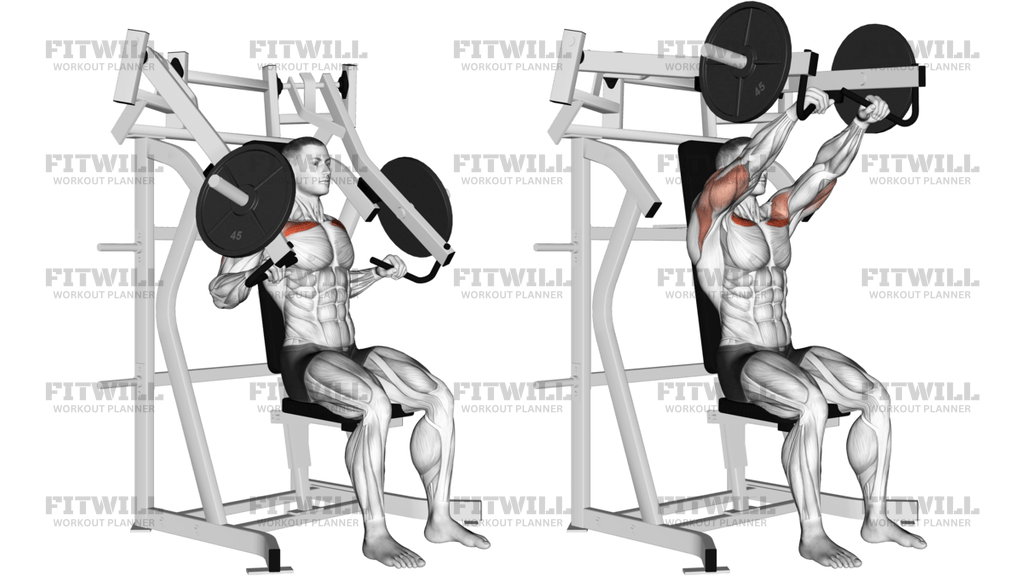
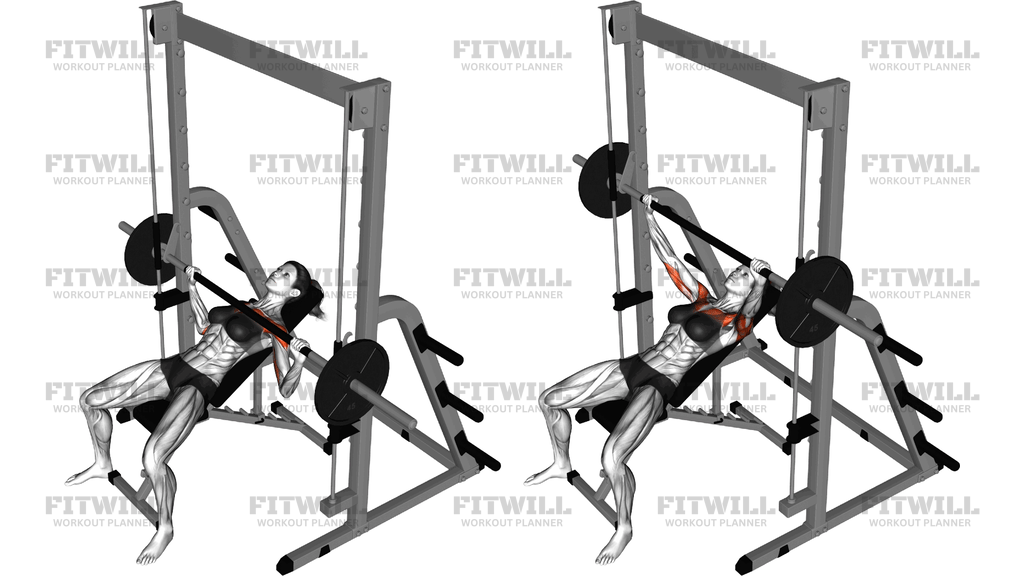
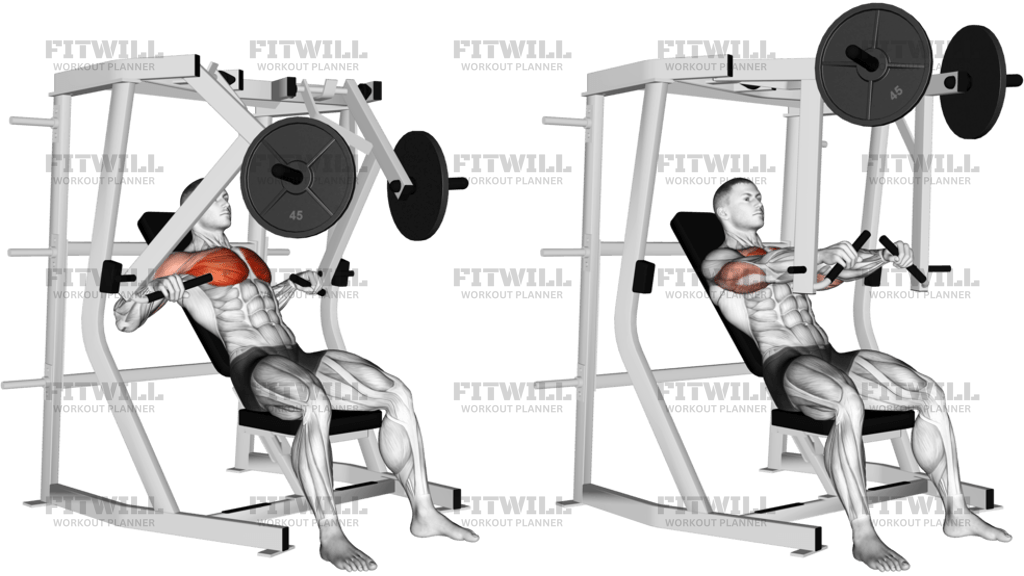
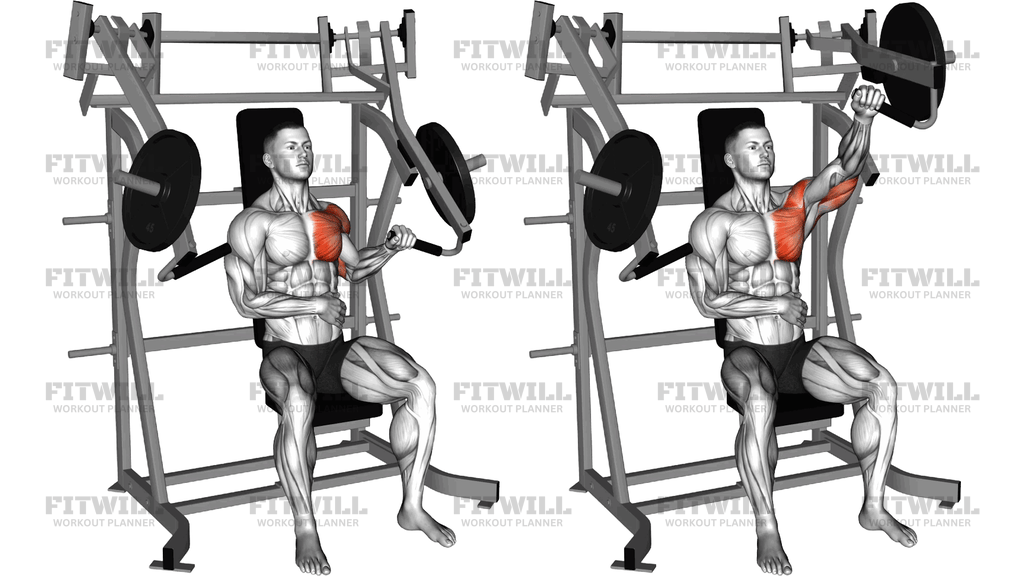
The Lever Incline Single Arm Chest Press is a plate-loaded machine exercise that trains the chest one side at a time from an incline pressing angle. You sit on the machine's seat with your back braced against the pad, grip a single handle, and press it up and forward along the machine's fixed lever path until the arm is extended, then control it back down. Because the movement arm travels on an inclined arc, the emphasis falls on the upper portion of the chest, with the front delts and triceps assisting through the lockout.
Working one arm at a time is the defining feature here. It lets you spot and correct left-to-right strength differences, which are common after an injury or simply from years of favoring one side. It also frees your non-working hand to rest across your midsection, which helps you stay tall on the pad instead of twisting toward the handle. Many lifters find they can focus harder on the squeezing muscle when only one side is working.
The fixed lever path is what separates this from a dumbbell incline press. The machine stabilizes the weight for you, so you can put your attention into driving the handle and feeling the upper chest work without worrying about balancing two separate implements. That makes it a solid choice for beginners learning what a chest press should feel like, and for more experienced lifters who want to push close to failure safely near the end of a chest session.
Setup matters more than most people expect on this machine. The seat height determines where the handle starts relative to your chest — set it so the handle lines up roughly with your upper chest or nipple-to-collarbone area, not down near your stomach. If the seat is too low, the press turns into more of a shoulder-dominant upward push; too high and you lose the incline angle that gives the exercise its purpose. Keep your head, upper back, and hips in contact with the pad throughout.
Execution is straightforward but worth doing deliberately. Press with intent but without locking the elbow hard at the top, pause for a beat where the chest is fully contracted, then lower under control until you feel a comfortable stretch across the upper chest before the next rep. Breathe out on the press, in on the return, and keep your free hand on your abs or the side of the seat for balance. Most people do best with moderate weights for 8 to 15 reps per side, always starting with the weaker arm.
Common use cases include fixing a size or strength imbalance between sides, rehabbing back into pressing after the stable path of a machine has been cleared for training, and finishing a chest workout with focused, single-side volume on the upper chest. If your gym's machine allows it, you can also work both arms together by alternating handles, but the pure single-arm version gives you the cleanest feedback on each side.
[ Workout Log & Planner ]
Put your next workout in Fitwill
Keep your plan and training log ready when you are.


Instructions
- Adjust the seat so the machine's handle sits at about upper-chest height when you are seated, then load the appropriate plates onto the pegs.
- Sit with your back, shoulders, and hips flat against the pad and plant your feet firmly on the floor about hip-width apart.
- Grip the single handle with a neutral or overhand grip and place your free hand across your midsection or on the seat edge for stability.
- Pull your shoulder blades back and down, brace your core, and lift your chest so you are set tall against the pad before the first rep.
- Press the handle up and forward along the machine's inclined path until your arm is nearly straight, keeping the elbow slightly soft at the top.
- Squeeze the chest for a moment in the fully pressed position without shrugging the working shoulder toward your ear.
- Lower the handle slowly back along the same path until you feel a stretch across the upper chest, keeping your back against the pad.
- Exhale as you press, inhale as you lower, and keep the breathing rhythm steady for every rep.
- Complete all reps on one side, then re-grip and perform the same number of controlled reps with the other arm.
- When finished, let the weight stack or lever arm settle fully, unload the plates, and step away from the machine carefully.
Tips & Tricks
- Start every set with your weaker arm and match the reps on the stronger side — never the other way around if you want to even out an imbalance.
- If you feel the work shifting into the front of the shoulder, lower the seat slightly or reduce the weight so the handle path starts closer to chest level.
- Do not let your torso rotate toward the pressing arm as fatigue sets in; that twist steals work from the chest and strains the lower back.
- The elbow drifting behind the body at the bottom of the rep is a common fault on this machine — stop the descent when the upper chest is stretched, not when the arm is cranked back.
- A partial shrug at lockout means the weight is too heavy; drop the load until you can finish each press with the shoulder staying down.
- Because the lever arm swings on a fixed arc, guide it rather than fight it — pushing at an angle off the machine's path just adds stress to the elbow.
- Pause for one full second at the top of each rep; the pause forces the upper chest to finish the rep instead of the triceps bouncing it through.
- Keep the rep timing around two seconds down and one second up — letting the lever arm crash back down is where most shoulder complaints on this machine start.
- If one side wants to move faster than the other, slow the weaker arm down deliberately on the lowering phase to build control before adding weight.
Frequently Asked Questions
Which muscles does the Lever Incline Single Arm Chest Press work?
The primary muscle is the upper chest, specifically the clavicular head of the pectoralis major. The triceps and front delts assist, and the serratus anterior helps stabilize at the top of the press.
Why press one arm at a time instead of both handles together?
The single-arm version exposes and corrects side-to-side strength differences and forces your core to resist rotation. You also get a clearer feel for which side is actually doing the work.
Is the Lever Incline Single Arm Chest Press good for beginners?
Yes, it is one of the friendliest pressing setups for a new lifter because the fixed lever path removes the need to balance the weight. Start light, learn the path, and focus on feeling the upper chest contract.
How high should the seat be set on the Lever Incline Single Arm Chest Press?
Set it so the handle lines up with your upper chest at the start of the press. If the handle starts near your midsection, the seat is too low and the front delts will take over.
What is the most common mistake on this exercise?
Rotating the torso toward the working arm as the set gets hard. Keep both shoulders square to the pad and your free hand braced across your midsection to stay honest.
Can I use the Lever Incline Single Arm Chest Press if one side is weaker after an injury?
The machine's guided path and back support make it a common choice for rebuilding one side at a time, but get clearance from a medical professional or physical therapist before returning to pressing after an injury.
What can I substitute if my gym has no leverage chest press machine?
A single-arm dumbbell press on an incline bench is the closest free-weight alternative, and a cable press from a low-to-high angle with one handle also covers the same upper-chest emphasis.
Should I lock out my elbow at the top of each press?
Press to full extension but keep a slight bend in the elbow rather than snapping it straight. This keeps tension on the chest and avoids jamming the joint at lockout.
How many sets and reps work best for this movement?
Two to four sets of 8 to 15 reps per side fits most goals, always starting with the weaker arm. Heavier low-rep work is possible on a leverage machine, but control matters more than load here.