Standing Hip Rotation Over The Bar
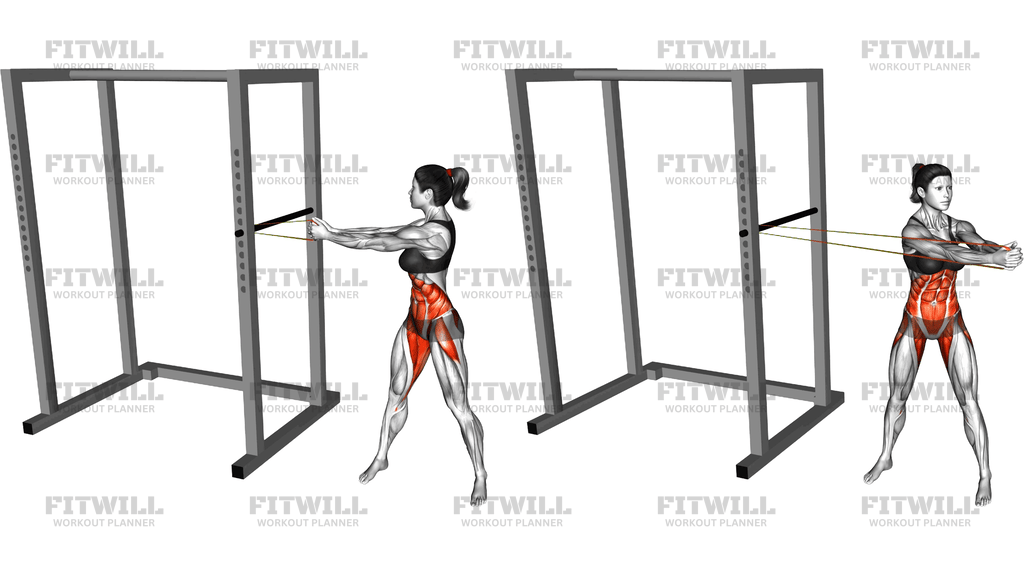
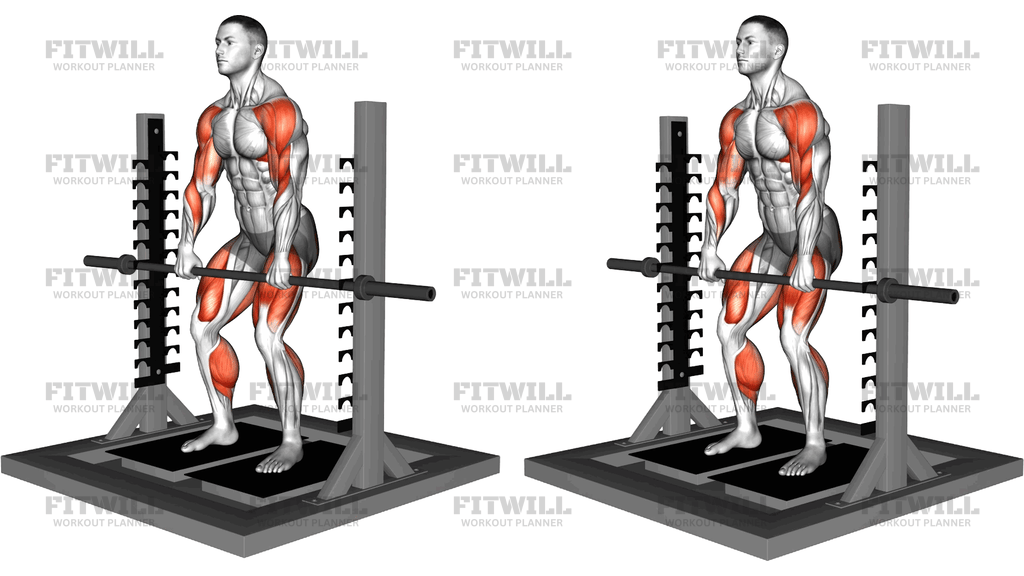
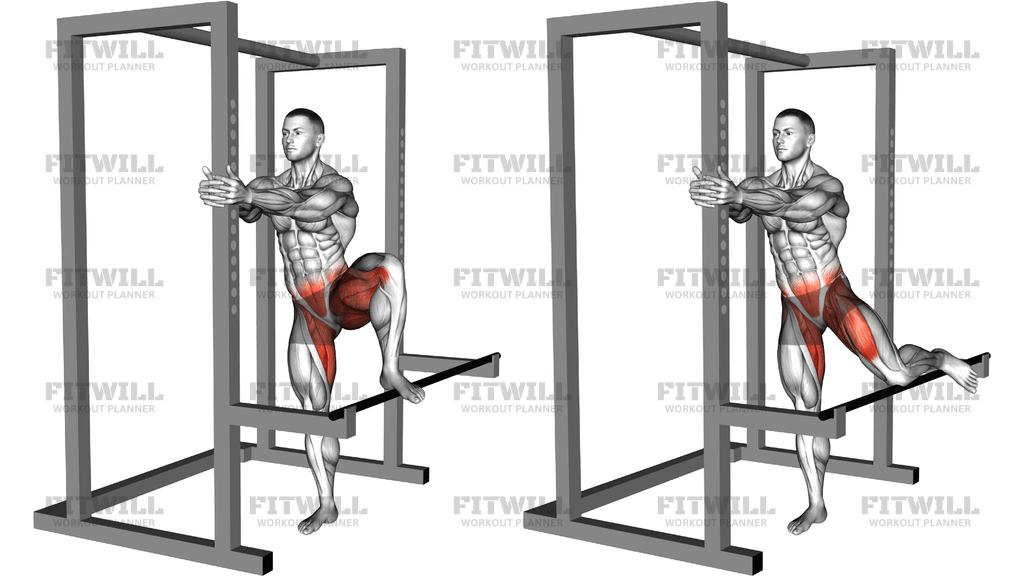
Standing Hip Rotation Over The Bar is a standing mobility drill that uses a fixed bar set at roughly mid-thigh to knee height as a pivot point for the leg. You brace your hands against a rack upright, rest one leg over the bar, and rotate the hip so the leg sweeps from a raised, bent-knee position in front of you to an extended position behind you. The bar acts as a physical guide for the arc of rotation, which makes it much easier to keep the movement consistent from rep to rep than free-standing leg swings.
This drill targets rotational range at the hip joint. As the leg travels over the bar, you work through hip flexion, abduction, and external rotation on the way forward, then extension and internal rotation on the way back. The glutes and deep hip rotators control and produce the rotation, while the obliques and core work to keep your torso square instead of letting it twist along with the leg.
People who sit for long hours, lifters with stiff hips before squatting or deadlifting, and athletes in rotational sports like golf, tennis, or baseball all get good mileage from this movement. It slots neatly into a warm-up because it takes the hip through a large arc without loading the spine, and the hand support means balance is never the limiting factor.
The setup matters more than it looks. The bar height determines the arc your leg must travel, and your distance from the rack determines whether the leg glides over the bar smoothly or jams against it. Stand close enough that the bar passes under the mid-thigh of the working leg, grip the upright firmly at about chest height, and keep the standing foot planted and pointing straight ahead.
To perform it well, think of the hip as the hinge and the bar as the track. Lift the knee up and over the bar, let the shin clear it, then rotate the hip so the leg continues around to the rear before reversing the same path. The motion should feel like drawing a wide circle with your knee while your torso stays quiet. Keep the height modest at first; the goal is a clean, unobstructed rotation, not forcing the leg over a bar that sits too high.
A few practical points will keep this safe and productive. Move at a tempo you can stop instantly, keep the weight distributed through the whole standing foot, and never let the bar catch the shin or knee mid-sweep. If rotation feels pinched at the front of the hip, reduce the arc and stay in the range that moves freely. Two to three sets of five to eight rotations per side is a sensible dose, either as a standalone mobility break or as part of a lower-body warm-up.
[ Workout Log & Planner ]
Put your next workout in Fitwill
Keep your plan and training log ready when you are.


Instructions
- Set a straight bar in the rack at roughly mid-thigh height so it sticks out horizontally from the upright, then stand sideways to the rack with your working leg nearest the bar.
- Grip the rack upright with both hands at about chest height, arms extended, and step in close enough that the bar sits under your mid-thigh when your leg hangs relaxed.
- Plant the standing foot flat and pointing forward, soften the knee slightly, and squeeze your core so your torso stays square to the rack.
- Brace your grip and shift a little of your weight into your hands so balance is handled and the hip is free to move.
- Lift the knee of your working leg up and forward, bending it, and rotate the hip outward so the thigh clears the bar on its way over.
- Continue rotating as the leg travels over the bar, letting it extend behind you until the hip reaches its comfortable end range of rotation.
- Reverse the exact same path, bringing the leg back over the bar and returning the knee to the raised starting position in front of you.
- Breathe steadily throughout, exhaling as the leg sweeps over and inhaling on the way back; never hold your breath mid-rotation.
- Complete five to eight smooth rotations on one side, step off the bar, then switch sides and repeat on the other leg.
Tips & Tricks
- If the bar scrapes your shin or catches the knee mid-sweep, you are standing too far away or the bar is set too high; lower it slightly and step in closer before the next set.
- A common mistake is letting the torso whip around to help the leg over the bar, which turns a hip drill into a spine-twisting exercise; keep your chest and shoulders facing the rack and let only the leg move.
- Do not swing fast and hope momentum does the work; the bar gives you a fixed path, so use it to move slowly and find the exact point where your rotation tightens.
- Keep the standing knee soft rather than locked; a locked knee makes it harder to shift weight into your hands and steadier on hard floors.
- If the front of the hip pinches when the knee comes up, angle the knee slightly outward as it lifts instead of driving it straight toward your chest.
- Taller lifters often need the bar a notch lower than they assume; the bar should pass under the thigh, not force the hip into a forced high-knee hold.
- Use the hand grip deliberately, leaning a small amount of bodyweight into the upright so your standing hip stays level instead of hitching up as the leg rotates.
- Keep the working foot relaxed rather than pointed rigidly; a loose foot lets the whole leg follow the rotational arc more naturally.
- If one side rotates noticeably better than the other, start each session with the stiffer side and match your reps to it rather than to the looser side.
Frequently Asked Questions
What does Standing Hip Rotation Over The Bar actually train?
It trains rotational range of motion at the hip, moving through flexion, abduction, external rotation, extension, and internal rotation in one continuous arc. The glutes and deep hip rotators do the steering, and the core keeps your torso from twisting.
How high should I set the bar for this exercise?
Start around mid-thigh height so the bar passes under your thigh without forcing an exaggerated knee lift. If the leg catches on the bar or the hip feels jammed, drop it one notch.
Is Standing Hip Rotation Over The Bar suitable for beginners?
Yes, because the hands grip the rack for balance and the bar guides the path, making it easier to control than free leg swings. Beginners should use a lower bar height and a shorter arc until the movement feels smooth.
Should I feel this in my lower back?
No, the rotation should come from the hip, and your torso should stay square to the rack. If you feel your lower back working or twisting, reduce the arc and focus on moving only the leg over the bar.
Can I do this exercise without a rack and bar?
You can perform a similar standing hip rotation free-standing or with a hand on a wall, but you lose the fixed guide that keeps the arc consistent. A securely placed bar or sturdy rail at thigh height is the closest substitute.
Is this better as a warm-up or a cool-down?
It works well as a warm-up before squats, deadlifts, or rotational sports because it opens the hips without fatigue. It can also be used in a cool-down, just with slower, more relaxed rotations.
Why do my hands and arms feel more involved than my hips?
That usually means you are hanging on the rack instead of lightly bracing against it. Shift most of your weight into the standing leg and lean only slightly into your hands so the hip, not the arms, drives the movement.
How many reps and sets should I do per side?
Two to three sets of five to eight controlled rotations per side is a practical dose. If one hip is stiffer, do your extra work on that side and match the looser side to it.
What should I do if the bar catches my leg during the rotation?
Stop the set rather than forcing through it, then adjust your distance from the rack or lower the bar. The leg should glide over the bar, and any contact mid-sweep means the setup does not match your leg length yet.