Kettlebell One-Arm Snatch
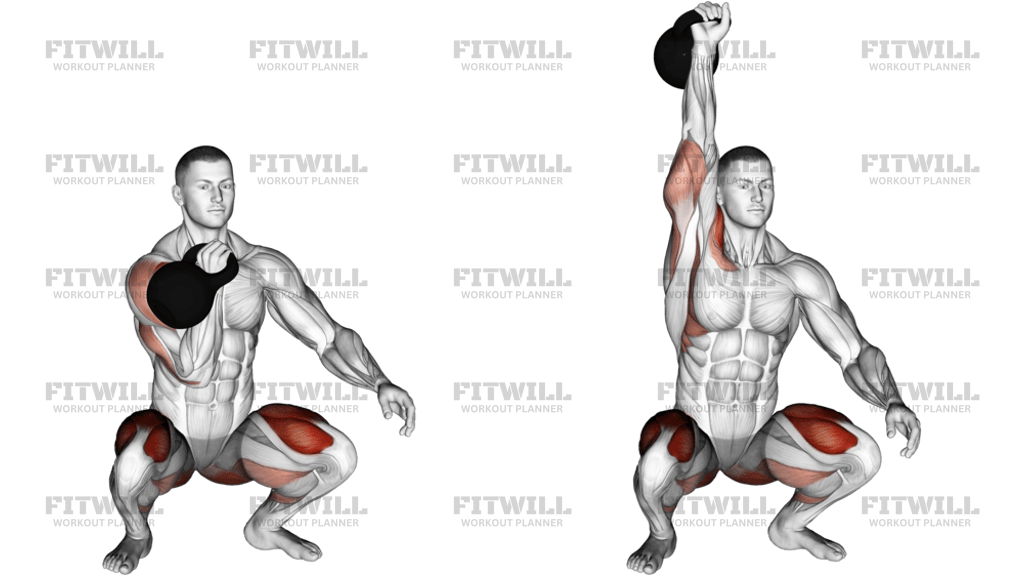
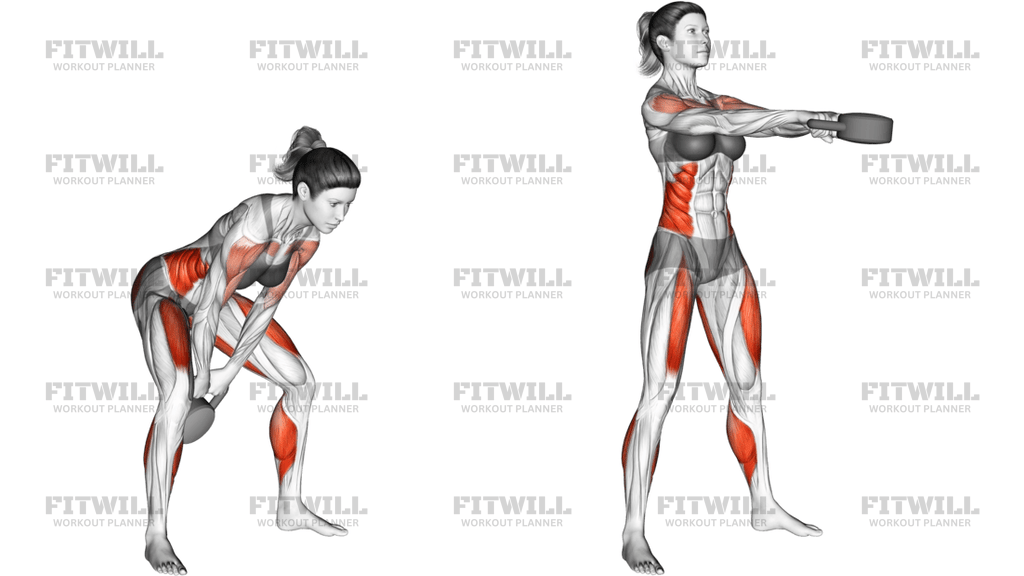
The kettlebell one-arm snatch is a powerful hip-driven exercise that sends the bell from a hike swing to a stable overhead lockout in one continuous path. It trains the posterior chain, shoulders, upper back, and grip while also asking the trunk to resist rotation as the weight moves from below the hips to overhead. The movement is fast, but it should still look organized: the bell stays close, the torso stays stacked, and the finish is quiet and controlled.
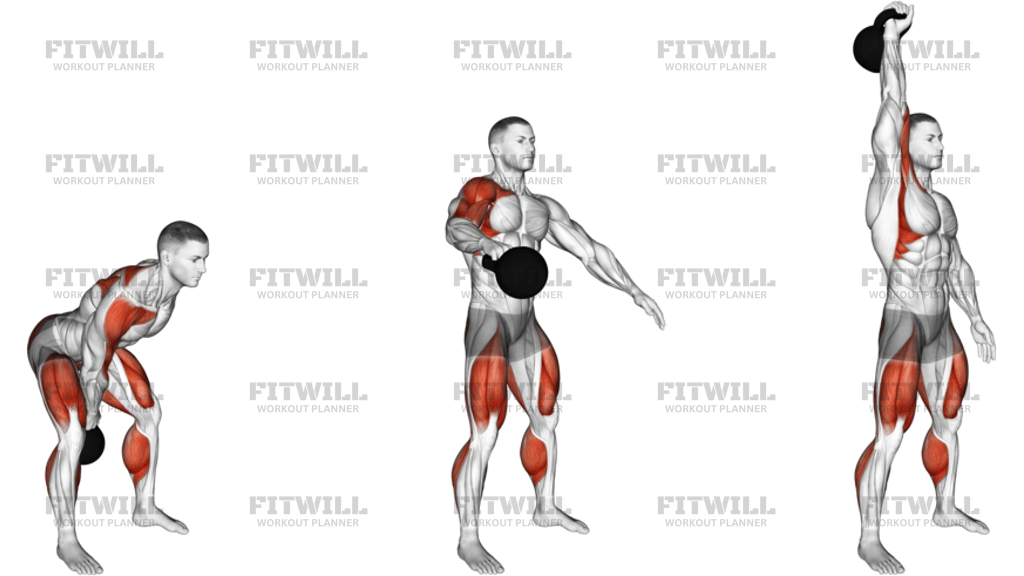
The setup matters because the snatch is built from the same positions as a hard-style swing. A solid hinge, a clean backswing, and a vertical finish are what keep the bell from drifting away from the body or slamming the forearm on the turnover. In anatomy terms, the main work centers on the deltoids, with help from the trapezius, rhomboids, triceps brachii, glutes, hamstrings, and core. Most of the power comes from the hips; the shoulder only finishes and stabilizes the overhead position.
Start with the bell a little in front of you, hinge back, and hike it high between the legs before exploding to standing. As the kettlebell rises, keep the elbow close and guide the handle around the hand rather than letting the bell fly outward. At the top, press through to a straight overhead line with the wrist stacked over the shoulder and the ribcage down. That lockout should feel balanced, not arched or shrugged.
This exercise fits well in power blocks, conditioning circuits, kettlebell technique work, or advanced full-body sessions where explosive hip extension is a goal. It can also build overhead endurance when the reps are crisp and the bell size is appropriate. The main safety priorities are timing and control: if the bell bangs the forearm, the arc is too wide or the turnover is late; if the lower back takes over, the hinge and hip drive need attention. Use only the range and speed you can repeat cleanly on both sides.
[ Workout Log & Planner ]
Put your next workout in Fitwill
Keep your plan and training log ready when you are.


Instructions
- Stand with the kettlebell a little in front of you, feet about hip-width apart, and take the handle with one hand.
- Hinge at the hips, bend the knees slightly, and hike the bell back high between your thighs while keeping your back flat.
- Let the bell swing forward close to your body as you drive through the hips and stand tall.
- Keep the working elbow close to your side as the bell rises; do not let it drift far away from the torso.
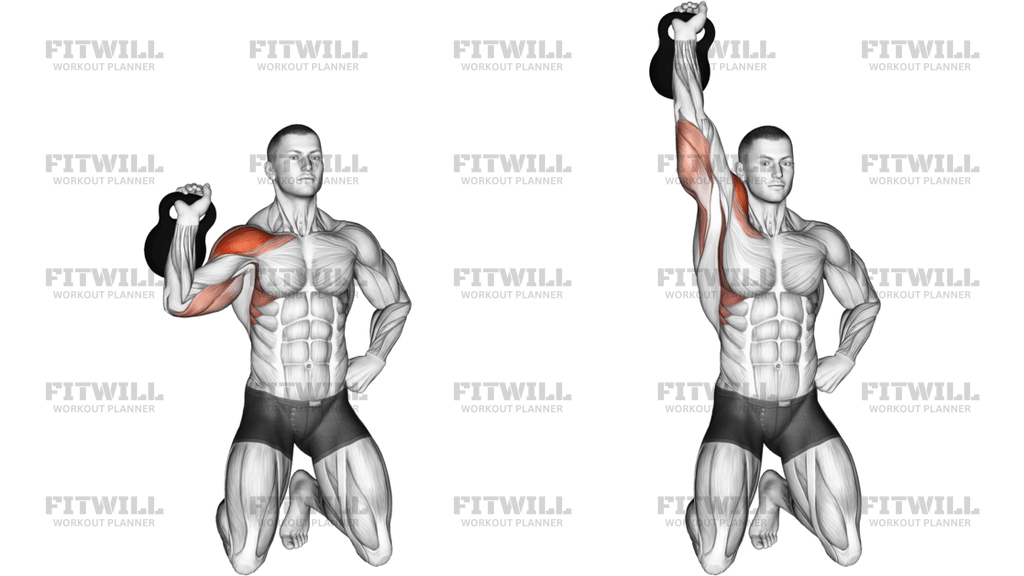
- As the kettlebell reaches chest or face height, guide the hand around the handle and punch straight up to prevent forearm impact.
- Finish with the arm fully extended overhead, wrist stacked over shoulder, ribs down, and glutes tight.
- Pause briefly in the overhead lockout to confirm balance and control before lowering the bell.
- Bring the bell back down by letting it arc forward and then hike it back between the legs for the next rep or switch hands after the set.
Tips & Tricks
- Think about snapping the hips, not lifting the bell with the arm; the shoulder finishes the rep, but the hips create the speed.
- Keep the kettlebell close on the way up. A wide arc usually means more forearm slap and less efficient power transfer.
- Open the hand during the turnover so the bell can roll around the palm instead of crashing onto the forearm.
- Do not shrug hard at the top. The lockout should be stacked and stable, not jammed into the neck.
- Keep the free arm slightly out to the side for balance, but do not twist the torso to chase the bell.
- If the bell keeps hitting your forearm, reduce speed, shorten the swing arc, and practice the high pull before snatching heavier.
- Exhale sharply during the hip drive and overhead finish so the torso stays braced without overextending the ribs.
- Choose a load you can lock out cleanly for every rep on both sides; sloppy turnovers usually mean the bell is too heavy.
Frequently Asked Questions
What does the kettlebell one-arm snatch train most?
It primarily trains explosive hip extension, shoulder lockout strength, upper back stability, and grip endurance.
Is this really a shoulder exercise?
The shoulders finish the rep overhead, but the main power comes from the hips, glutes, and hamstrings.
Why does the kettlebell sometimes hit my forearm?
That usually means the bell is swinging too far away from the body or the turnover is happening too late. Keep the arc tighter and punch through sooner.
Can a beginner learn this movement?
Yes, but only after learning a solid hinge, swing, and high pull with a light kettlebell.
How should the kettlebell finish overhead?
The arm should be straight, the wrist stacked over the shoulder, and the ribs kept down so the torso does not lean back.
Should I alternate arms rep by rep?
You can, but many lifters do a set on one arm first, then switch, so each side gets the same attention and rhythm.
What is the difference between a clean and a snatch?
A clean finishes in the rack position at the shoulder, while a snatch finishes overhead in one continuous motion.
How heavy should I go on this lift?
Use a bell you can snatch without arching your back, banging your forearm, or losing a clean overhead lockout.