Barbell Hip Thrust Inside Rack
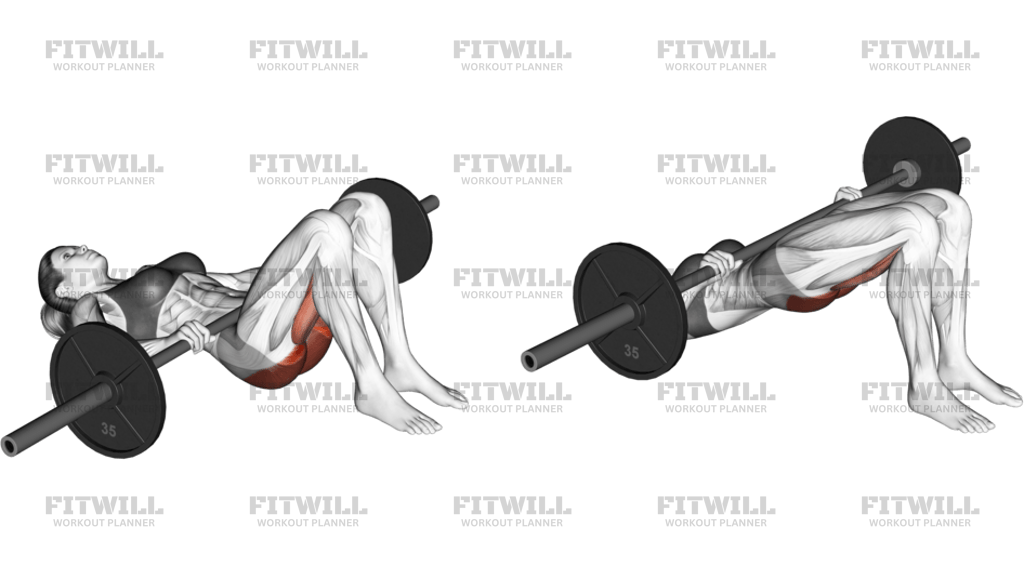
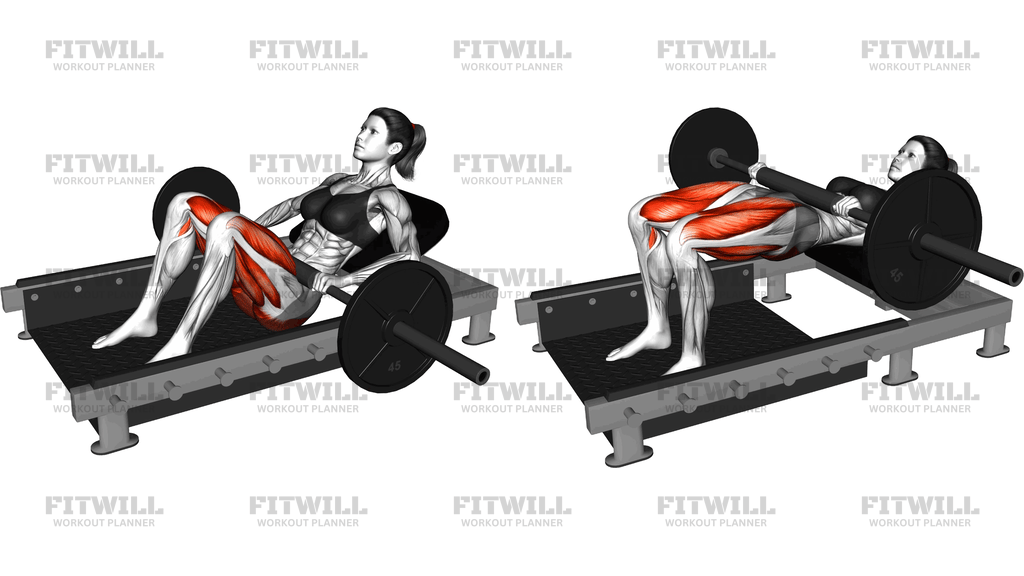
The Barbell Hip Thrust Inside Rack is a horizontal hip extension exercise performed with your upper back braced against a bench and a loaded barbell positioned across your hips. Setting up inside a power rack makes the movement far more practical: you can roll or lift the bar into place over your hips from the rack's J-hooks or safety pins instead of wrestling a heavy barbell over your legs from the floor. This is one of the biggest barriers for people learning the hip thrust, so the rack setup lets you load progressively heavier weight with less fuss.
This exercise is primarily a glute builder. As you drive your hips toward the ceiling, the gluteus maximus works through hip extension against a direct, horizontally loaded resistance, while the hamstrings and quads assist and the lower back and core stabilize your torso. Because the trunk stays supported on the bench and the load travels with your hips rather than compressing your spine vertically, many lifters find they can emphasize the glutes here more comfortably than in heavy squats or deadlifts.
The Barbell Hip Thrust Inside Rack suits a wide range of trainees. Powerlifters and strength athletes use it to supplement squat and deadlift lockout strength, while anyone chasing glute development appreciates how directly it targets the hips. It is also a useful option for lifters who feel back-dominant in deadlifts, since the bench support reduces the demand on spinal erectors compared with a bent-over pull.
Setup details matter more here than in most exercises. The bench height, your foot placement, and where the bar sits on your hips all change the leverage and how the movement feels. Your shins should end up close to vertical at the top, with the ribs down and a straight line from shoulders to knees. If your feet drift too far forward, the hamstrings and quads take over and the hips hyperextend; too far back and the range shortens. A bar pad or folded mat across the hips keeps the bar from digging in as the weight gets heavy.
To execute the lift well, brace before you move, then push the floor away through your whole foot rather than just your toes. Drive until your hips are fully extended and squeeze at the top without arching your lower back, then lower under control until the plates nearly touch the floor before the next rep. Avoid bouncing out of the bottom, and keep your chin tucked so your neck stays neutral. Breathe in at the bottom, exhale as you press up.
In practice, this exercise slots in as a main lift on lower-body days or as a high-rep finisher after squats and hinges. Because the rack setup lets you safely fail or set the bar down between reps, it is friendlier for training alone near your limit than free-floor hip thrust variations.
[ Workout Log & Planner ]
Put your next workout in Fitwill
Keep your plan and training log ready when you are.


Instructions
- Position a flat bench inside the power rack so the rack's J-hooks or safety pins sit on either side of where your hips will rest, with the bench long enough to support your upper back.
- Set the barbell on the hooks at roughly the height your hips reach while seated on the floor in front of the bench, and load plates on both sides evenly.
- Sit on the floor with your upper back against the front edge of the bench, roll the bar so it rests across your crease of the hips, and place a bar pad or folded mat over the bar for cushioning.
- Bend your knees and plant your feet flat on the floor about hip-width apart, toes angled slightly out, adjusting until your shins will be near vertical at the top of the lift.
- Grip the bar on both sides of your hips to hold it in place, tuck your chin, and brace your core as if preparing for a light punch to the stomach.
- Exhale and drive through your whole foot to push your hips up until your torso and thighs form a straight line and your hips are fully extended.
- At the top, squeeze your glutes hard, keep your ribs down, and avoid pushing your lower back into an arch.
- Inhale and lower your hips under control until the plates are just above the floor, keeping tension in the glutes instead of dropping into the bottom.
- Pause briefly at the bottom, reset your brace, and begin the next rep.
- When finished, hold the bar at your hips, walk your feet toward the rack, and rack the bar back onto the hooks before standing up.
Tips & Tricks
- If the bar bites into your hip bones as the weight climbs, upgrade from a thin pad to a thicker squat bar pad or a folded yoga mat, because discomfort at the hips is the most common reason people cut hip thrust sets short.
- Check your shin angle at the top of each rep: if your knees have traveled past your toes toward the rack, move your feet slightly further away; if your hips fall short of full extension, walk them in a little.
- Do not let your lower back take over at the top. If you finish each rep by arching and lifting your chest, you are extending through the spine instead of the hips — keep the ribs stacked over the pelvis and let the glutes finish the movement.
- Push through your heels and mid-foot rather than curling your toes up or driving only from the balls of your feet, which shifts work away from the glutes.
- Keep the bar centered over your hips, not up on your abdomen; a bar that rides too high turns the rep into an uncomfortable abdominal press and changes the leverage.
- If one side of the bar lifts before the other, slow down and match your foot pressure; uneven footing inside the rack is easy to miss because the bench blocks your view of your own hips.
- Start lighter than you think you need for your first rack session, since the bench height and pin placement will feel different from a standard hip thrust bench until you dial in the geometry.
- Use a slight posterior tilt at the very top — tucking the pelvis under an inch — if you tend to hyperextend, but do not force it if it makes the top position feel weak.
- Chalk or a neutral grip on the bar helps when the weight gets heavy, because a bar that slides off your hips mid-rep ends the set immediately.
Frequently Asked Questions
What muscles does the Barbell Hip Thrust Inside Rack work?
The glutes are the primary mover, with the hamstrings and quads assisting hip and knee extension. Your lower back and core work isometrically to keep the torso stable on the bench.
Why set up the Barbell Hip Thrust Inside Rack instead of on the open floor?
The rack lets you roll the loaded bar directly over your hips from the hooks or pins, which removes the hardest part of the setup: lifting a heavy barbell over your legs from the floor. It also gives you a safe place to rack the bar between sets or if a rep fails.
How high should the bench be for the Barbell Hip Thrust Inside Rack?
A standard flat bench height around 16-17 inches works for most people, so your upper back rests on the edge and your shoulders stay higher than your hips throughout. If the bench is too tall, your range shortens; too low and your hips drop below a useful starting angle.
Is the Barbell Hip Thrust Inside Rack good for beginners?
Yes, and the rack setup actually helps beginners because the bar is easy to position and easy to bail from. Start with an empty or lightly loaded bar to learn the hip extension pattern before adding plates.
Should my feet be flat and how far from the bench?
Keep your feet flat on the floor with knees bent roughly 90 degrees at the top, so your shins are close to vertical. If your hamstrings cramp or your hips fall short of full extension, walk your feet slightly closer to the bench.
How do I stop the barbell from hurting my hips?
Place a thick bar pad or folded mat across the bar directly over the hip crease and keep the bar centered, not riding up onto your abdomen. As weights get heavy, a thinner pad often stops being enough, so upgrade the padding rather than tolerating the discomfort.
What is the most common mistake in the Barbell Hip Thrust Inside Rack?
Hyperextending the lower back at the top instead of finishing with the glutes. Keep your ribs down and your torso in a straight line from shoulders to knees, squeezing the glutes to complete each rep.
What can I substitute if I do not have a rack and bench available?
A standard barbell hip thrust on a flat bench, a glute bridge from the floor, or a machine hip thrust all train the same hip extension pattern. Dumbbell or band-resisted hip thrusts work well when a loaded barbell is not practical.
How heavy should I go on the Barbell Hip Thrust Inside Rack?
Add weight only when you can reach full hip extension with a straight torso and control the lowering phase on every rep. Many lifters handle more load here than in squats, but earning that load with clean reps matters more than the number on the bar.
Is it safe to train the Barbell Hip Thrust Inside Rack alone?
It is one of the safer heavily loaded barbell lifts because the bench supports your torso and the rack gives you somewhere to set the bar down. Still, use collars on the sleeves, keep the bar racked when not in use, and avoid maxing out without a spotter if you are new to the setup.