Bow Yoga Pose (Beginner)
The Bow Yoga Pose (Beginner) is a gentle prone back extension that introduces you to the shape of the full bow posture without needing to grab your ankles. You lie face down on a mat, extend your arms overhead, then lift your chest while sweeping your arms back along your sides toward your hips. The beginner version keeps the legs grounded or only lightly engaged, so the emphasis stays on lengthening and strengthening the spine rather than forcing a deep backbend.
This movement is especially useful for people who spend long hours seated. Sitting rounds the upper back and closes the front of the shoulders, and this pose works in the opposite direction: the chest lifts, the shoulder blades draw down and together, and the muscles along the spine do the lifting. The rear shoulders and upper back are highlighted as the arms sweep back, which makes this a good primer for pressing, pulling, and swimming movements as well as a yoga practice opener.
The setup matters more than the height you reach. Lying with the legs straight, the tops of the feet pressing into the mat, and the forehead resting down gives your neck a neutral line before you move. From there, the lift should come from the mid and upper back rather than from craning the chin or hinging only at the lowest part of the spine. A small, even arch across the whole back is far more productive than one sharp bend in the lower back.
To execute it well, think of the arms leading the shape. Start with them stretched forward like Superman arms, then as you exhale and lift the chest, glide them back toward your hips as if pushing water past you. The sweep naturally settles the shoulders away from your ears and encourages the upper back to do its job. Hold the lifted position for a few steady breaths, then lower with the same control rather than dropping onto the mat.
The Bow Yoga Pose (Beginner) fits well near the start of a yoga flow, in a core and back warm-up, or as a standalone reset after a long workday. Two to three rounds of five to eight slow repetitions, or holds of fifteen to thirty seconds, are plenty for most people. If you feel pinching anywhere in the spine, reduce the range instead of pushing through it, and keep the glutes lightly active to support the lower back.
[ Workout Log & Planner ]
Put your next workout in Fitwill
Keep your plan and training log ready when you are.


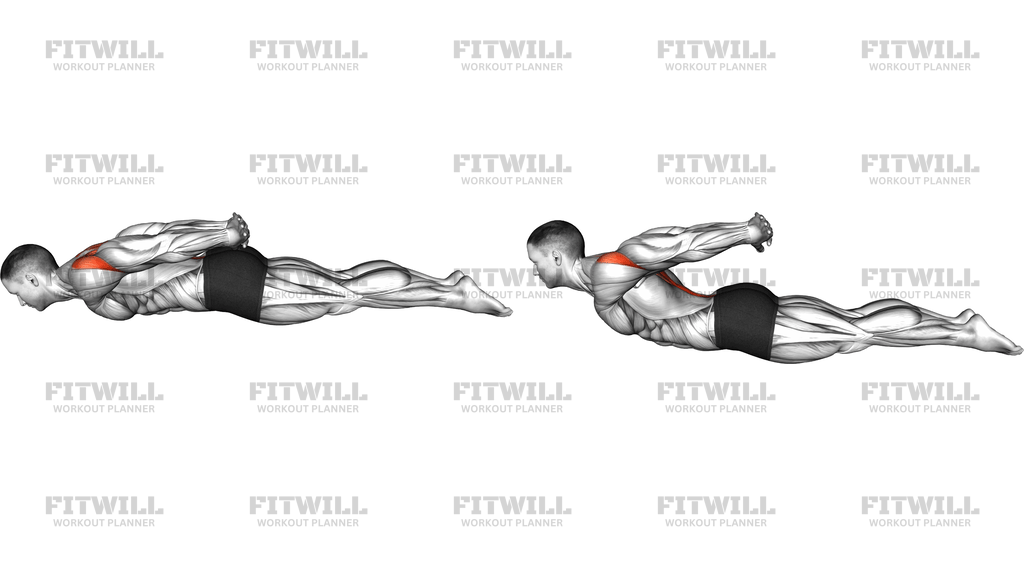
Instructions
- Lie face down on an exercise mat with your legs straight behind you and the tops of your feet resting on the floor.
- Extend both arms straight overhead, hands about shoulder-width apart, palms facing down, and let your forehead hover just above or rest lightly on the mat.
- Lighten your breathing and gently engage the abdominal wall so the trunk feels supported before you lift.
- Exhale and lift your chest and head a few inches off the mat, keeping the back of your neck long and your gaze on the floor.
- As the chest rises, sweep your arms back alongside your body toward your hips, turning your palms slightly upward so the thumbs point toward the ceiling.
- In the lifted position, keep your hips and thighs grounded in the beginner version, with the glutes lightly engaged and the shoulders drawn down away from your ears.
- Hold the position for two to four slow breaths, feeling the work in the mid and upper back rather than at one spot in the lower back.
- Inhale or exhale slowly as you lower the chest back down, then glide the arms forward overhead again with control instead of letting them drop.
- Complete five to eight repetitions, or hold the lifted shape for fifteen to thirty seconds, then rest on your side or in a child's pose position before repeating.
Tips & Tricks
- The most common mistake is craning the chin upward to look forward, which compresses the neck; keep your gaze on the mat and let the lift come from the chest.
- If the lift is coming only from the lower back, make the arm sweep bigger and slower — moving the hands all the way toward the hips recruits the upper back and rear shoulders.
- Keep the tops of the feet actively pressing into the mat; floppy feet usually mean the legs are passive and the knees may drift apart.
- Do not hold your breath in the lifted position; if you notice you are, shorten the hold and breathe continuously instead.
- Skip yanking the arms back quickly. The sweep should feel like pushing water past your hips, not like a rowing jerk that shrugs the shoulders.
- If your shoulders feel pinched when the arms reach back, stop the sweep at the point where they move freely and gradually increase the range over weeks.
- Engage the glutes just enough to feel supported in the hips; clenching them hard tilts the pelvis and limits the back extension you are trying to build.
- Avoid holding the highest point you can reach for long periods — a moderate lift held with easy breathing builds the back extension better than a max-effort arch.
- If you feel a sharp or pinching sensation anywhere in the spine, come down, rest, and next round lift only the chest while keeping the arms by your sides.
Frequently Asked Questions
Which muscles does the Bow Yoga Pose (Beginner) work?
The primary work comes from the erector spinae along the spine, supported by the rear shoulders, upper back, and glutes as you lift the chest and sweep the arms back. The hamstrings assist lightly when the legs stay grounded.
Is the Bow Yoga Pose (Beginner) suitable if I have never done yoga?
Yes. Because the legs stay on the mat and you never reach back to grab your ankles, it is one of the most accessible entries into prone backbends and teaches the shape before the full pose.
Why do the arms sweep back instead of staying overhead?
The sweep draws the shoulder blades down and together and brings the rear shoulders and upper back into the lift, which keeps the shoulders away from the ears and builds the posture this pose targets.
How is the beginner version different from the full Bow Yoga Pose?
In the full pose you bend the knees, reach back, and hold your ankles, which pulls the chest and thighs higher off the floor. The beginner version keeps the legs down and uses the arm sweep to create the same open-chest shape with far less spinal load.
How long should I hold the lifted position?
Two to four steady breaths per repetition, or fifteen to thirty seconds for a static hold. If you catch yourself holding your breath, the hold is too long or the lift is too high.
What should I do if I feel a pinch in my lower back during the Bow Yoga Pose (Beginner)?
Lower the chest closer to the mat, keep the glutes lightly engaged, and spread the arch across the whole back instead of concentrating it in one spot. If pinching continues, switch to a gentler variation with the arms by your sides and consult a qualified professional if discomfort persists.
Can this pose help counteract long hours of sitting?
It places the spine and shoulders in the opposite position from sitting — chest lifted, upper back extended, shoulder blades retracted — which makes it a practical counter-movement to include on desk-heavy days.
What can I substitute if lying face down is uncomfortable?
A standing back extension with hands on the lower back, or a Sphinx pose with the forearms on the mat, trains a similar gentle extension without loading the prone position.
How often should I practice the Bow Yoga Pose (Beginner)?
Two to three sets of five to eight slow repetitions, three to five days per week, works well for most people since the load is low. It pairs naturally before or after core and pulling work.
Should my thighs lift off the mat in this version?
Not in the beginner version. Keep the hips and thighs grounded and let the chest and arms create the shape; lifting the legs is a progression you can add once the back extension feels comfortable and controlled.