Sitting Legs Extended To Butterfly Stretch
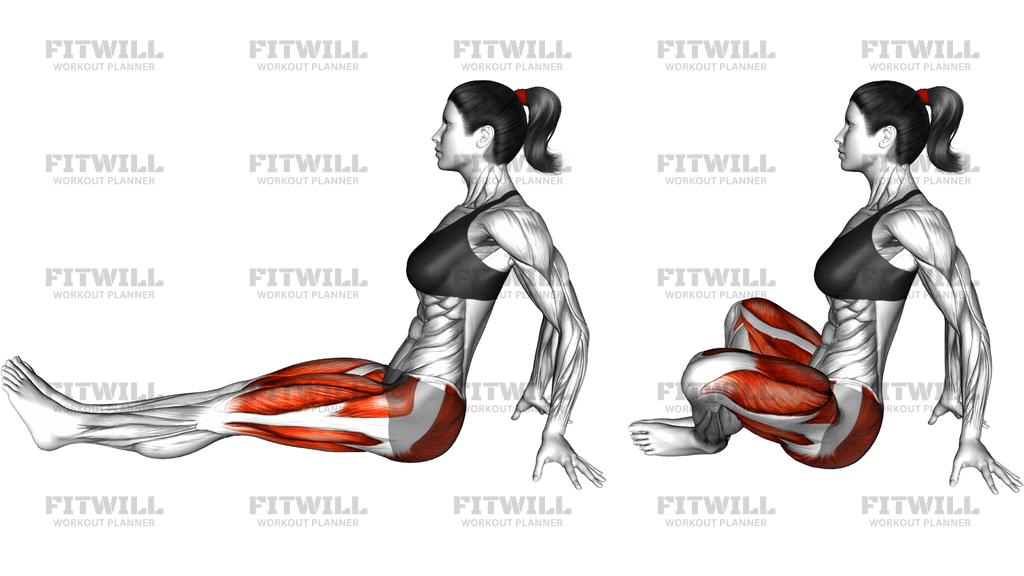
The Sitting Legs Extended To Butterfly Stretch is a seated floor transition that moves you from a straight-leg position into the classic butterfly stretch, with your hands planted on the floor behind your hips for support throughout. You start sitting tall with both legs extended straight in front of you, then bend your knees, let them fall open to the sides, and draw your feet in toward your groin until the soles meet. The whole sequence is done slowly and deliberately, so it works as a mobility drill rather than a strength exercise.
This movement targets the adductors along the inner thigh, which get highlighted prominently as the knees drop toward the floor in the butterfly position. The extended-leg start also places a mild stretch on the hamstrings and calves before you begin the transition, and the act of drawing the heels in teaches active control of hip external rotation rather than just falling into the stretch. Supporting yourself on your hands behind you helps keep the chest lifted and the lower back from rounding.
The two-phase setup matters because it warms the back of the legs first and gives you a moment to establish an upright torso before the hips open. If you skipped straight to the butterfly position with a slouched spine, you would lose much of the inner-thigh stretch and put unnecessary strain on the lower back. Sitting on a folded towel or thin mat to elevate the hips can make the position far more comfortable if your hips or hamstrings are tight.
This stretch fits well at the end of a lower-body workout, after running or cycling, or as part of a general flexibility routine. It is especially useful for people whose inner thighs feel tight from squatting, lunging, or sitting for long hours, and it is a common preparatory drill for deep squats and straddle positions in martial arts and yoga. Because it uses only your body weight and a patch of floor, you can do it almost anywhere.
Move into the butterfly position gradually and let gravity do the work rather than forcing your knees down with your hands or elbows. A gentle, sustained stretch that you can breathe through will serve you better than pushing to the point of sharp discomfort. If you feel any pinching in the groin or hip joint, back off the range, widen the distance between your heels and your body, or place a rolled towel under each thigh for support.
[ Workout Log & Planner ]
Put your next workout in Fitwill
Keep your plan and training log ready when you are.


Instructions
- Sit on the floor or an exercise mat with both legs extended straight in front of you and your hands resting on the floor behind your hips, fingers pointing away or slightly outward.
- Sit up tall through your spine, roll your shoulders back, and let your legs relax fully so the backs of the thighs and calves settle toward the floor.
- Take a slow breath in, and as you breathe out, bend both knees and let them fall open toward the floor, keeping your feet on the ground.
- Draw your heels in toward your groin until the soles of your feet touch each other, letting your knees drop outward naturally.
- Hold the outside edges of your feet or rest your hands on your knees, keeping your chest lifted and your weight even across both sitting bones.
- Let each exhale soften the inner thighs a little further, allowing the knees to sink toward the floor without pushing them down.
- Hold the butterfly position for 20 to 40 seconds while breathing steadily.
- To release, slowly extend your knees forward and guide your legs back out to the straight, extended position with control.
- Rest for a breath or two with your legs long, then repeat the transition for another round if desired.
Tips & Tricks
- If your lower back rounds as soon as your knees bend, sit on the edge of a folded towel or yoga block so your hips sit above your knees and your spine stays tall.
- Do not bounce your knees up and down; the stretch comes from a steady hold, and bouncing can make the adductors guard and tighten instead of release.
- Keep your heels a comfortable distance from your groin. Pulling them in too close often causes groin pinching rather than a better inner-thigh stretch.
- Move both knees at the same time during the transition. Letting one leg trail behind creates an uneven stretch across the pelvis.
- If your knees hover far off the floor, slide a rolled towel or yoga block under each thigh so the muscles can relax instead of holding tension.
- Press the soles of your feet together gently rather than collapsing the ankles inward, which keeps the stretch in the thighs instead of the feet.
- Keep some weight through your hands behind you but avoid sinking into the shoulders; think of pushing the floor away to stay lifted through the chest.
- Use the extended-leg phase as a check-in: if your hamstrings are grabbing hard, soften the knees slightly before starting the transition.
Frequently Asked Questions
Which muscles does the Sitting Legs Extended To Butterfly Stretch target?
The main target is the adductors along the inner thigh, which work hardest as the knees open and drop toward the floor. The hamstrings and calves get a light stretch in the extended-leg phase, and the outer hips and glutes are lengthened as the legs rotate outward.
Why start with the legs extended instead of going straight into the butterfly position?
Starting with the legs long gives the hamstrings and calves a mild stretch and lets you establish an upright, supported torso before the hips open. It also makes the transition itself active, so you move into the butterfly position with control instead of dropping into it cold.
Is the Sitting Legs Extended To Butterfly Stretch suitable for beginners?
Yes, it is a beginner-friendly stretch because you control the range entirely with your own legs and gravity. Beginners should keep the heels farther from the groin and support the thighs with blocks or towels if the knees sit high off the floor.
Should my hands stay on the floor behind me the whole time?
Your hands behind your hips support the upright torso through the extended-leg phase and the transition. Once you reach the butterfly position, you can move them to hold your feet or rest on your knees, as long as your chest stays lifted.
My knees will not go anywhere near the floor. Is that a problem?
Not at all; knee height simply reflects how tight your adductors and hips currently are. Support each thigh with a rolled towel or block so your legs can fully relax, and the knees will lower gradually over weeks of consistent practice.
How long should I hold the butterfly position?
Hold for 20 to 40 seconds per round and repeat two to three times if you are using it as a standalone flexibility drill. After a workout, a single longer hold of 45 to 60 seconds works well.
What is the most common mistake in this stretch?
Rounding the lower back and letting the chest collapse toward the feet, which shifts the stretch away from the inner thighs and loads the spine. Sitting on a slight elevation and keeping the sternum lifted keeps the work where it belongs.
Can I press my elbows against my knees to push them down?
It is better not to. Forcing the knees down can strain the groin and hip joints, while a relaxed hold lets the muscles release on their own. If you want more depth, lengthen your exhales and lean forward from the hips only a small amount.
When is the best time to do the Sitting Legs Extended To Butterfly Stretch?
It works best after training or a warm shower, when the muscles are warm and respond more readily to stretching. Doing it before activity is fine if you keep the holds shorter and treat the movement as a gentle mobility drill.
Is this stretch safe if I have a groin or hip injury?
If you have a current groin strain, hip injury, or recent surgery in that area, check with a qualified professional before adding it to your routine. Otherwise, stay well short of any pinching or sharp pulling at the inner thigh and let comfort guide your range.