Lat Stretch Against Wall
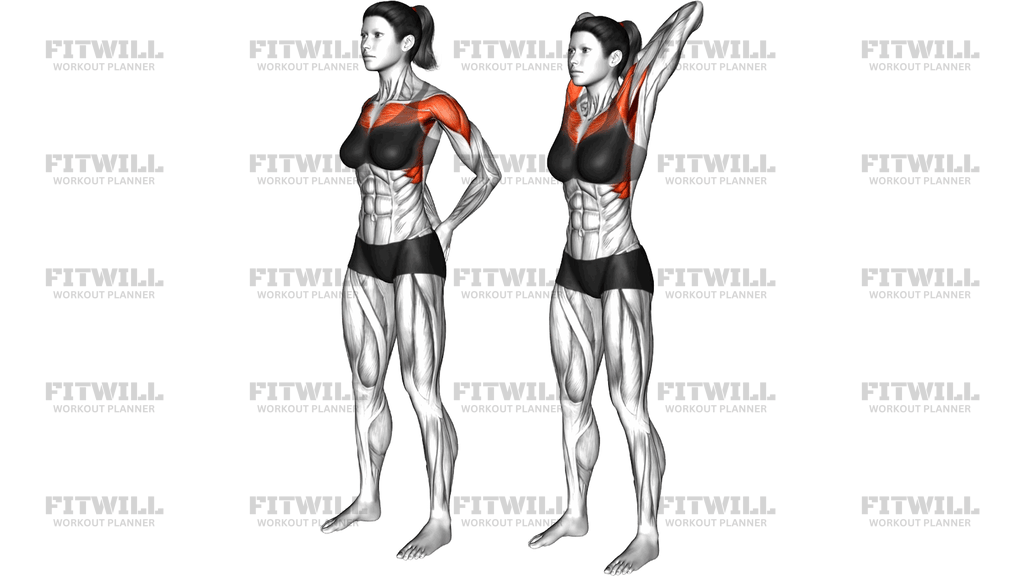
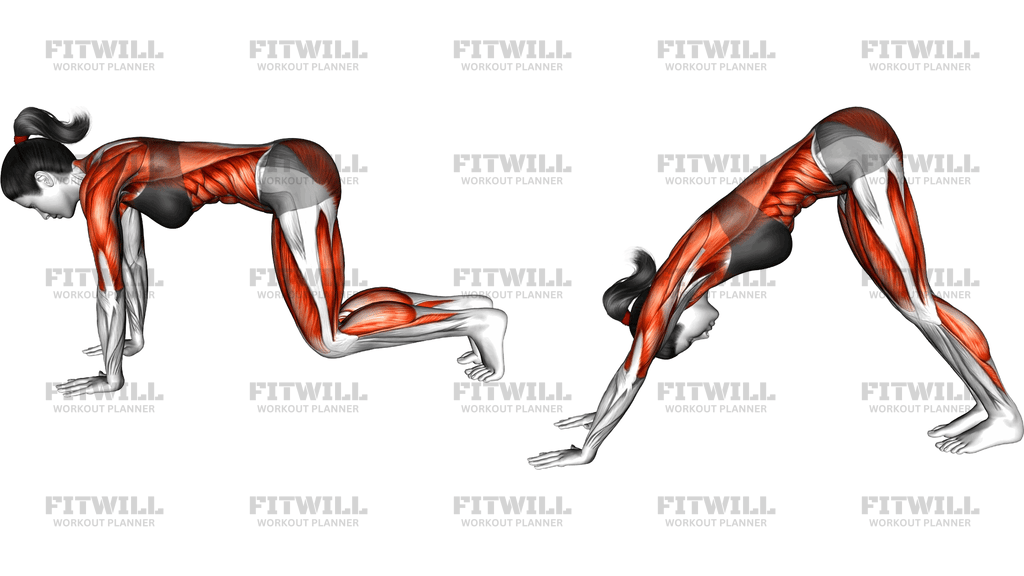
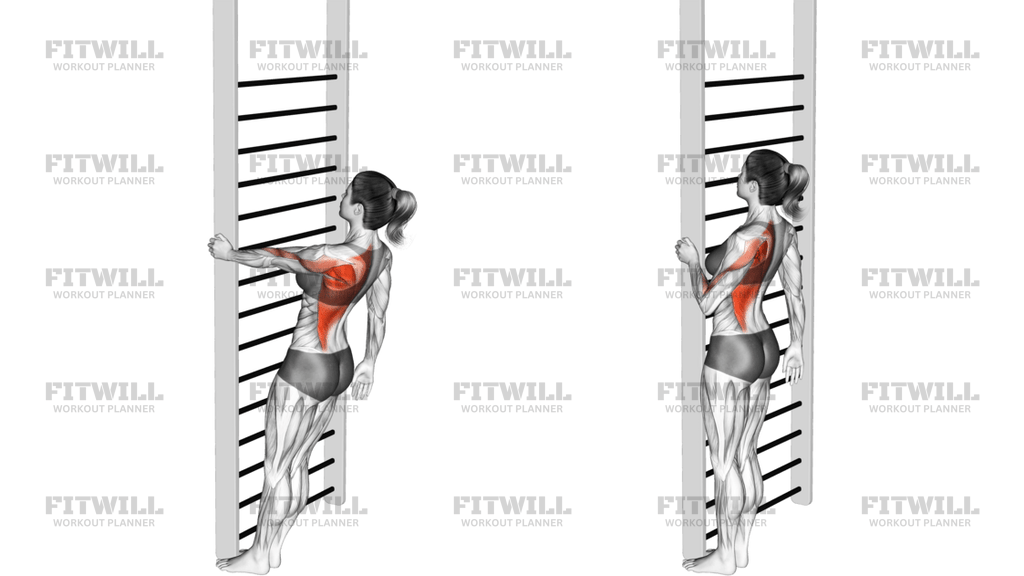
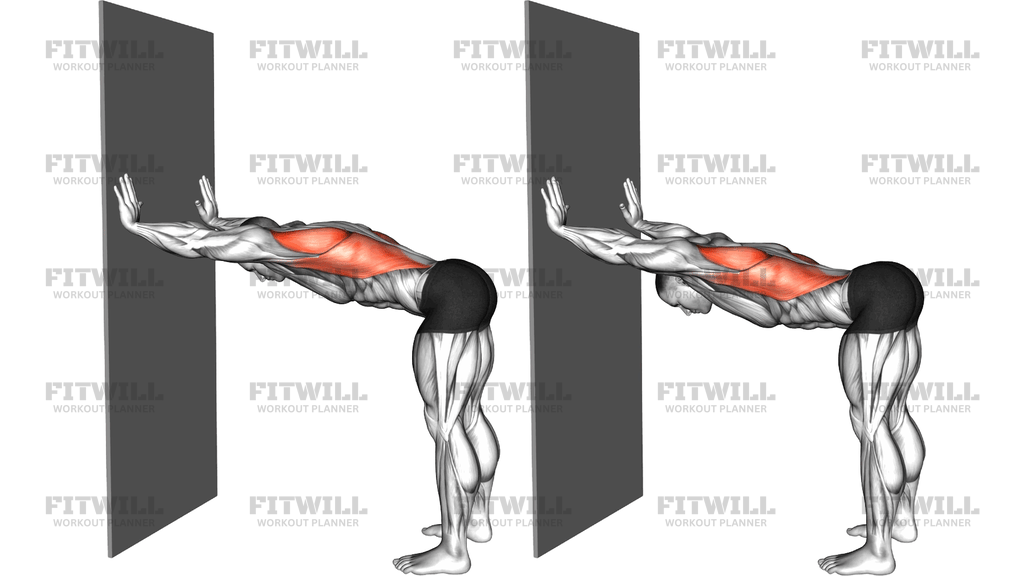
The Lat Stretch Against Wall is a straightforward body-weight stretch that targets the latissimus dorsi, the broad muscles running from your upper arms across your mid and upper back to your pelvis. You stand facing a wall, hinge forward at the hips, place your palms or fingertips on the wall with your arms extended overhead, and then sink your chest down while pushing your hips back. The second phase of the movement, where the torso drops lower between the arms, is what drives the stretch deep into the lats on both sides of the back.
This stretch is especially useful for anyone whose lats tend to run tight: people who lift regularly with pulling movements, swimmers, climbers, and anyone who spends long hours sitting with rounded shoulders. Tight lats limit overhead arm range of motion, which shows up as difficulty pressing overhead, shortened handstand or swim-stroke mechanics, and a tendency to arch the lower back to compensate when reaching up. Spending a few controlled breaths in this position before upper-body training or after a heavy pulling day can help restore that overhead reach.
The setup matters more than it looks. Your hand height on the wall, your distance from the wall, and how far you hinge all determine where the stretch lands. Hands placed at roughly hip-to-waist height with a strong forward hinge bias the stretch toward the lats; hands too high or a torso held too upright shifts the tension toward the shoulders and chest instead. Keeping the back relatively flat rather than letting the lower spine round also keeps the stretch where it belongs.
To execute it well, walk your feet back until your arms are fully extended and your body forms a long line from hands to hips. Brace the trunk lightly, keep the knees soft, and push the floor away with your feet as you press the chest toward the wall and let the hips travel backward. You should feel a broad pull along the sides of the back and into the armpits, not a pinch in the shoulders or strain in the lower back. Hold for twenty to thirty seconds, breathe slowly, and ease out rather than bouncing.
Because it requires nothing but a clear patch of wall, this stretch fits easily into warm-ups, cooldowns, and desk-break routines. It is gentle enough for beginners and adjustable enough for advanced trainees, since small changes in foot position and torso depth scale the intensity precisely. If you feel it more in the shoulders than the back, shorten the lever by lowering the hands slightly or reducing the hinge depth until your mobility improves.
[ Workout Log & Planner ]
Put your next workout in Fitwill
Keep your plan and training log ready when you are.


Instructions
- Stand facing a clear wall and place both palms flat against it at about hip to waist height, with your fingers spread and arms straight.
- Walk your feet backward, keeping the knees soft, until your arms are fully extended and your torso hinges forward so the hips stack roughly over the ankles.
- Let the head hang relaxed between the arms and keep the back long rather than rounded.
- Press your hands firmly into the wall and slowly push your hips farther back, allowing the chest to sink down between the arms.
- Continue lowering until you feel a broad stretch along the sides of the back and into the armpits.
- Hold the end position for 20 to 30 seconds, keeping the arms straight and the shoulders relaxed away from the ears.
- Breathe slowly and deeply, letting the ribcage settle slightly lower with each exhale to deepen the stretch gently.
- To release, walk the feet toward the wall and roll the torso up slowly, one vertebra at a time.
- Reset your stance and repeat for a second hold if needed, or shift the hips slightly to one side to bias the stretch into a single lat.
Tips & Tricks
- If you feel the stretch only in the shoulders, lower your hands a few inches on the wall and hinge deeper; that shift moves the tension into the lats.
- Avoid rounding the lower back to reach lower — a rounded spine shortens the lats and hides the stretch. Keep the back long and let the hips travel back instead.
- Do not lock the knees hard; a soft knee keeps the pelvis free to tilt and the stretch honest.
- Keep the neck relaxed and let the head hang between the arms. Lifting the head engages the upper traps and reduces the lat stretch.
- To emphasize one side, walk both hands toward the opposite side of the wall and push the hip on the stretching side slightly away.
- If your wrists complain from pressing flat palms, drop to your forearms against the wall or grip the edge of a doorway instead.
- Bend the knees more, not the spine, if you feel pinching at the front of the shoulders — that usually means the lever is too aggressive for your current mobility.
- Warm the area first with a few minutes of light pulling or arm circles; stretching cold, tight lats often feels sharper and less productive.
- Ease out of the hold slowly. Standing up too fast from a deep hinge can leave you lightheaded.
Frequently Asked Questions
Which muscles does the Lat Stretch Against Wall target?
The primary target is the latissimus dorsi, with supporting stretch through the teres major, lower trapezius, and the connective tissue around the armpit. The shoulders and chest stay relatively relaxed in this position.
How high should my hands be on the wall?
Hip to waist height works best for biasing the lats. Placing the hands much higher turns the position into more of a shoulder and chest stretch.
How far should I stand from the wall?
Far enough that your arms are fully extended and your hips sit behind your heels when you hinge. If you cannot straighten your arms, step back; if you feel no stretch when you lower your chest, step closer or deepen the hinge.
Is the Lat Stretch Against Wall suitable for beginners?
Yes. It is low-load and self-paced, so beginners can start with a shallow hinge and shorter holds, then deepen gradually as the lats lengthen.
Why do I feel this more in my shoulders than my lats?
Usually the hands are too high or the torso is not hinged forward enough. Lower the hand position, push the hips back farther, and keep the chest sinking between the arms to shift tension into the back.
How long should I hold the stretch?
Twenty to thirty seconds per hold works well, repeated two to three times. Before training, shorter holds of ten to fifteen seconds are enough to prime overhead range of motion.
Can I stretch one lat at a time in this position?
Yes. Walk both hands toward one side of the wall and let the hip on the opposite side drift back, which lengthens a single lat more directly.
What can I use if I do not have a clear wall space?
A sturdy countertop, the edge of a rack, or a doorway frame works the same way. Any stable surface at roughly hip height that lets you hinge and extend your arms overhead will do.
Should I feel discomfort in my lower back during the stretch?
No. If the lower back strains, the hinge is too deep or the spine is rounding. Bend the knees slightly, reduce the depth, and keep the back long so the stretch stays in the lats.
When is the best time to use this stretch?
It fits well in a warm-up before pressing or pulling sessions and as a cooldown after heavy back or shoulder work. Many people also use it as a desk-break stretch to counter rounded sitting posture.