Seated Isometric Hold Pull Up
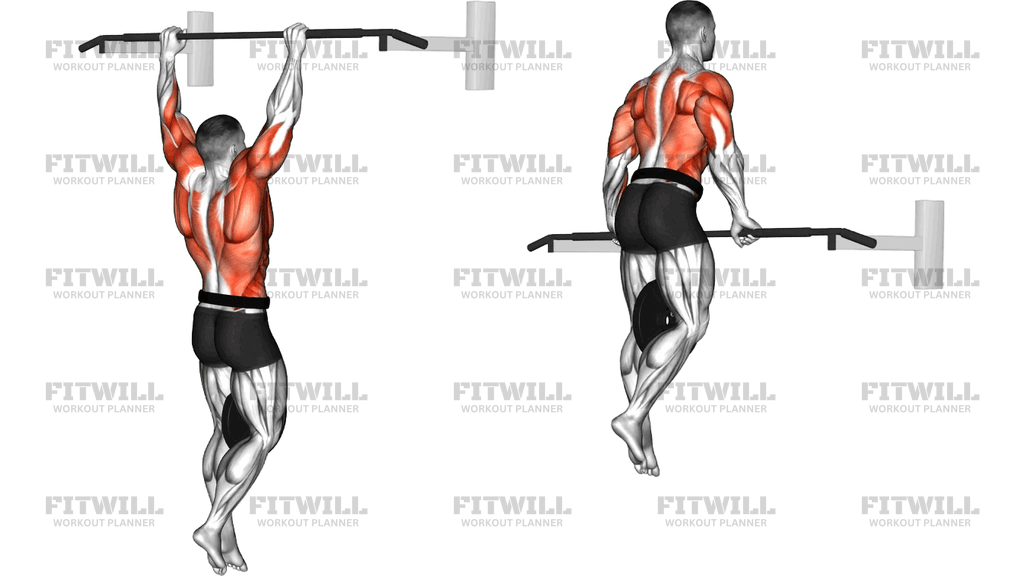
The Seated Isometric Hold Pull Up is a static strength exercise performed on a pull-up bar where you start from a seated position on the floor beneath the bar, pull your torso up until your upper chest meets the bar, and hold that top position without moving. Because your heels stay planted on the floor with your legs extended in front of you, a portion of your body weight is supported by the ground, making the hold more manageable than a full hanging isometric while still loading the lats, upper back, and arms heavily.
This movement is especially useful for people who cannot yet perform full pull-ups or hold a dead-hang isometric at the top. By removing part of your body weight through floor support, you can train the exact top-of-pull-up position — the hardest part of the lift for most beginners — and build the strength needed to progress toward unassisted reps. It also works well as a finishing hold for more advanced lifters who want extra time under tension for the lats and biceps without adding more dynamic volume.
The primary muscles worked are the lats, which drive the shoulder joints down and back as you pull toward the bar. The rhomboids and middle traps retract the shoulder blades, the biceps and forearms bend the elbows and maintain your grip, and the core works to keep your torso rigid and prevent your hips from sagging while your heels brace against the floor. The extended-leg position also places a noticeable demand on the hip flexors and thighs as they hold your lower body in place.
Setup matters more than people expect here. The distance between your hands and your heels determines how much load your upper body actually carries: the closer your heels are to a point directly under the bar, or the more you lean back through the hold, the harder the pull. Start with your body angled back and your weight partially on the floor, then gradually shift more load onto your arms as you get stronger. Grip the bar slightly wider than shoulder width with an overhand grip, keep your chest tall, and aim to bring the bar to your upper chest rather than just getting your chin over it.
Because this is an isometric hold, quality comes from position and duration, not movement. Hold the top position with your elbows pulled down and your shoulder blades depressed — not shrugged up to your ears — for anywhere from five to thirty seconds depending on your level. Breathe steadily throughout rather than holding your breath, and step your feet in toward the bar to lower yourself under control instead of dropping down.
A practical safety point: only perform this exercise on a bar that is rated for your body weight and securely mounted, and make sure the floor beneath you is non-slip. Since your heels carry part of your load, keep the knees soft rather than locked and stay in control on the way down so your shoulders never take a sudden jerk at the bottom.
[ Workout Log & Planner ]
Put your next workout in Fitwill
Keep your plan and training log ready when you are.


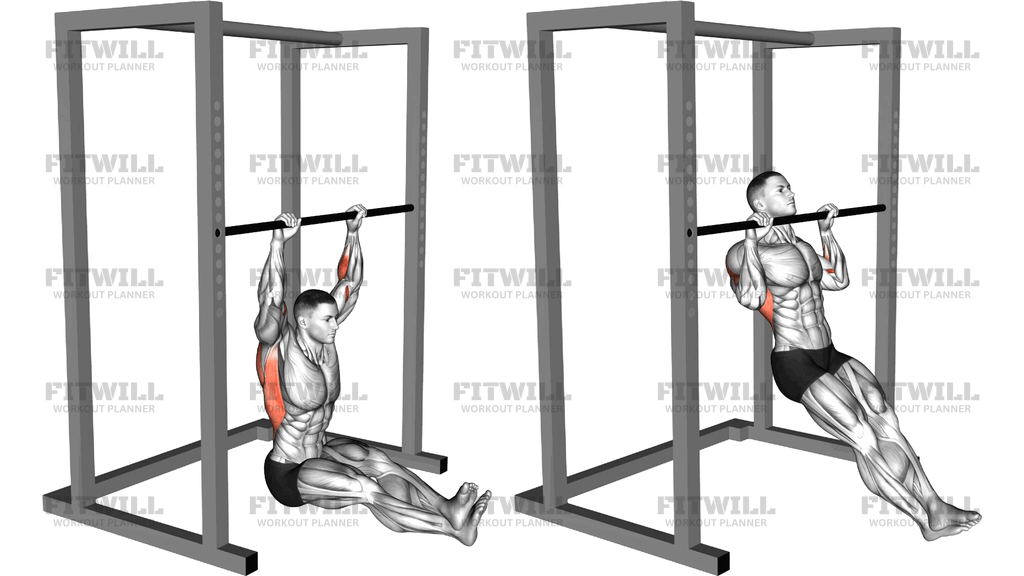
Instructions
- Set a pull-up bar at standard height and sit on the floor directly beneath it with your legs extended in front of you and your heels resting on the floor.
- Reach up and grip the bar with an overhand grip slightly wider than shoulder width, thumbs wrapped around the bar.
- Straighten your arms fully so you hang from the bar with your weight shared between your hands and your heels, torso leaning back slightly.
- Brace your core and squeeze your glutes and thighs to keep your legs extended and your body in a straight, rigid line from head to heels.
- Pull your elbows down toward your ribs and drive your shoulder blades down and back as you draw your upper chest up to the bar.
- Hold the top position — upper chest at or near the bar, elbows bent and pulled down — without letting your shoulders shrug upward.
- Keep breathing in a slow, steady rhythm through the hold; do not hold your breath.
- After your hold time ends, walk your feet in toward the bar and lower yourself under control until your arms are straight again.
- Rest briefly, reset your grip and leg position, then repeat for the desired number of holds.
Tips & Tricks
- If your shoulders creep up toward your ears during the hold, you are losing scapular depression — think of pushing the bar away with straight arms at setup, then pulling the elbows down as you rise.
- Adjust difficulty with heel placement: sliding your feet closer to a point under the bar or leaning your torso further back shifts more weight onto your arms, while sitting more upright makes the hold easier.
- A common mistake is pulling with the arms only and ending with the bar at chin height with rounded shoulders — aim to bring the bar to your upper chest and keep the chest proud.
- Keep a slight bend in the knees; locking the knees with legs extended makes the hold uncomfortable on the back of the legs and reduces your control.
- If your grip fails before your back does, use a hook grip or chalk your hands, since grip is often the limiting factor in long isometric holds.
- Avoid dropping from the top position — walking your feet in and lowering with control protects your elbows and shoulders from a sudden stretch under load.
- Start with shorter holds of five to eight seconds at high quality rather than grinding out a long hold with a sagging torso and shrugged shoulders.
- Keep your neck neutral by looking slightly up at the bar rather than craning your chin over it, especially as fatigue builds.
- Because isometrics provide little feedback on progress, track your hold times and gradually increase duration or shift weight onto your arms week to week.
Frequently Asked Questions
What muscles does the Seated Isometric Hold Pull Up work?
The lats are the primary movers, supported by the rhomboids and middle traps in the upper back, the biceps and forearms for pulling and grip, and the core for keeping your torso rigid while your heels brace on the floor.
Is the Seated Isometric Hold Pull Up good for beginners who cannot do a pull-up yet?
Yes, it is one of the best introductory pull-up drills. Because your heels on the floor support part of your body weight, you can hold the top position — the hardest part of a pull-up — and build strength there before attempting full reps.
Why do my heels stay on the floor during the Seated Isometric Hold Pull Up?
The extended legs with heels planted are what make this a seated variation: the floor takes part of your load, reducing the demand on your upper body. Moving your feet closer to under the bar shifts more weight onto your arms as you progress.
How long should I hold the top position?
Start with five to eight second holds for three to five sets, and progress toward twenty to thirty seconds as your strength improves. A shorter, high-quality hold with the chest at the bar beats a long hold with sagging hips.
What is the most common mistake in the Seated Isometric Hold Pull Up?
Shrugging the shoulders up toward the ears and only partially bending the elbows, which turns the hold into a hanging arm exercise. Keep the shoulder blades pulled down and back and bring the bar toward your upper chest.
How is this different from a regular isometric pull-up hold at the top?
In a regular top hold you hang with your full body weight off the floor. In the seated version your heels support part of your weight, so the hold is less demanding and easier to scale by adjusting your foot position.
Can I use the Seated Isometric Hold Pull Up as a substitute for negatives?
Yes, they complement each other well. Negatives train the lowering portion, while this hold trains the top position statically. Many people use both in the same phase to build toward their first unassisted pull-up.
Is it safe if my grip starts to slip during a hold?
End the set immediately rather than fighting through it. Since part of your weight is already on the floor the risk is lower than a full hang, but a slipping grip can still drop you onto your heels, so chalk your hands and stop before failure.
Should my legs be straight or bent during the Seated Isometric Hold Pull Up?
Keep your legs extended in front of you with a slight, soft bend in the knees. Fully locked knees create tension in the back of the legs and make it harder to control how much load your upper body carries.