Cobra To Side Shoulder Stretch
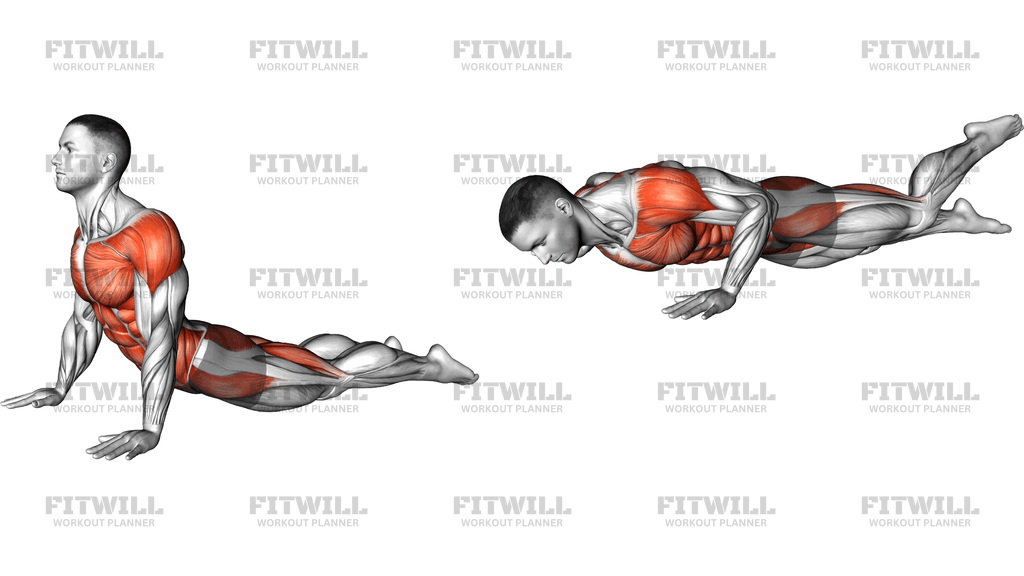
Cobra To Side Shoulder Stretch is a floor-based mobility drill that flows from a classic cobra position into a rolling shoulder opener. You start lying face down with your palms planted under your shoulders, press your chest up into a gentle backbend, and then shift your weight to one side so one shoulder sinks toward the mat while the opposite hand keeps you supported. The result is a stretch that reaches the front of the shoulder and chest from an angle a standard doorway stretch simply cannot replicate.
This movement is especially useful for anyone who spends long hours sitting, typing, or driving. Those habits roll the shoulders forward and shorten the tissues across the front of the chest and shoulder joint. Because the cobra phase also places the spine into extension and the hip fronts into a lengthened position, the drill doubles as a counter-pose for desk workers, cyclists, and lifters who press heavily all week.
The primary target is the front of the shoulder, with the chest opening alongside it. The cobra position additionally loads the abdominals eccentrically as they lengthen over the backbend, wakes up the muscles along the spine, and stretches the hip flexors as the legs stay long behind you. The rolling transition also demands some control through the trunk, so you get light stabilizing work rather than a passive hang.
Setup matters here because everything happens close to the floor. Hand placement under the shoulders determines how far you can press up in the cobra, and keeping the pressing hand active is what lets you control how deep the side roll goes. Rushing the transition or letting the supporting arm collapse is the fastest way to lose the stretch and dump stress into the lower back.
To execute it well, move slowly and let your breath set the pace. Press into the cobra with the elbows softly bent rather than locked, keep the hips heavy on the mat, and only roll as far to the side as you can while staying relaxed. The stretch should feel like a broad opening across the front of the shoulder, never a sharp pinch at the joint. Spend time on each side, and if one shoulder feels tighter, give it an extra few breaths instead of forcing extra range.
This drill fits naturally at the end of a pressing workout, as part of a morning mobility routine, or as a warm-up before overhead lifting. It needs nothing more than a mat and a few square feet of floor, which makes it easy to use at home or in a crowded gym corner.
[ Workout Log & Planner ]
Put your next workout in Fitwill
Keep your plan and training log ready when you are.


Instructions
- Lie face down on an exercise mat with your legs extended straight behind you and the tops of your feet resting on the floor.
- Place your palms flat on the mat directly under your shoulders, elbows tucked close to your ribs, and let your forehead hover just above the floor.
- Press gently through your palms to lift your chest into a cobra position, keeping your hips and the fronts of your thighs heavy on the mat.
- Inhale as you rise, and hold the cobra for two or three easy breaths, letting the front of your shoulders and chest open.
- From the top of the cobra, shift your weight toward your right side, bending the right elbow and lowering the right shoulder toward the mat.
- Keep your left hand pressed into the floor to control the depth of the roll, and let the front of the right shoulder sink into the stretch.
- Hold the side position for five to eight slow breaths, staying relaxed and letting gravity deepen the opening gradually.
- Press back up to center through the supporting hand, return to the cobra, and pause briefly before rolling to the left side.
- After finishing both sides, lower your chest back down, tuck your toes or push back to a seated position, and shake out the shoulders before your next activity.
Tips & Tricks
- The most common mistake is locking the elbows hard at the top of the cobra, which shifts the stress into the joint instead of the chest and shoulder tissues. Keep a slight bend so the muscles around the shoulder do some of the work.
- If your lower back pinches in the cobra phase, spread your feet a little wider and squeeze the glutes lightly. This stabilizes the pelvis so the extension comes more from the upper back.
- Do not let the rolling shoulder slam down. Lower it under the control of the opposite pressing hand, otherwise the stretch turns into a drop.
- Keep the head in line with the spine rather than craning the neck up to look forward. Looking slightly down at the mat keeps tension out of the neck.
- If the front of the shoulder feels pinched rather than stretched, back off the roll by an inch or two. The stretch should feel broad and spread out, not sharp at a single point.
- Breathe out slowly as you sink into the side position. Holding your breath tightens the chest muscles and fights the very opening you are trying to create.
- Keep the hips square to the floor as much as possible during the roll. Letting the opposite hip fly up reduces the chest and shoulder angle and turns it into a side-body stretch instead.
- If wrist pressure bothers you in the cobra, make fists or lower onto your forearms for the backbend phase, then press up with one hand only for the side roll.
Frequently Asked Questions
Which muscles does the Cobra To Side Shoulder Stretch target?
The main stretch hits the front of the shoulder and the chest, while the cobra phase lengthens the abdominals and hip flexors over the backbend. The trunk also works lightly to control the roll from side to side.
Is the Cobra To Side Shoulder Stretch suitable for beginners?
Yes, as long as you keep the cobra shallow and roll only a small distance to the side at first. Beginners should prioritize staying relaxed over chasing depth, since range improves naturally with consistent practice.
Why does my lower back tighten during the cobra position?
The lumbar spine often takes over when the mid-back stays stiff. Widen your stance slightly, engage the glutes gently, and focus on lifting the chest rather than pushing the belly toward the floor.
How long should I hold each side of the stretch?
Five to eight slow breaths per side works well for most people. If one shoulder is noticeably tighter, add a few extra breaths on that side rather than pushing into a deeper roll.
What is the biggest form mistake in the side-rolling phase?
Dropping the shoulder down too quickly without controlling it with the opposite hand. The pressing hand is your brake, so keep it firmly planted and release the roll gradually.
Can I do this stretch before a workout or only after?
It works well as a warm-up before pressing or overhead work, and it is equally useful as a cool-down. Keep the holds shorter and gentler before training and longer and deeper afterward.
What can I substitute if lying on the floor is uncomfortable?
A standing wall or doorway chest and shoulder stretch covers similar tissue, though it misses the spinal extension of the cobra. Pairing the standing version with a gentle backbend over a rolled towel gets you close to the same effect.
Should I feel this in my neck?
No, neck tension usually means the head is lifting or jutting forward. Let the head follow the spine and keep your gaze down toward the mat throughout both phases of the movement.
Is it normal for one side to feel tighter than the other?
Very common, especially if you favor one arm in sport or daily habits. Train both sides equally, and simply give the tighter side more time under a relaxed stretch rather than forcing extra range.