Assisted Lying Hip Stretch In Supine Position
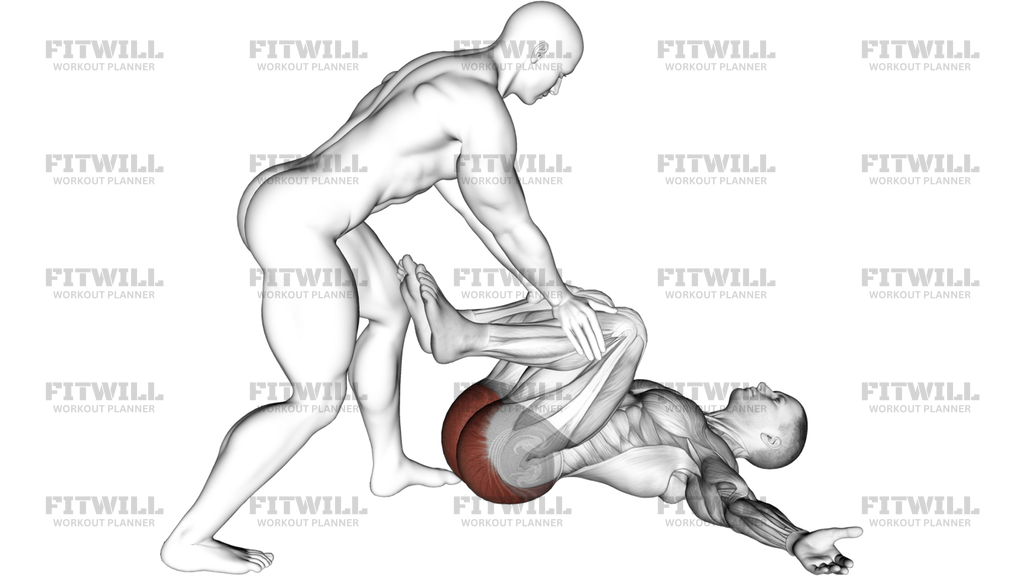
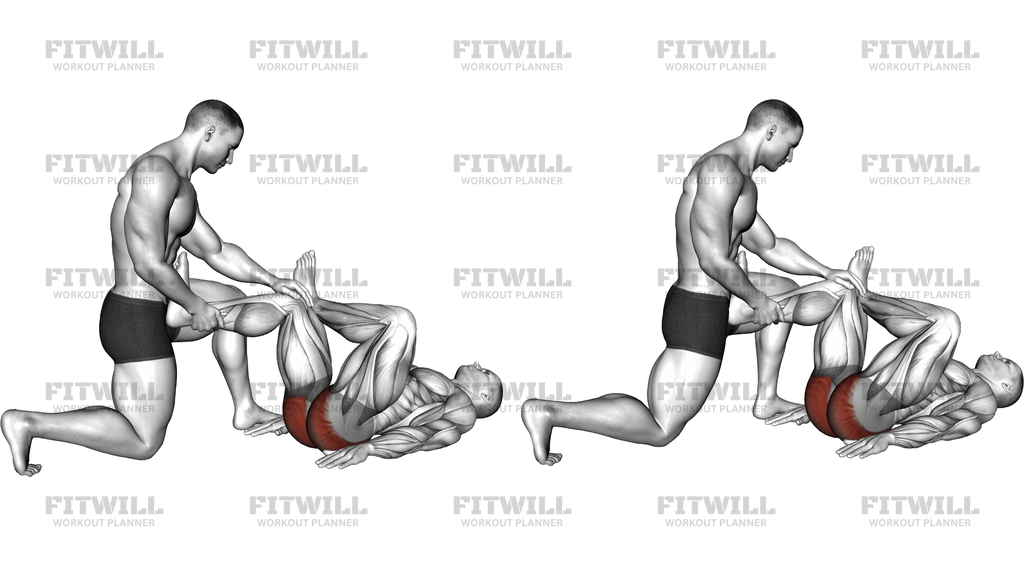
Assisted Lying Hip Stretch In Supine Position is a partner-assisted mobility drill for opening the hips and glutes while the body stays supported on an exercise mat. The person on the floor lies on the back and allows a helper to guide the working leg into a deeper stretch, which makes it easier to relax into the range without forcing the joint. It is a useful option when the hips feel stiff from sitting, running, squatting, or lower-body training and you want a controlled way to ease tension in the back and side of the hip.
The main benefit comes from letting the pelvis stay grounded while the leg is gently moved through hip flexion and rotation. That position can challenge the glutes, deep hip rotators, and the tissues around the outer hip, while the core helps keep the trunk from twisting. Because the stretch is assisted, the goal is not to chase the biggest possible range. The goal is to find a position that feels like a strong but manageable stretch and then breathe through it.
Setup matters here. Lie flat on your back with the shoulders relaxed, the neck long, and the lower back settled into the mat. Let the partner support the working leg close to the knee and lower leg so the pressure is spread out instead of concentrated on the joint. From there, the helper can guide the thigh toward the torso and slightly across the body if needed, but only as far as the pelvis stays quiet and the stretch remains smooth.
During the hold, keep the movement calm and controlled. Exhale as the leg settles deeper, then keep breathing slowly so the hip can relax instead of guarding against the stretch. If the pelvis starts to roll, the lower back arches, or the knee feels pinched, back the range off a little and let the stretch live in the glute and outer hip rather than the groin or spine. Smooth assistance is better than a hard pull or bouncing at end range.
This stretch works well as part of a warmup, cooldown, or mobility session when the hips need more freedom before or after training. It can also be helpful for beginners because the partner helps control the range and reduces the guesswork. Keep the sensation at a mild-to-moderate stretch, never sharp pain, and switch sides so both hips get equal attention. When performed patiently, Assisted Lying Hip Stretch In Supine Position is a simple way to restore hip comfort without adding load or fatigue.
[ Workout Log & Planner ]
Put your next workout in Fitwill
Keep your plan and training log ready when you are.


Instructions
- Lie on your back on an exercise mat with your shoulders relaxed and your neck long.
- Let a partner support the working leg near the knee and lower leg so the hip can be guided without a sudden pull.
- Keep the non-working leg relaxed and the lower back settled into the mat before the stretch starts.
- Exhale as the helper draws the working thigh toward your torso and, if needed, slightly across the body.
- Stop the movement when you feel a clear stretch in the glute, outer hip, or deep hip rotators without pinching.
- Keep both hips heavy and avoid letting the pelvis roll or the lower back arch as the stretch deepens.
- Breathe slowly for the full hold and let the partner maintain a steady, even pressure.
- Guide the leg back to the starting position slowly before changing sides.
Tips & Tricks
- If the lower back lifts off the mat, reduce the pull and keep the stretch focused in the hip instead of the spine.
- A good rep feels strongest in the glute and outer hip, not as a pinch in the groin or front of the hip.
- Have the partner increase pressure gradually; a smooth hold works better than a quick push into end range.
- Keep the head and shoulders relaxed so tension does not travel up into the neck.
- Let the exhale lengthen the stretch, but do not force the knee deeper once the pelvis starts to rotate.
- If the knee feels stressed, have the helper hold closer to the thigh and reduce leverage on the lower leg.
- Use a shorter hold and a smaller range after heavy lower-body lifting, especially when the hips are already irritated.
- Switch sides only after the first leg feels calm and settled, not while the hip is still guarding.
Frequently Asked Questions
What muscle does Assisted Lying Hip Stretch In Supine Position target most?
It mainly targets the glutes and the muscles around the back and side of the hip, especially when the partner guides the thigh toward the torso.
Can beginners perform this exercise?
Yes. The partner can keep the stretch gentle and help you stop before the pelvis twists or the lower back arches.
Where should I feel Assisted Lying Hip Stretch In Supine Position?
You should feel a stretch in the glute, outer hip, or deep hip rotators. If you feel it mostly in the low back or groin, reduce the range and adjust the leg angle.
How much pressure should my partner use on the leg?
Only enough to create a steady stretch. The pressure should build gradually and stop before the hip starts to pinch or the pelvis lifts.
Should my lower back stay flat during the stretch?
Yes. A flat, quiet lower back keeps the stretch in the hip and glute instead of turning it into a lumbar twist.
Can I do Assisted Lying Hip Stretch In Supine Position without a partner?
Yes, but the partner version gives more control. A solo figure-four or knee-to-chest variation can work if you want the same hip-opening pattern on your own.
Why does the knee angle matter in this stretch?
Small changes in knee angle change where the stretch lands. A tighter bend usually shifts more work into the glute, while a straighter leg can make the hamstrings and back of the hip feel more involved.
When is the best time to use Assisted Lying Hip Stretch In Supine Position?
It works well after lifting, running, or long periods of sitting, when the hips need to relax rather than power through another hard effort.