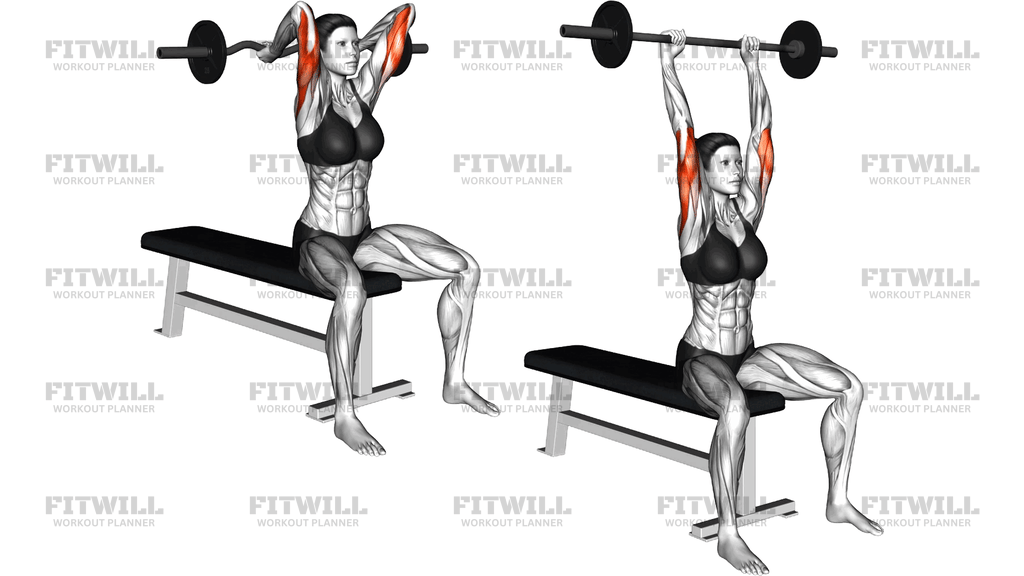
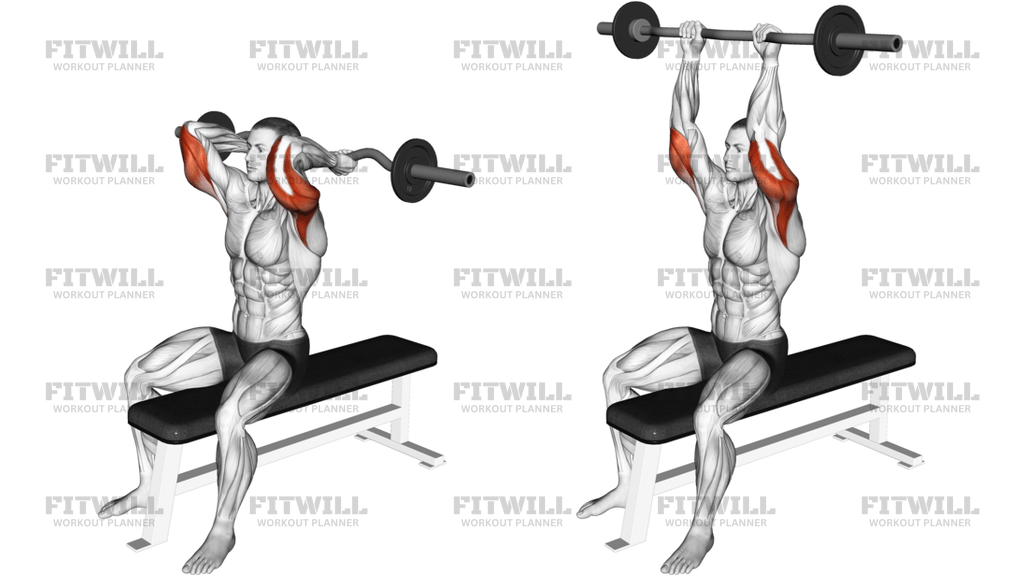
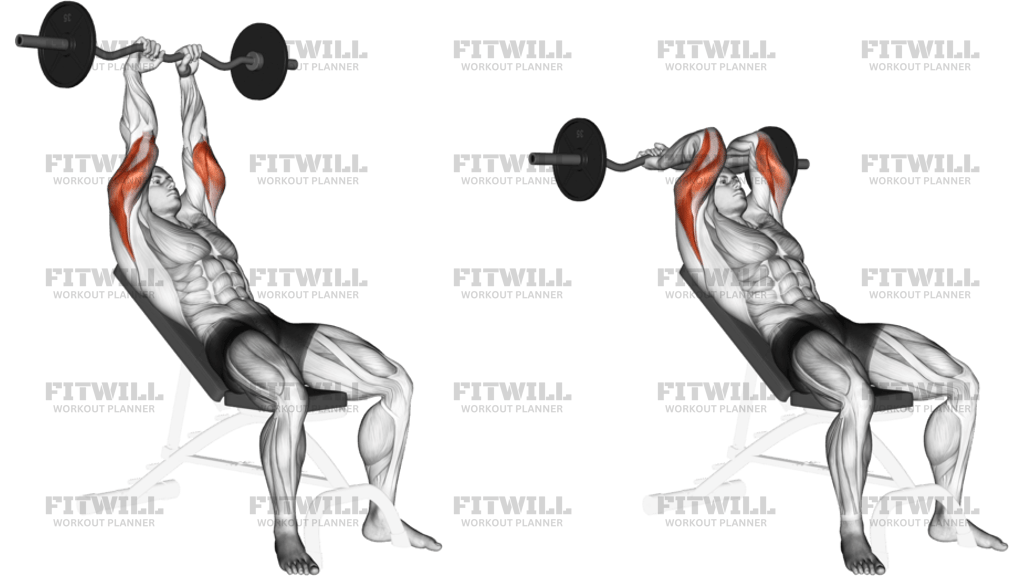
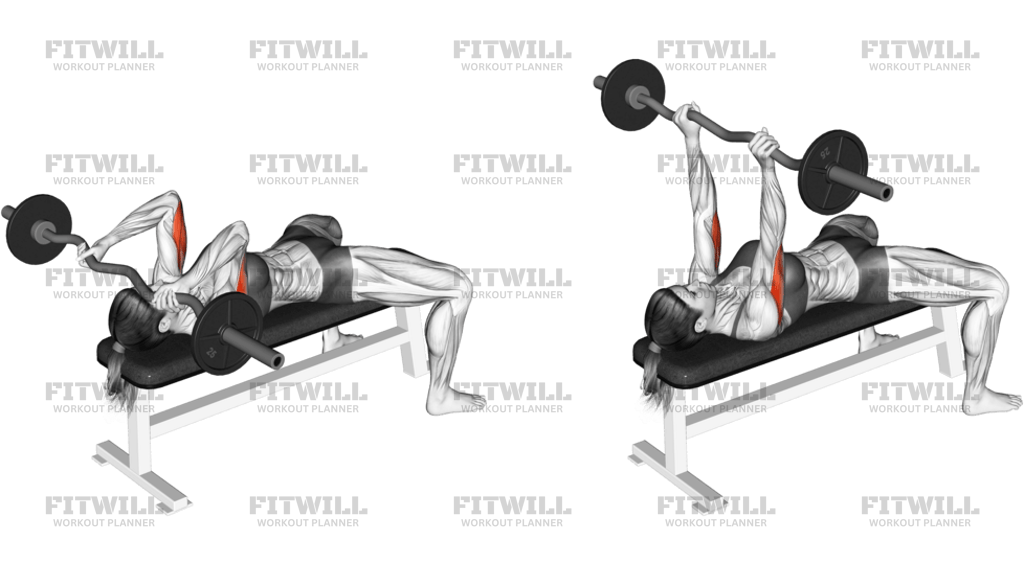
Ez Bar Skull Crusher (Version 2)
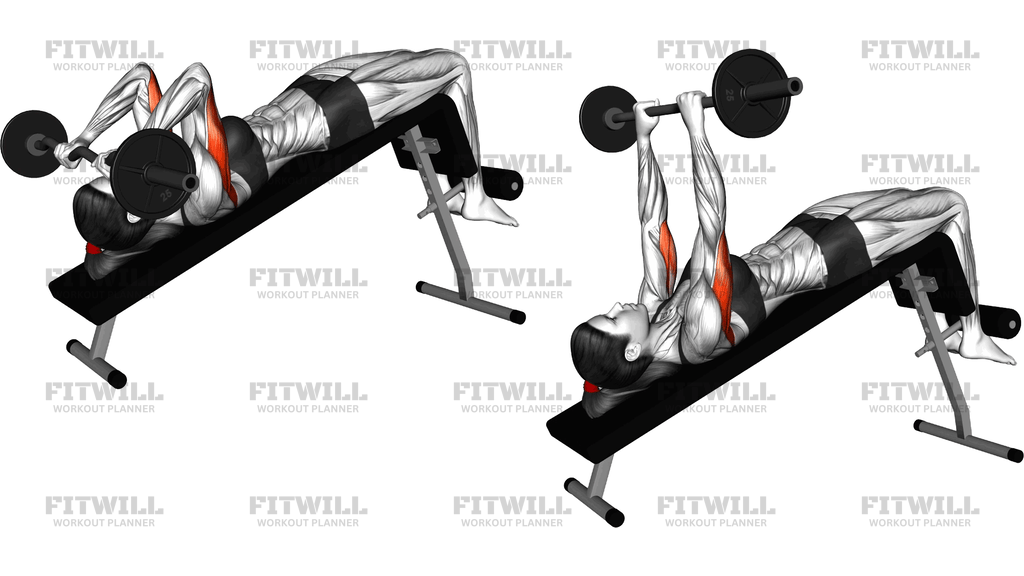
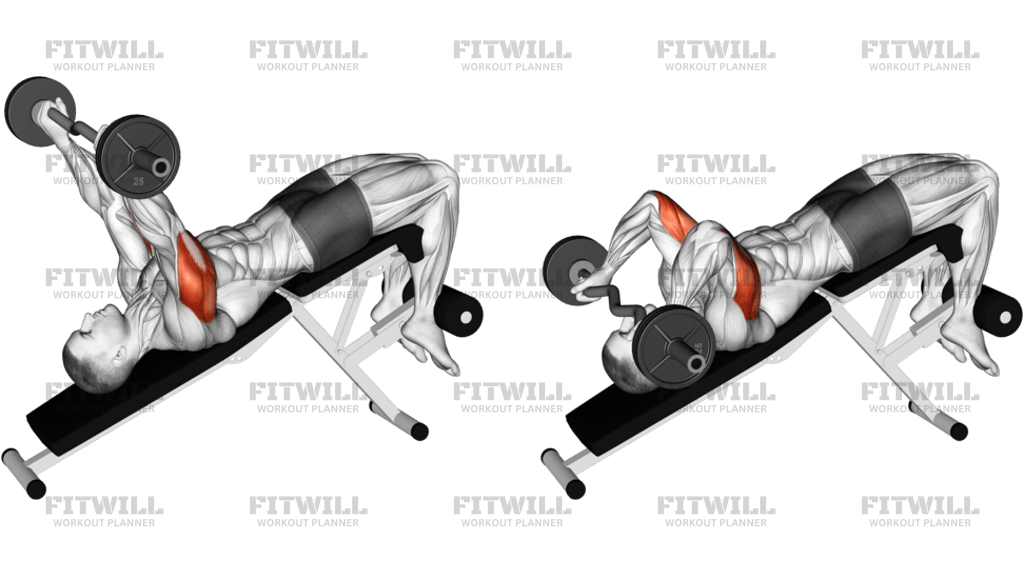
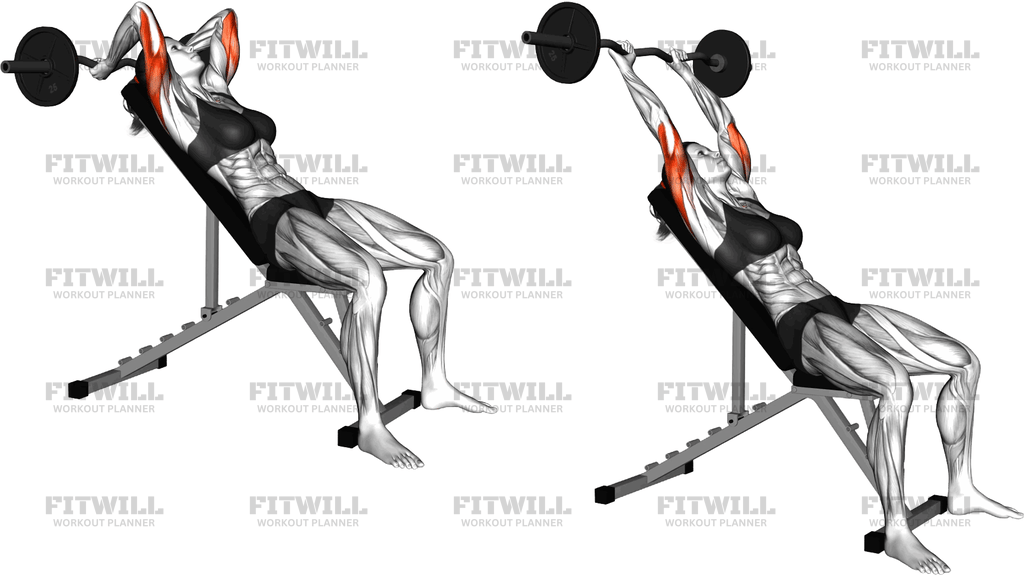
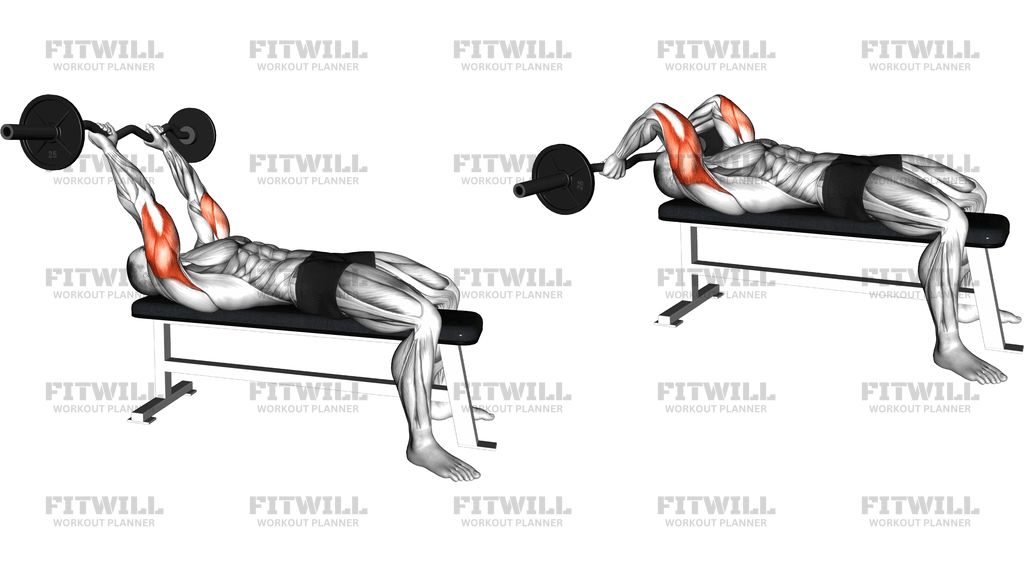
The Ez Bar Skull Crusher (Version 2) is a lying triceps extension performed on a flat bench with an EZ bar, lowering the weight behind the head rather than toward the forehead. Starting with the bar held over the chest with arms extended, you bend only at the elbows and let the bar travel back past the crown of your head before extending back up to lockout. The angled grip of the EZ bar is easier on the wrists and elbows than a straight bar, which is why most lifters prefer it for this movement.
This version, where the bar descends behind the head, places a slightly longer stretch on the triceps, especially the long head, because the shoulder is positioned in flexion as the elbow bends. If your goal is fuller upper-arm development, this variation generally gives you more stretch-driven tension than the forehead version, though both build the triceps effectively.
The setup matters more than people expect. Lying flat with your head supported, feet planted on the floor, and upper arms angled slightly back toward your head creates a stable base and a consistent path. If your elbows drift or flare outward, the movement turns into a partial press and the triceps stop doing the bulk of the work. Keeping the upper arms relatively fixed while only the forearms move is the whole point of the exercise.
This exercise fits well on arm days, as a secondary movement after close-grip pressing, or as a hypertrophy tool for lifters whose pressing strength is limited by triceps size or endurance. It suits intermediates best, though beginners can learn it with an empty bar or very light weight to master the arc before loading it.
Because the bar travels behind your head with plates attached, control is non-negotiable. Never lower the bar quickly or bounce it at the bottom, and always keep a firm overhand grip on the inner bends of the EZ bar. If you feel sharp elbow discomfort rather than normal muscle effort, shorten the range or switch to a lighter load and rebuild the pattern.
[ Workout Log & Planner ]
Put your next workout in Fitwill
Keep your plan and training log ready when you are.


Instructions
- Load an EZ bar with an appropriate weight and set it across the inner angled grips so both hands hold the bar evenly.
- Sit on a flat bench with the bar resting on your thighs, then lie back and press the bar up over your chest with an overhand grip.
- Position your head fully on the bench, plant your feet flat on the floor, and brace your core to keep your ribcage down.
- Angle your upper arms slightly back toward your head so they are roughly perpendicular to the floor rather than vertical.
- Inhale, then bend only at the elbows and lower the bar in a controlled arc behind the top of your head until you feel a solid triceps stretch.
- Pause briefly at the bottom without letting the bar drop or rest, keeping your elbows pointed at the ceiling and roughly shoulder-width apart.
- Exhale and extend your elbows to press the bar back up until your arms are straight over your chest, squeezing the triceps at the top.
- Complete your repetitions, then lower the bar back to your thighs and sit up carefully, or rack the bar if you are working inside a rack with safeties.
Tips & Tricks
- Keep your elbows stacked over your shoulders with only a slight backward lean; if they drift toward your knees, the triceps lose tension at the bottom.
- Do not chase depth at the expense of elbow comfort. Lowering the bar until you feel a stretch behind the head is enough; forcing it deeper usually just loads the elbow joint.
- If your wrists bend backward under the bar, narrow your grip one notch so your forearms stay vertical over the bar path.
- Keep your lower back in contact with the bench. Arching hard to move more weight shifts tension away from the triceps and strains the spine.
- Use a full lockout at the top without pushing the bar back toward your feet, which turns the last inch into a shoulder-driven press.
- When the weight gets heavy, have a partner hand the bar to you at the start. Getting into position from the floor with a loaded EZ bar behind your head is risky.
- Slow the lowering phase to about two to three seconds. Most people rush the eccentric and lose the stretched-position tension that makes this variation worthwhile.
- If your elbows protest on flat bench skull crushers, try a slight incline on the bench or reduce the range by a few inches before abandoning the exercise.
Frequently Asked Questions
Which muscles does the Ez Bar Skull Crusher (Version 2) work?
The triceps are the primary muscle, with particular stretch on the long head because the shoulder is flexed as the elbow bends. The front shoulders assist lightly to stabilize the arm position.
How is Version 2 different from a regular skull crusher?
In this version the bar is lowered behind the head rather than toward the forehead, which lengthens the triceps further and is often more comfortable for the elbows.
Is the EZ bar grip better than a straight bar for skull crushers?
For most lifters, yes. The angled grips let your wrists sit in a more natural position, which reduces stress on the wrists and elbows during the extension.
Can beginners do the Ez Bar Skull Crusher (Version 2)?
Beginners can learn it with an empty bar to practice the arc, but many start with the forehead version or dumbbells first since the bar passes behind the head and requires confidence and control.
Where exactly should my elbows point during this exercise?
Keep them pointed at the ceiling and roughly shoulder-width apart, tilted slightly back toward your head. Flared or drifting elbows turn the movement into a partial press.
Why do my shoulders lift off the bench at the bottom?
That usually means the weight is too heavy or you are lowering the bar too deep. Reduce the load or shorten the range so your shoulder blades stay flat against the bench.
What can I use instead of an EZ bar for this movement?
Dumbbells work well and let each arm move independently, and a cable with a rope attachment provides similar elbow extension with more constant tension and a safer bailout.
How heavy should I go on the Ez Bar Skull Crusher (Version 2)?
Pick a weight you can lower under control for your target reps without your elbows flaring or your back arching. This is an isolation exercise, so moderate loads with clean technique beat max-effort attempts.
Is it safe to do this exercise without a spotter?
It can be, as long as you use a modest weight, keep a tight grip, and never fail a rep with the bar behind your head. Setting up inside a power rack with the bar handed to you at the top is the safest solo option.