Ez Barbell Seated Triceps Extension
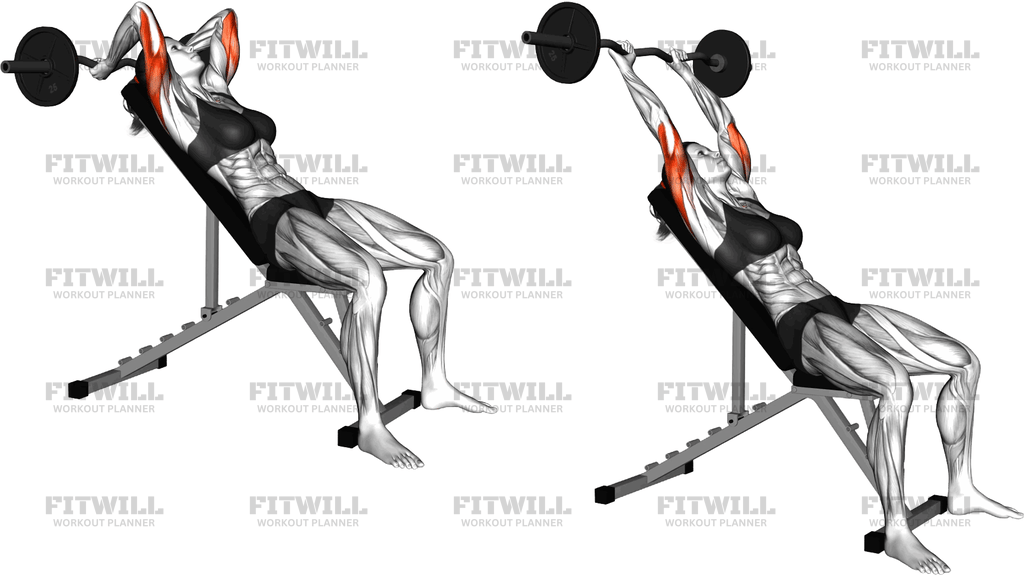
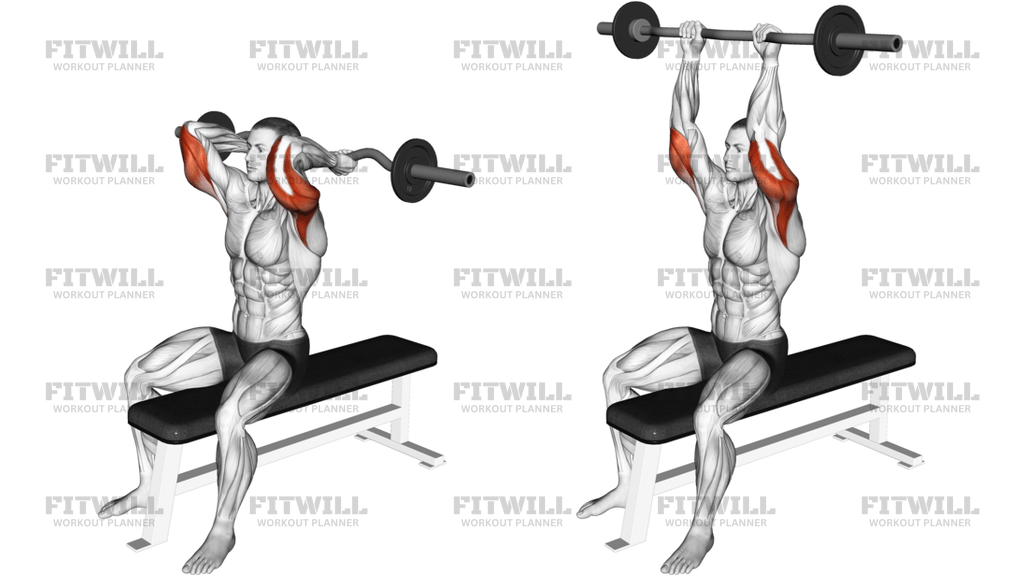
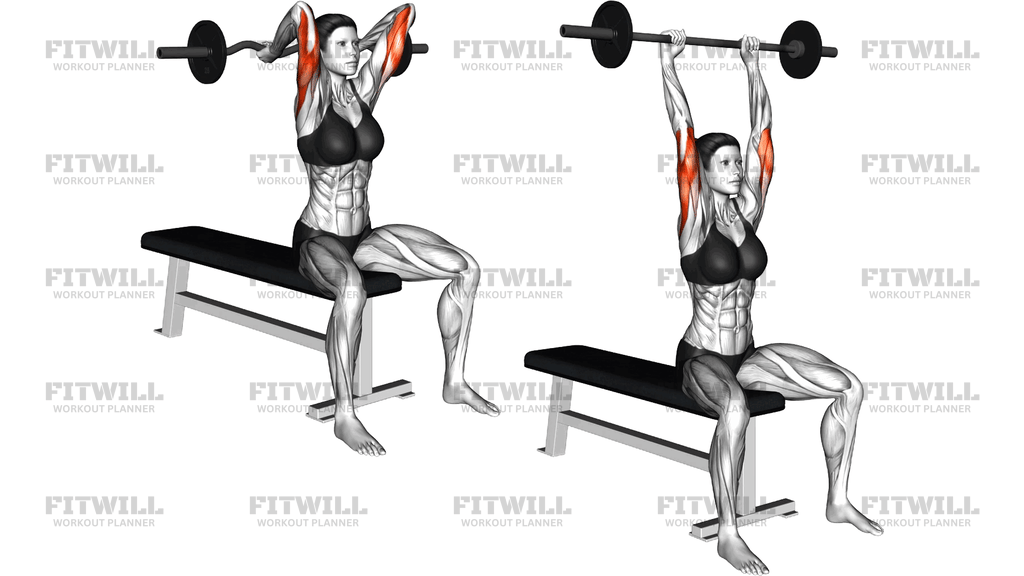
The Ez Barbell Seated Triceps Extension is an overhead extension performed sitting on a flat bench. You hold an EZ bar with both hands, press it to full extension above your head, then bend your elbows to lower the weight behind your head before extending back up. The seated position removes the balance demands of a standing version, so your energy goes into the triceps rather than into stabilizing your whole body.
This movement targets the triceps brachii, with particular emphasis on the long head. Because your arms are overhead, the long head is stretched at the bottom of each rep, which is a position many pressing exercises never reach. The EZ bar's angled grip puts your wrists in a more neutral path than a straight bar, which is why many lifters with cranky elbows or wrists prefer it for overhead extension work.
Setup matters here because the overhead position exaggerates any looseness in your torso. Sit tall on the bench with feet planted, keep your ribs stacked over your hips, and resist the urge to arch your lower back as the bar travels behind you. Your upper arms should stay close to your ears and roughly vertical throughout; when they drift forward or flare outward, the elbows start doing the moving and the triceps lose tension.
To execute it well, think of your elbows as hinges pinned in place. Lower the bar in a slow arc behind your head until you feel a solid stretch along the back of the arms, then drive the bar back up by squeezing the triceps until your elbows are nearly straight. Don't lock out aggressively at the top, and don't let the bar drift forward over your face.
This exercise fits well as a secondary triceps movement after presses or dips, typically for moderate weights in the 8 to 15 rep range. It's especially useful for lifters who feel presses mostly in their chest or front delts and want direct long-head work, and for anyone whose elbows dislike steep-angle straight-bar extensions.
The main safety point is controlling the descent. The bar passes close to your head and neck on the way down, so use a weight you can lower deliberately for every rep. If your shoulders or elbows complain about the deep overhead stretch, shorten the range slightly rather than forcing the bar lower.
[ Workout Log & Planner ]
Put your next workout in Fitwill
Keep your plan and training log ready when you are.


Instructions
- Place a flat bench in an open area and sit on it with your feet flat on the floor about hip-width apart, knees bent to roughly 90 degrees.
- Grip the EZ bar on the angled inner section with an overhand grip, hands about shoulder-width apart, and press the bar straight up overhead to full elbow extension.
- Bring your upper arms in line with your ears so they point vertically toward the ceiling, and squeeze your core to keep your ribs from flaring.
- Keep your chest up and lower back in a neutral position; brace your torso before starting each descent.
- Bend only at the elbows and lower the bar in a slow arc behind your head until you feel a stretch in your triceps, keeping your upper arms still and close to your head.
- Pause briefly at the bottom without letting your elbows drift forward or outward.
- Extend your elbows to press the bar back overhead until your arms are nearly straight, squeezing your triceps at the top without slamming into a hard lockout.
- Exhale as you press the bar up and inhale slowly as you lower it behind your head.
- Complete the set, then carefully lower the bar to the floor in front of you or return it to a rack rather than dropping it from overhead.
- Reset your seated posture and grip between sets so every set starts from the same tall, braced position.
Tips & Tricks
- The most common fault is turning this into a pullover: if the bar ends up over your face instead of behind your head, your elbows crept forward. Fix them in place by thinking about pointing them at the ceiling.
- If your lower back arches as the bar drops, sit taller and squeeze your abs; a slightly wider stance with both feet planted helps you stay anchored to the bench.
- Choose the narrow angled section of the EZ bar rather than the wide outer bends, so your wrists can track naturally and your elbows stay stacked under the bar.
- Stop lowering when you feel the triceps stretch, not when the bar touches your upper back. Chasing extra depth usually comes from the shoulders instead of the elbows.
- A full lockout with the bar drifting forward shifts tension away from the triceps; finish each rep with the bar stacked over your shoulders.
- Keep your wrists firm and neutral. Letting them bend backward under the bar turns the movement into a wrist and forearm exercise and stresses the elbow joint.
- Use a slower lowering phase than you think you need; because the weight passes near your head, momentum is both a wasted opportunity and a safety risk.
- If your elbows are achy from pressing earlier in the week, reduce the depth and load for this exercise rather than skipping overhead extension work entirely.
- Warm up your shoulders with a few overhead reaches or light presses first, since cold shoulders struggle in the behind-the-head position.
Frequently Asked Questions
Which muscles does the Ez Barbell Seated Triceps Extension work?
The triceps brachii are the primary movers, with the long head getting extra demand because the arm is overhead and stretched at the bottom. The shoulders and upper back help hold the bar steady overhead.
Why use an EZ bar instead of a straight barbell for this extension?
The angled grips of the EZ bar let your wrists sit in a more natural position, which reduces strain on the wrists and elbows during the deep overhead bend. Many lifters find they can train heavier and more comfortably as a result.
Why perform the Ez Barbell Seated Triceps Extension seated instead of standing?
Sitting on the bench removes the need to balance and brace your whole body, so your lower back and legs stay out of the movement. This makes it easier to keep tension on the triceps and spot when your form drifts.
How far behind my head should I lower the bar?
Lower it until you feel a clear stretch along the back of your upper arms, which is usually just below the level of your head. Going deeper adds little for the triceps and mostly loads the shoulder joint.
Is the Ez Barbell Seated Triceps Extension suitable for beginners?
Yes, as long as you start light and prioritize the behind-the-head path. Beginners should practice the elbow position with an empty bar for a session or two before adding plates.
My elbows flare outward during the rep. How do I fix that?
Flaring elbows usually mean the weight is too heavy or your grip is too wide. Narrow your grip to the angled middle section of the bar and reduce the load until your elbows stay pointing up and close together.
What can I substitute if the overhead position bothers my shoulders?
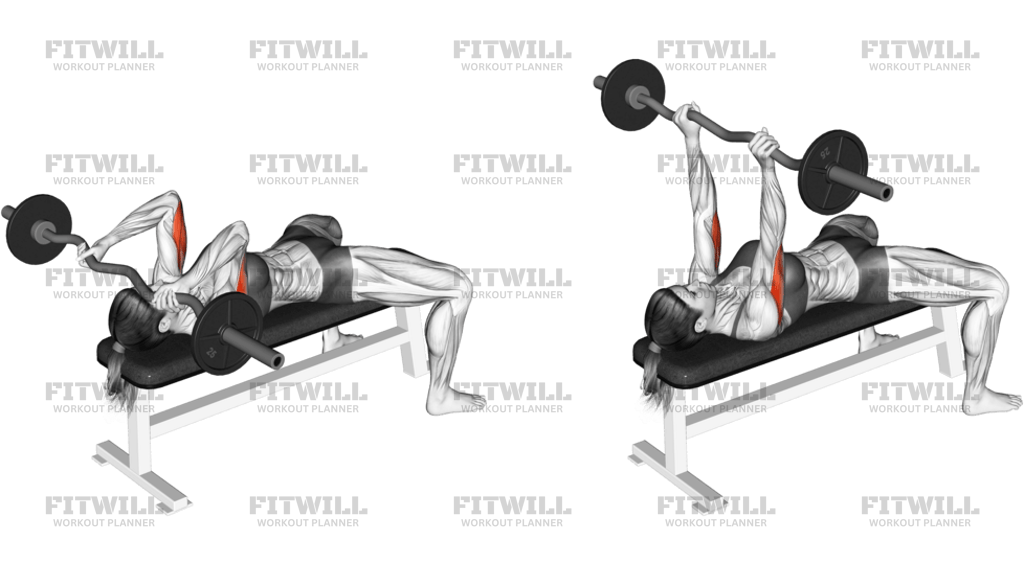
Seated triceps extensions with the bar lowered in front of your forehead, or lying triceps extensions on a bench, keep the triceps working with a less demanding shoulder angle. Cable rope overhead extensions are another option with a gentler setup.
How many sets and reps should I do?
Two to four sets of 8 to 15 reps works well, placed after your main pressing or dipping movements. Keep the weight moderate since the bar travels near your head and face on every rep.
Can I do the Ez Barbell Seated Triceps Extension every arm workout?
You can include it frequently, but your triceps also get worked by presses and dips, so watch your total weekly volume. If your elbows start to ache between sessions, cut back a set or two rather than pushing through.