Ez Barbell Incline Triceps Extension
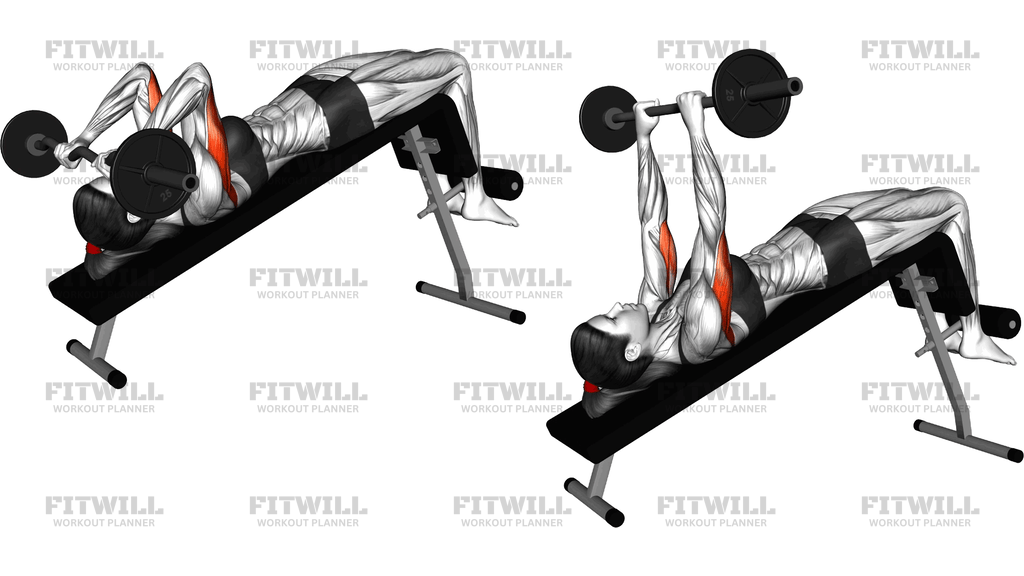
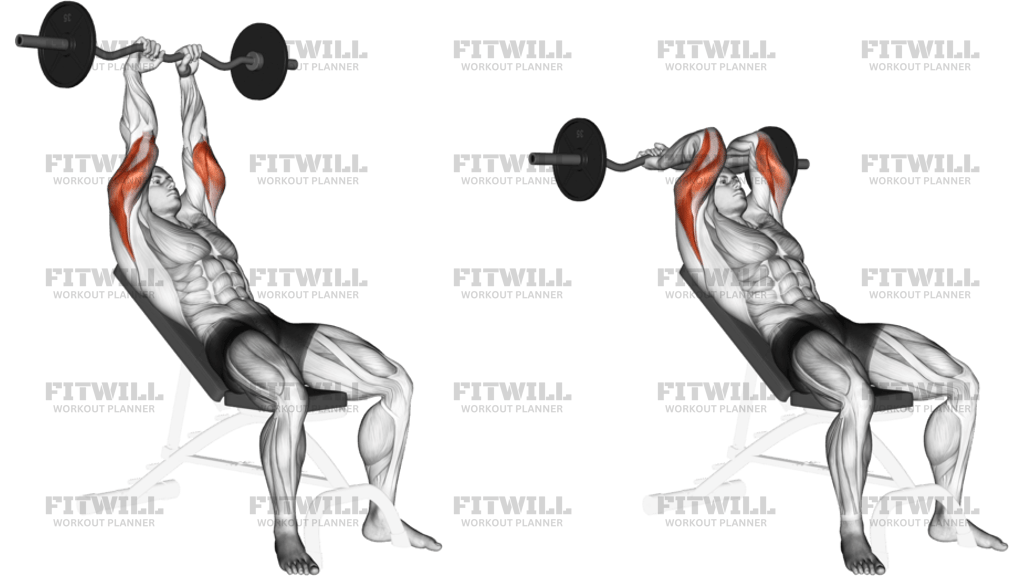
The Ez Barbell Incline Triceps Extension is a free-weight isolation movement for the back of the upper arm, performed lying face-up on an incline bench. You hold an EZ barbell with a closed, shoulder-width grip and lower it in an arc behind your head before pressing it back to full elbow extension above you. The angled torso is what separates this from a flat-bench skull crusher: with your upper body tilted back, the shoulder sits in a deeper overhead position, which places a longer stretch on the triceps, particularly the long head that crosses the shoulder joint.
This exercise suits lifters who already have some pressing or extension experience and want to develop the triceps with more emphasis on the stretched position. Because the long head contributes most of the triceps' overall mass, training it from an overhead angle is an efficient way to build arm size and strength that carries over to pressing movements like the bench press and overhead press. It also works well as a second or third triceps exercise on an arm day, after heavier compound pressing.
The setup matters more than it might seem. The incline angle shifts your shoulders behind your torso, so if the bench is set too flat you end up doing a standard skull crusher, and if it is too upright the movement drifts toward a seated overhead extension with a very deep stretch. A moderate incline keeps the elbows pointing up toward the ceiling, the bar traveling behind the crown of the head, and the tension staying on the triceps rather than the shoulder capsule.
Execution revolves around the elbows. They should stay narrow and fixed in place, acting as hinges while only the forearms move. The bar descends on a smooth arc until you feel a solid stretch along the triceps, then travels back up under control until the arms are straight without locking or hyperextending hard. Letting the elbows flare or drift forward is the most common fault, and it quietly turns the movement into a partial press.
Because an EZ bar has angled grip sections, the wrists sit at a slightly less extreme position than on a straight bar, which many lifters find more comfortable on the elbow joints over repeated sets. Still, load conservatively. The bar travels behind your face and head on every rep, so use a weight you can control through the full arc, keep your feet planted on the floor for stability, and stop the set the moment your elbow path starts to waver.
[ Workout Log & Planner ]
Put your next workout in Fitwill
Keep your plan and training log ready when you are.


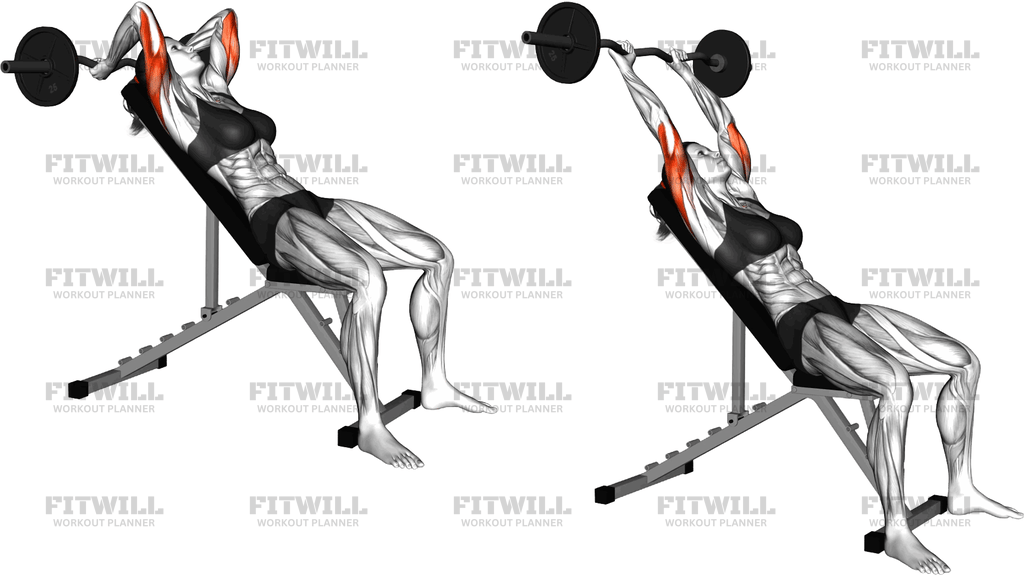
Instructions
- Set an adjustable bench to a moderate incline, roughly 30 to 45 degrees, and sit back against it with your feet flat on the floor and spaced for stability.
- Take a closed overhand grip on the EZ barbell on the inner angled handles, about shoulder-width apart, and press the bar up until your arms are fully extended over your upper chest.
- Draw your shoulder blades down and back against the bench, brace your abdominal muscles, and point your elbows up toward the ceiling with them held about shoulder-width apart.
- Bend only at the elbows and lower the bar in a controlled arc back behind the top of your head, keeping your upper arms stationary and vertical.
- Continue lowering until you feel a distinct stretch along the triceps and the bar is just behind your head, without letting your elbows spread outward or drift forward.
- Reverse the arc by contracting the triceps, driving the bar back up along the same path until your elbows are fully extended over your shoulders.
- Exhale as you press the bar up and inhale steadily as you lower it behind your head.
- Pause briefly at the top with straight arms, then begin the next repetition, rechecking that your elbows stay pinned in place.
- After your final rep, extend the arms fully, sit upright, and either set the bar on the floor with control or have a spotter take it.
- Reset your back and foot position against the bench before starting the next set.
Tips & Tricks
- Set the incline before you load the bar. Changing the angle mid-session changes where the bar travels, so pick one position, roughly 30 to 45 degrees, and stay with it for all sets.
- If your elbows flare wide as the bar drops behind your head, the weight is usually too heavy or your grip is too narrow. Widen your grip slightly to the inner angled handles and reduce the load until the elbows stay stacked under the bar.
- Keep your head and shoulders in contact with the pad throughout. Lifting the head to watch the bar rounds the upper back and shortens the arc, so feel the stretch instead of chasing it visually.
- Do not let the bar drift toward your forehead. On an incline, the correct path ends behind the crown of the head, and stopping short turns the exercise into a partial-range press.
- The EZ bar's angled grips exist to reduce wrist strain. Turn the bar so your wrists follow those angles rather than forcing a straight-bar position, especially on heavier sets.
- Squeeze the bar evenly with both hands. Uneven pressure shows up quickly on an incline because one arm can extend ahead of the other with nothing to correct it.
- Brace your core to stop the lower back from arching off the bench as the bar goes behind you; pressing your feet into the floor helps anchor the position.
- Lower the bar slower than you press it. The stretch behind the head is where most of the growth stimulus for the long head comes from, and bouncing out of it steals that benefit.
- Warm up the elbows with a lighter set or a band extension first, since the deep overhead stretch on an incline loads the triceps and elbow joint from an angle they rarely see in pressing.
Frequently Asked Questions
Which muscles does the Ez Barbell Incline Triceps Extension work?
The triceps brachii is the primary muscle, with the long head receiving extra emphasis because the incline places the shoulder in an overhead position. The forearms and small stabilizers around the shoulder assist with controlling the bar.
How is the incline version different from a flat-bench skull crusher?
On an incline, your torso is tilted back so the bar lowers behind your head rather than toward your forehead, which puts the triceps in a longer stretch. The flat version keeps the shoulder more neutral and tends to feel less demanding on the long head.
What incline angle should I set the bench to?
A moderate incline of roughly 30 to 45 degrees works for most lifters. Lower angles resemble a skull crusher, while steeper angles create a very deep stretch that is harder to control.
Why use an EZ bar instead of a straight barbell?
The EZ bar's angled grip sections let your wrists sit in a slightly turned-out position, which reduces strain on the wrists and elbows during repeated sets. This matters most at the bottom of the rep when the bar is behind your head.
Is the Ez Barbell Incline Triceps Extension suitable for beginners?
Beginners can perform it, but it is smart to start with a light bar or a flat-bench version first to learn the elbow-hinge pattern. Having a spotter is a good idea at first since the bar travels behind the head.
Should my elbows stay pointed at the ceiling the whole time?
Yes, the elbows should stay up and roughly shoulder-width apart while only the forearms move. If they flare outward or drift toward your ears, the triceps stop doing the work and the shoulders take over.
How far behind my head should I lower the bar?
Lower until you feel a clear but comfortable stretch along the back of the upper arm, with the bar just behind the crown of your head. Going deeper only helps if you can keep your elbows fixed and your back against the bench.
What can I substitute if I don't have an EZ barbell or incline bench?
A dumbbell overhead extension on an incline bench, a cable rope overhead extension, or a flat-bench EZ bar skull crusher all train the triceps through a similar arc. Each shifts the stretch slightly, so treat them as alternatives rather than exact matches.
How many sets and reps should I use?
Because the movement is an isolation exercise with a deep stretch, moderate loads in the range of 8 to 15 reps for 2 to 4 sets work well. Keep at least one or two controlled reps in reserve rather than grinding to failure with the bar behind your head.
Is it safe to do this exercise without a spotter?
It can be done solo if you use a weight you can comfortably press for several extra reps and keep the bar on a controlled path. If you train close to failure, a spotter or a power rack setup nearby is the safer choice since the bar passes over your face and head.