Side Plank Elbow To Knee Raise
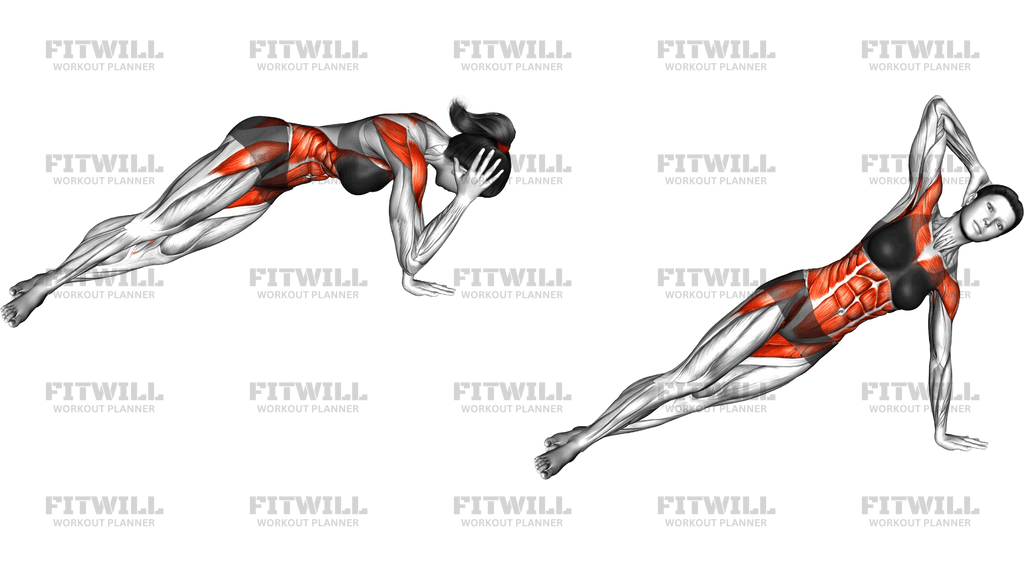
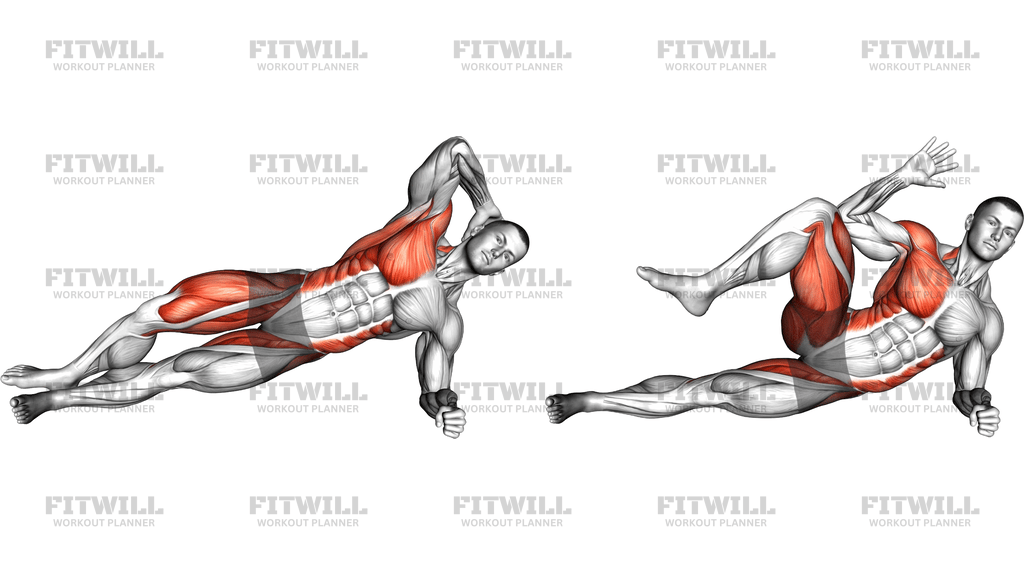
The Side Plank Elbow To Knee Raise is a side-lying core exercise that combines a lateral crunch with a knee pull, so the top elbow and top knee travel toward each other in a controlled squeeze. You lie on your side on a mat with your lower arm positioned for stability, your top hand placed lightly behind your head, and both the sideways fold of your torso and the draw of your knee working together in one rep. Because the trunk curls sideways rather than forward, the muscles along the flank of your waist do most of the work.
The main workers here are the obliques on the side you are crunching, with the deeper trunk muscles bracing to keep you balanced on your side. As the knee draws up, the hip flexors assist, and the muscles around the outer hip work to keep the legs tracking cleanly instead of swinging. This makes the movement useful for anyone who wants more than a static side plank, since the waist muscles shorten and lengthen through a real range instead of simply holding a position.
Setup matters more than speed in this exercise. Lying squarely on your side, with your hips stacked and your lower body aligned, is what keeps the crunch in the lateral trunk muscles rather than letting your roll backward and turn it into a loose, forward-dominant crunch. Keeping the supporting arm planted on the floor and the neck relaxed lets the waist do the lifting instead of momentum or pulling on the head.
To perform it well, think of closing the space between your ribs and your pelvis on the top side. Exhale as you lift your shoulder and knee toward each other, pause briefly at the top of the fold, then lower both slowly without letting your torso or legs drop fully to the floor between reps. The return is where most people lose the benefit, so treat the lowering phase as part of the exercise rather than a rest.
This movement fits well near the end of a core session, when you want direct, focused work on the sides of the waist after heavier compound lifts. It is also a practical progression for people who find full side planks uncomfortable on the shoulder or wrist, because the floor supports the trunk throughout and there is no prolonged weight-bearing on one arm. Many lifters use it for balanced trunk development, since training each side separately exposes and corrects left-to-right differences in strength and control.
As for safety, the main cautions are simple. Do not yank your head forward with the top hand, and avoid collapsing through the lower back or rolling the hips backward as fatigue sets in. If the floor feels hard on your hip or ribs, a thicker mat or a folded towel solves it. Move within a range you can keep smooth, and stop the set when the fold starts to turn into a jerky, momentum-driven curl.
Fitwill
Log Workouts, Track Progress & Build Strength.
Achieve more with Fitwill: explore over 9600 exercises with images and videos, access built-in and custom workouts, perfect for both gym and home sessions, and see real results.
Start your journey. Download today!




Instructions
- Lie on your right side on an exercise mat with your legs extended and stacked, and place your right arm on the floor in front of you or across your torso for support.
- Bend your left elbow and rest your left hand lightly behind the left side of your head without pressing on your neck, then align your hips and shoulders so they are stacked vertically.
- Brace your trunk gently and lift your legs and shoulders slightly off the floor so your body is active rather than sagging into the mat.
- Exhale and simultaneously draw your left knee up toward your left elbow while folding your upper body sideways, closing the gap between ribs and pelvis.
- Pause for a beat at the top of the fold, squeezing the side of your waist as your elbow and knee come close together.
- Inhale and lower your shoulder and knee back down in a slow, controlled path, stopping just before your torso and legs rest on the floor.
- Keep the supporting arm planted and your hips stacked the entire time so the crunch stays in the lateral trunk muscles.
- Complete all repetitions on one side, then roll over and perform the same number on the other side.
Tips & Tricks
- A common mistake is pulling the head forward with the top hand, which shifts work to the neck. Keep the hand resting behind the head and let the side of the waist lift the shoulder.
- If your hips roll backward during the crunch, the movement turns into a forward curl. Think of folding strictly sideways, as if trying to bring your ribs toward the top of your hip bone.
- Do not let the lower leg drift forward or swing with the knee. Keep the bottom leg still and extended so the top knee does all the traveling.
- Avoid dropping the shoulder and knee back to the floor between reps. Stopping just short keeps constant tension on the obliques.
- Keep the movement slow enough that you feel a distinct squeeze in the side of your waist at the top; if you cannot feel it, you are likely using momentum.
- If your hip bone or ribs dig into the floor, slide a folded towel under the hip or use a thicker mat rather than shortening the range awkwardly.
- Breathe out on the fold and in on the return. Holding your breath makes the lateral crunch feel far harder than it should.
- Match reps side to side, and always start with your weaker side so the imbalance does not grow as fatigue builds.
- If balance is the limiting factor, widen the base slightly by extending the bottom arm out to the side like a kickstand before adding reps.
Frequently Asked Questions
Which muscles does the Side Plank Elbow To Knee Raise target?
The obliques on the side you are crunching do the primary work, supported by the deeper trunk muscles. The hip flexors assist as the knee draws up, and the outer hip muscles help keep the legs controlled.
Is the Side Plank Elbow To Knee Raise suitable for beginners?
Yes, as long as you keep the range modest and move slowly. Beginners often benefit from starting with fewer reps per set and focusing on keeping the hips stacked rather than chasing a large fold.
How is this different from a regular side plank?
A side plank is a static hold where the trunk stays rigid while the arm and feet support you. The Side Plank Elbow To Knee Raise is dynamic, so the waist muscles shorten and lengthen through a range instead of just holding tension.
Should my top hand pull on my head during the raise?
No. The hand rests lightly behind the head for position only, and pulling on the neck shifts stress away from the waist and toward the cervical spine. Guide the elbow with the shoulder, not the hand.
Why do my hips keep rolling backward when I crunch?
This usually means the trunk muscles are fatigued or the rep is too fast. Slow the tempo down, reduce the range slightly, and cue yourself to fold sideways rather than curling forward.
Can I do the Side Plank Elbow To Knee Raise without a mat?
You can, but the floor is unforgiving on the hip bone and ribs in a side-lying position. A mat or a folded towel under the hip makes the movement far more comfortable without changing the mechanics.
What can I substitute if this exercise bothers my hip or lower back?
A standing side bend with body weight only, or a side-lying lateral leg raise, trains the same flank muscles without the torso-on-floor position. Both keep the spine neutral while still loading the obliques.
How many reps should I do per side?
Somewhere between 8 and 15 controlled repetitions per side works well for most people. Because each side is trained separately, match the reps exactly and start with your weaker side.
Is it safe to do this exercise every day?
The trunk muscles recover quickly compared to larger muscle groups, but they still need rest to adapt. Two to four focused sessions per week is a sensible rhythm, and daily use is unnecessary for progress.