Dumbbell Russian Twist Close-Grip Shoulder Press Sit-Up
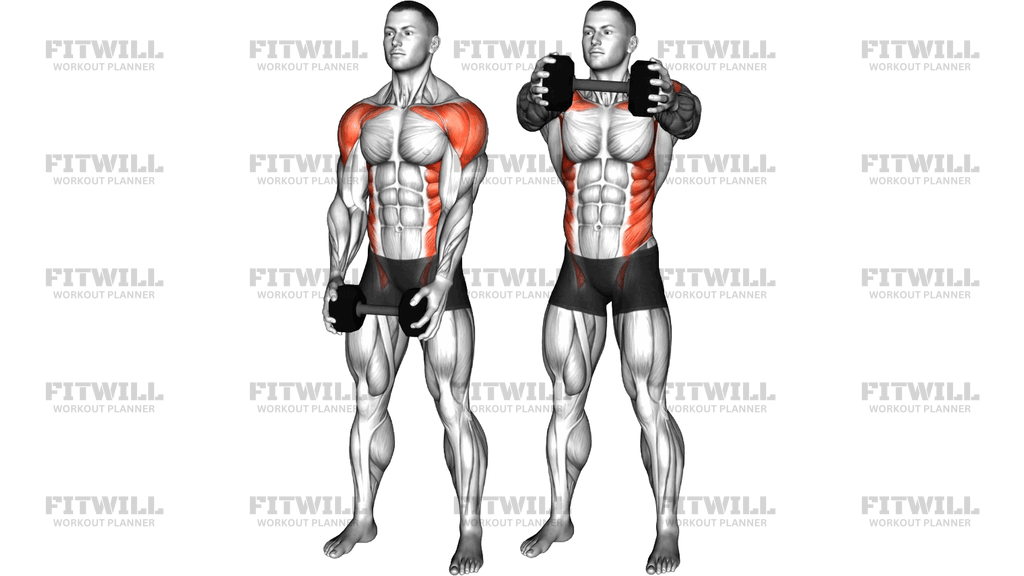
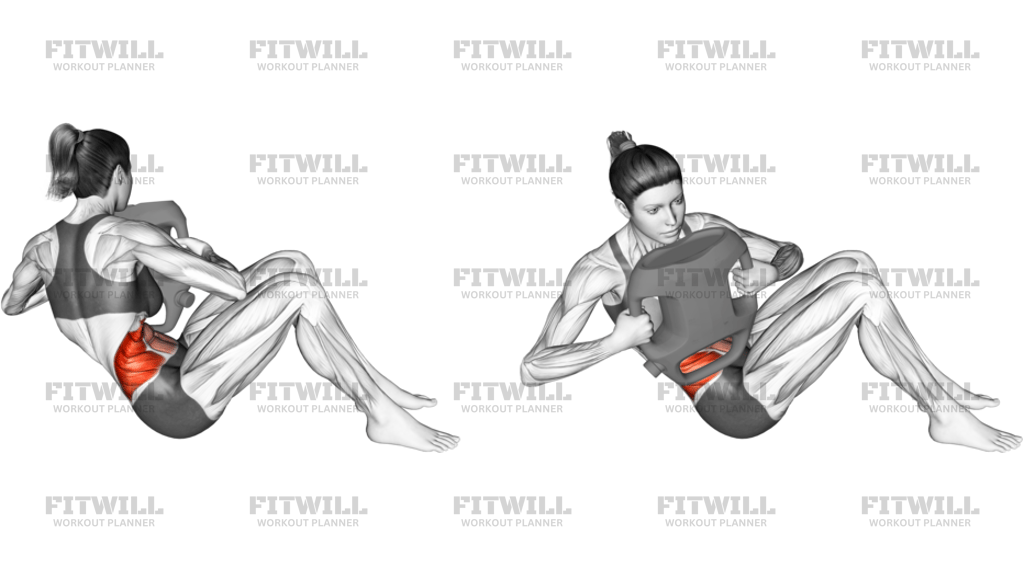
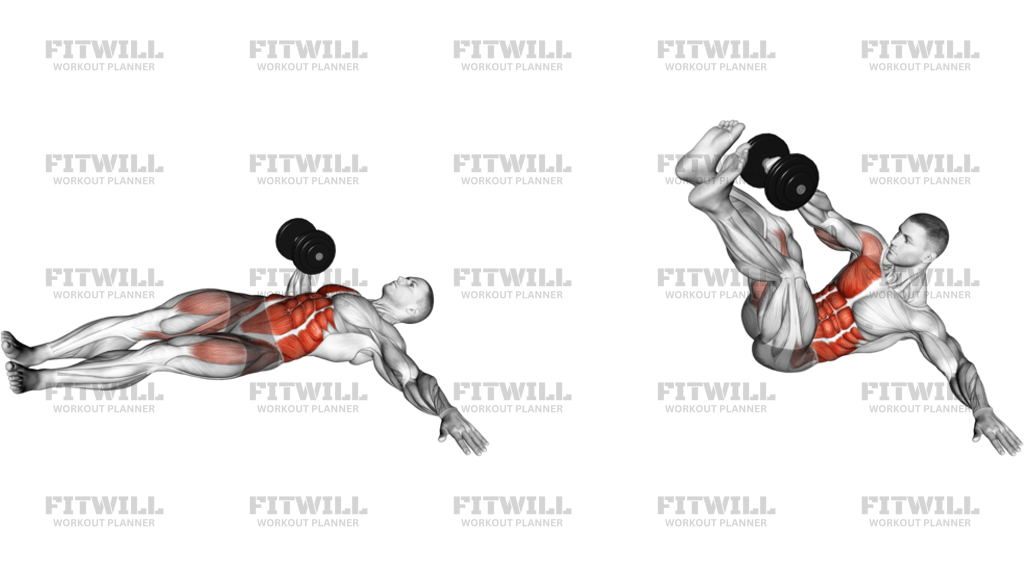
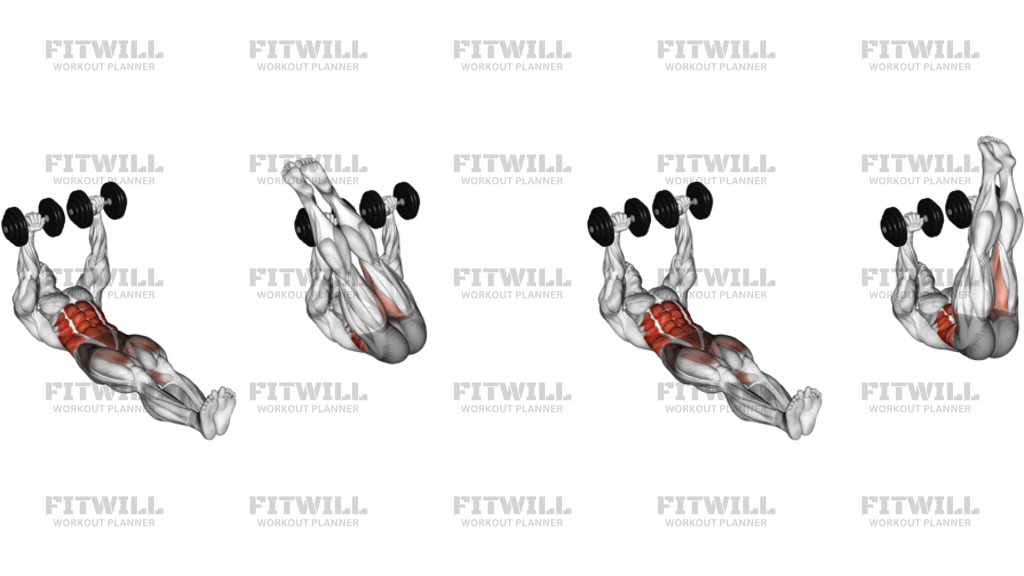
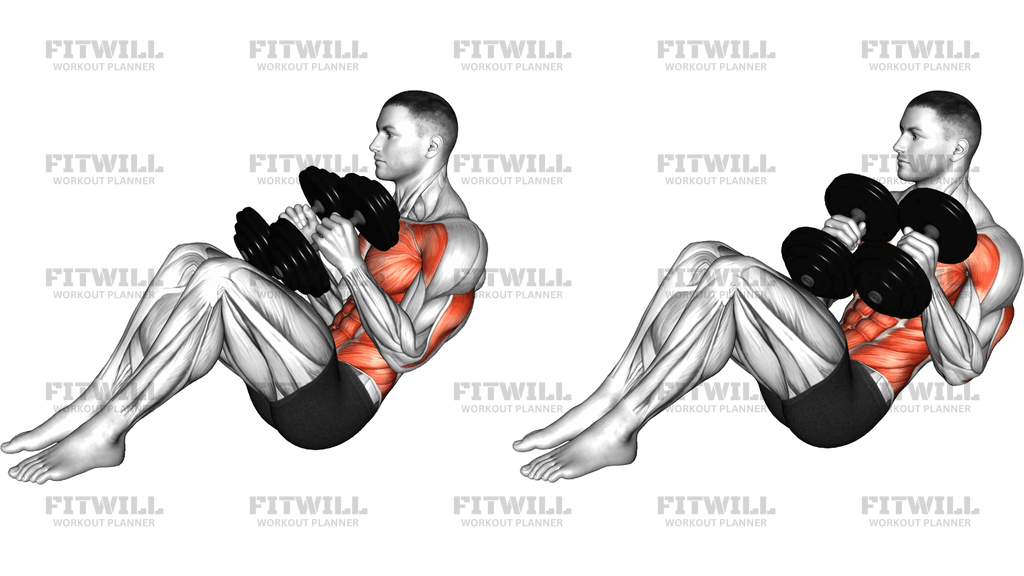
Dumbbell Russian Twist Close-Grip Shoulder Press Sit-Up is a loaded core-and-shoulder drill that links a floor sit-up with a tight dumbbell press. The image shows a lifter starting on the floor with the knees bent, the dumbbells held close together, then sitting up and pressing the weights overhead before lowering back down with control. Because the torso and shoulders have to stay organized at the same time, this movement rewards precision far more than heavy loading.
The main training value is trunk control under load: the abs, obliques, hip flexors, and shoulder girdle all have to cooperate while the spine moves from reclined to upright. The close-grip press keeps the dumbbells stable in front of the chest and makes the rep feel compact, while the sit-up adds a strong anti-collapse demand through the midsection. If your program includes a small Russian-twist turn at the top, the rotation should come from the ribcage and upper torso, not from swinging the arms or yanking the hips.
Setup matters more than it does in a basic sit-up or shoulder press. Lie back with the feet planted, knees bent, and the dumbbells stacked or held very close together at the upper chest. Keep the elbows tucked instead of flared, keep the chin slightly tucked, and brace before the first rep. From there, curl the ribs up, sit tall, and press the bells overhead in a straight line. Lower the weights back to shoulder height first, then roll the spine down one segment at a time so the return stays controlled instead of dropping onto the mat.
This exercise works best as accessory core work, athletic conditioning, or a trunk-stability drill when you want the abdomen to stay active while the shoulders move through a press. It is not a power exercise and it should not be rushed for speed or load. Use it when you can keep the lower back from arching, the dumbbells from drifting apart, and the neck relaxed. A clean rep should feel coordinated, deliberate, and repeatable from start to finish.
[ Workout Log & Planner ]
Put your next workout in Fitwill
Keep your plan and training log ready when you are.


Instructions
- Lie on the floor or mat with your knees bent, feet flat, and the dumbbells held together or very close at your upper chest with your palms facing each other.
- Tuck your elbows in, keep your chin slightly down, and brace your abs before you start the first rep.
- Curl your head and shoulders off the floor, then continue the sit-up until your torso is upright.
- As you come tall, press the dumbbells straight overhead without letting them separate or drift behind your head.
- If your version of the exercise includes a Russian-twist turn, rotate only a small amount through the ribs and upper torso while staying tall.
- Lower the dumbbells back to shoulder height under control while keeping your chest lifted.
- Roll down to the floor one vertebra at a time instead of dropping your back to the mat.
- Reset your brace at the bottom, inhale as you lower, and exhale through the sit-up and press.
- Repeat for the planned number of repetitions with the same tempo and body position.
Tips & Tricks
- Keep the dumbbells almost touching so the close-grip press stays compact and stable.
- Use a lighter load than you would for a normal shoulder press, because the sit-up makes the rep much harder.
- Lead the sit-up with the ribs, not the chin, so your neck does not take over the movement.
- Keep the elbows tucked on the press; flared elbows usually make the shoulders feel unstable.
- If your lower back pops off the floor too early, shorten the sit-up and keep more of the spine connected on the way up.
- Make any twist small and controlled. The goal is trunk tension, not a big swing from side to side.
- Lower the weights before you roll down so the return phase stays organized.
- Stop the set if the bells start drifting apart, because that usually means the core brace is fading.
Frequently Asked Questions
What muscles does Dumbbell Russian Twist Close-Grip Shoulder Press Sit-Up train?
It mainly trains the abs and obliques with strong support from the hip flexors, shoulders, and triceps.
Can beginners perform this exercise?
Yes, but beginners should use very light dumbbells and keep the range conservative until the sit-up and press feel coordinated.
Should the dumbbells stay close together during the rep?
Yes. Holding them close together keeps the press tight and makes the shoulder position more stable.
Do I need to twist every repetition?
Only if your programming calls for the Russian-twist version. Keep the turn small and controlled instead of swinging side to side.
What is the most common form mistake?
Most people rush the sit-up or let the dumbbells separate, which removes tension from the core and makes the press sloppy.
Where should I feel the press portion?
You should feel the shoulders and triceps working, but the torso should still stay braced so the rep does not turn into a standing-style press.
What should I do if my lower back arches?
Reduce the load, keep the feet planted, and stop the sit-up a little earlier so the ribs do not flare.
How do I make this exercise harder without using heavier weights?
Slow the lowering phase, pause briefly at the top, or add a small controlled twist if your version includes rotation.