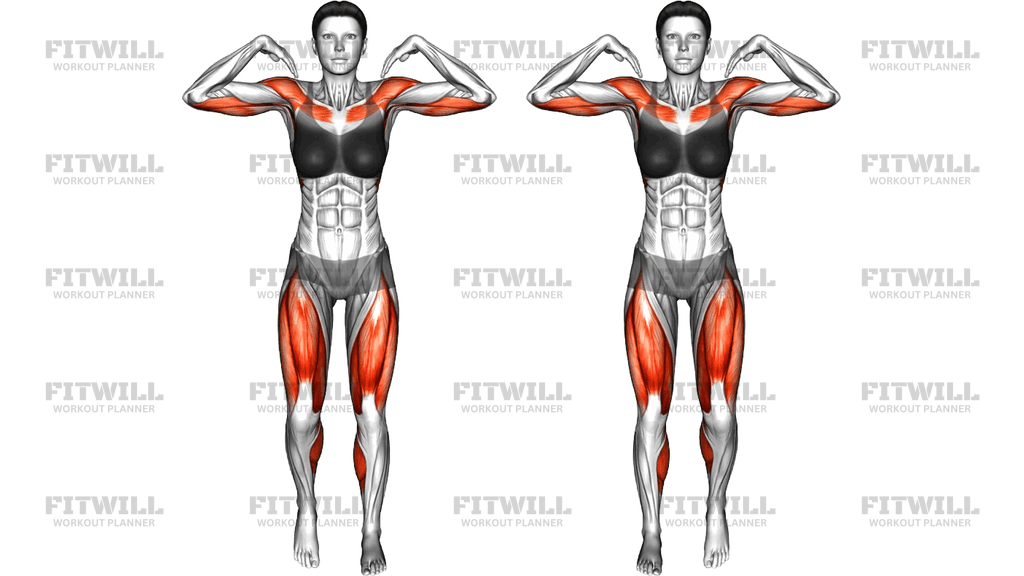
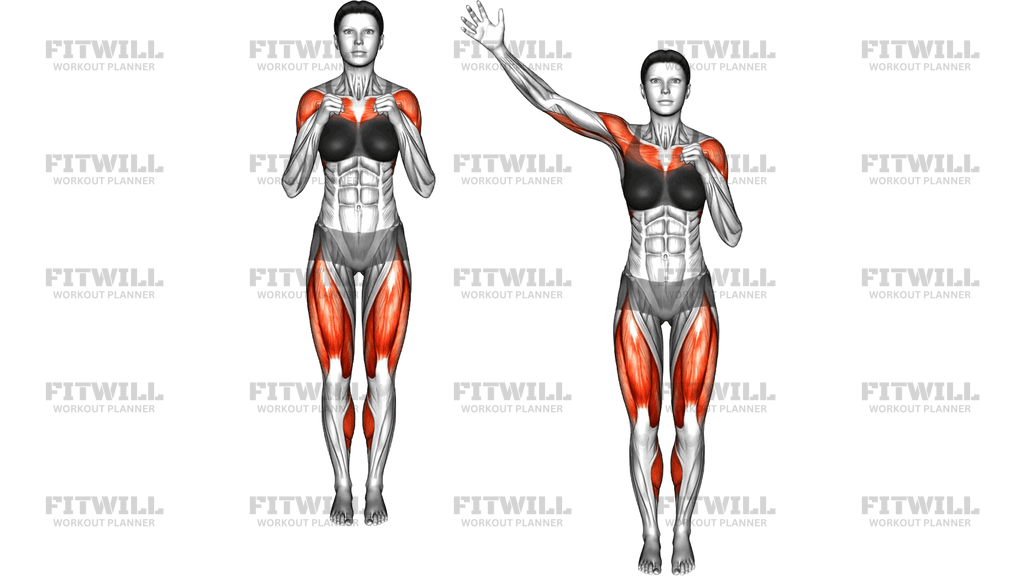
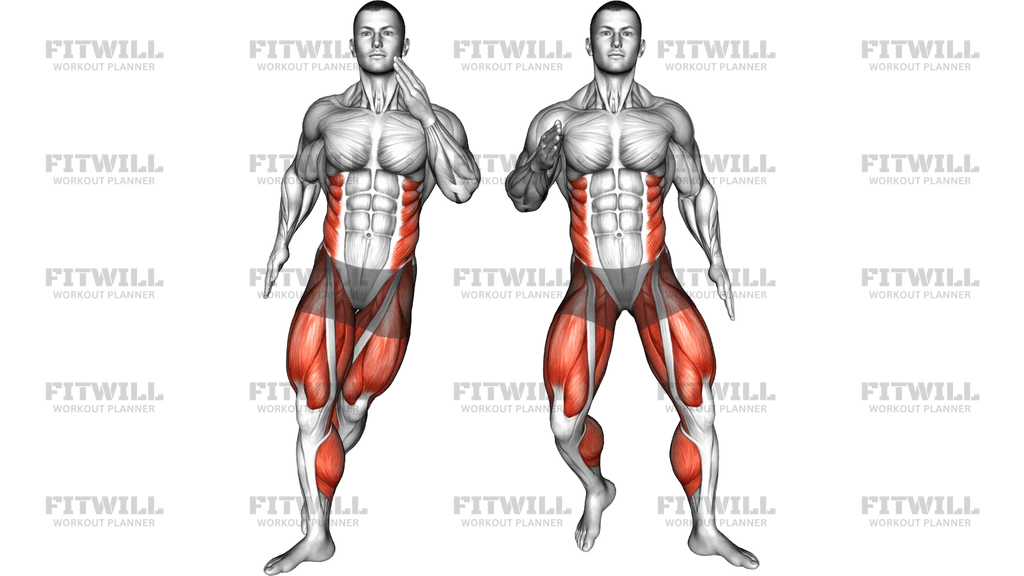
Slip Right Slip Left Left Hook Cross (Combo)
Slip Right Slip Left Left Hook Cross is a four-count boxing combination that chains two defensive slips into two offensive punches. You start in a standard boxing stance with your guard up, rotate your head and torso off-line to the right, then back to the left, and finish by driving a left hook followed by a right cross. Because the sequence moves you in and out of a defensive posture before attacking, it teaches you to transition smoothly from evasion to offense without losing balance or dropping your hands.
This combination is useful for anyone training boxing or kickboxing, whether for sparring preparation, bag work, or shadowboxing conditioning. It is especially valuable for developing head movement under fatigue, since the slips come first and force you to change levels and rotate your hips before you are allowed to throw anything. Fighters use it to rehearse slipping an incoming straight punch and countering immediately with the hook-cross; general trainees use it as a full-body conditioning drill that raises the heart rate quickly.
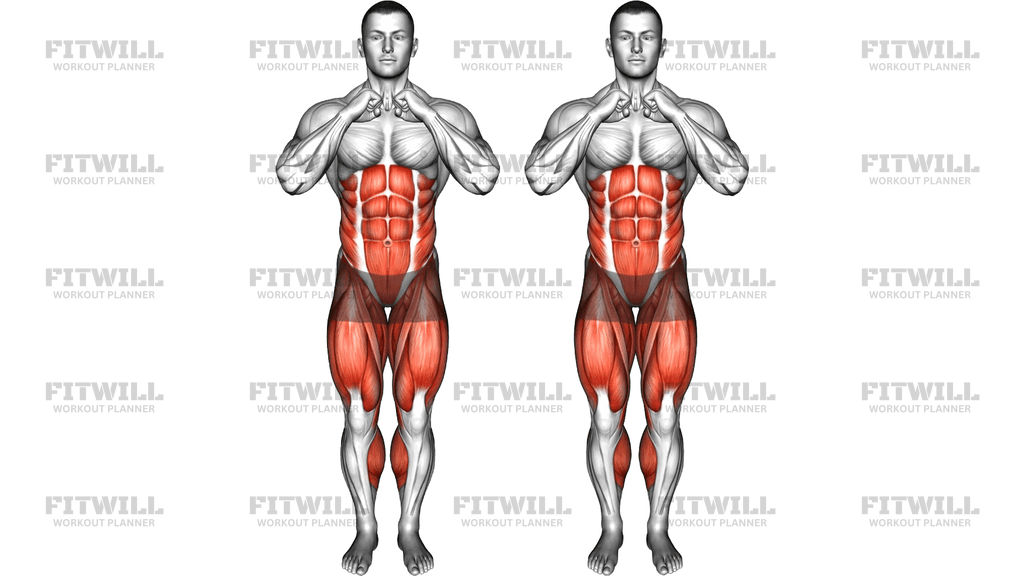
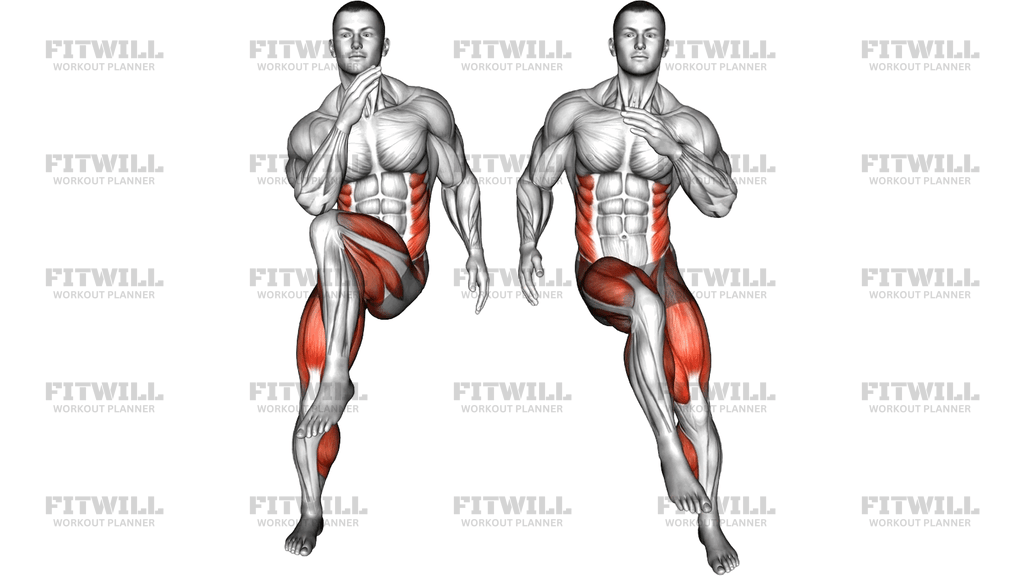
The work is distributed across the whole body, but the rotation comes primarily from the obliques and deep core, which drive each slip and power the left hook. The shoulders and arms deliver the punches, the legs absorb the level change on each slip and push the ground through the hook and cross, and the calves and feet handle the constant small weight shifts. Done continuously, it doubles as steady footwork practice because your stance must reset perfectly after every rep.
Setup matters more than people expect. A slightly wider-than-shoulder stance with the lead foot forward, knees soft, and hands glued to the cheeks gives you the base to slip without leaning. If your feet are too narrow or too square, the slips become lunges and the hook loses its hip rotation. Keep the chin tucked behind your gloves and your eyes forward throughout, as if a real opponent were in front of you.
To execute it well, think of the slips as small, tight movements of the head and torso rather than big bends. Slip right by rotating slightly clockwise and shifting weight to the right leg, then slip left the same way, then let the left hook pivot off the lead foot while the right cross follows with a full hip turn. Common mistakes include leading with the head instead of the body, dropping the rear hand during the hook, and rushing the count so the footwork never resets. Start slow, drill the rhythm, and only add speed once each position looks clean.
Fitwill
Log Workouts, Track Progress & Build Strength.
Achieve more with Fitwill: explore over 9600 exercises with images and videos, access built-in and custom workouts, perfect for both gym and home sessions, and see real results.
Start your journey. Download today!




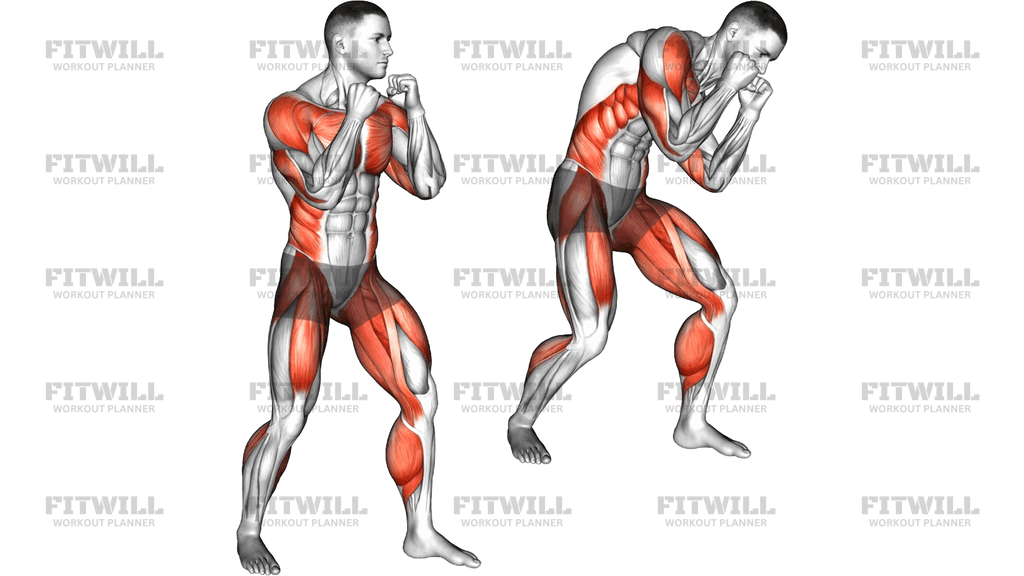
Instructions
- Stand in a boxing stance with your feet slightly wider than shoulder width, lead foot forward, rear heel slightly raised, and both fists touching your cheeks.
- Soften your knees and brace your core so your weight sits over the balls of both feet, ready to shift in any direction.
- To slip right, rotate your head and torso a few inches to the right, bend your front knee slightly, and keep both gloves up by your face.
- Slip left immediately by rotating back through center and a few inches to the left, shifting weight onto the left leg while your eyes stay forward.
- From the left slip, pivot your lead foot and hips to drive a left hook, sweeping the arm at roughly chest to shoulder height with the elbow bent.
- Let the hook flow straight into a right cross: rotate the rear hip and shoulder forward, extend the right arm, and turn the rear heel out.
- Exhale sharply on the hook and cross, and breathe steadily through the two slips.
- Recover the cross quickly by pulling the right glove back to your cheek and re-establishing your original stance.
- Reset your feet, weight, and guard before starting the next repetition so every rep begins from a clean position.
Tips & Tricks
- The most common error is leaning the head forward during the slips; the head should travel sideways with the torso, not dip toward the imaginary opponent.
- Keep the rear glove welded to your cheek during the left hook, because dropping it during the rotation is the classic opening a counter-puncher would exploit.
- Do not let the slips get bigger as you tire; a slip of a few inches is enough, and oversized slips pull you off balance for the hook.
- Pivot the lead foot on the hook rather than swinging the arm flat; without the foot pivot the punch is all shoulder and no power.
- Land the right cross with the rear heel turned out so the hip can rotate fully, instead of punching with the arm alone.
- Count the rhythm out loud at first, slip-slip-hook-cross, because rushing the transition from the left slip into the hook is where form usually breaks.
- Keep a slight bend in both knees the entire time; straight legs make the level change on the slips feel like a stoop instead of a rotation.
- If you keep crossing your feet, narrow your stance slightly and focus on shifting weight rather than stepping side to side.
- Work in short rounds of 30-60 seconds and reset your guard at the end of each rep to build the habit of finishing in a defensive position.
Frequently Asked Questions
What muscles does the Slip Right Slip Left Left Hook Cross work most?
The obliques and deep core handle most of the rotational work on the slips and the left hook. The shoulders and arms deliver the punches, while the quads and calves manage the level changes and constant weight shifts.
Is this combination suitable for beginners?
Yes, but beginners should slow the tempo way down and master the two slips separately before chaining them into the hook and cross. Once each position feels stable, link all four counts together at a controlled speed.
How deep should the slips be in this combo?
Only a few inches. The goal is to move your head off the center line with a small rotation of the torso and a slight knee bend, not a big lunge or bend at the waist.
Do I need a heavy bag or gloves for the Slip Right Slip Left Left Hook Cross?
No, the combination works perfectly as shadowboxing with just your body weight. It can also be thrown on a heavy bag, but the slips are easiest to learn in the air where nothing restricts your head movement.
Why does my left hook feel weak after the two slips?
This usually happens when the slips are too large, leaving your weight outside your base, or when you skip the lead-foot pivot. Shrink the slips and consciously turn the lead foot and hip into the hook to restore power.
Can I use this combination for conditioning?
Absolutely. Repeating the combo in timed rounds keeps the heart rate high while training rotational core endurance and footwork, making it a solid stand-alone cardio drill.
Is it safe for the knees and lower back?
Generally yes when the knees stay soft and the rotation comes from the hips and core rather than the lower back. Keep slips small, avoid twisting with the feet planted, and stop if you feel joint discomfort.
What can I substitute if I cannot do the slips smoothly?
Practice the left hook and cross alone until the punches feel natural, then add a single right slip, then the left slip, before chaining all four counts. You can also replace slips with small weaves or simple weight shifts while you build coordination.