Prayer Push Knee Thrust
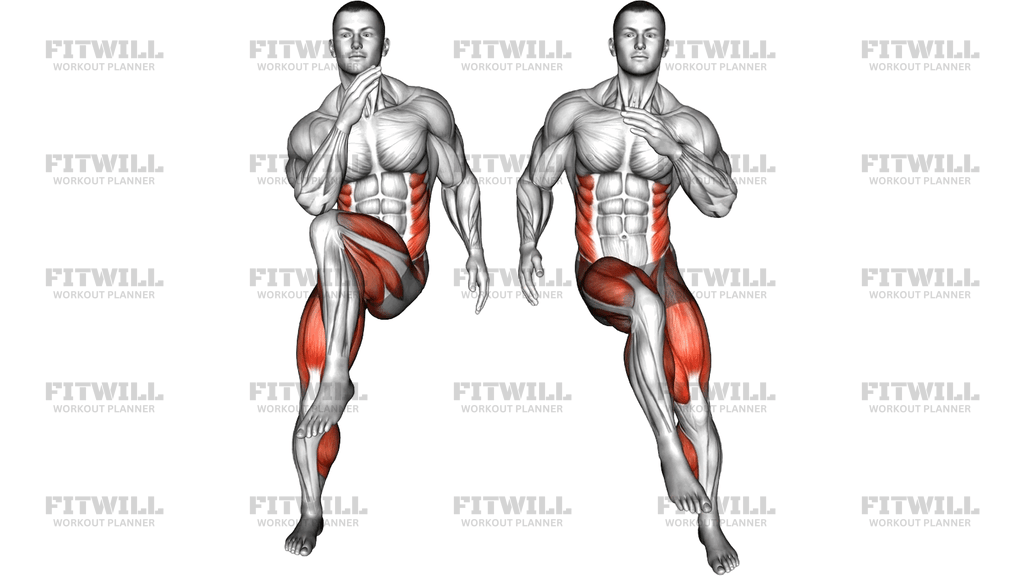
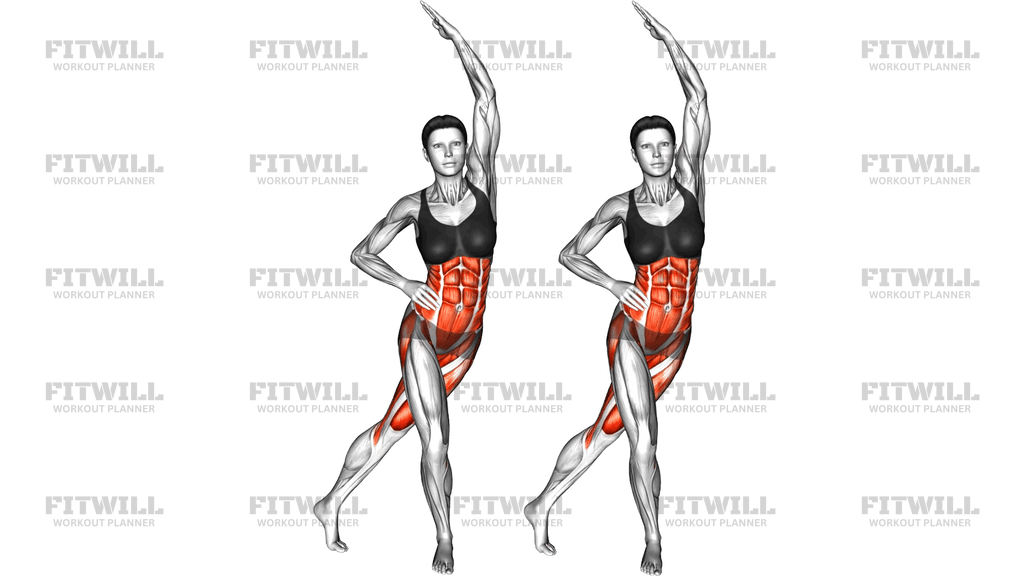
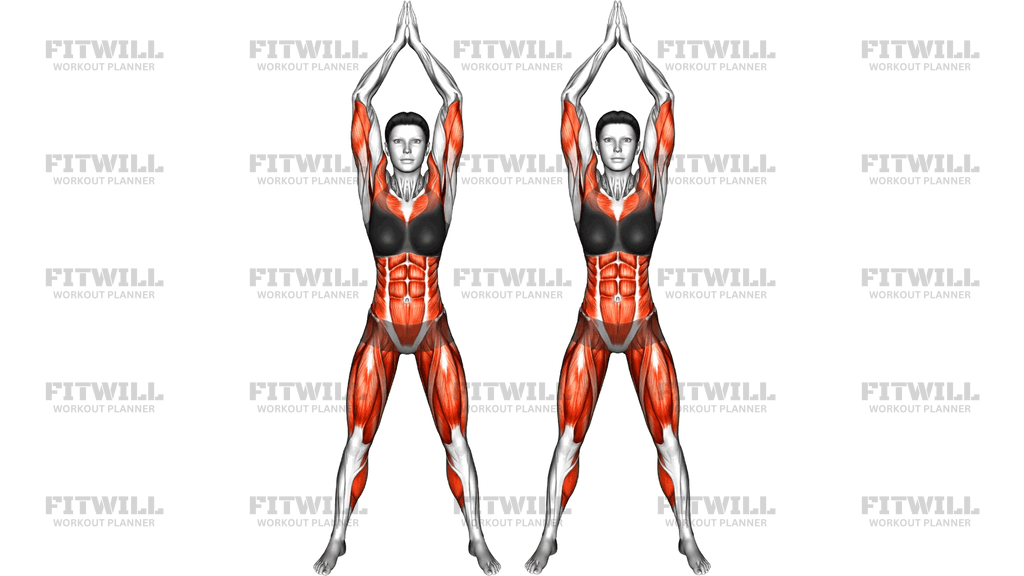
The Prayer Push Knee Thrust is a standing body weight exercise that combines an isometric overhead press with an explosive knee drive. You start with your feet set wide, palms pressed firmly together and arms extended straight overhead, then thrust one knee up toward your chest while keeping the prayer press locked in. The result is a movement that challenges your midsection from two directions at once: the arms fight to hold their position overhead while the lower body and trunk power the knee upward.
What makes this exercise valuable is the way the two halves interact. Pressing your palms together creates constant tension through the chest, shoulders, and triceps, and that tension forces your core to brace harder every time you lift a knee. Because you briefly balance on one leg with your arms overhead, your obliques and deep core muscles have to keep your ribs stacked over your pelvis, which is exactly the kind of anti-rotation and anti-extension control that carries over to running, climbing, and everyday lifting.
This movement suits anyone training without equipment, and it works especially well as a warm-up primer, a finisher, or part of a circuit. Beginners can use a slower, more deliberate knee lift to learn the balance demand, while more experienced trainees can drive the knee with real intent and add a small calf raise on the standing leg to raise the difficulty. It also fits nicely into mobility flows because the overhead reach opens the shoulders between repetitions.
Setup matters more than it looks. A stance that is too narrow makes balancing on one leg unnecessarily tricky, and hands that drift apart or sink toward the head kill the tension the exercise depends on. Keep the palms welded together, the arms long, and the elbows tracking slightly forward rather than flaring wide. If your shoulders cannot reach full overhead extension comfortably, widen the hands slightly or lower them a few inches rather than arching your lower back to compensate.
Execution is simple but easy to rush. Drive one knee up to roughly hip height with the thigh angled slightly across your body, pause for a beat to own the balance, then lower the foot back to its wide stance under control. Alternate legs or complete all repetitions on one side before switching. Exhale as the knee rises, and keep your torso tall — the moment your shoulders round forward or your ribs flare, the core work quietly disappears.
The most common fault is turning the knee thrust into a leaning, hip-hiking lurch. The knee should travel up because the hip flexors and abs lift it, not because your torso tips sideways to meet it. Keep the movement honest and the reps modest at first; this is a control exercise wearing a cardio costume, and quality repetitions will do far more for your stability than a frantic set ever will.
Fitwill
Log Workouts, Track Progress & Build Strength.
Achieve more with Fitwill: explore over 9600 exercises with images and videos, access built-in and custom workouts, perfect for both gym and home sessions, and see real results.
Start your journey. Download today!




Instructions
- Stand tall with your feet roughly hip-width to slightly wider, toes pointing forward, and shift your weight so you can lift one foot without wobbling.
- Bring your palms together in front of your chest in a prayer position, fingers pointing up, then press them firmly and extend both arms straight overhead until your biceps line up near your ears.
- Squeeze the palms against each other and keep that pressure constant for the entire set — this is the anchor for your shoulders and chest.
- Brace your abs as if bracing for a light punch, pull your ribs down, and keep your gaze forward with your neck relaxed.
- Shift your weight onto one leg, then drive the opposite knee up toward your chest in one smooth, deliberate thrust, letting the thigh rise to about hip height.
- Hold the top position for a second with the arms still pressed overhead and your torso completely upright.
- Lower the foot back down to the floor under control rather than letting it drop, and re-establish your wide base before the next rep.
- Exhale as the knee drives up, inhale as it lowers, keeping the breath steady instead of holding it.
- Continue by alternating legs for reps, or complete all reps on one side before switching, keeping the palm press active from start to finish.
- To finish, lower the hands slowly from overhead, shake out the shoulders, and reset your stance before the next set.
Tips & Tricks
- If your arms tire before your core does, ease off the palm pressure slightly rather than dropping the hands — some tension is better than none, but the press should stay visible.
- The most common mistake is hiking the hip or leaning sideways to meet the knee; film yourself from the front and make sure your shoulders stay level throughout each knee thrust.
- Keep the standing knee soft, not locked. A slightly bent knee gives you a stable base and protects the joint when you balance on one leg.
- Point the driving knee slightly toward the opposite shoulder to wake up the obliques, but stop well short of any twisting that rounds your lower back.
- If you struggle to balance, widen your stance a few inches and slow the knee lift down — speed hides balance problems, control exposes and fixes them.
- Avoid arching your lower back to get the arms higher overhead; if your shoulders are tight, hold the arms a little short of vertical and work on the range over time.
- Do not let the palms drift apart at the top of the knee thrust, which is exactly when the tension tends to slip — cue yourself to press harder as the knee rises.
- Place the lowering foot deliberately instead of letting it slap down; the eccentric portion is where much of the hip flexor and core control is built.
- Start with 6-8 knee thrusts per side and only add speed once you can keep your torso upright and your palms pressed together on every rep.
Frequently Asked Questions
What muscles does the Prayer Push Knee Thrust work?
The primary work comes from the core, especially the abs and obliques, which stabilize your torso during the knee drive. The isometric prayer press keeps the chest, front shoulders, and triceps under constant tension, while the hip flexors lift the knee.
Why do I press my palms together during the Prayer Push Knee Thrust?
Pressing the palms together is an isometric contraction that loads the chest and shoulders without any equipment. It also forces your core to brace harder, because your trunk must stay tall while the arms hold a fixed position overhead.
Is the Prayer Push Knee Thrust good for beginners?
Yes, provided you slow it down. Beginners should use a controlled knee lift to about waist height and a slightly wider stance for balance, then progress to faster, higher knee thrusts as stability improves.
How high should I drive my knee during the Prayer Push Knee Thrust?
Aim for roughly hip height, or as high as you can lift while keeping your torso completely upright. If your back rounds or your hips tilt to gain height, the knee has gone higher than your control allows.
Why do I keep losing my balance on the standing leg?
Balance usually fails because the base is too narrow or the reps are rushed. Widen your stance, keep a soft bend in the standing knee, and pause for a full second at the top of each knee thrust until the position feels steady.
Can I substitute the Prayer Push Knee Thrust if overhead reach bothers my shoulders?
You can hold the prayer press at chest height or slightly forward of your chest instead of overhead. You lose some shoulder range work, but the core and hip flexor demand of the knee thrust stays largely intact.
Should I do all reps on one leg or alternate sides?
Either works. Alternating keeps the effort balanced and heart rate up, while completing all reps on one side before switching makes it easier to notice and correct side-to-side differences in balance or height.
Is the Prayer Push Knee Thrust a cardio or strength exercise?
It is primarily a strength and stability exercise with a mild cardio effect when performed at a brisk pace. Slow, controlled reps emphasize core control, while faster alternating thrusts push your heart rate higher.
How many sets and reps of the Prayer Push Knee Thrust should I do?
Two to three sets of 8-12 knee thrusts per side is a solid starting point. Add reps or speed before adding anything else, and stop the set as soon as your palms drift apart or your torso starts leaning.