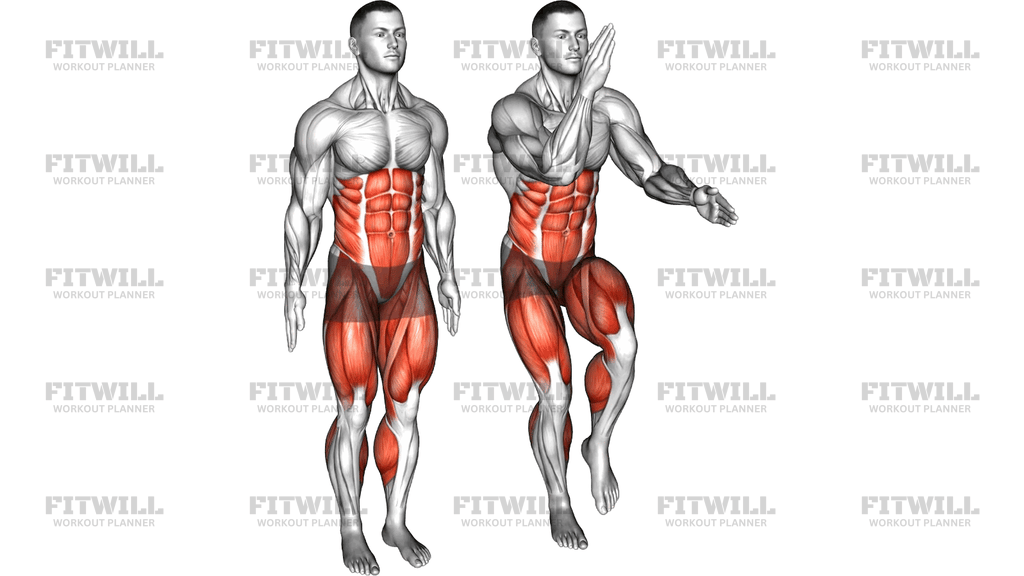
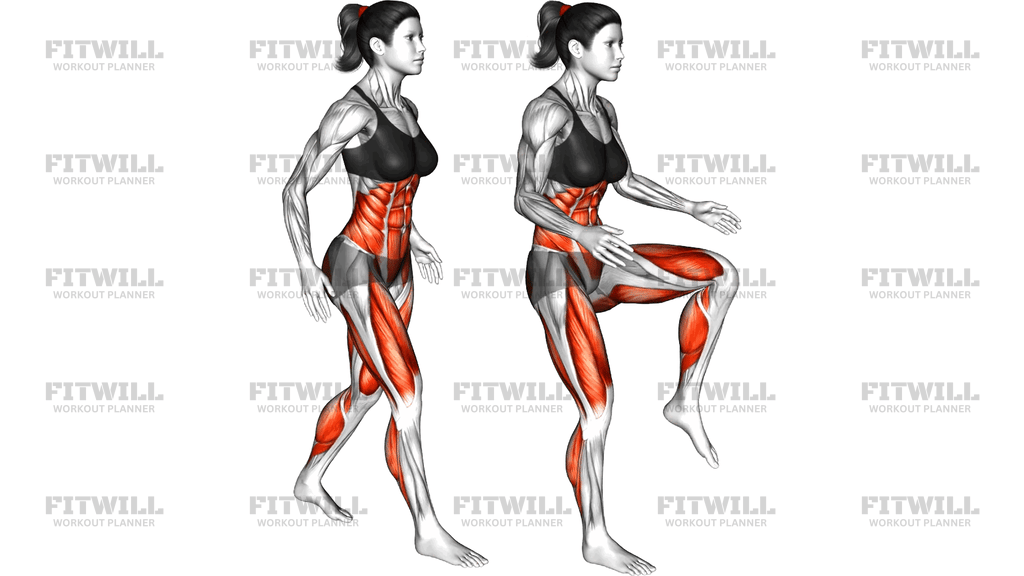
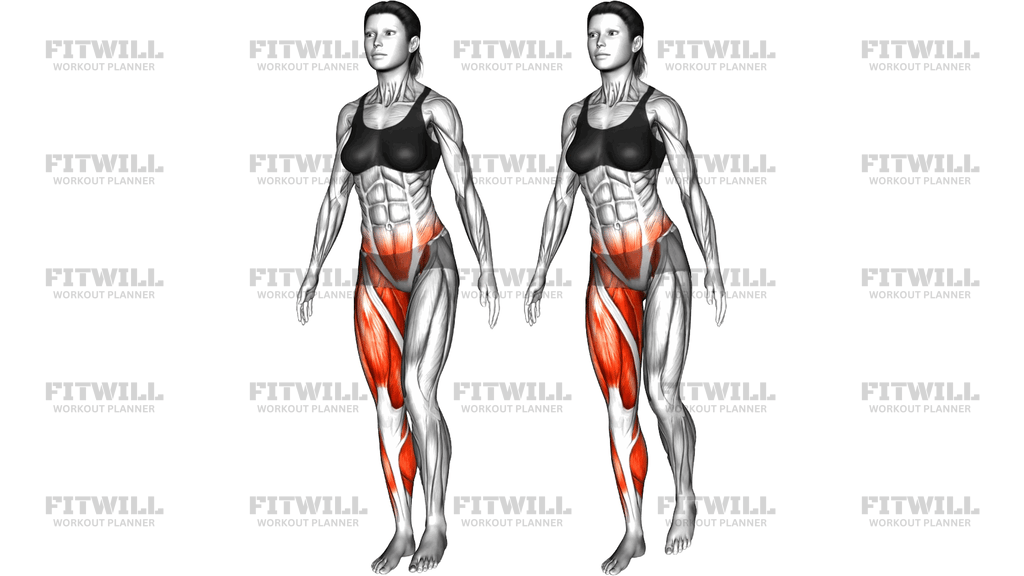
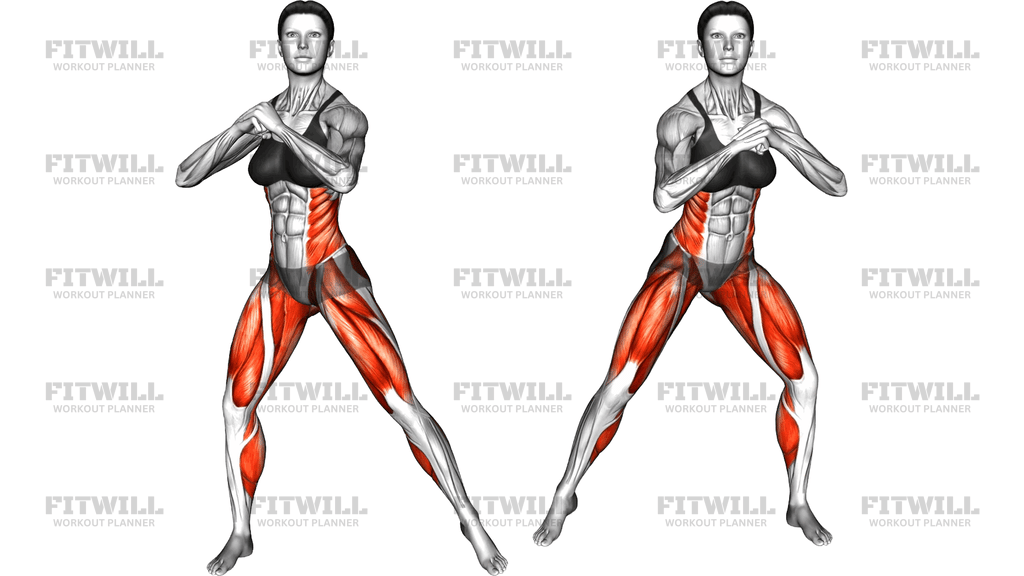
Alternating Side Step Back Toe Tap Walk
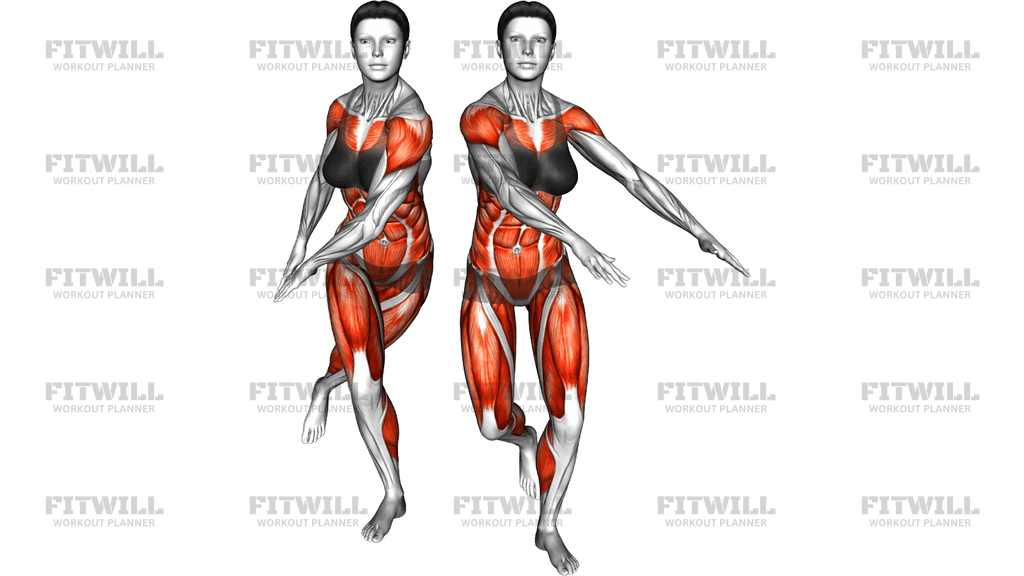
The Alternating Side Step Back Toe Tap Walk is a body weight coordination drill that combines a lateral step with a rear toe tap, repeated in an alternating walking pattern. From a tall stance, you step one foot out to the side, tap the toes of your other foot behind and across your body, then bring that foot through to step out on the opposite side. The result is a continuous, rolling walk that moves you forward while your feet cross and reopen beneath your hips.
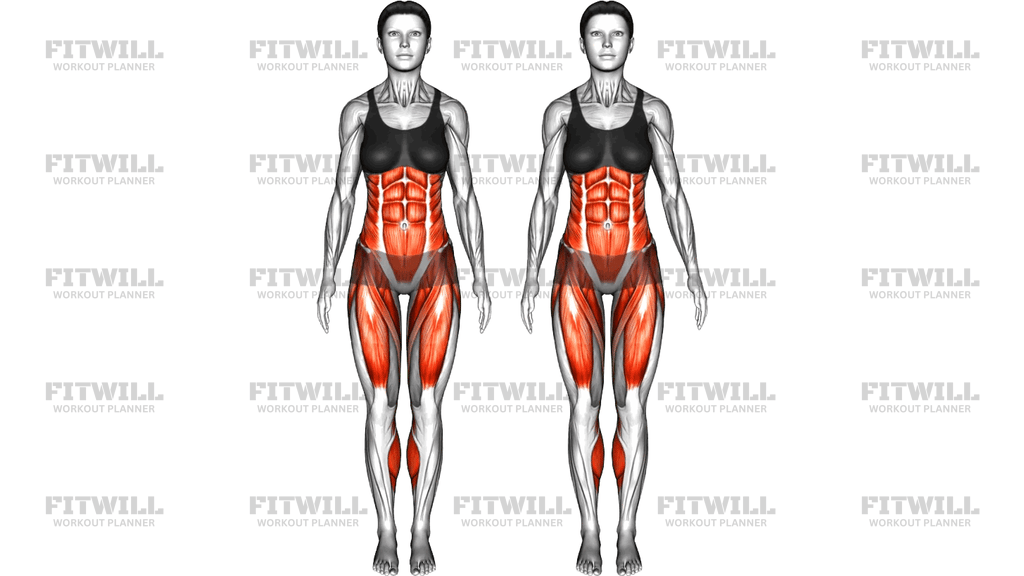
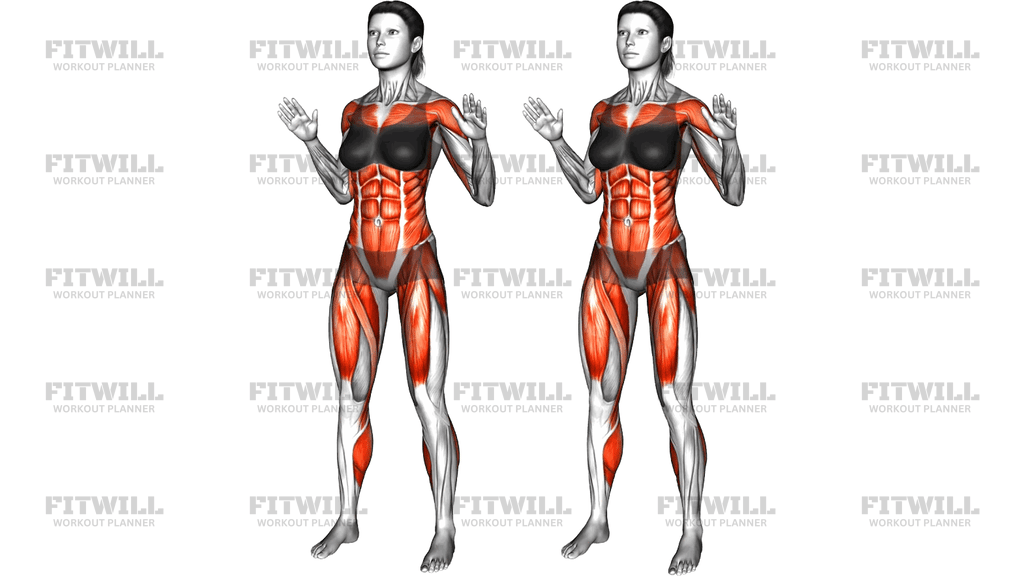
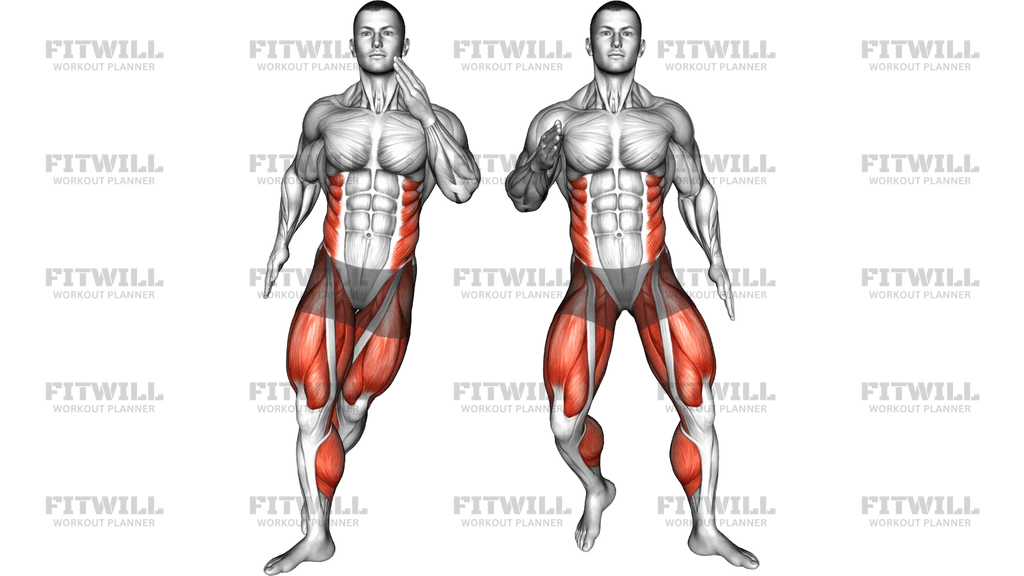
This movement is popular in warm-ups, low-impact cardio circuits, and senior or rehab-style programming because it trains lateral hip control, single-leg balance, and rhythmic footwork without any jumping or equipment. The quadriceps and calves handle most of the stepping work, while the gluteus medius and outer hip muscles stabilize your pelvis every time one foot leaves the floor. Your core, especially the obliques, works quietly to keep your torso facing forward as your legs cross beneath you.
Setup matters more than it looks. Because the tapping foot travels behind and slightly across the midline, you need clear floor space, an upright chest, and a braced middle so the crossing leg does not pull your pelvis into a twist. Keep the tap light, more of a brush of the toes against the floor than a weight shift, so the standing leg stays loaded and stable.
Executed well, each step should feel smooth and even: step wide, tap soft, step through, switch sides. A common error is rushing, which turns the drill into a shuffle with sloppy taps and a leaning torso. Slow the tempo down until the foot path is clean, then build speed gradually while keeping the chest tall.
You will see this drill used as a dynamic warm-up before lower body strength work, as a low-impact cardio interval in group classes, and as a balance and coordination exercise for older adults or anyone returning from time off. It also pairs well with forward, backward, and lateral walking drills to round out a footwork circuit.
For safety, keep your eyes forward rather than down at your feet, clear loose rugs or clutter from your path, and hold a wall or doorway for light support if the crossing tap feels unsteady at first. Stop and shorten the range if you feel any pinching at the front of the hip or strain along the outer thigh.
[ Workout Log & Planner ]
Put your next workout in Fitwill
Keep your plan and training log ready when you are.


Instructions
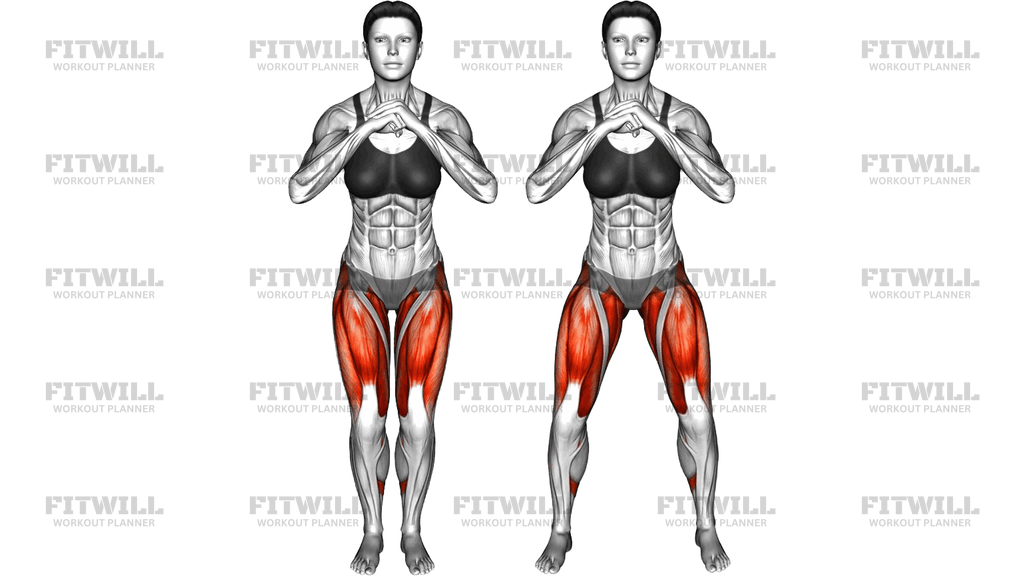
- Stand tall with your feet hip-width apart, arms relaxed at your sides or lightly clasped in front of your chest, and your gaze on a fixed point at eye level.
- Brace your core gently, as if preparing for a light push to the side, and keep your shoulders stacked over your hips.
- Step your right foot out wide to the right side, keeping your chest upright and your weight over the stepping foot.
- Bring your left foot behind and slightly across your midline, tapping only the toes of the left foot on the floor behind your right heel without shifting weight onto it.
- Lift the left foot and step it out wide to the left, passing it back through a hip-width stance as it travels forward.
- Tap the toes of your right foot behind and across your midline behind the left heel, keeping the tap light and quick.
- Continue alternating in this walking rhythm, moving steadily forward with each wide step while your torso stays square ahead.
- Exhale on each step out to the side and inhale as the rear foot taps and prepares to step through.
- Keep your steps controlled and even on both sides rather than fast; pace should let you place every tap deliberately.
- To finish, step both feet together into a hip-width stance, settle your weight evenly, and reset your posture before stopping.
Tips & Tricks
- Keep the rear tap to about 20 to 30 percent of your body weight; if you feel yourself sinking onto the back toes, cue yourself to stay tall over the front leg.
- If your hips sway side to side with every step, narrow the width of your side step until your pelvis stays level, then widen again as control improves.
- Watch for the standing knee collapsing inward as the other foot crosses behind; think of pressing the standing knee out over your little toe.
- Start beside a wall or counter on your first few sessions and trail a fingertip along it; the crossing tap is where most people lose balance.
- If your lower back arches as the leg reaches back, reduce how far behind you tap and focus on bracing your ribs down over your pelvis.
- Alternate which foot starts each set, since most people step noticeably farther and smoother on their dominant side.
- Count taps instead of time at first, such as 10 per side, so a rushed tempo does not degrade the foot path.
- Wear flat, secure footwear or do the drill barefoot on a non-slip surface; sliding sneakers are the most common cause of a missed tap.
- Once the pattern is automatic, add a gentle arm swing opposite to each step to reinforce the walking rhythm and raise the cardio demand.
Frequently Asked Questions
What muscles does the Alternating Side Step Back Toe Tap Walk work?
The quadriceps and calves drive the stepping, while the gluteus medius and outer hip muscles stabilize each single-leg stance. The obliques and deep core work to keep your torso square as your feet cross behind your midline.
Is the Alternating Side Step Back Toe Tap Walk suitable for beginners?
Yes, it is a low-impact drill with no jumping or load. Beginners should start with a smaller side step, a light toe tap close to the standing heel, and a hand on a wall until the crossing pattern feels natural.
How far behind me should my tapping foot travel?
The tap should land a comfortable step behind and slightly across your midline, roughly in line with the heel of your standing leg. If your hip pinches or your torso twists, shorten the reach rather than pushing the range.
Should I put weight on the foot when it taps back?
No, keep it a light brush of the toes so the standing leg stays loaded and your balance stays intact. Loading the back tap is one of the most common mistakes and usually causes a stumble forward on the next step.
Why do I keep leaning forward during this drill?
Leaning usually happens when the side step is too wide or the rear tap reaches too far for your current hip mobility. Reduce both distances, re-brace your core, and keep your shoulders stacked over your hips before progressing.
Can I use the Alternating Side Step Back Toe Tap Walk as cardio?
Yes, once the pattern is smooth you can extend the duration or add arm swing to raise your heart rate. It works well as a low-impact interval in circuits where jumping is not appropriate.
What can I substitute if the crossing tap feels too difficult?
Try a straight side step with a rear tap directly behind the heel, without crossing the midline. Once that is stable, angle the tap slightly inward and progress back to the full crossing pattern.
How long should I perform the Alternating Side Step Back Toe Tap Walk?
For a warm-up, 20 to 40 meters of walking or about 30 seconds per set is plenty. For conditioning, accumulate 1 to 3 minutes of continuous, quality steps rather than chasing speed.
Do I need any equipment or a special surface?
No, the drill only requires body weight and clear, non-slip floor space. Flat-soled shoes or bare feet both work; avoid thick, unstable footwear that makes the toe tap harder to feel.