Sitting Overhead Lats Stretch
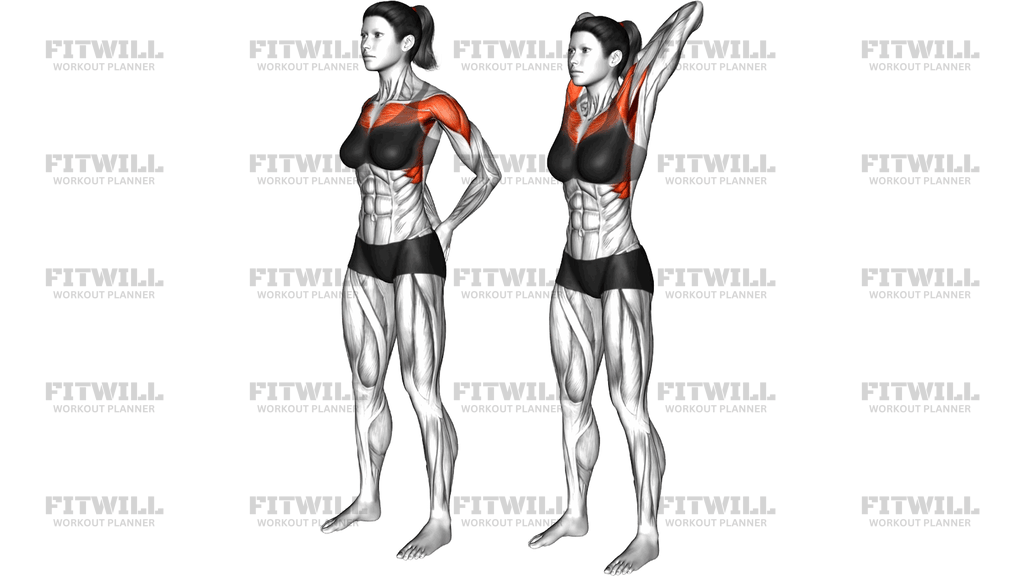
The Sitting Overhead Lats Stretch is a simple body-weight stretch that targets the latissimus dorsi, the broad muscles running from your upper arms down along the sides of your back. You sit or kneel upright, raise one arm overhead, bend the elbow so the hand drops behind your head, and then use the opposite hand to gently draw the elbow further back and over. A slight side bend away from the stretching arm deepens the pull along the ribs and armpit, which is where the lats are felt most clearly.
This stretch is especially useful for anyone whose training loads the lats heavily: pull-ups, lat pulldowns, rows, and overhead pressing all shorten and tighten these muscles over time. It is also a practical remedy for the overhead-restricted positions many people develop from long hours of desk work. Swimmers, climbers, throwers, and weightlifters who need full shoulder flexion will notice the carryover quickly, since stiff lats limit how high the arms can reach.
The seated or kneeling setup matters more than it might seem. Sitting down removes your legs from the equation and anchors your hips, so you cannot cheat the stretch by arching your lower back or rising up onto your toes. With the pelvis fixed, the lengthening has to happen in the lats and shoulder, which is exactly what you want. Keep your torso tall and your ribs stacked over your hips rather than letting the chest flare upward.
To execute it well, move into the stretch gradually. The pulling hand applies gentle, steady pressure on the elbow — never a sharp yank — and the intensity should sit at a comfortable tension you could hold while breathing normally. Breathe slowly and let the tissue release over 20 to 30 seconds rather than forcing range. You should feel the stretch along the side of the back, into the armpit, and down the back of the upper arm where the triceps long head runs.
A few safety points keep this effective. Stop if you feel pinching in the shoulder joint or any tingling in the arm, and reduce the angle of the pull instead of pushing through discomfort. Because the overhead position places the shoulder in a stretched, externally loaded spot, people with a history of shoulder impingement or instability should keep the range modest. Done consistently after upper-body sessions or on rest days, this stretch reliably improves overhead reach and side-back flexibility.
[ Workout Log & Planner ]
Put your next workout in Fitwill
Keep your plan and training log ready when you are.


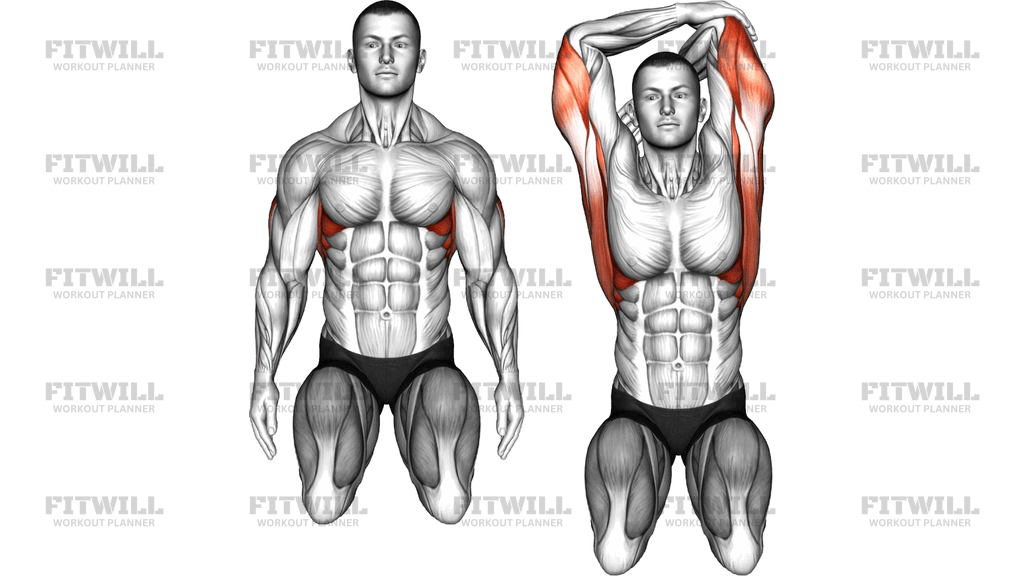
Instructions
- Sit upright on a bench or kneel down and sit your hips back onto your heels, with your torso tall and your hips anchored so they stay level throughout the stretch.
- Raise your right arm straight overhead, then bend the elbow so your right hand drops down behind your head toward your upper back.
- Reach your left hand up and grip the right elbow, keeping your sitting posture tall with ribs stacked over your pelvis.
- Gently pull the right elbow backward and slightly to the left, letting the right hand travel further down behind your head.
- Add a slow side bend of your torso to the left to lengthen the right lat along the ribs and armpit, stopping at a moderate, comfortable tension.
- Hold the end position for 20 to 30 seconds while breathing slowly and steadily through your nose; avoid holding your breath.
- Ease out of the stretch by releasing the elbow first, then slowly straighten the right arm back overhead before lowering it.
- Switch sides and repeat the same sequence on the left arm, matching the hold time and intensity.
- Perform 2 to 3 repetitions per side, ideally after upper-body training or when the shoulders feel tight.
Tips & Tricks
- If you feel the stretch mostly in the neck, relax the shoulder of the stretching arm down away from your ear before pulling the elbow.
- The most common mistake is yanking the elbow hard, which shifts tension into the shoulder capsule; apply only light, steady pressure with the assisting hand.
- Keep your hips planted on the bench or heels — arching your lower back is the easiest way to fake extra range without actually lengthening the lats.
- Angle matters: pulling the elbow straight down stretches mostly triceps, while drawing it back and across slightly targets the lat more directly.
- Exhale slowly as you settle into the end range; the rib cage drops slightly with the exhale and the side of your back softens with it.
- If your shoulder pinches when the elbow points straight up, widen the arm angle a little so the elbow points slightly outward instead.
- Avoid collapsing forward — the moment your chest drops, the stretch leaks out of the lat and moves into the mid-back.
- Warm muscles stretch more willingly, so use this after training or a light general warm-up rather than first thing on cold muscles.
- For a deeper lat bias, think about driving the armpit of the stretching arm up and over your head as you side bend, not just pulling the elbow.
Frequently Asked Questions
Which muscles does the Sitting Overhead Lats Stretch target?
The primary target is the latissimus dorsi along the side of your back, with the triceps long head and the shoulder muscles also lengthened because the arm is overhead with the elbow bent.
Why should I do this stretch seated or kneeling instead of standing?
Sitting anchors your hips so you cannot compensate by arching your lower back or shifting your weight, which forces the lengthening to happen in the lats and shoulder where you want it.
Should I feel the Sitting Overhead Lats Stretch in my triceps too?
Yes, some sensation down the back of the upper arm is normal since the triceps long head crosses the shoulder and is stretched in this position, but the dominant feeling should be along the side of your back and armpit.
How long should I hold the stretch?
Hold for 20 to 30 seconds per side and repeat 2 to 3 times, resting briefly between holds so the muscle can release gradually instead of being forced.
Is it safe if I have shoulder problems?
If you have a history of shoulder impingement or instability, keep the elbow angle higher and the pull very gentle, and stop entirely if you feel pinching or tingling; check with a qualified professional if unsure.
When is the best time to use the Sitting Overhead Lats Stretch?
It works best after pull-ups, pulldowns, rows, or overhead pressing, or any time your overhead reach feels restricted, since warm muscles respond better than cold ones.
How hard should I pull on my elbow?
Only lightly — the assisting hand guides the elbow back and over with steady pressure, and the intensity should feel like a comfortable stretch you could breathe through, never sharp pain.
Can I do this stretch if I cannot reach behind my head with my hand?
Yes, simply bend the elbow as far as your range allows and hold near the elbow or upper arm with the other hand; your range behind the head will usually improve with consistent practice.
What can I use instead if sitting is uncomfortable?
A standing version with the same overhead elbow pull works, though it is easier to arch your back, so brace your core and keep your ribs down; a doorway lat stretch is another substitute.
Why do I feel this stretch more on one side than the other?
Side-to-side differences are common, usually from handedness or uneven pulling and carrying habits, so spend an extra hold on the tighter side to balance your overhead range over time.