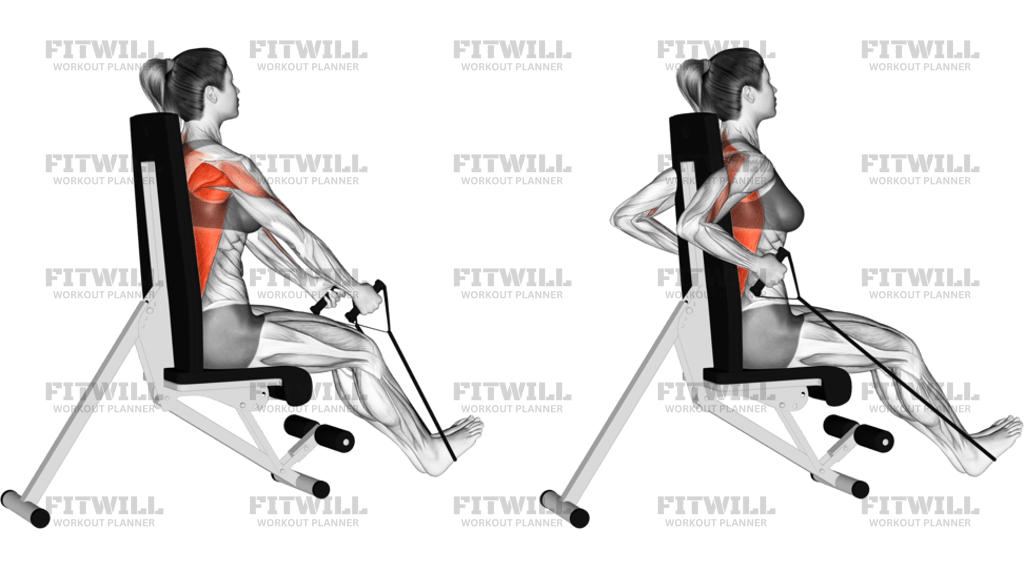
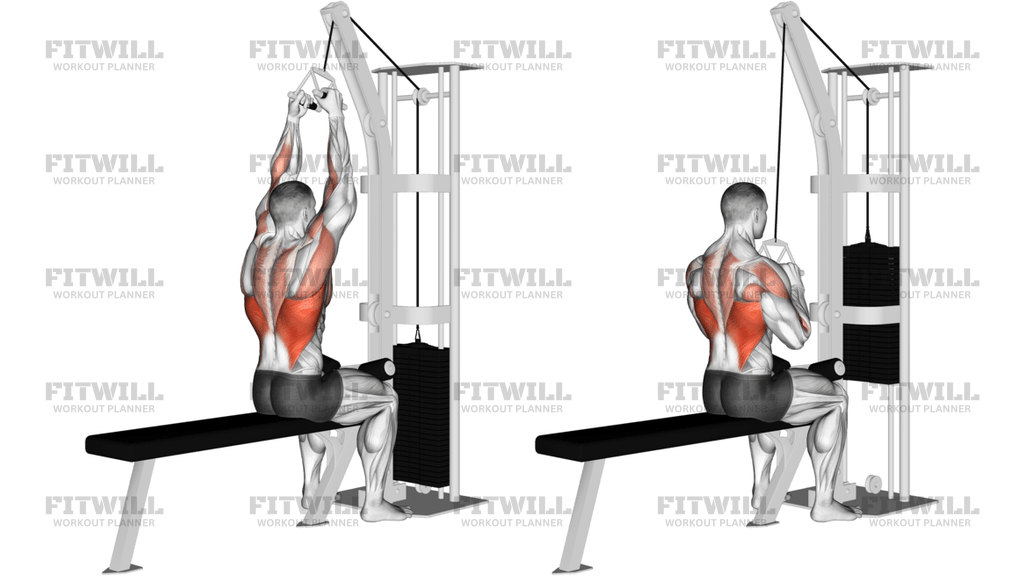
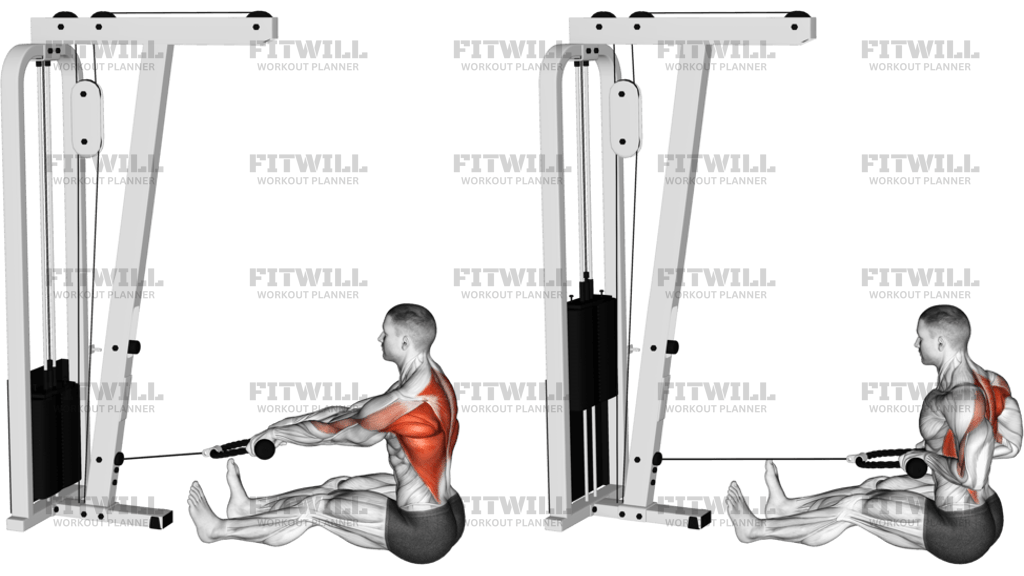
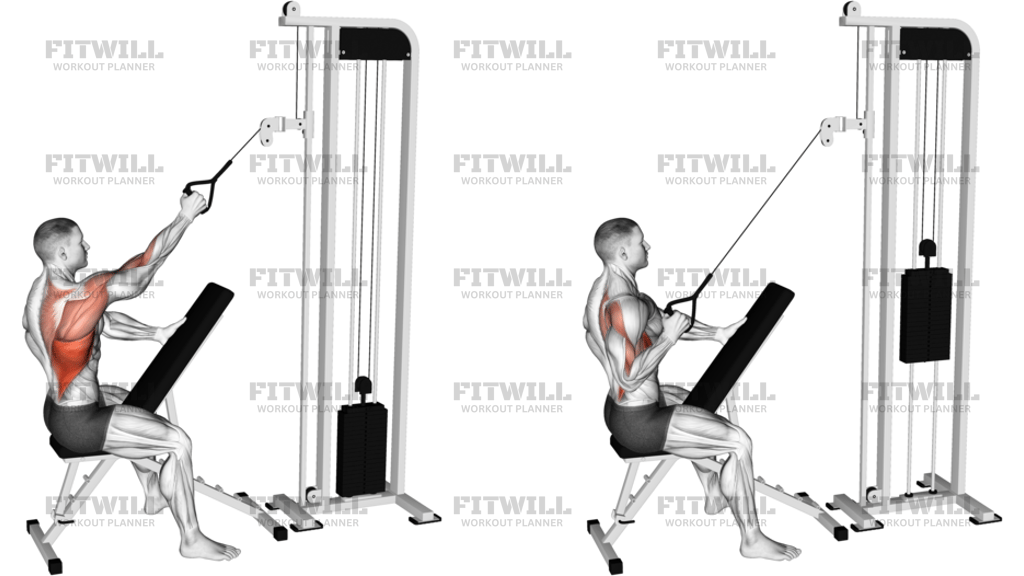
Seated Boat Row On Chair
The Seated Boat Row On Chair is a simple bodyweight pulling exercise you can do on any sturdy chair. You sit tall on the front edge of the seat, clasp your hands together, and start with your arms extended straight overhead. From there you pull your elbows down and back toward your torso, as if rowing a boat with a single wide oar, then slowly return your arms to the overhead position. Because your hands stay clasped, both sides of your upper body have to work evenly through the whole pull.
This movement is a great fit for people who train at home, office workers breaking up long sitting periods, beginners who are not ready for dumbbell or cable rows, and anyone traveling without equipment. It also works well as a warm-up before heavier back training, since it takes the lats and upper back through a long range without load. Older adults and people returning from time away from training often use it to rebuild pulling strength in a very controlled, low-risk way.
The main muscles working are the lats, which drive the arms down from overhead, along with the rhomboids and middle traps, which pull the shoulder blades back and together. The rear shoulders and biceps assist the pull, and your abs and deep core stay busy the entire time because a tall, slightly forward-leaning boat posture has to be held without a backrest doing the work for you.
Setup matters more than it looks. A chair without wheels, placed against a wall, gives you a stable base so your attention stays on your shoulder blades instead of on balance. Sitting on the front half of the seat lets you hinge slightly forward from the hips, which lengthens the lats at the top and gives the pull a real starting stretch rather than a dead-end range.
To execute it well, think of leading with your elbows rather than your hands. Your clasped hands travel down toward your upper chest while your elbows sweep out and back, and the strongest part of the rep is the squeeze between the shoulder blades at the bottom. The return should be just as deliberate as the pull; lowering your arms slowly keeps tension on the lats and stops the movement from turning into a quick arm swing.
A few practical points keep this exercise comfortable. Keep your shoulders pulled down away from your ears throughout, keep your ribcage stacked over your pelvis so you do not arch your lower back as the arms go overhead, and stop the set if you feel any pinching at the front of the shoulder. Done with steady tempo and honest range, this is one of the most useful zero-equipment pulling drills you can keep in your routine.
[ Workout Log & Planner ]
Put your next workout in Fitwill
Keep your plan and training log ready when you are.


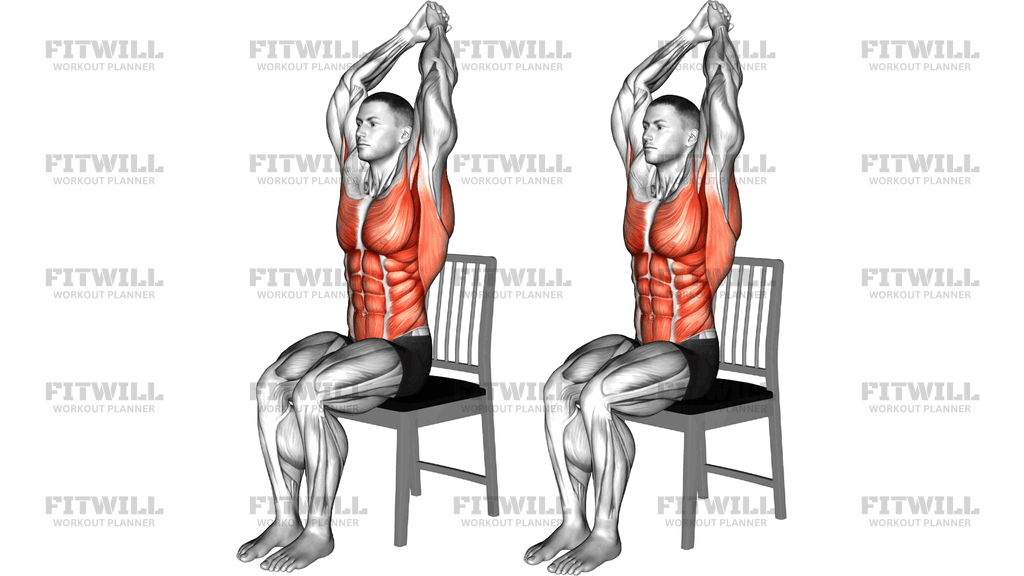
Instructions
- Place a sturdy, armless chair against a wall so it cannot slide, and sit on the front half of the seat.
- Set your feet flat on the floor about hip-width apart with your knees bent roughly 90 degrees.
- Clasp your hands together and extend both arms straight overhead, then hinge a few degrees forward from the hips into a tall boat-style lean without rounding your back.
- Brace your abs lightly and pull your shoulders down away from your ears before you start pulling.
- Pull your elbows down and out to the sides, letting your clasped hands travel toward your upper chest as if rowing a single oar.
- Finish the pull with your elbows just below shoulder height and squeeze your shoulder blades together for a beat.
- Slowly press your hands back up until your arms are fully extended overhead again, keeping your torso lean unchanged.
- Exhale as you pull down and inhale as you return your arms overhead.
- Reset your posture on the seat between reps if you feel yourself slumping, then complete your set with the same tempo throughout.
Tips & Tricks
- The most common mistake is shrugging at the top. If your shoulders creep toward your ears as your arms go overhead, lower the range slightly and consciously press your shoulder blades down before each pull.
- Do not let the pull come only from the arms. If your elbows stay close to your ears the whole rep, think about driving them down and outward so the lats and upper back do the work.
- Watch your lower back as the arms rise. An exaggerated arch usually means the chair seat is too deep or you are leaning too far back; shorten the overhead range and keep the ribs stacked over the pelvis.
- Keep the forward boat lean small and consistent. Rocking back and forth turns the exercise into momentum work and removes the stretch on the lats at the top.
- Use a chair without wheels or padding that compresses unevenly. A sliding chair is the fastest way to lose the stable base this movement depends on.
- Slow the return down before you add reps. Two to three seconds on the way up keeps the lats loaded and is usually the difference between feeling your back and just waving your arms.
- Do not grip so hard that your forearms burn out first. Clasp firmly enough to stay connected, but let the pulling effort come from the shoulders and back.
- If your shoulders feel pinched at the very top, turn your clasp slightly so your palms angle toward each other and stop just short of full overhead extension.
Frequently Asked Questions
Which muscles does the Seated Boat Row On Chair work?
The lats do most of the pulling as your arms come down from overhead, while the rhomboids and middle traps squeeze the shoulder blades together. Rear shoulders, biceps, and your abs assist and stabilize throughout.
Is the Seated Boat Row On Chair suitable for beginners?
Yes, it is one of the friendliest pulling exercises for beginners because it uses only bodyweight and a chair. Start with two sets of 10 to 12 slow reps and focus on the shoulder blade squeeze rather than speed.
Why are the hands clasped overhead instead of pulling at chest height?
Starting overhead lengthens the lats and gives you a full range from a long stretch to a hard squeeze, similar to a straight-arm pulldown combined with a row. It also forces both sides to work evenly through the clasped grip.
What kind of chair should I use for the Seated Boat Row On Chair?
Use a stable, armless chair without wheels, ideally placed against a wall. Kitchen or dining chairs work well; office chairs on casters and folding chairs are poor choices because they can shift under you.
Why do I feel the Seated Boat Row On Chair mostly in my arms?
That usually means your elbows are staying tucked near your ears and your shoulders are shrugging. Drive your elbows down and out to the sides and pause at the bottom of each rep to shift the work back to your upper back.
Can I do the Seated Boat Row On Chair every day?
For most people, yes, since it is low load and can serve as a mobility and activation drill. If your shoulders or upper back feel sore rather than just worked, take a day off and reduce the reps.
What can I use instead of a chair for this movement?
A bench, a sturdy stool, or the edge of a bed without wheels all work. The key requirements are a firm, stable seat height that lets your feet rest flat and enough room to extend your arms overhead without hitting anything.
How is the Seated Boat Row On Chair different from a resistance band row?
The band row provides resistance pulling you forward, while this version relies on muscular control through a long overhead range with no external load. The chair version is easier on the joints and better for learning the pulling pattern; the band version scales resistance more easily.
Should I stop if I feel a pinch in my shoulder?
Yes, do not push through pinching at the front or top of the shoulder. Shorten the overhead range, adjust the angle of your clasp, and if the sensation continues, choose a chest-height pulling variation instead.