Seated Pulldown On Chair
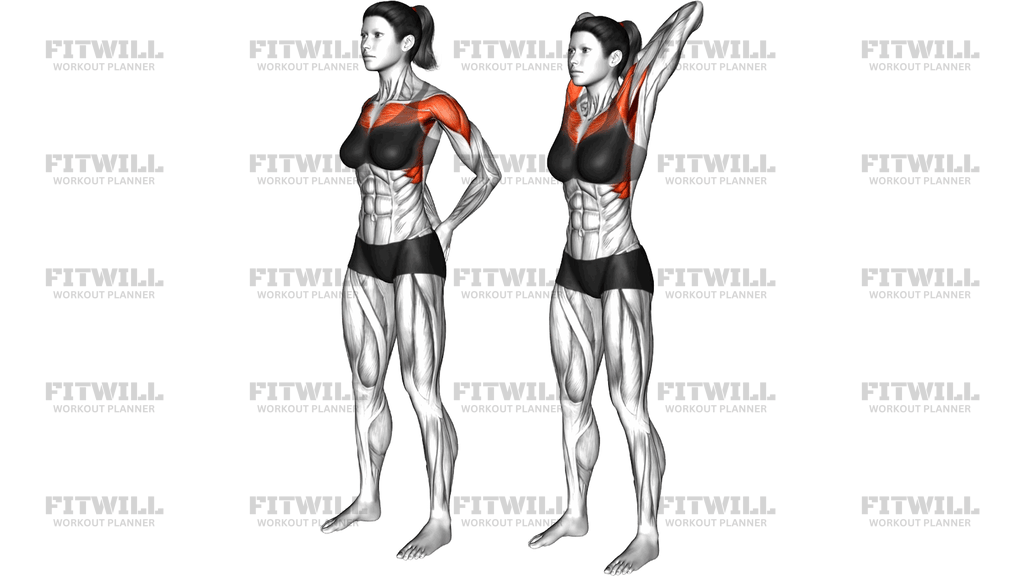
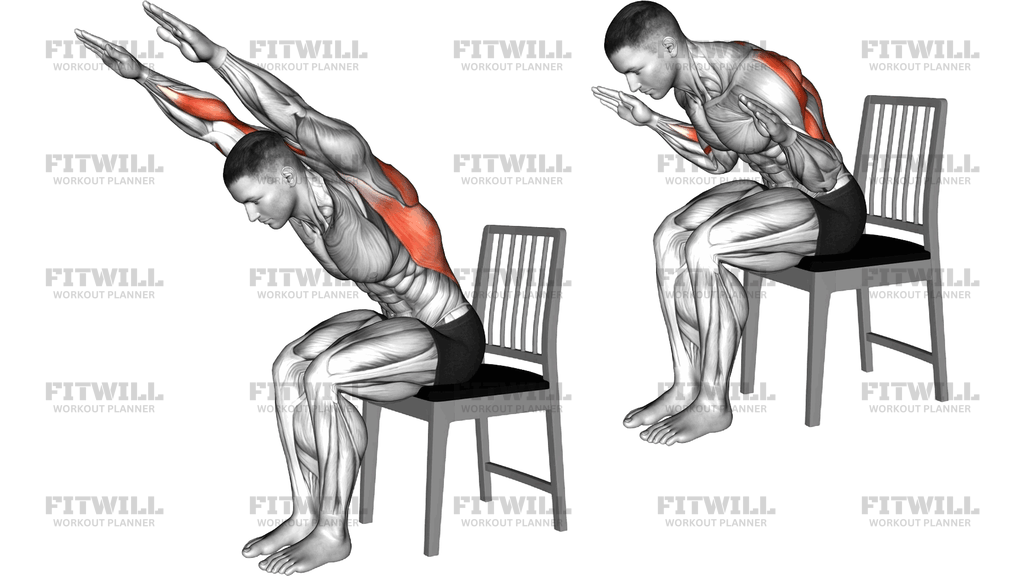
The Seated Pulldown On Chair is a bodyweight movement that recreates the arm path of a lat pulldown without any cable or bar. You sit on an ordinary chair, hinge your torso forward, sweep your arms up overhead, then pull your elbows down and back toward your ribs in a wide arc, as if you were dragging something heavy down from above. Because there is no external resistance, the exercise works as a controlled contraction drill: you create tension yourself by actively squeezing the arms down and driving the shoulder blades together at the bottom.
This is a practical option for anyone who wants to rehearse the pulldown pattern without equipment — beginners learning what a lat contraction should feel like, people warming up before a heavy back session, or anyone training at home, in an office, or while traveling with nothing but a chair available. It is also useful as a rehabilitation-friendly or low-load regression, since the joints move through the full vertical pull path with no weight to mismanage.
The primary work is done by the lats, which drive the arms down from an overhead position toward the torso. The teres major and rear delts assist that downward sweep, the rhomboids and mid-traps retract the shoulder blades as the elbows pass the ribs, and the biceps and forearms support the elbow bend and grip tension. Holding the forward-leaning seated position also asks the spinal erectors and core to keep the torso from collapsing.
The setup matters more than it looks. Sitting tall on the chair with feet flat gives you a stable base, and the forward hinge is what puts the arms in a true overhead line, so a lazy torso angle turns the movement into a shallow arm curl. Keep the hinge fixed once you set it — if your chest rises as you pull, you are using momentum instead of the lats. The elbow path should stay wide and slightly forward of the shoulders, not tucked straight down at your sides.
To execute it well, think of leading with the elbows rather than the hands. Drive them down and back until they finish just outside the ribcage, pause for a beat with the shoulder blades pulled together, then let the arms rise slowly along the same arc until they are fully extended overhead again. The negative should take at least as long as the pull.
Common use cases include warm-up sets before pulldowns or pull-ups, high-rep finishers when no gym is available, and technique practice for people whose pulldowns are dominated by the biceps. Keep the effort honest — because the load is your own muscular tension, moving fast or cutting the range gives you almost nothing. Move deliberately, feel the sides of the back working, and stop before your torso posture breaks down.
[ Workout Log & Planner ]
Put your next workout in Fitwill
Keep your plan and training log ready when you are.


Instructions
- Sit sideways-free on a sturdy chair with your feet flat on the floor, knees bent to roughly 90 degrees, and your weight spread evenly across both seat bones.
- Hinge forward from the hips until your chest is angled down toward your knees, back flat rather than rounded, and extend both arms up and forward overhead so they line up with your torso.
- Turn your palms to face slightly forward or inward, arms straight, and set a light tension in your shoulders before the rep begins.
- Brace your core to hold the hinge angle steady — your torso position should not change for the whole set.
- Pull by driving your elbows down and out in a wide arc, bending them as they travel toward and past your sides.
- Finish with your elbows just outside your ribcage, hands near chest height, and squeeze your shoulder blades together for a one-second hold.
- Reverse the arc slowly, straightening your arms overhead under control instead of letting them spring back up.
- Exhale as you pull down and inhale as you return to the overhead position.
- Complete your reps, then sit upright and gently roll or stretch your shoulders before standing up from the chair.
Tips & Tricks
- The most common mistake is sitting upright through the set — without the forward hinge your arms never reach an overhead line and the lats barely contribute. Reset the hinge every few reps if you drift.
- Lead with the elbows, not the hands. If your hands finish near your waist while your elbows flare backward, you have turned the pull into an arm movement; cue yourself to pull the elbows down wide.
- Because there is no added load, tension comes entirely from your own effort. Actively squeeze the arms down as if fighting resistance — passive swings do almost nothing here.
- Avoid rounding your lower back as you hinge forward. Push your hips back into the seat and keep the chest proud to hold a neutral spine.
- Do not shrug into the pull. If your shoulders creep toward your ears, the upper traps are taking over; drop the shoulders down first, then start each rep.
- Keep the descent slow. The eccentric overhead return is where most of the lat stretch happens, so rush it and you lose half the exercise.
- Pause for a full second at the bottom with the shoulder blades retracted — the hold replaces the load a cable would normally provide.
- Use a chair without wheels or armrests so your legs and arms have clear space to move and the seat cannot slide out from under you.
Frequently Asked Questions
What muscles does the Seated Pulldown On Chair work?
The lats do the main work of pulling the arms down from overhead, supported by the teres major and rear delts. The rhomboids and mid-traps retract the shoulder blades, and the biceps assist the elbow bend.
Is the Seated Pulldown On Chair a good exercise for beginners?
Yes. With no external load it is a low-risk way to learn the vertical pulling pattern and feel a lat contraction before progressing to machine pulldowns or pull-ups. Beginners should focus on slow, deliberate reps rather than speed.
Why do I need to lean forward on the chair for the Seated Pulldown On Chair?
The forward hinge puts your arms in a true overhead line, which is what makes the downward arc a lat-dominant pull. Sitting upright shortens the range and shifts the work toward the biceps and shoulders.
How many reps should I do of the Seated Pulldown On Chair?
Since the resistance comes from your own muscular tension, use higher reps — typically 12 to 20 per set — with a one-second squeeze at the bottom and a slow overhead return. Stop when your torso posture starts to slip.
My biceps fatigue before my back on the Seated Pulldown On Chair. What am I doing wrong?
You are likely pulling with your hands instead of driving the elbows down and back. Cue yourself to lead with the elbows in a wide arc and keep your grip relaxed, and the lats will take over more of the work.
Can I substitute the Seated Pulldown On Chair for a cable pulldown?
It trains the same movement path, but it cannot load the lats the way a cable stack can. Treat it as a technique drill, warm-up, or travel option rather than a full replacement when strength building is the goal.
What kind of chair should I use for the Seated Pulldown On Chair?
A stable, armless chair with four legs and no wheels, set on a non-slip surface. A swivel or rolling chair can slide out during the hinge and pull, so avoid office chairs on casters.
Is the Seated Pulldown On Chair safe for people with shoulder issues?
It is generally gentle because there is no added weight, but the overhead reach still requires decent shoulder mobility. If raising your arms overhead causes discomfort, work to a pain-free range or check with a qualified professional first.
Should my feet stay flat during the Seated Pulldown On Chair?
Yes, keep both feet flat on the floor with knees around 90 degrees. That base stops you from tipping forward as you hinge and keeps the torso angle consistent from rep to rep.