Dumbbell Seated Half Circle Front Raise
The Dumbbell Seated Half Circle Front Raise is a single-arm shoulder exercise where you sweep one dumbbell in a wide arc across the front of your body, starting beside your hip and finishing at shoulder height on the opposite side. The seated position on a bench with back support removes momentum from your lower body and locks your torso upright, so the front of the shoulder has to do the lifting on its own. Because the weight travels diagonally rather than straight ahead, the movement covers more of the shoulder's natural arc than a standard front raise.
This lift is useful for anyone whose front raise work has grown stale or who wants more time under tension through the first half of the shoulder's range. The half-circle path keeps the front delts and upper chest fibers under continuous load from the moment the dumbbell leaves your thigh until it reaches the top of the arc, and the long lever of a single dumbbell held in one hand makes even light weights feel demanding by the end of a set.
Setup matters more here than in most raise variations. Sitting with your back flat against the bench pad and your feet planted stops you from leaning back and turning the exercise into a full-body heave. The bench also stabilizes your ribcage, which makes it easier to feel the front of the shoulder working instead of compensating with your traps or lower back.
To execute it well, keep the arc wide and smooth rather than swinging the dumbbell straight up. Your arm stays nearly straight with only a soft bend at the elbow, and the weight traces a shallow half circle across your midsection as it climbs. Pause briefly at the top with the dumbbell around shoulder height on the opposite side, then lower along the same path under control. One complete sweep should take noticeably longer than a normal rep, because that slow tempo is exactly what makes this variation effective.
Expect to use a lighter dumbbell than you would for a two-arm front raise. The single-arm setup doubles the time each shoulder spends working, and the diagonal path places extra demand on the stabilizing muscles around the shoulder girdle. Start conservative, focus on a clean arc, and only add weight when the last few reps still look identical to the first.
This movement fits well as an accessory after pressing work, or as a finisher when you want to fatigue the front delts without heavy loading. It is also a practical choice for lifters recovering from heavy bench or overhead sessions who still want direct shoulder work with minimal joint stress, since the seated, supported position keeps the movement controlled from start to finish.
Fitwill
Log Workouts, Track Progress & Build Strength.
Achieve more with Fitwill: explore over 9600 exercises with images and videos, access built-in and custom workouts, perfect for both gym and home sessions, and see real results.
Start your journey. Download today!




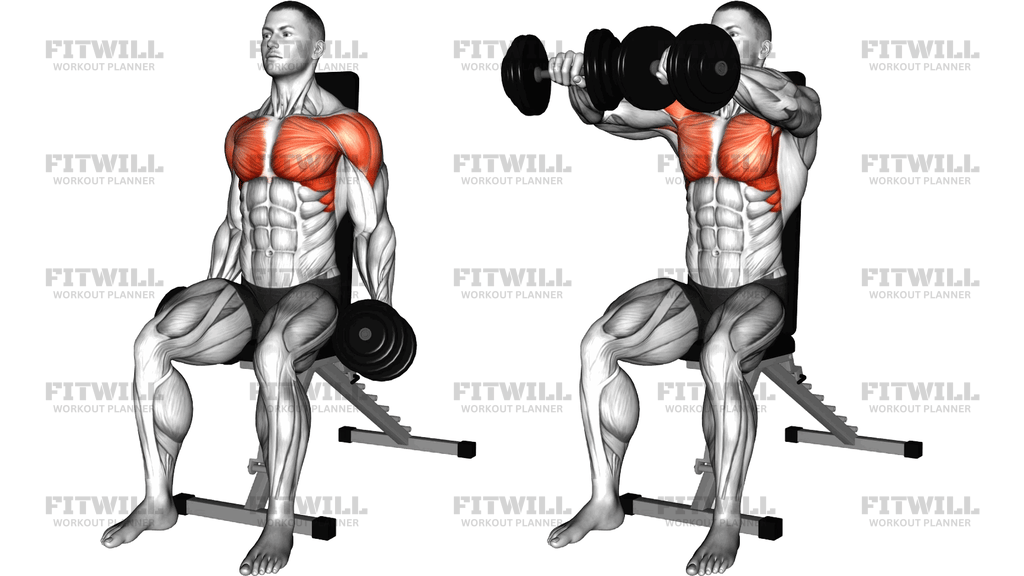
Instructions
- Sit on a bench with an upright back pad, feet flat on the floor about hip-width apart, and your back and head resting against the pad.
- Hold one dumbbell in your right hand with a neutral grip, palm facing your body, and let your arm hang straight down beside your right hip.
- Brace your core, pull your shoulders down away from your ears, and keep your ribcage stacked over your hips before the rep starts.
- With a soft bend in your elbow, sweep the dumbbell forward and across your body in a wide half-circle arc toward your left side.
- Continue the arc until the dumbbell reaches about shoulder height on the opposite side, with your arm roughly parallel to the floor.
- Pause for a beat at the top without shrugging or leaning sideways, then reverse the exact same arc back down to your right hip.
- Exhale as you sweep the weight up and across, and inhale as you lower it back along the path.
- Complete all reps on one side, then switch the dumbbell to your left hand and repeat the arc toward your right side.
- Reset your posture against the back pad between sides so every set starts from the same upright position.
Tips & Tricks
- Think of drawing a shallow rainbow across your torso rather than lifting straight up; if the dumbbell travels vertically in front of your chest, the half-circle intent is lost.
- The most common mistake is leaning the torso away from the bench as the weight crosses midline. Keep both shoulder blades in contact with the pad and the lean will disappear.
- Keep the elbow bend constant and minimal. Bending the arm more as it rises shortens the lever and quietly makes the set easier without you noticing.
- If you feel it in your neck or traps, the weight is likely too heavy and you are shrugging to assist. Drop the load until the work stays in the front of the shoulder.
- Do not let the dumbbell clang against your thigh at the bottom. Stop the descent an inch short so the shoulder stays under tension for the whole set.
- Alternate which hand starts each session. Starting always with the same side hides a strength difference between your left and right shoulders over time.
- A three-second lowering phase turns this into a demanding tempo exercise with surprisingly light weight, which suits it well as a finisher.
- Grip the handle firmly but not white-knuckle tight; excess grip tension tends to creep up into the forearms and shoulders and disrupts the smooth arc.
Frequently Asked Questions
Which muscles does the Dumbbell Seated Half Circle Front Raise target?
The front shoulders do most of the lifting, with the upper chest assisting as the dumbbell crosses the body. The muscles that steady the shoulder blade work isometrically to keep your torso fixed against the bench.
Why is this done seated instead of standing?
Sitting with back support removes the ability to use hip and trunk momentum to swing the dumbbell, which forces the shoulder to raise the weight on its own. It also makes the long diagonal arc easier to keep clean.
Is the Dumbbell Seated Half Circle Front Raise suitable for beginners?
Yes, provided the weight is light and tempo is slow. Beginners should master a standard seated front raise first, since the diagonal arc requires a bit more coordination.
Should one arm work at a time or both?
One arm at a time, as the setup and arc are built around a single dumbbell. This doubles the time each shoulder spends under tension and makes left-right differences obvious.
How high should the dumbbell travel at the top of the arc?
Aim for roughly shoulder height on the opposite side, with your arm close to parallel to the floor. Going higher usually means shrugging or leaning, which shifts work away from the front delts.
What is the most common mistake in this exercise?
Turning the half-circle into a straight front swing by using momentum from the leg or trunk. Keep your back on the pad and make the arc deliberate and wide to avoid it.
What can I use if I do not have a bench with back support?
Any stable upright seat works, but a backless setup will make it harder to prevent leaning. In that case reduce the weight noticeably and focus on keeping your torso vertical throughout the arc.
How does this differ from a regular Dumbbell Front Raise?
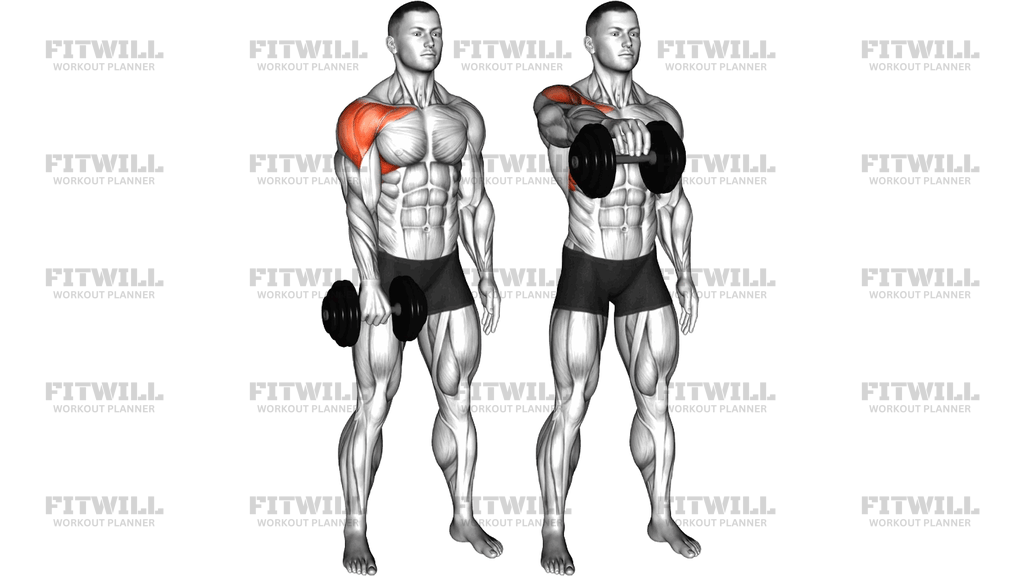
The regular version lifts the dumbbell straight ahead of the same-side shoulder, while this variation sweeps diagonally across the body, lengthening the path and keeping tension on the shoulder through a wider range.
How heavy should the dumbbell be?
Use noticeably less than your standard front raise weight, since each shoulder works alone through a longer path. Choose a load you can sweep for 10 to 12 controlled reps without your torso moving off the pad.
Can I do this every shoulder day?
It can appear in most sessions because the load is light and joint-friendly, but treat it as accessory work after your presses. If your front delts feel persistently sore or fatigued, cut back to two sessions per week.