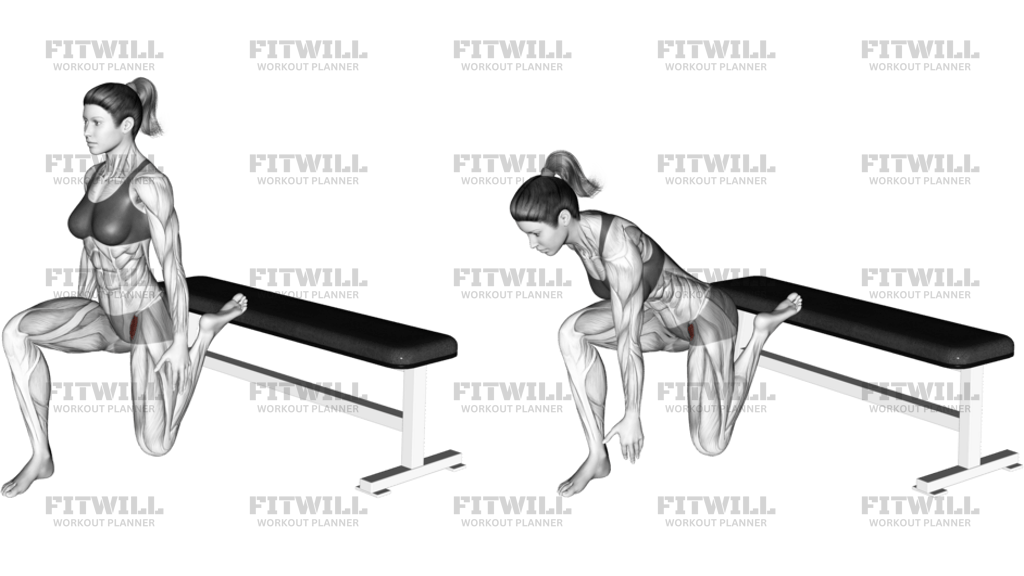
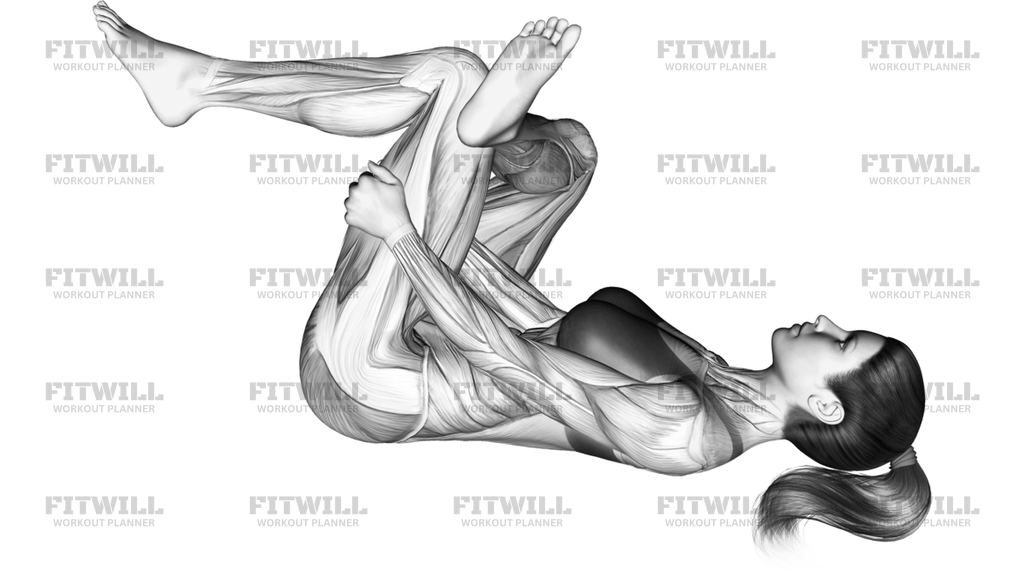
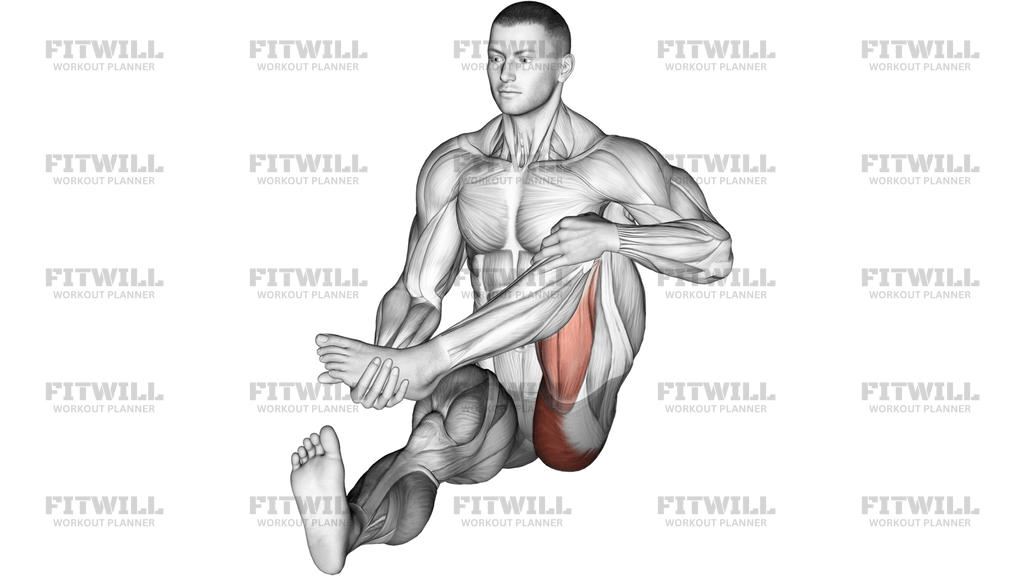
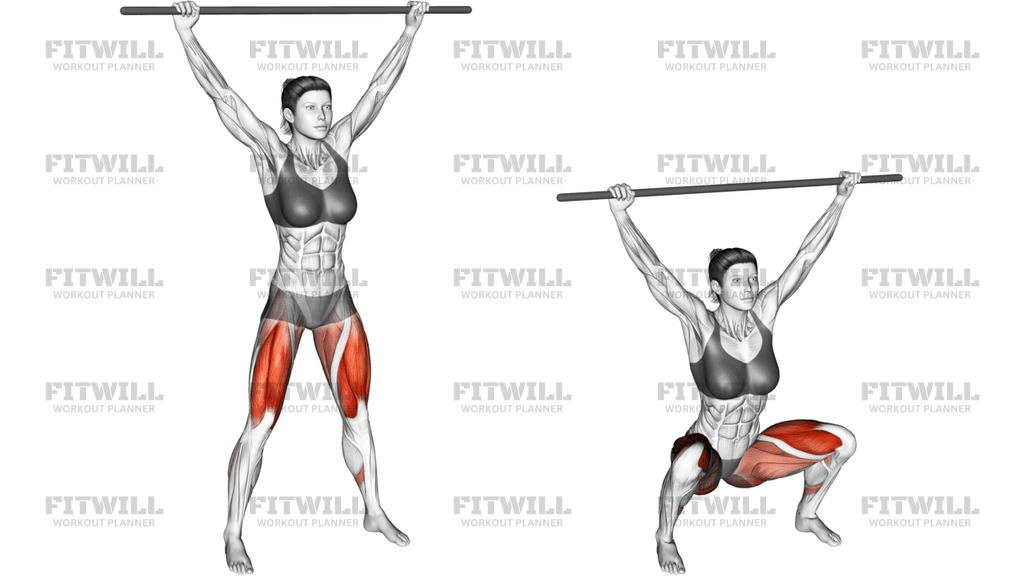
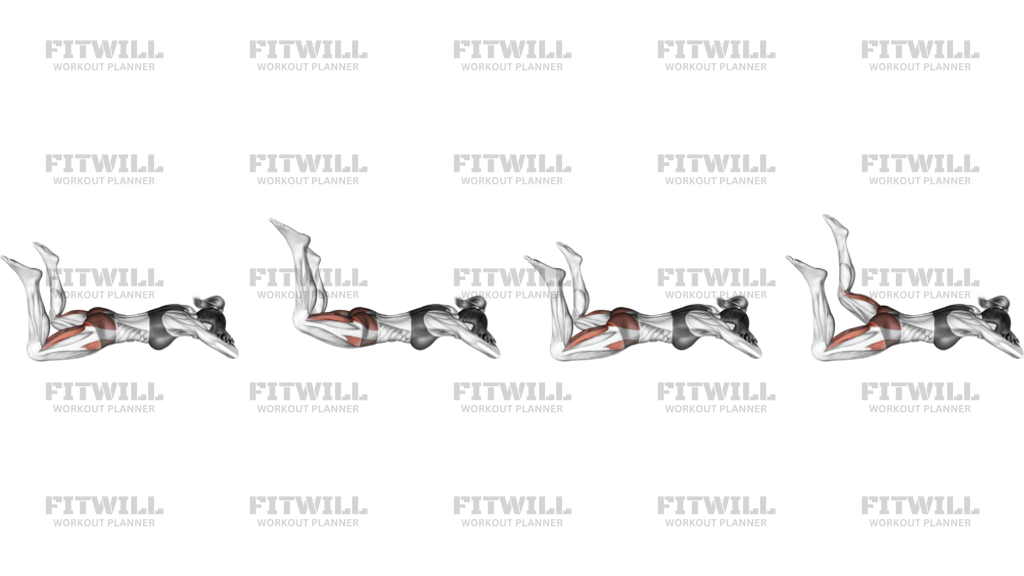
Kneeling Hip Flexor Stretch
Kneeling Hip Flexor Stretch is a half-kneeling mobility drill that targets the front of the hip on the trailing leg. It is especially useful after long periods of sitting, running, cycling, squats, or any lower-body session where the hips start to feel tight and the pelvis wants to drift forward. The goal is not to chase a huge lunge; it is to create a stable stretch that opens the front of the hip while the torso stays stacked and the pelvis stays square.
The setup matters more than depth. One knee rests on the mat, the other foot is planted in front, and both feet should point mostly forward so the hips do not twist open. Keep the rear knee and the top of the rear foot supported, then find a stance that lets the front shin stay close to vertical without crowding the front knee. A small pelvic tuck and a light squeeze of the kneeling-side glute usually puts the stretch where it belongs.
From there, breathe out and glide the hips forward only a few inches at a time. Keep the chest tall, the ribs down, and the lower back quiet so the movement comes from the hip rather than an over-arched spine. If you want more range, build it with pelvis position and glute tension instead of leaning the torso farther forward.
Kneeling Hip Flexor Stretch is a practical reset in warm-ups, cooldowns, and between lower-body sets when the hips feel stiff or compressed. It can help runners and lifters restore a more comfortable front-hip position before split squats, lunges, deadlifts, or step-ups. Hold each side long enough to feel a steady opening, then come out of the stretch slowly and repeat on the other side so both hips get the same attention.
The stretch should feel like a clear pull through the front of the rear hip and upper thigh, not a pinch in the groin or strain in the low back. If the rear knee is uncomfortable, use more padding and shorten the stance. If the front knee feels crowded, move the front foot a little farther away and keep pressure through the heel. Clean positioning always gives a better result than forcing a bigger shape.
Fitwill
Log Workouts, Track Progress & Build Strength.
Achieve more with Fitwill: explore over 9600 exercises with images and videos, access built-in and custom workouts, perfect for both gym and home sessions, and see real results.
Start your journey. Download today!




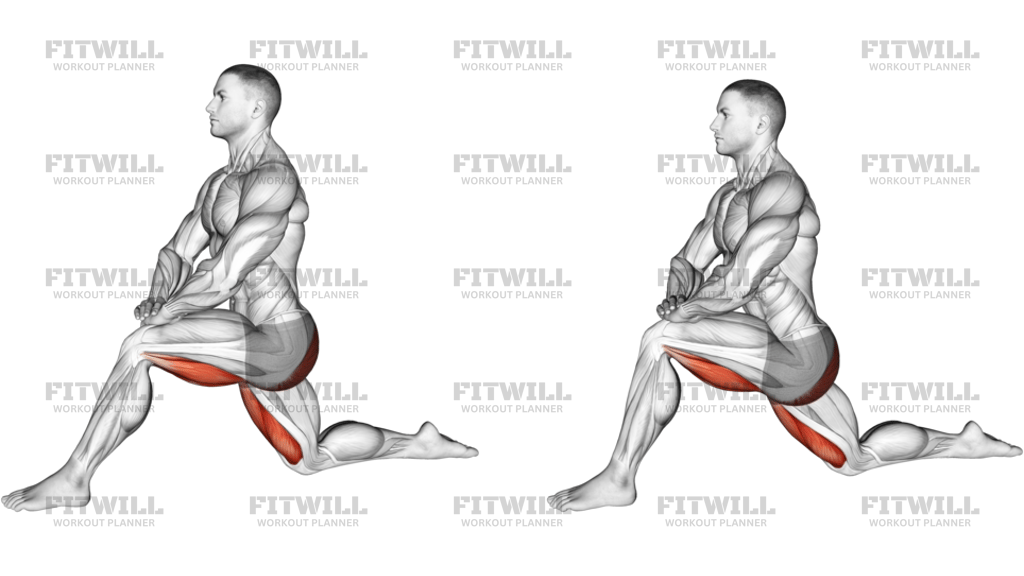
Instructions
- Place a mat on the floor and kneel with one knee down, the other foot planted in front, and both feet pointing mostly straight ahead.
- Stack the front knee over the ankle and keep the rear knee under the hip with the top of the rear foot resting on the mat.
- Square your hips forward and place both hands on the front thigh for balance.
- Lightly squeeze the glute on the kneeling side and tuck the pelvis just enough to flatten the lower back.
- Lift the chest without flaring the ribs or twisting the torso.
- Exhale and glide the hips forward a few inches until you feel the stretch in the front of the rear hip and upper thigh.
- Hold the position and breathe slowly while keeping the torso tall and the weight centered between the front foot and rear knee.
- Ease the hips back out of the stretch, switch sides, and repeat with the same stance.
Tips & Tricks
- Start with a shorter stance than you think you need; if the front foot is too far away, the stretch often shifts into the groin.
- Think glute squeeze first, hips second on the kneeling side so the pelvis stays tucked instead of dumping into the low back.
- Keep the front heel heavy; if it starts to float, the lunge becomes unstable and the stretch loses its line.
- Pad the rear knee enough that you can relax into the hold instead of guarding against the floor.
- If you feel the low back more than the hip, shorten the range and re-stack the ribs over the pelvis before moving again.
- Use a slow exhale to help the hips glide forward without forcing the position.
- Stay square to the front; if one hip opens outward, you are no longer stretching the same line on both sides.
- For a stronger rectus femoris stretch, keep the torso tall and the rear glute engaged rather than leaning forward.
Frequently Asked Questions
What muscle does Kneeling Hip Flexor Stretch target most?
It mainly opens the hip flexors and upper thigh of the trailing leg, especially when you keep the pelvis tucked and square.
Can beginners perform this exercise?
Yes. It is beginner-friendly as long as the rear knee is padded and the stance is short enough to keep balance and pelvic control.
Should my back toes be tucked or flat in Kneeling Hip Flexor Stretch?
The top of the rear foot on the floor is a good starting position. Tuck the toes if that feels better on the ankle or gives you more support.
Why do I feel Kneeling Hip Flexor Stretch in my lower back?
You are probably arching instead of tilting the pelvis slightly back. Shorten the stance and squeeze the rear-side glute before gliding forward.
How far forward should I move in Kneeling Hip Flexor Stretch?
Only far enough to create a steady stretch in the front of the rear hip without pinching the front of the hip or loading the front knee.
Is Kneeling Hip Flexor Stretch good before lower-body training?
Yes, it can work well in a warm-up if you keep the hold brief and avoid sinking so deep that the hip feels loose.
What if my front knee hurts during Kneeling Hip Flexor Stretch?
Move the front foot slightly farther away, keep the shin more vertical, and make sure the rear knee has enough padding.
Can I add an overhead reach to Kneeling Hip Flexor Stretch?
Yes, but only after you can hold the basic half-kneeling position without arching or rotating.