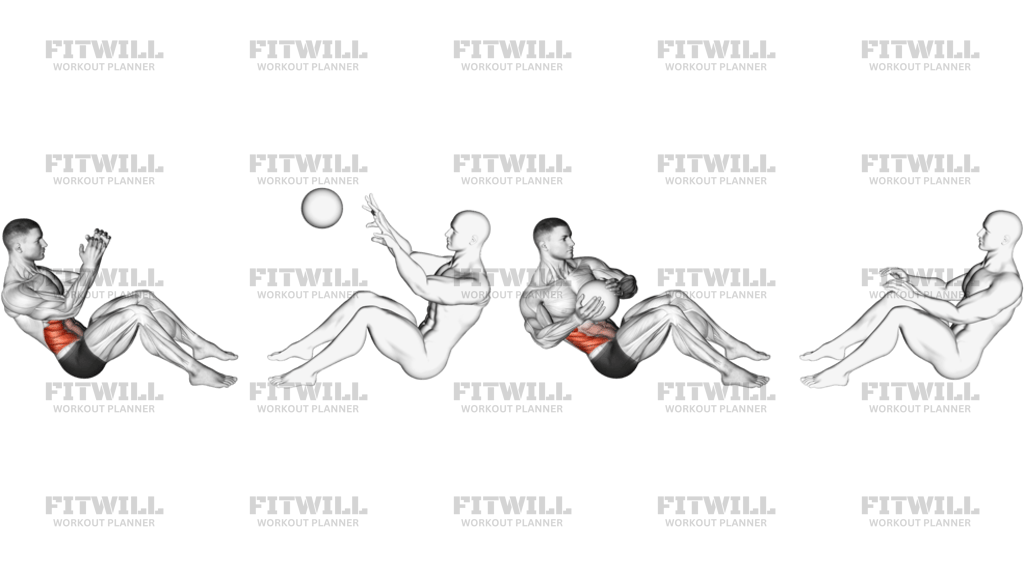
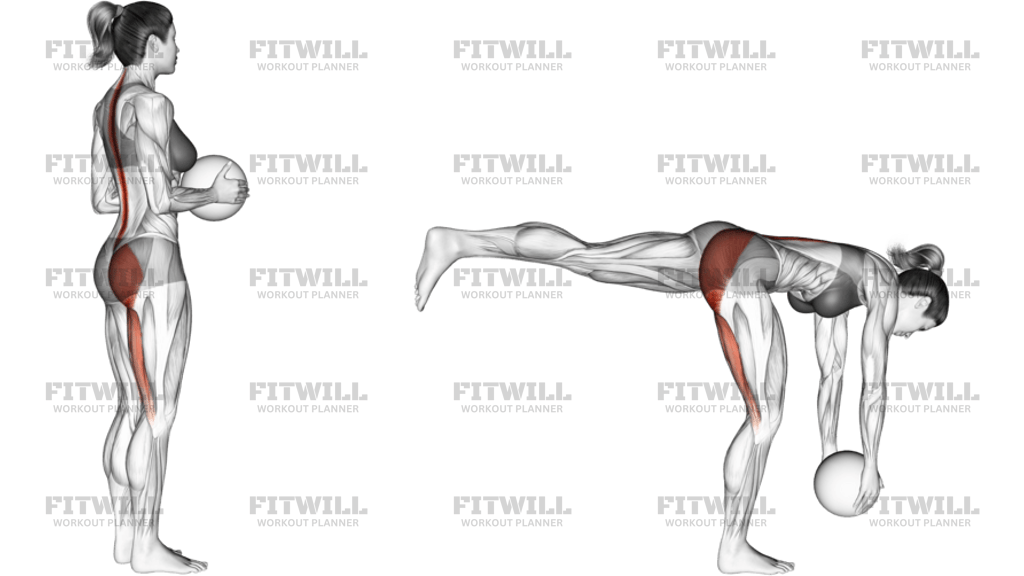
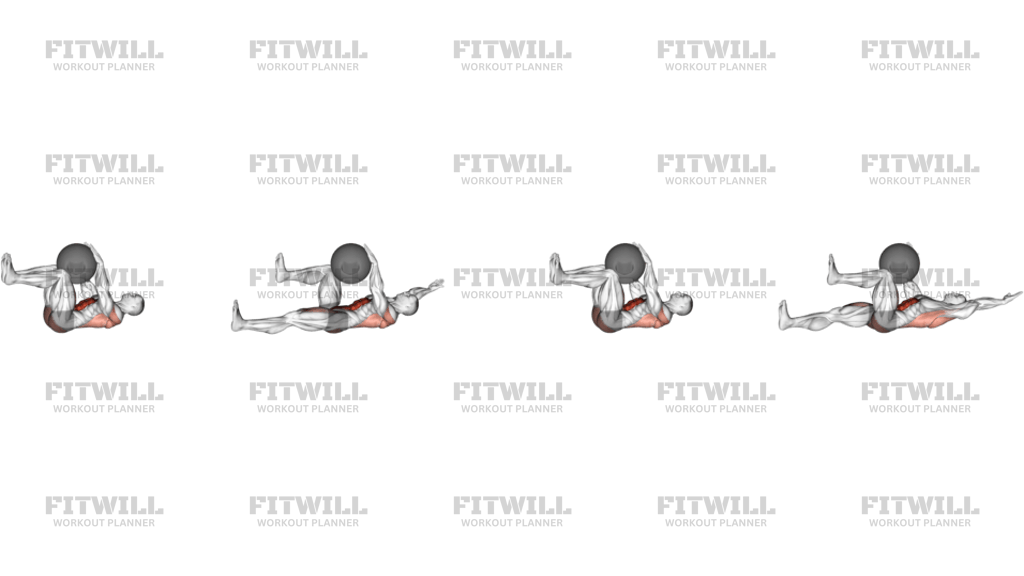
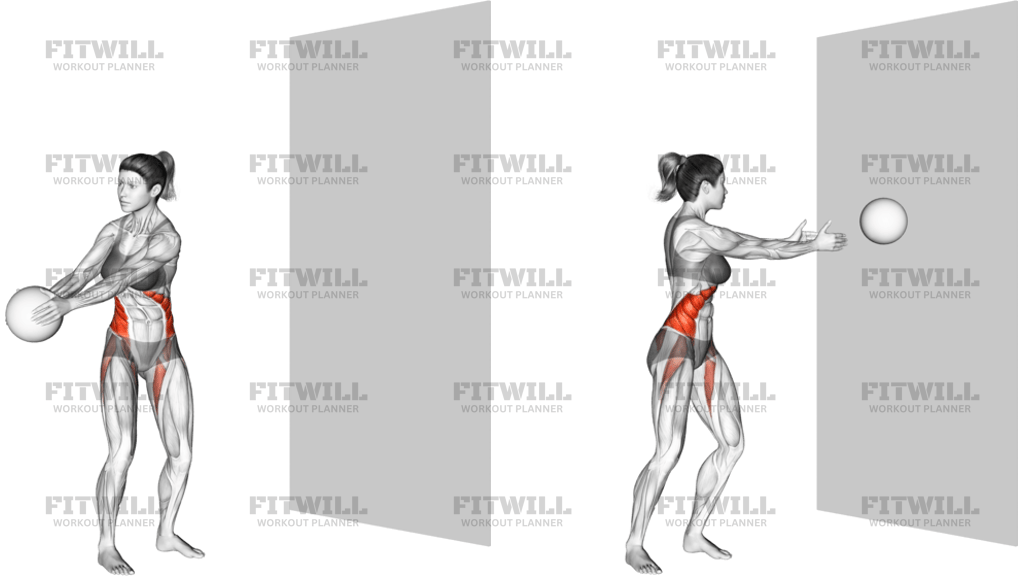
Plank Alternating Hit The Ball
Plank Alternating Hit The Ball is a dynamic anti-rotation core exercise performed from a high plank position. You set a light ball a short distance in front of you, keep one palm planted on the floor, and use the free hand to hit or push the ball so it rolls or bounces toward a wall. The ball rebounds back, and you alternate hands with each hit, all while your torso, hips, and legs hold a rigid plank line. The wall gives the ball a return path, so the drill flows continuously without you having to chase it across the floor.
The value of this movement comes from the mismatch between a stable lower body and a busy upper body. Your legs and glutes want to stay put, but every time one hand leaves the floor and strikes the ball, the rotation and shift in support challenge your deep core and obliques to resist twisting. Because the hitting arm works at an angle in front of you, the shoulder and triceps also get steady work, and the loaded side of the trunk has to fight lateral collapse.
This drill suits anyone who already holds a solid plank for at least 30 seconds and wants to make it more sport-like. It is popular in boxing and martial arts conditioning, in athletic training for throwing and striking sports, and in general core workouts where planks have gone stale. The staggered, alternating hand pattern also mimics the asymmetric demands of running and climbing better than a static hold does.
Setup matters more than speed here. Place the ball close enough that you can reach it without shifting your shoulder forward or letting your hips drift, but far enough that your arm extends fully toward it. If the ball is too near, you will pike and round your back; too far, and the plank line breaks with every reach. A wall or sturdy vertical surface in front of you keeps the ball returning on a predictable line so you can focus on your trunk instead of chasing it.
To execute it well, think of your body as one long plank with a moving arm attached, not a torso that twists to chase the ball. Hit the ball with a firm palm and a short, deliberate push rather than a wild slap, then return that hand to the floor before the other hand goes out. Keep the rhythm steady — the goal is many clean repetitions, not knocking the ball through the wall.
The most common breakdown is hip rotation: as the hand reaches out, the same-side hip lifts and the torso opens up. Slow the tempo, widen the feet slightly, and imagine a glass of water balanced on your lower back. If your lower back starts to sag or your wrists complain, stop, reset the plank, and continue with fewer reps or a lighter ball. Controlled quality reps beat a long set done with a wobbly trunk.
[ Workout Log & Planner ]
Put your next workout in Fitwill
Keep your plan and training log ready when you are.


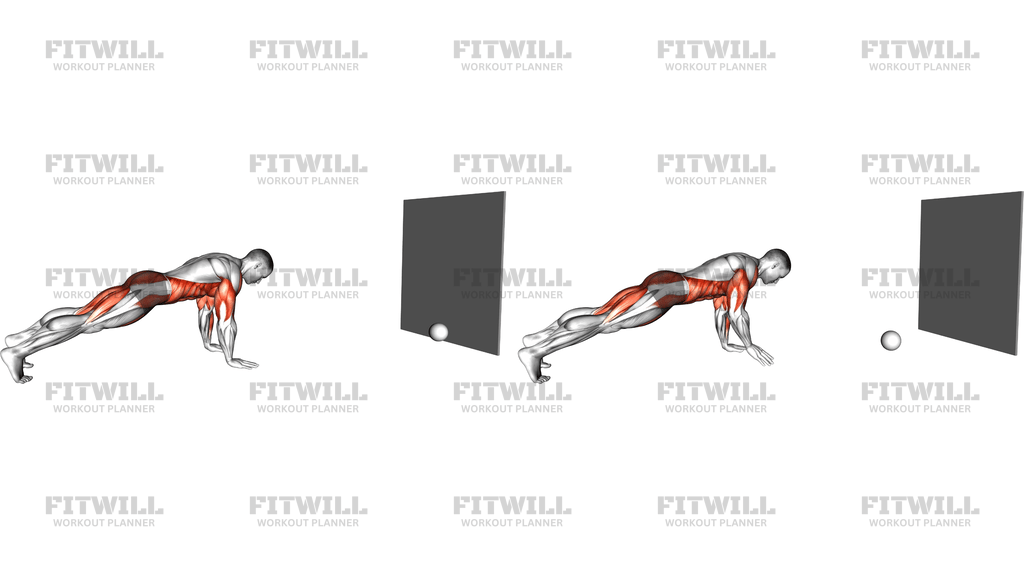
Instructions
- Place a light medicine ball or small ball on the floor roughly arm's length in front of a wall, then set up in a high plank facing it with your hands under your shoulders and feet about hip-width apart.
- Position the ball slightly off to the side of your midline so your free hand can reach it with a mostly straight arm without your hips shifting forward.
- Brace your abdominals, squeeze your glutes, and pull your shoulder blades down so your body forms one straight line from head to heels.
- Lift one hand off the floor, reach forward, and hit the ball with a firm palm, pushing it so it travels into the wall and rebounds back toward you.
- Keep the hitting arm's shoulder away from your ear and avoid letting your torso rotate open as you reach.
- Return that hand to its spot on the floor, re-establish the plank, then immediately reach out with the opposite hand to hit the ball back.
- Continue alternating hands for each hit, letting the wall return the ball to the same spot every time.
- Exhale sharply as you hit the ball and inhale as the hand travels back to the floor.
- Keep your neck neutral by looking at a spot on the floor just ahead of your hands rather than following the ball with your eyes.
- When finished, stop with both palms planted, hold the plank for a breath, then lower your knees to the floor to come out of the set.
Tips & Tricks
- If your hips swing side to side with every hit, widen your feet to shoulder-width; the wider base gives your obliques more leverage against rotation.
- Hit the ball with a stiff wrist and firm palm. A floppy slap sends the ball off line and forces you to reach and twist to recover it.
- Watch for the hitting-side shoulder dipping toward the floor — that usually means you are leaning on the planted arm. Push the floor away and keep both shoulders level.
- Start with just 10-15 seconds of alternating hits. The temptation to rush the tempo is what breaks the plank line before fatigue is even the limiting factor.
- If the ball rolls away from the wall instead of straight back, angle your hits slightly inward or move a few inches closer so the rebound stays predictable.
- Breathe in a steady rhythm instead of holding your breath; breath-holding makes the trunk stiff for a moment but causes you to sag as the set continues.
- Keep your weight distributed between the planted hand and both feet — shifting all your weight forward onto the planted arm pikes your hips and strains the wrist.
- If your wrists ache, make fists and plank on your knuckles, or use a mat to cushion the palms.
- When the ball rebounds slower than expected, use the waiting time to reset the plank rather than reaching early with a rounded back.
Frequently Asked Questions
What muscles does Plank Alternating Hit The Ball work?
The deep core and obliques do most of the work as they resist rotation each time a hand leaves the floor. The shoulders, triceps, and glutes assist by stabilizing the hitting arm and holding the plank line.
Do I need a specific type of ball for this exercise?
Any light, firm ball works — a small medicine ball, a tennis ball, or a soft playground ball. It should be light enough to hit without losing plank position and firm enough to rebound off the wall.
Is Plank Alternating Hit The Ball suitable for beginners?
It is best for people who can already hold a clean high plank for about 30 seconds. Beginners can start by tapping the ball with alternating hands without hitting it hard, or by doing the drill from the knees to reduce the load.
Why does my hip keep rotating when I hit the ball?
Hip rotation usually means the ball is too far away or you are rushing the reach. Bring the ball slightly closer, widen your feet, and deliberately squeeze the glutes on the hitting side before your hand leaves the floor.
How far should the ball be from my body?
Place it where your arm extends almost fully but your shoulder stays over the planted hand. If your hips shift forward or your back rounds to reach it, the ball is too far away.
Can I do this exercise without a wall?
Yes, but you will need to retrieve the ball after each hit, which breaks the rhythm and adds extra movement. A partner can roll or toss the ball back to you instead, or you can hit the ball gently against a sturdy door or rebound surface.
How long should a set of Plank Alternating Hit The Ball last?
Aim for 15-40 seconds of continuous alternating hits, or roughly 10-20 hits per side. Stop the set as soon as your hips sag or start swinging, since a broken plank position removes the training benefit.
Is this exercise hard on the wrists?
It can be, because your weight shifts onto one planted wrist during each hit. Use a cushioned mat, plank on fists, or reduce the time per set if you feel wrist discomfort.
What can I substitute if I do not have a ball?
Plank shoulder taps train the same anti-rotation demand — simply tap your opposite shoulder with each hand while holding the plank. A light object tapped forward on the floor can also stand in for the ball.