Cable Pendlay Row
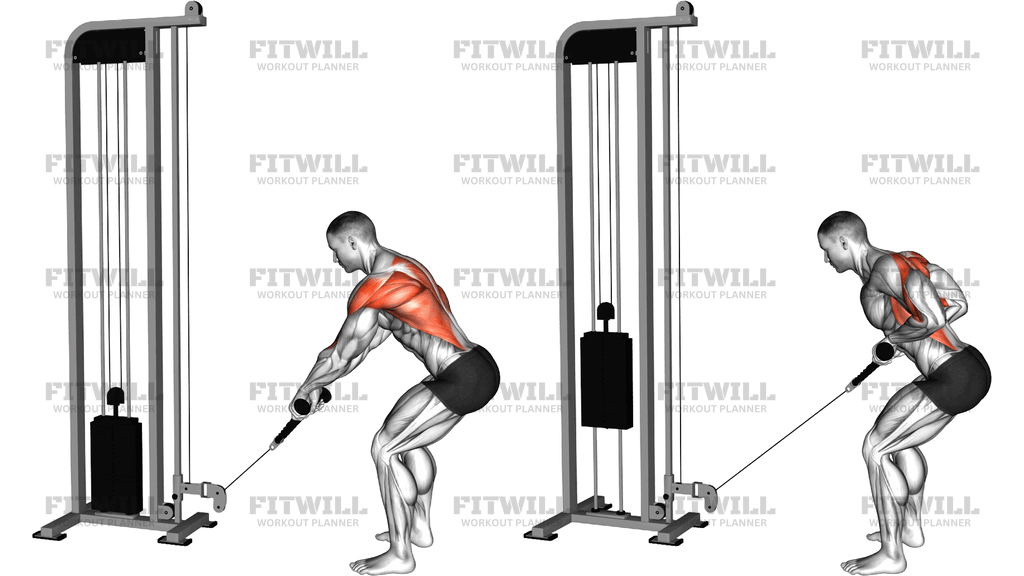
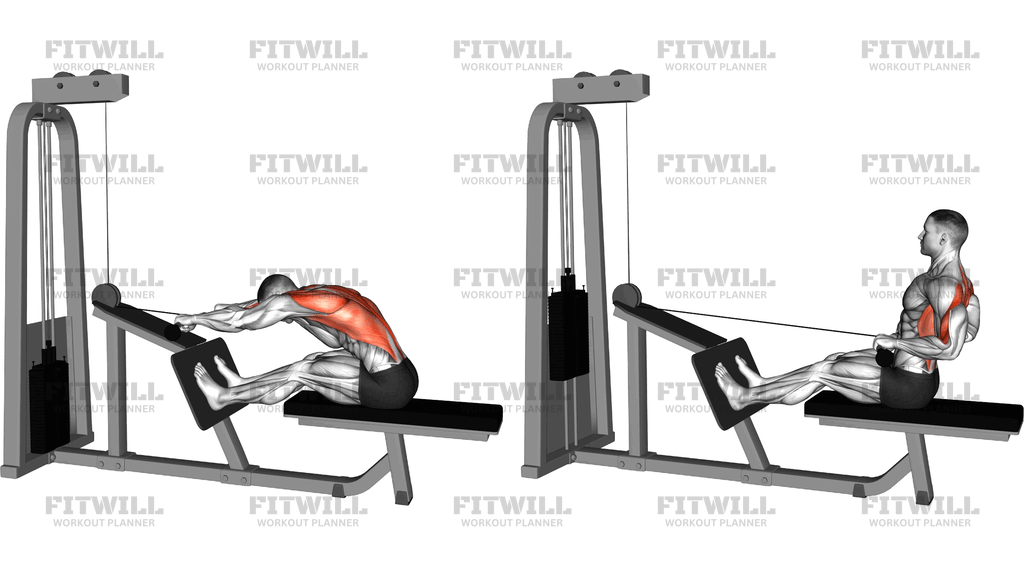
The Cable Pendlay Row takes the dead-stop, explosive character of the barbell Pendlay row and moves it onto a seated cable row station. Instead of rowing continuously from a supported upright torso, you fold forward over your legs at the start of every rep, let the handle come to a complete stop with your arms extended, then pull explosively to your abdomen as your torso comes upright. The cable provides smooth resistance through the whole pull, while the footplate gives you a fixed brace so your legs never have to work around a barbell.
This variation is useful for lifters who want the power-building benefit of a dead-start row without the setup demands of a loaded barbell on the floor. Because every rep begins from zero momentum, you cannot bounce the weight out of the stretch position, which forces the lats, rhomboids, and mid traps to do the actual work of accelerating the stack. The erector spinae and core work isometrically to control your torso as it travels from the folded position to upright.
The setup matters more here than in a standard seated cable row. Your feet belong firmly on the footplate with the knees softly bent, the cable should already carry light tension before you fold forward, and your chest should move down toward your thighs so the arms can reach fully extended. If you sit upright and row from there, you have turned it into a conventional seated row and lost the dead-stop element that defines the movement.
To execute well, think of each rep as three distinct phases: fold forward and let the weight settle, drive the elbows back and past your ribs as the torso rises, then control the return all the way back into the stretch. Pull to the lower abdomen, not the chest, and finish with the shoulder blades drawn together rather than shrugged toward the ears. A brief pause at the fully extended position is what separates this from ordinary rowing.
You will see this movement used as a back-thickness builder on pull days, as an accessory for lifters whose barbell rows stall out of the bottom, and as a lower-back-friendlier alternative for people who struggle to hold a bent-over barbell position under load. Keep the weight honest; the whole point of the dead stop disappears if the stack is heavy enough that you have to heave it with your lower back.
[ Workout Log & Planner ]
Put your next workout in Fitwill
Keep your plan and training log ready when you are.


Instructions
- Sit on the row bench and place both feet flat against the footplate with the knees softly bent, never locked.
- Grasp the handle with an overhand grip roughly shoulder-width and slide back until your arms are extended and the cable carries light tension.
- Hinge forward from the hips and let your chest travel down toward your thighs until your arms reach full extension in front of you and the weight stack settles to a dead stop.
- Flatten your back in this folded position and brace your core before initiating the pull.
- Exhale and pull the handle explosively toward your lower abdomen, driving the elbows back past your ribs as your torso comes upright.
- At the end position, sit tall and draw the shoulder blades together without shrugging them up toward your ears.
- Inhale and return the handle under control, extending the arms fully and hinging forward again until the stack comes to a complete stop.
- Pause for a beat at the stretched, folded position so each rep starts from zero momentum, then repeat.
- Recheck your foot placement and brace before every rep rather than letting your hips slide forward as fatigue builds.
Tips & Tricks
- The most common error is turning this into a regular seated row by skipping the pause; if the stack never fully settles, the stretch reflex is doing work your upper back should be doing.
- Do not let the weight yank you forward at the end of the return; stay connected to the handle and control the last few inches so your lower back does not round abruptly.
- Pull to the lower abdomen, not the upper chest; a high pull path shifts the work toward the traps and arms and away from the lats and rhomboids.
- If your torso flies upright on every rep, the load is too heavy; the stack should move because your elbows drove back, not because your whole body leaned away from it.
- Keep a soft bend in the knees on the footplate; locked knees tilt the pelvis backward and make it harder to keep a neutral lower back in the folded position.
- Grip the handle just firmly enough to hold it; a death grip shifts tension into the forearms and often causes early grip fatigue before the back is trained.
- If your shoulders creep toward your ears at the end of the pull, cue yourself to pull the elbows to your back pockets instead of thinking about moving the hands.
- Choose a weight you can stop dead for every rep; a stack you can only heave with momentum defeats the purpose of the dead-stop setup.
- If your hips slide forward off your ideal position mid-set, reset them before the next rep instead of rowing from a shortened arm path.
Frequently Asked Questions
What muscles does the Cable Pendlay Row work?
The primary work goes to the lats, rhomboids, mid traps, and upper back, with the biceps and rear shoulders assisting the pull. The lower back and core hold the torso steady as it moves from the folded position to upright.
How is the Cable Pendlay Row different from a standard seated cable row?
A standard seated row is done continuously from an upright torso, while the Pendlay version starts every rep from a dead stop with the chest folded toward the thighs and the arms fully extended. This removes the stretch reflex and forces a more explosive pull.
Is the Cable Pendlay Row suitable for beginners?
Yes, provided the weight is kept light at first and the dead-stop position is respected. The cable setup is actually easier to learn than a barbell Pendlay row because the machine supports the legs and the resistance path is fixed.
Why does each rep need to pause at full extension?
The pause eliminates momentum, so every rep must be started by the back muscles actively accelerating the handle. Without it, the movement becomes a standard seated row with a bounce out of the stretch.
Where should I pull the handle to on the Cable Pendlay Row?
Pull to the lower abdomen, just above the belt line. Pulling to the chest shortens the elbow path and shifts emphasis toward the traps and arms at the expense of the lats and rhomboids.
Is this exercise hard on the lower back?
It loads the lower back less than a bent-over barbell row because you are seated and braced against the footplate, but the erectors still work to control the torso. Keep the back neutral when folded and use a moderate weight rather than forcing the stack up with your trunk.
What should I do if my grip gives out before my back?
Try a wider or more neutral handle, relax your grip pressure, or use lifting straps for heavier sets. Grip should not be the limiting factor in a back-focused row.
Can the Cable Pendlay Row replace barbell rows in my program?
It can serve a similar purpose for back thickness and pulling power, especially if you want less lower-back fatigue or no barbell setup. However, it does not load the body the same way, so treat it as a substitution with a different demand profile rather than an exact equivalent.
How many reps should I do on the Cable Pendlay Row?
Sets of 6 to 12 reps work well, with a deliberate pause at full extension on each one. If you cannot stop the weight dead every rep, the load is too heavy for this style of rowing.
Why do my hips slide forward during the set?
Fatigue and a heavy stack tend to pull the torso toward the cable, shortening your arm path and rounding your position. Reset your seat position and foot placement between reps, or reduce the weight so you can hold your position honestly.