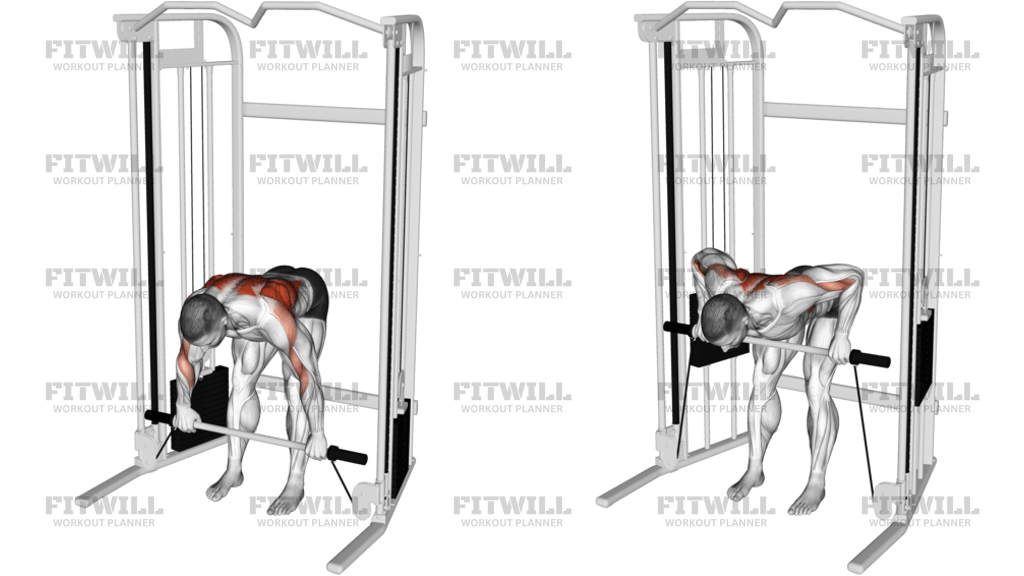
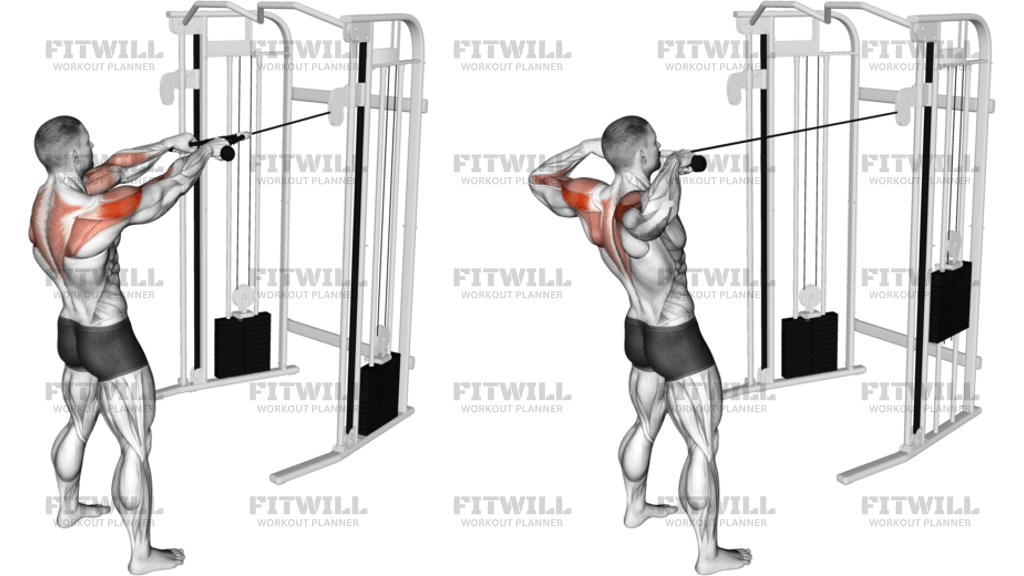
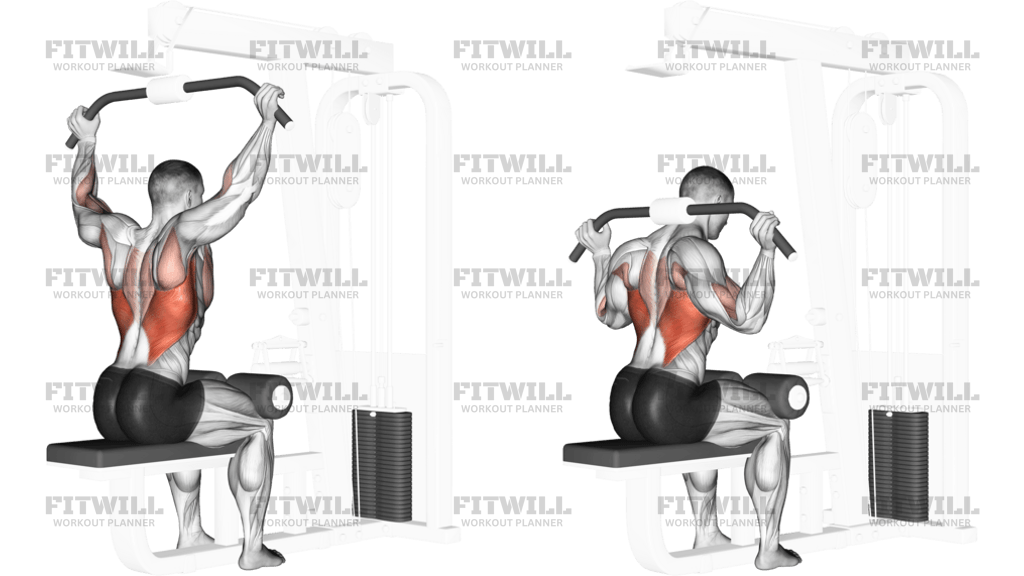
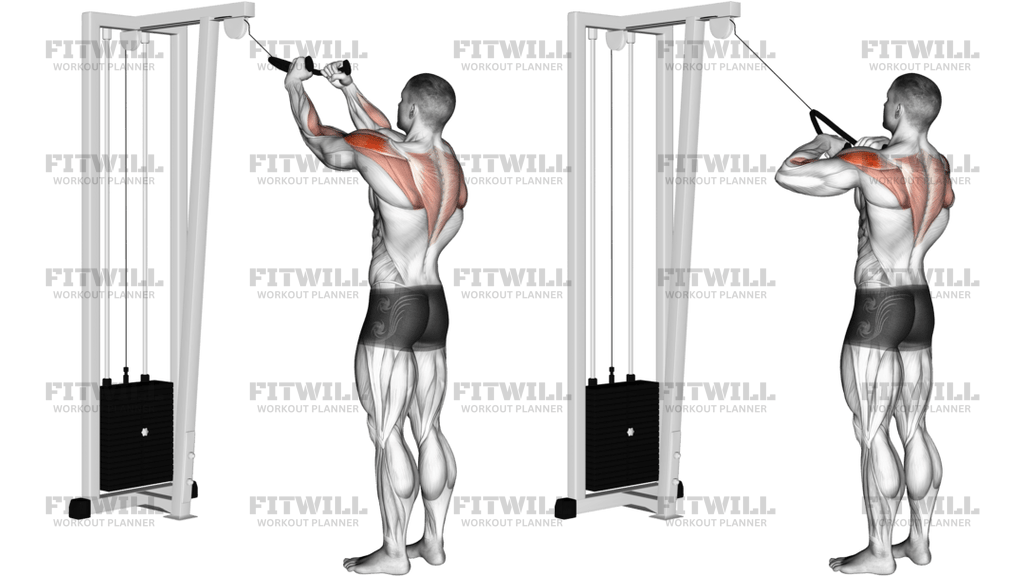
Cable 45 Degrees Reverse Fly
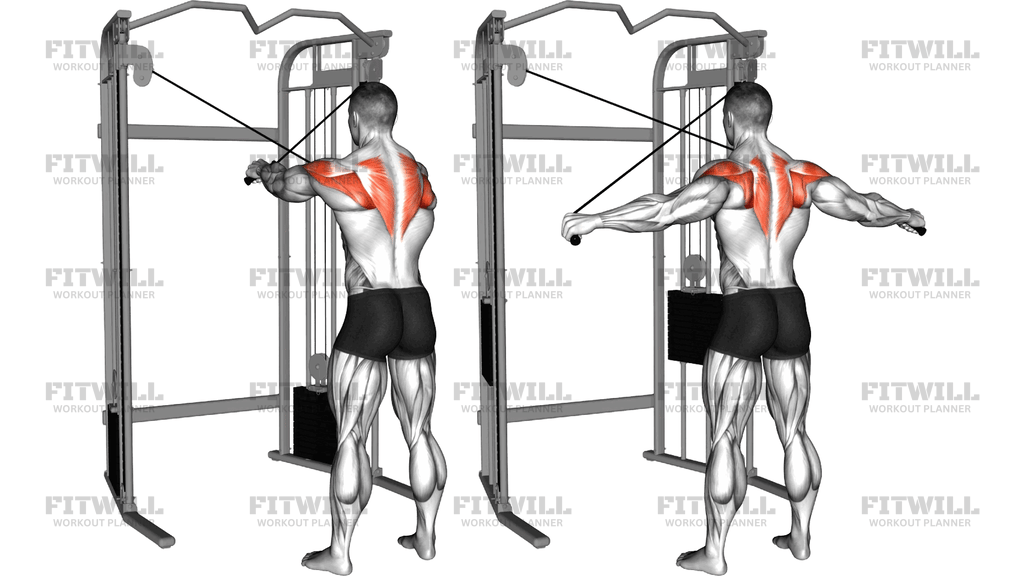
The Cable 45 Degrees Reverse Fly is a rear-delt and upper-back movement performed on a dual-pulley cable machine. You stand centered between two high pulleys, grab the handle attached to the opposite side so the cables cross in front of you, and sweep your arms outward and back until they extend roughly in line with your shoulders. The crossing cables create a smooth, constant arc of resistance that pulls your arms forward and together, which is exactly the demand your rear shoulders have to fight against.
This is one of the best tools for building the back of the shoulders, an area that pressing exercises and everyday posture tend to leave underdeveloped. Beyond the posterior deltoids, the movement recruits the rhomboids and mid-traps as your shoulder blades squeeze together at the wide point of the arc. Because the cable tension stays loaded through the entire range, you get a strong contraction at the finish position that dumbbell reverse flys cannot match once gravity stops challenging you.
The setup is what makes this version special. By crossing the cables and standing facing the machine, your arms are pulled slightly across your body at the start, so each arm works through a longer path and reaches a deeper stretch behind you. Keep your torso upright and still, arms with a soft bend at the elbows, and let the shoulder joint do the work rather than the torso twisting. The 45-degree angle of the sweep, ending slightly below and out from shoulder line, keeps the rear delts in their strongest line of pull without forcing the elbows up too high.
This exercise suits anyone who presses a lot, sits at a desk with rounded shoulders, or wants thicker, more complete-looking shoulders. Lifters often program it in the middle or end of a shoulder or upper-back session with moderate weight for 10 to 15 controlled reps per set.
The most common faults are using too much weight and turning the movement into a row, which shifts effort away from the rear delts and toward the lats and biceps. Keep the weight light enough that your elbows stay high, your hands lead with a slight bend in them, and your chest stays facing the machine. Controlled tempo matters more here than load; a one-second pause with the arms open will do more for you than heavy, swinging reps.
[ Workout Log & Planner ]
Put your next workout in Fitwill
Keep your plan and training log ready when you are.


Instructions
- Set both pulleys of a dual cable machine to the highest position and attach a single handle to each side.
- Stand in the center of the machine facing the stack, then grab the left pulley handle with your right hand and the right pulley handle with your left hand so the cables cross in front of your chest.
- Take a staggered or hip-width stance, keep a slight bend in the knees, and brace your core so your torso stays upright and square to the machine.
- Start with your arms extended forward and slightly crossed, palms facing inward or down, with a small fixed bend in each elbow.
- Exhale as you sweep both arms outward and back in a wide arc, keeping the cables taut and leading with your elbows until your arms open to roughly 45 degrees out from your shoulders.
- At the open position, squeeze your shoulder blades together and hold for a beat without shrugging your shoulders toward your ears.
- Inhale as you slowly let your arms travel back along the same arc until the cables bring your hands together in front of you, keeping tension in the rear delts rather than letting the weight stack slam down.
- Keep your chest tall and your torso motionless throughout; if you feel yourself rocking backward, reduce the weight.
- Complete your reps, then release one handle at a time and step away from the machine carefully, since the crossed cables carry tension.
Tips & Tricks
- Choose a lighter weight than you think you need. The rear delts are a small muscle, and heavy loads on this exercise almost always turn it into a standing row.
- Think about pulling your elbows back and out, not your hands. Leading with the hands turns the movement into a biceps- and lat-driven pull.
- Keep your elbows at or slightly below shoulder height at the wide point. Raising them toward your ears shifts work to the upper traps and shrugs away from the rear delts.
- Do not lock your elbows, but do not bend them more than a few degrees either. The angle you set at the start should not change as your arms open.
- If the cables rub against your arms or thighs, take a half-step forward or back until your hands and shoulders are aligned on the same plane.
- Avoid leaning your torso backward as you open your arms. Your chest should keep facing the machine so the rear delts, not momentum, finish each rep.
- A slow three-second return is more valuable than extra reps here. The cables will yank your arms forward if you rush the negative.
- Because the cables cross, your starting position already puts the rear delts on stretch. Use that extra range instead of cutting the movement short in front of your body.
Frequently Asked Questions
What muscles does the Cable 45 Degrees Reverse Fly work?
The primary movers are the rear shoulders, with the rhomboids and mid-traps working hard as your shoulder blades pull together at the open position. The crossing cables also load the rear delts in a stretched position at the start, which many reverse fly variations miss.
Why do the cables need to cross in this exercise?
Crossing the cables so each hand grabs the opposite pulley lengthens the path your arms travel and places the rear delts under tension from a stretched position. It also lets you extend slightly behind your body, where the rear delts contract hardest.
Is the Cable 45 Degrees Reverse Fly good for beginners?
Yes, as long as the weight stays light and the tempo stays controlled. The machine guides the arc of the movement, which actually makes it easier to learn than a free-weight reverse fly, but beginners should still start with the lowest workable load.
How is this different from a dumbbell reverse fly?
Dumbbells rely on gravity, so resistance fades as your arms move behind you. The crossed cables keep constant tension through the entire arc and add extra stretch at the start, giving a stronger contraction where dumbbells go slack.
Why do my biceps fatigue before my rear delts?
That usually means your elbows are bending as you pull, turning the fly into a curl-and-row hybrid. Set your elbow bend at the start and hold that same angle for every rep, and think of your arms as fixed levers your shoulders are moving.
How many sets and reps should I do?
Two to four sets of 10 to 15 reps works well for most lifters, placed after your heavier rows or presses. The rear delts respond better to moderate loads and strict form than to grinding max-weight reps.
Can I do this exercise with a resistance band if I have no cable machine?
Yes. Anchor a band at about face height on a sturdy object, hold one end in each hand, and mimic the same crossed-arm outward sweep. You lose some of the pulley's smooth resistance, but the movement pattern and muscles stay the same.
Should my arms stay straight during the Cable 45 Degrees Reverse Fly?
Keep a small, fixed bend in the elbows rather than locking them straight. Fully locked elbows can strain the joint at the stretch position, and a bend that grows during the rep steals work from the rear delts.
Is it safe to release the handles when the cables are under tension?
Be deliberate about it. Finish the set, then return your hands to the start position and let go one handle at a time while keeping your stance stable, since the crossed cables will snap your arms forward if you release both at once under load.
Why do I feel this in my neck or upper traps?
You are most likely shrugging as your arms open or setting your elbows too high. Lower the weight, consciously drop your shoulders away from your ears, and let your arms stop at roughly shoulder height instead of above it.