Sumo Deadlift High Pull
Sumo Deadlift High Pull is a barbell power exercise built from a wide sumo stance, a deadlift from the floor, and an explosive pull to chest height. The wide stance shortens the bar path and gives the hips room to open, while the upright finish shifts emphasis toward the shoulders, upper back, and arms. It is a useful movement when you want one lift that trains leg drive, hip extension, and an aggressive upper-body pull in the same repetition.
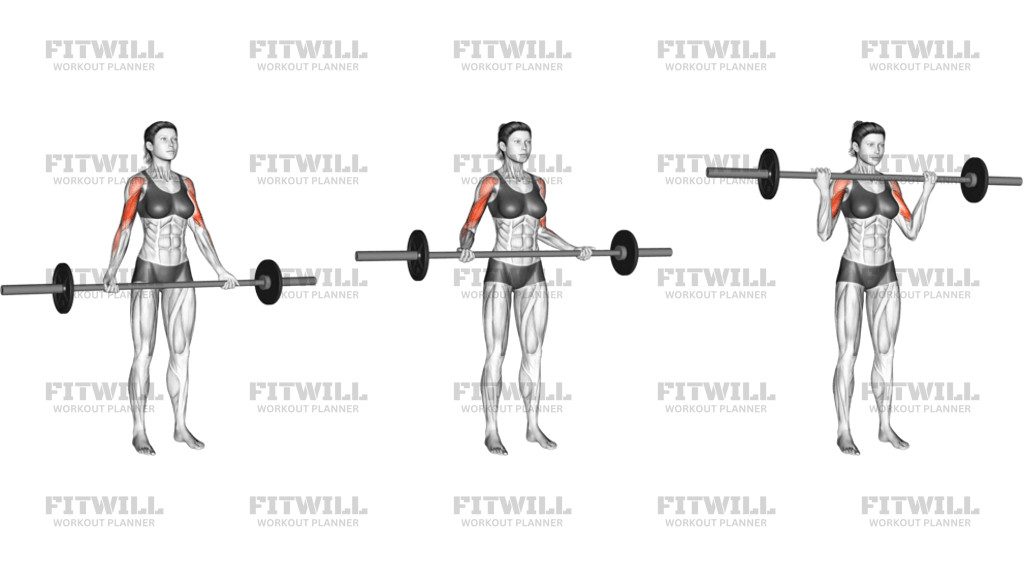
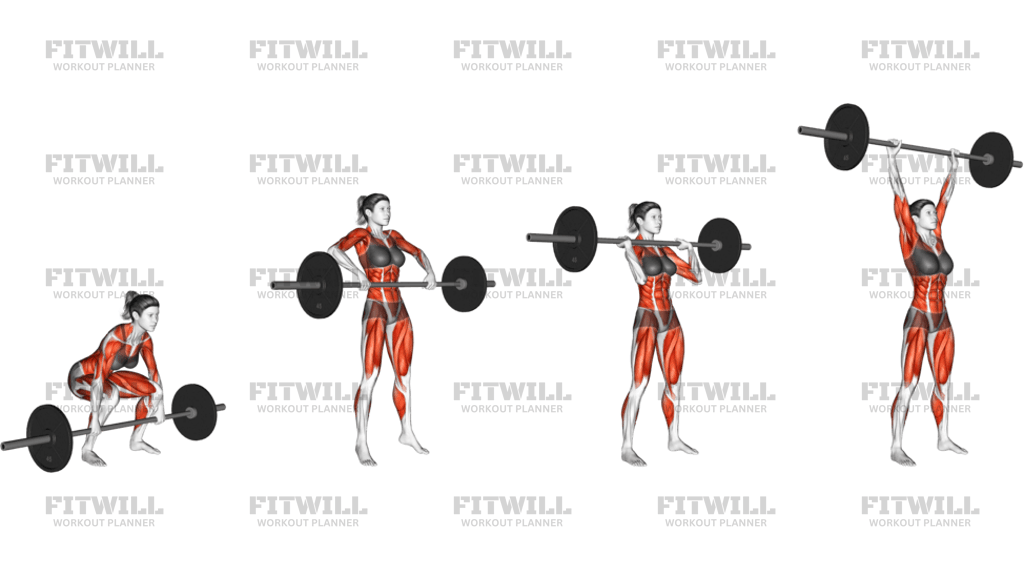
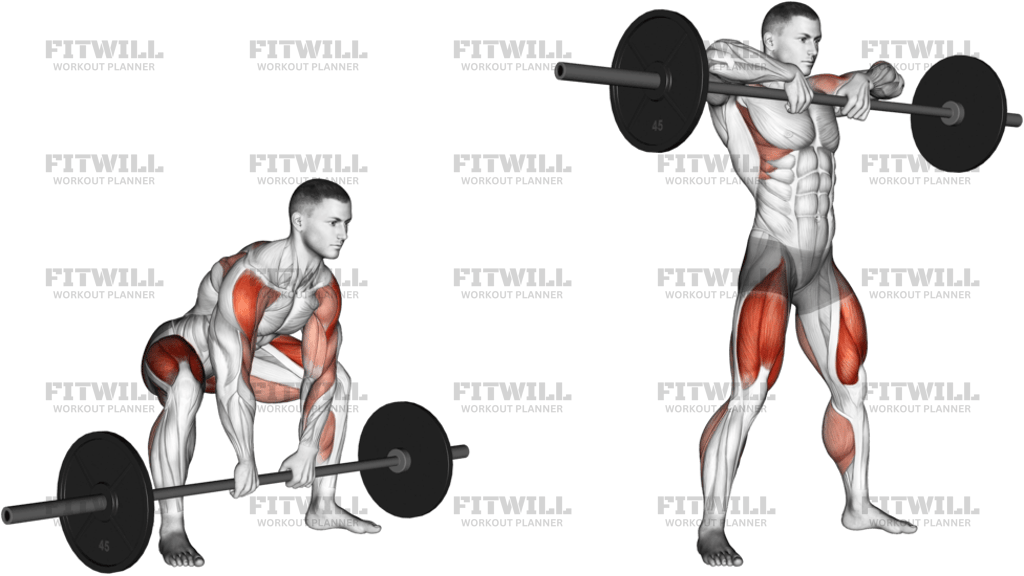
This exercise is not just about lifting the bar from the floor. The setup determines whether the rep feels powerful and organized or jerky and overextended. With the bar centered over the midfoot, the hands inside the knees, and the chest lifted, the lifter can keep the bar close and use the legs to start the pull. The image shows a deep sumo start and a tall finish, which means the hips and knees should do most of the work before the elbows rise.
The main training effect comes from the combination of lower-body drive and a high pull finish. The legs and hips create the force, then the traps and delts finish the pull as the elbows travel high and outside. That makes the movement more demanding than a standard deadlift or a simple upright row because it asks for coordination, timing, and control through the transition from floor to standing.
Execution matters because the bar should stay close to the body the entire time. If the bar drifts forward, the shoulders lose leverage and the lower back has to stabilize more than it should. If the arms bend too early, the lift turns into a curl-like yank instead of a powerful extension. The clean rep starts with pressure through the floor, then finishes with a strong shrug and elbow drive after the hips have already extended.
Use Sumo Deadlift High Pull for athletic conditioning, power-focused accessory work, or full-body training sessions where a controlled explosive lift makes sense. It is best performed with a load you can move crisply for repeated reps rather than a weight that forces you to grind. Beginners can learn it with a light barbell, but the pattern should stay smooth, pain-free, and technically clean. If the shoulders feel pinched or the lower back takes over, reduce the load, shorten the pull, or switch to a simpler sumo deadlift until the setup and timing are consistent.
[ Workout Log & Planner ]
Put your next workout in Fitwill
Keep your plan and training log ready when you are.


Instructions
- Stand with your feet wider than shoulder width, toes turned slightly out, and the barbell centered over your midfoot.
- Hinge your hips back, bend your knees, and grip the bar just inside your knees with straight arms.
- Set your chest up, keep your back flat, and let your shins stay close enough to the bar that it can travel straight up.
- Brace your torso before the rep starts so your ribs stay down and your spine stays fixed.
- Drive through the floor, pushing your knees out as the bar leaves the ground.
- Keep the bar close to your legs as it passes the knees and moves toward mid-thigh.
- Explosively extend the hips and knees, then shrug and pull the elbows high and outside as the bar reaches lower chest height.
- Lower the bar under control back to the start, reset your stance if needed, and repeat for the planned reps.
- Breathe in and brace before each rep, then exhale as you finish the pull and return to the floor with control.
Tips & Tricks
- Start with the bar over the middle of the foot, not in front of the toes, so the first pull stays vertical.
- Keep your hands inside your knees; if the grip is too wide, the bar will drift and the pull gets sloppy.
- Think about pushing the floor apart with your feet to help the knees clear the bar on the way up.
- The arms should stay long until the hips snap open; early arm bend turns the lift into a weak upright row.
- Let the bar skim the thighs instead of swinging away from the body.
- Finish tall with the glutes tight and the chest proud, not with a leaned-back lower-back arch.
- Use a light-to-moderate load that lets every rep look the same from the floor to the rack position.
- If the top position feels cramped at the shoulders, lower the pull height slightly and keep the elbows tracking outside the hands.
- Reset the breath and brace on each rep if the set starts to get fast or disconnected.
Frequently Asked Questions
What does Sumo Deadlift High Pull train?
It combines a sumo deadlift pattern with an explosive upper-body pull, so it trains the glutes, quads, adductors, traps, delts, upper back, and arms.
Why use a sumo stance instead of a regular deadlift stance?
The wider stance opens the hips, shortens the bar path, and gives the bar room to travel close to the body without scraping the legs.
Where should the bar travel during the pull?
The bar should rise almost straight up, stay close to the shins and thighs, and finish near lower chest height without swinging away from the body.
When should my elbows rise?
The elbows should come high and outside only after the hips and knees have finished extending. If the elbows start early, the lift loses power.
Is this exercise more like a deadlift or an upright row?
It starts like a deadlift from a sumo stance and finishes with a high pull. The deadlift portion creates the force; the upper pull is only the finishing phase.
Can beginners do this exercise?
Yes, but only with a light barbell and a controlled tempo. Many beginners should first learn the sumo deadlift and the high pull separately before combining them.
What are the most common mistakes?
Common errors are letting the bar drift forward, bending the arms too soon, losing the chest position off the floor, and overextending the lower back at the top.
How heavy should I load it?
Use a load that allows crisp hip extension and a clean pull to chest height. If the bar slows down or the shoulders shrug early, the weight is too heavy.
What should I do if my shoulders feel irritated?
Reduce the pull height, keep the elbows slightly lower, or switch to a sumo deadlift or a simpler high pull variation until the shoulder position feels comfortable.