Cable Reverse Grip Front Raise
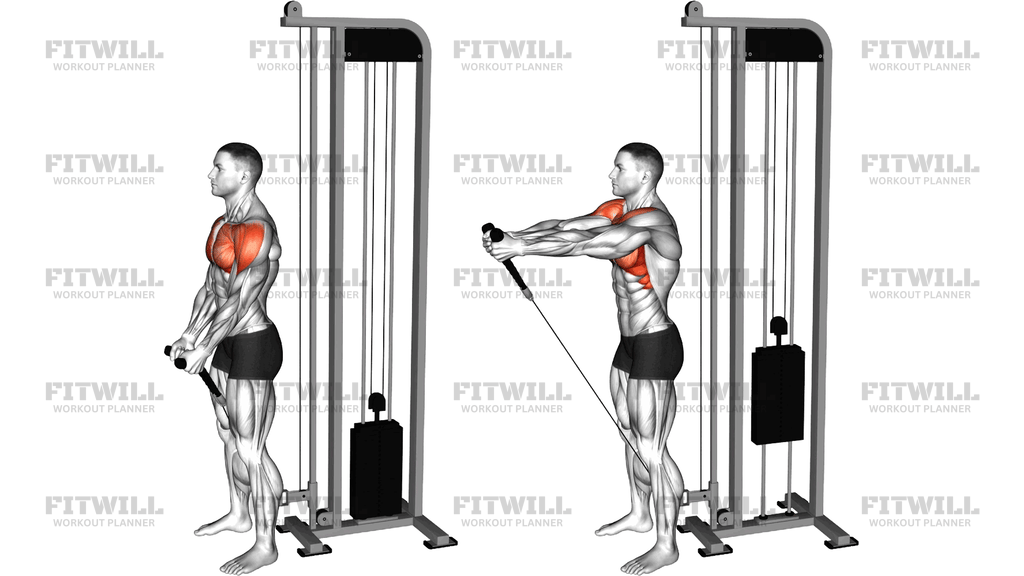
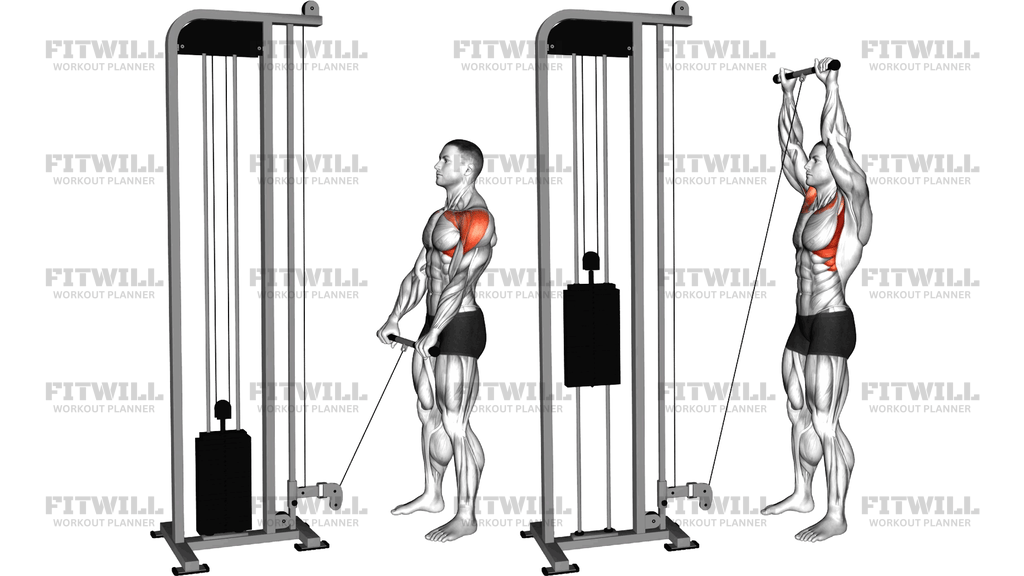
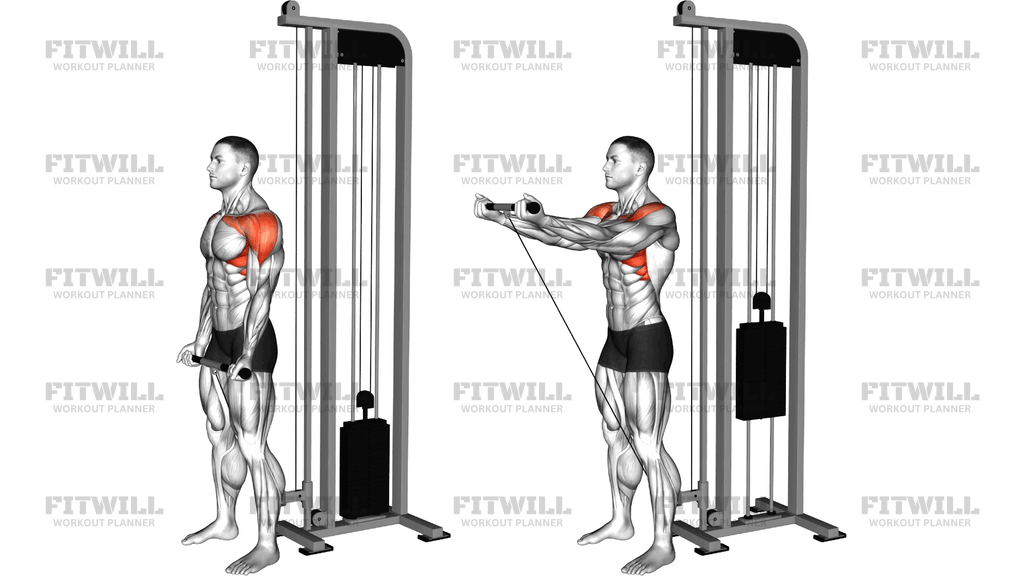
The Cable Reverse Grip Front Raise is a standing isolation exercise for the front of the shoulders, performed with a straight bar attached to the low pulley of a cable machine. Unlike a barbell or dumbbell front raise, the cable provides continuous tension through the entire arc, including the point near your hips where free weights feel easiest. The reverse grip — palms facing up, fingers wrapping under the bar from behind — changes the shoulder's rotation slightly compared with a standard overhand front raise and tends to line the bar up more comfortably with the natural plane of the upper arm.
This movement fits well into a shoulder or upper-body push day as a secondary lift after heavier pressing. Because the cable stacks the resistance evenly and the weight is easy to fine-tune in small increments, it works well for lifters who find dumbbell front raises jerky at the bottom, for beginners learning to feel the anterior delt working without using body English, and for anyone wanting a strict, constant-tension variation during higher-rep accessory work.
Setup matters more than most people expect. Stand far enough from the machine that the cable runs from the low pulley up to the bar without dragging against your legs, but close enough that the resistance starts pulling the bar backward toward the pulley. That backward pull is part of the benefit — your front delts have to work from the very first inch of the lift instead of only once the weight is past your thighs. Keep the feet roughly hip-width apart, a soft bend in the knees, and the torso upright; leaning back turns the lift into a hip-driven swing and steals work from the shoulder.
Execution is simple but strict: raise the bar forward and upward with nearly straight arms until it reaches about shoulder height, pause briefly, then lower it under control back to your thighs. The reverse grip keeps your knuckles facing the floor at the top, which most lifters find keeps the wrist neutral and the shoulder in a friendlier position. Keep the ribs down and brace the trunk so the lift stays in the shoulder rather than becoming a lower-back extension.
A few practical points keep this exercise safe and productive. Choose a weight you can raise to shoulder height without shrugging or swinging — the cable makes it tempting to lean, because the tension never lets up. Stop the descent when the plates nearly touch rather than letting the stack slam down, and keep one rep of tension in reserve at the bottom. If your shoulder pinches or the front of the joint feels compressed near the top, lower the bar slightly before that point or try a neutral grip with a rope or single handle instead.
[ Workout Log & Planner ]
Put your next workout in Fitwill
Keep your plan and training log ready when you are.


Instructions
- Set the pulley of the cable machine to its lowest position and attach a straight bar.
- Stand facing away from the machine with your back toward the pulley, feet hip-width apart, knees slightly bent, and take an overhand-free reverse grip on the bar so your palms face up and the bar rests across the front of your thighs.
- Step forward one small pace so the cable hangs clear of your legs and is already taut, then stand tall with your ribs stacked over your hips and brace your trunk.
- Let your arms hang straight down with a very slight bend at the elbows, and set your shoulder blades down and back before the first rep.
- Raise the bar forward and upward in a smooth arc in front of your body, keeping the elbows nearly locked and the bar traveling in line with your shoulders, not out to the sides.
- Stop when the bar reaches about shoulder height and your arms are roughly parallel to the floor, and hold that top position for a beat.
- Lower the bar back down along the same path until it returns to your thighs, resisting the cable's pull on the way down instead of letting it drop.
- Exhale as you raise the bar and inhale as you lower it, keeping the breath steady rather than holding it.
- Complete your reps with the same range and tempo, then release the bar safely and let the stack settle before stepping away.
Tips & Tricks
- The most common mistake on this lift is leaning back as the bar climbs — because the cable never goes slack, your body looks for leverage. Keep your glutes engaged and think about raising the bar with the shoulder, not driving the hips forward.
- Shrugging the bar up at the top means the weight is too heavy. If your upper traps take over near shoulder height, drop the load by one plate and own the last few degrees with the front delts.
- Do not let the bar drift out wide. The cable pulls slightly back toward the pulley, so it is easy for the arc to curve; picture the bar moving in a narrow track straight up the midline of your body.
- Keep the wrist straight under the bar. With a reverse grip the load sits on the fingers, and bending the wrists back at the top shifts stress into the forearm flexors instead of the shoulder.
- Avoid letting the stack slam down between reps. Touching down completely removes tension and turns the set into singles; stop the descent just before the plates settle.
- If your elbow wants to bend as the bar rises, cue yourself to lift with the hand, not the elbow — a creeping bend turns the raise into a half front raise, half curl hybrid.
- Start lighter than you would for a dumbbell front raise. The constant cable tension plus the backward pull makes the same weight feel harder through the bottom half of the movement.
- Two raised sets in front of a mirror help here: check that both arms travel the same arc and that the bar stays level, since one side often lags when fatigue builds.
Frequently Asked Questions
Which muscles does the Cable Reverse Grip Front Raise work?
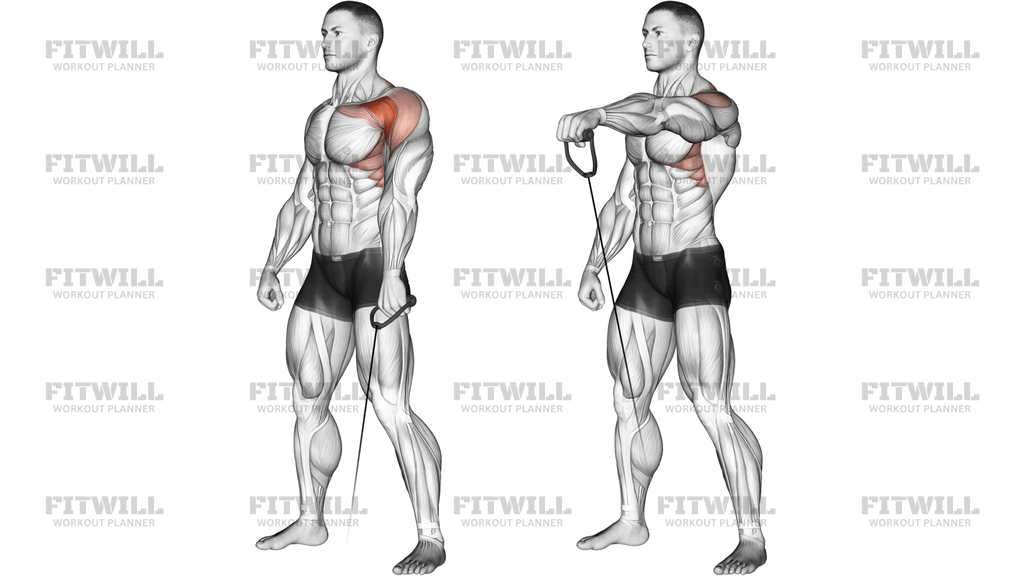
The front delts do the bulk of the lifting, with the upper chest assisting as the arm comes forward and the upper traps helping stabilize near shoulder height. The grip and wrist muscles also work statically to hold the bar.
Why use a reverse grip instead of an overhand grip for this exercise?
With palms facing up, the shoulder is slightly externally rotated, which many lifters find lets the arm travel in a straighter, more comfortable front raise path and keeps the wrist from collapsing. It also gives a more secure hold on a straight bar under cable tension.
How is the Cable Reverse Grip Front Raise different from a dumbbell front raise?
The cable keeps tension on the front delts through the whole range, including the bottom position where a dumbbell is nearly weightless, and the backward pull of the low pulley makes the first half of the lift much harder. It is generally better suited to strict, moderate-weight, higher-rep work.
How far should I raise the bar?
Raise until your arms are roughly parallel to the floor, with the bar around shoulder height. Going higher adds little for the front delts and usually just brings the traps and momentum into the lift.
Is this exercise suitable for beginners?
Yes, as long as the weight is kept modest. The cable guides the bar along a fixed line and the setup is simple, which makes it one of the easier front raise variations to learn with clean form.
My lower back aches during this movement — what am I doing wrong?
That almost always means the trunk is extending as the bar rises, so the lift is being shared with the lower back instead of the shoulders. Lighten the load, squeeze the glutes, brace the trunk, and stand tall so the ribs stay stacked over the hips.
What can I use if my gym has no straight bar for the low pulley?
A single handle, a rope, or a cable handle attachment all work; you can raise one arm at a time with a neutral or underhand grip. The shoulder stimulus is very similar, and single-arm work makes it easier to spot side-to-side differences.
Where should this exercise fit in my workout?
Treat it as an accessory after your heavier pressing or overhead work, in the 10 to 15 rep range for two or three sets. Its constant tension makes it a good finisher for the front delts rather than a primary strength builder.
Are there shoulder safety concerns with this lift?
The reverse grip and the front plane of movement are generally joint-friendly, but stop if you feel pinching at the top of the range. Reduce the height slightly, keep the weight moderate, and warm the shoulders up with lighter raising movements before loading.