Cable Decline Press
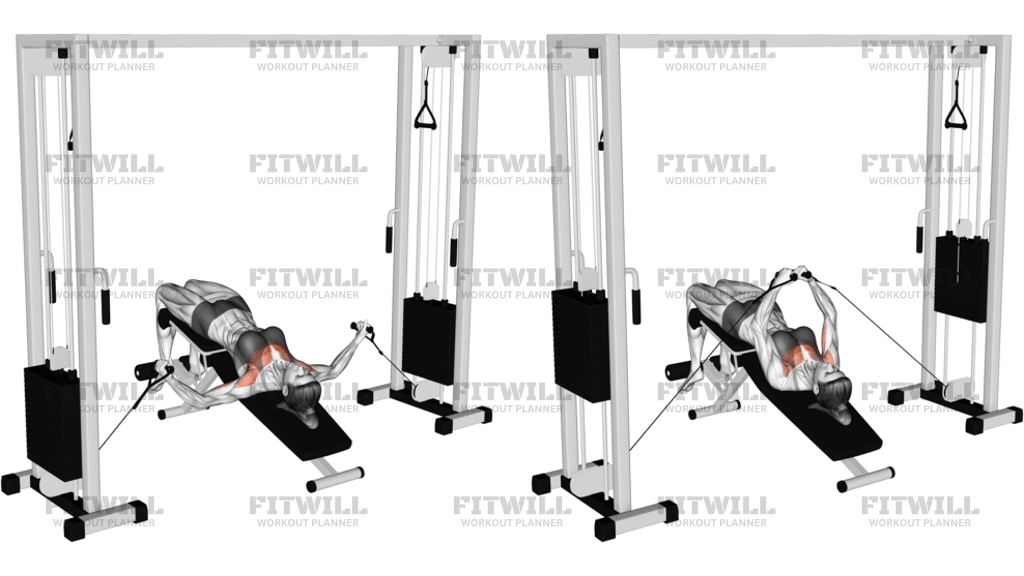
Cable Decline Press is a chest press variation that is set up on a decline bench between two cable stacks, usually with a handle in each hand and the cables pulling from low to high. The decline angle changes the press line and gives the chest a slightly different feel than a flat cable press, with the front shoulders and triceps helping to finish each rep. Because the resistance comes from cables, tension stays on the movement for the full arc instead of disappearing at the top.
The setup matters a lot here. Your upper back and head need to stay anchored on the bench while your feet stay planted and your torso remains steady against the decline pad. If the bench is too far forward, the handles will pull awkwardly behind you; if it is too close, the press path gets cramped and the shoulders tend to take over. A clean setup should let the handles start near the lower chest or upper ribcage with the elbows bent and the wrists stacked over the forearms.
When you press, think about driving the handles up and slightly inward rather than flaring them wide. The path should feel smooth and controlled, with the chest doing the work and the elbows finishing without locking hard at the top. Lower the handles back with the same control until you feel a comfortable stretch across the chest, then stop before the shoulders roll forward or the lower back starts to bridge off the bench.
Cable Decline Press is useful for lifters who want a chest-focused press with constant resistance and a stable torso position. It works well as an accessory movement after heavier barbell or machine pressing, or as a main press when joint-friendly tension is the priority. Because the cables keep pulling through the whole range, the exercise rewards clean alignment and steady tempo more than brute force.
Keep the motion honest and repeatable. A small reduction in load is usually worth it if it helps you keep the elbows under control, the shoulders packed, and the handles moving on the same path every rep. If your shoulders feel pinched or the bench angle forces you into an uncomfortable range, adjust the setup before adding weight. The goal is a strong chest press that stays smooth from the first rep to the last, not a rushed lift with a bigger number on the stack.
[ Workout Log & Planner ]
Put your next workout in Fitwill
Keep your plan and training log ready when you are.


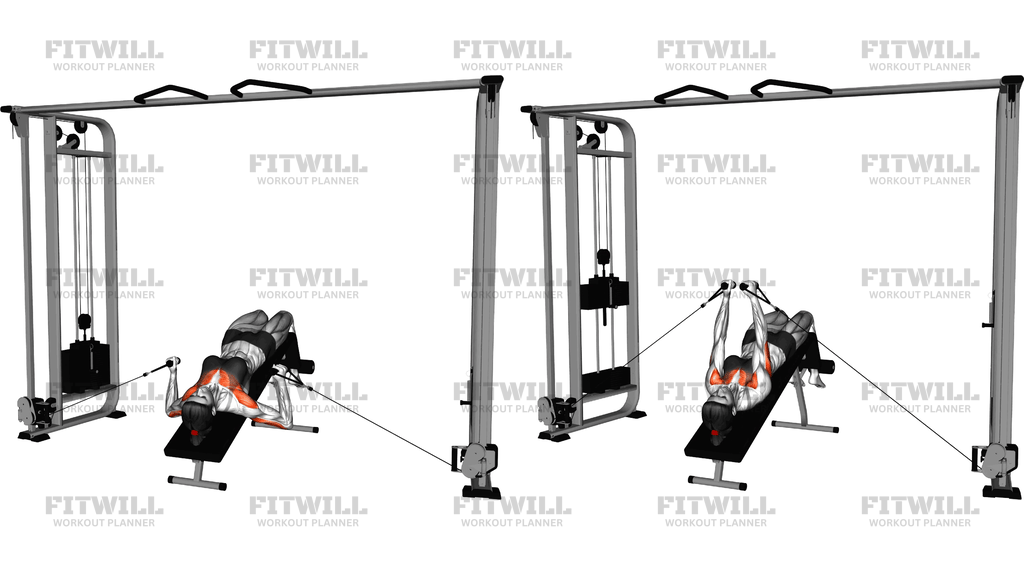
Instructions
- Set a decline bench between the low cable pulleys and attach a handle to each side.
- Sit down, hook your feet, and lie back with your head and upper back supported on the pad.
- Take a handle in each hand and start with your elbows bent near the lower chest and your wrists straight.
- Pull your shoulder blades gently down and back so your chest stays lifted on the bench.
- Press the handles up and slightly inward in a smooth arc until your arms are nearly straight.
- Keep a soft bend in the elbows and avoid slamming the handles together or locking out hard at the top.
- Lower the handles under control until your elbows return close to the starting angle and you feel a chest stretch.
- Exhale as you press and inhale as you lower, keeping your torso steady against the decline bench.
- Finish the set by lowering the handles all the way back, setting them down safely, and sitting up under control.
Tips & Tricks
- Set the bench so the cables pull from low to high without dragging your shoulders behind the bench.
- Keep your wrists stacked over the forearms; if they bend back, the triceps and shoulders usually take over.
- Think about pressing up and in, not straight up, so the handles follow the same arc every rep.
- Let the elbows stay slightly tucked instead of flaring wide at chest level.
- Stop the lowering phase when the chest stretches and the shoulders stay packed; do not chase extra depth.
- Use a lighter stack than you would on a machine press, because cable tension stays high through the top half.
- If your lower back starts arching off the decline pad, reduce the load and reset your rib position.
- A brief pause near the bottom can clean up bouncing and help you feel the chest start the next press.
Frequently Asked Questions
What muscles does Cable Decline Press work?
It mainly trains the chest, with the front shoulders and triceps helping through the press. The cables also keep the stabilizers working to control the handles.
How do I set up Cable Decline Press correctly?
Place a decline bench between two low pulleys, lie back with your head and upper back on the pad, and start the handles near the lower chest. The cables should pull smoothly from low to high without yanking your shoulders out of position.
Should the handles touch at the top of Cable Decline Press?
They can come close, but they do not need to collide. Ending with the hands slightly inside shoulder width usually keeps the chest loaded without forcing the shoulders forward.
Is Cable Decline Press good for beginners?
Yes, if the load is light and the bench position is stable. Beginners should focus on a smooth arc, straight wrists, and a controlled return before trying to add weight.
Why do my shoulders feel Cable Decline Press more than my chest?
Usually the bench is too high, the elbows are flared, or the handles are pressing too far overhead. Bring the bench position back into line with the pulleys and press up and slightly inward instead.
How low should I lower the handles?
Lower them until you feel a chest stretch without the shoulders rolling forward or the upper arms dropping too far behind the torso. A controlled, pain-free bottom position is better than extra depth.
Can I use one handle at a time on Cable Decline Press?
Yes, but the setup should stay identical: bench anchored, wrist stacked, and the pressing path moving from low to high. Single-arm work makes the torso work harder to stay centered on the bench.
What is the most common mistake with Cable Decline Press?
The biggest mistake is letting the shoulders roll forward and the handles drift into an awkward line. Keep the chest tall on the bench, maintain a slight elbow tuck, and move the handles on a consistent arc.