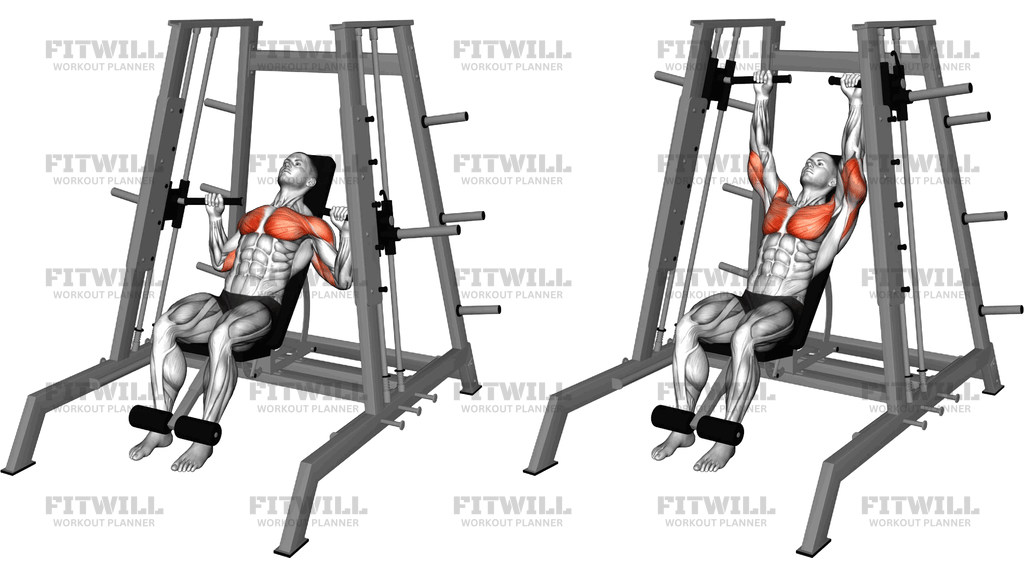
Lever Stack Seated Incline Chest Press
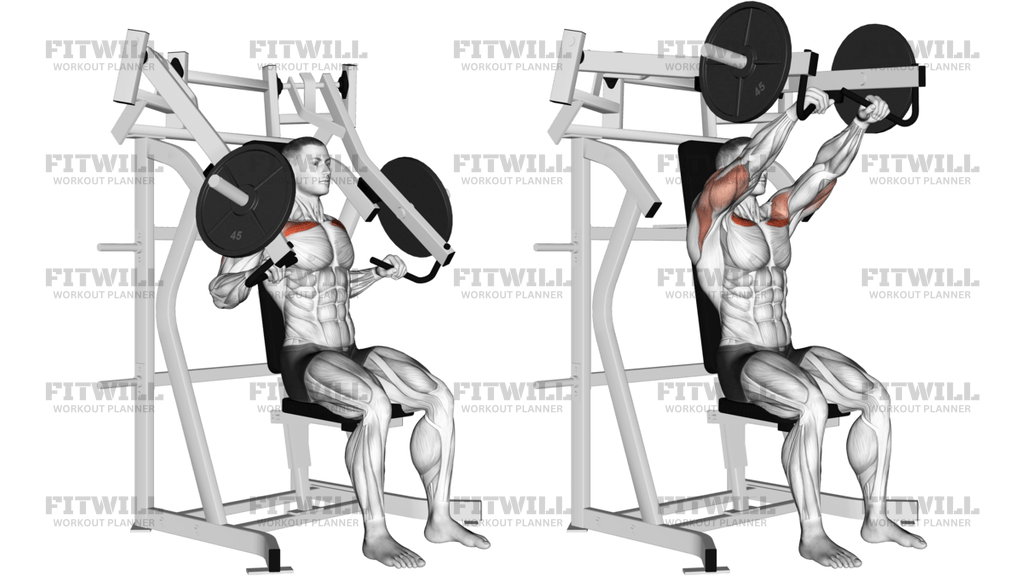
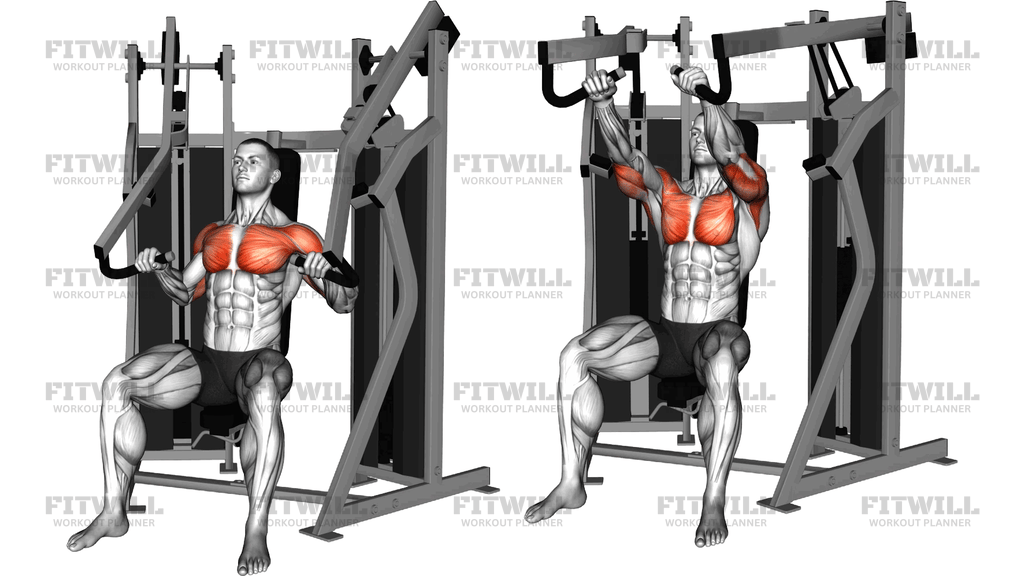
The Lever Stack Seated Incline Chest Press is a plate-loaded machine press built on an upward-slanting movement path. You sit upright against a back pad, grip two fixed handles at chest height, and press them up and slightly forward until your arms extend above shoulder level, then lower them back under control. Because the handles travel on a fixed lever arm driven by a weight stack, the machine stabilizes the path for you and lets you concentrate entirely on driving with the chest.
The incline angle is what sets this press apart from a standard seated chest press. Pressing upward along that diagonal line biases the clavicular head of the pectoralis major, the upper portion of the chest that a flat press only partly challenges. The front delts assist strongly through the middle of the range and the triceps lock out the extension, so you still get meaningful work in those areas without deliberately targeting them.
This exercise suits a wide range of lifters. Beginners appreciate that the fixed path removes the balance demands of free-weight incline pressing, making it easier to learn what a correct press feels like. More experienced trainees use it to add focused upper-chest volume late in a session when barbell or dumbbell incline work has already fatigued the stabilizers, or to push close to failure safely without a spotter. It is also a common choice in rehab or return-to-lifting settings where a controlled arc is preferred.
Setup determines whether the incline angle actually hits the upper chest. Adjust the seat so the handles line up with the top of your chest or just below your collarbones, and keep your entire back, shoulders, and hips in contact with the pad. If the seat is too low, the press turns into more of a shoulder exercise; too high, and you lose the incline emphasis and round forward.
Execution is straightforward but worth doing deliberately. Press the handles up in a smooth arc, exhaling as you push, and stop just short of snapping the elbows straight at the top. Lower the weight slowly until your hands return to chest level and you feel a mild stretch across the pecs, then drive straight into the next rep without letting the stack crash down. Feet stay flat on the floor throughout.
The main safety considerations are seat height, range of motion, and load. Choose a weight you can lower with control for every rep, keep your lower back from arching off the pad as the set gets hard, and stop the descent at chest level rather than forcing the handles deeper than your shoulders comfortably allow. Because the machine guides the path, your job is to stay braced, keep the ribcage down, and let the chest do the pushing.
Fitwill
Log Workouts, Track Progress & Build Strength.
Achieve more with Fitwill: explore over 9600 exercises with images and videos, access built-in and custom workouts, perfect for both gym and home sessions, and see real results.
Start your journey. Download today!




Instructions
- Sit on the machine's seat with your hips pulled back into the corner where the seat meets the back pad and your feet flat on the floor.
- Adjust the seat height so the machine's handles sit level with the top of your chest, just below your collarbones.
- Select your weight on the stack and grip the two handles with a full palm grip, wrists stacked over your elbows.
- Draw your shoulder blades back and down against the pad, brace your core, and keep your ribs from flaring upward.
- Press the handles up and slightly forward along the machine's incline path, exhaling as you push.
- Extend until your arms are nearly straight above shoulder level, stopping just short of locking the elbows hard.
- Pause briefly at the top and squeeze the upper chest rather than shrugging your shoulders toward your ears.
- Inhale as you lower the handles along the same path until they reach chest level and you feel a stretch across the pecs.
- Keep your back, shoulders, and hips against the pad for the entire set; do not let your lower back arch off the pad.
- Complete your reps, let the stack settle fully, release the handles, and stand up only after the weight is at rest.
Tips & Tricks
- If your shoulders feel the work more than your chest, raise the seat one notch so the handles start lower relative to your collarbones.
- Do not let the weight stack slam down between reps; the lowering half of each rep is where the chest gets most of its stretch stimulus.
- A common mistake is pushing the head forward against the pad at lockout. Keep the back of your head in contact with the pad and let the arms finish the rep.
- Grip the handles with a neutral-to-slightly-angled wrist rather than cocking the hands back, which keeps tension off the forearms and on the pressing muscles.
- If your elbows flare straight out to the sides at the bottom, think of the forearms following the machine's incline line rather than pointing straight out from your torso.
- When the set gets hard, avoid digging your heels in and driving your hips up the seat; lighten the load instead so the chest, not the legs, finishes the reps.
- Stopping one or two reps short of failure lets you keep the lower-back position intact; full grind-outs on this machine usually cost you back contact before they cost the chest anything.
- Use the machine's full but comfortable range: full stretch at chest level, near-lockout at the top, with no bouncing off the bottom.
- Because the lever arm isolates the press, small jumps in load feel bigger than on a barbell; progress by one plate increment at a time.
Frequently Asked Questions
Which muscles does the Lever Stack Seated Incline Chest Press work?
The primary muscle is the upper chest, specifically the clavicular head of the pectoralis major. The front delts assist through the press and the triceps handle the final extension toward lockout.
How is the Lever Stack Seated Incline Chest Press different from a regular seated chest press machine?
The handles travel on an upward-slanting path instead of a flat horizontal one, which shifts the emphasis from the middle chest toward the upper chest. The pressing motion and setup are otherwise very similar.
How do I set the seat height correctly for this machine?
Sit with your back against the pad and adjust the seat until the handles line up with the top of your chest, just below your collarbones. If the handles start at mid-chest or lower, the incline emphasis is lost and the shoulders take over.
Is the Lever Stack Seated Incline Chest Press good for beginners?
Yes. The fixed lever path removes the balance and stabilization demands of free-weight incline pressing, so a beginner can focus on learning the pressing groove and building a base of chest strength safely.
Should I lock my elbows out at the top of each rep?
Extend until your arms are nearly straight but stop just short of a hard elbow lockout. This keeps continuous tension on the chest and avoids dumping stress into the elbow joint at the top.
Why do I feel this exercise in my shoulders instead of my chest?
This usually means the seat is set too low, so the handles start near shoulder height, or the weight is too heavy and you are shrugging into the press. Raise the seat one notch, drop the load slightly, and consciously keep your shoulder blades pinned back against the pad.
Can I use the Lever Stack Seated Incline Chest Press as a substitute for incline barbell or dumbbell presses?
It can replace them when you want a controlled path, need to train without a spotter, or want upper-chest volume after stabilizers are already fatigued. It does not train the stabilizing demands of free weights, so it works best alongside them rather than as a permanent replacement.
How deep should I lower the handles on this machine?
Lower until your hands are at chest level and you feel a moderate stretch across the pecs. Forcing the handles below that point can pull the shoulders forward off the pad and strain the front of the shoulder.
How should I breathe during the Lever Stack Seated Incline Chest Press?
Exhale as you press the handles up and inhale as you lower them back to chest level. Keep the breathing rhythm steady and avoid holding your breath through the sticking point.
Is it safe to train to failure on this machine?
It is safer than pressing a bar to failure because the lever arm cannot drop on you, but form tends to break first: the lower back arches off the pad and the hips slide forward. Stop the set when you feel your back lose contact with the pad.