Lever Lateral Pulldown Plate Loaded
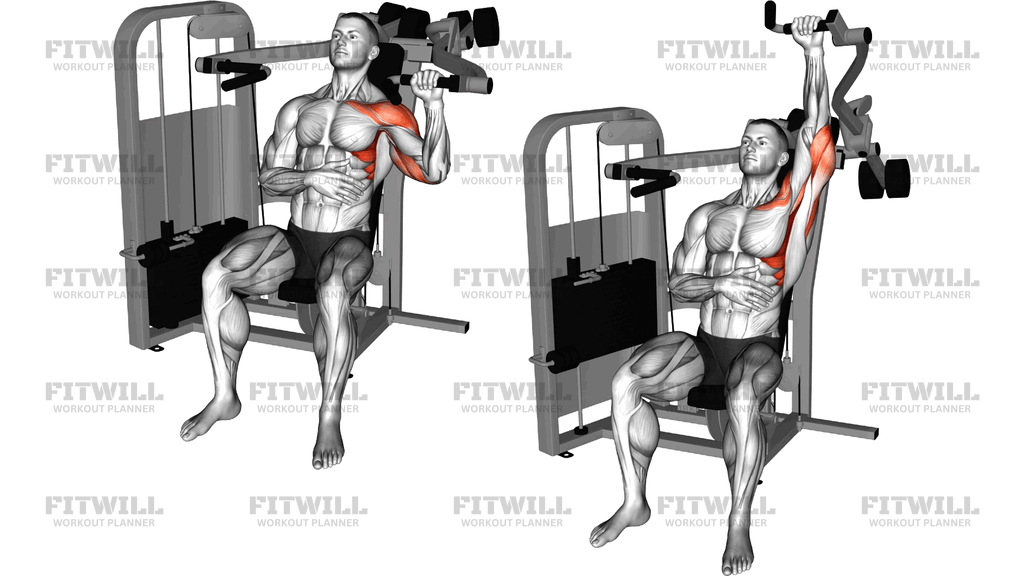
The Lever Lateral Pulldown Plate Loaded is a seated vertical pulling exercise performed on a plate-loaded leverage machine. You sit under the machine arms, lock your thighs under the pad, and pull the handles from an overhead stretch down toward your upper chest. The machine fixes the path of the resistance, which makes it useful for training the lats and upper-back muscles with less balance demand than a free cable pulldown.
This exercise is built around shoulder extension and scapular depression, so the quality of the rep depends on how well you organize the torso before the pull starts. A tall chest, steady ribcage, and firm leg brace keep the body from drifting backward as the load gets heavier. If you turn the movement into a lean-back row, the lats lose tension and the machine begins to feel like momentum work instead of a controlled pulldown.
The best repetitions start with a full overhead stretch and finish when the elbows travel down and slightly in front of the body. Pull the handles to the top of the chest or collarbone area without shrugging the shoulders forward. On the way up, let the arms lengthen under control and keep the shoulder blades moving smoothly, rather than yanking the weight back into the start position. That slow return is where much of the lat and upper-back stimulus comes from.
Because the machine uses a guided arc, this lift is a strong choice for lifters who want a stable back-building movement, a cleaner lat isolation option, or a safer way to add volume after heavier compound pulling. It also works well as an accessory exercise when you want to practice scapular control, improve pulldown strength, or keep the torso more upright than on a cable station. Beginners can use it effectively if they choose a manageable load and learn to keep the elbows driving down instead of pulling with the hands.
Treat the set as a controlled strength pattern, not a speed contest. If the thighs lift, the chest collapses, or the shoulders shrug toward the ears, the load is too heavy or the seat setup is off. Use a range that is pain-free at the shoulder, keep the motion smooth, and stop the set once the machine path starts to change from rep to rep.
[ Workout Log & Planner ]
Put your next workout in Fitwill
Keep your plan and training log ready when you are.


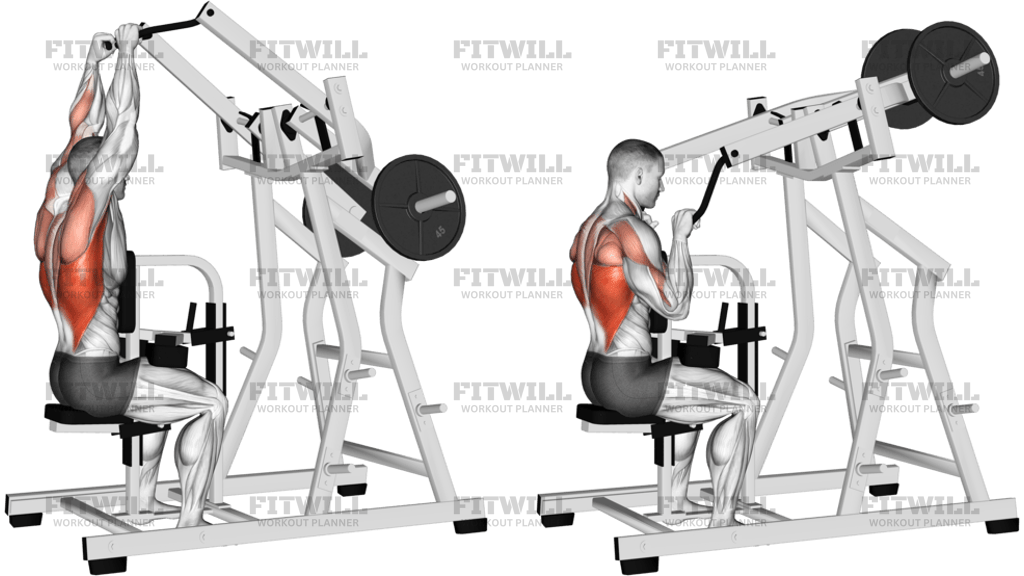
Instructions
- Adjust the seat so your thighs are pinned firmly under the pad and your feet stay flat on the floor.
- Sit tall with your chest up, ribs stacked over your pelvis, and grasp the overhead handles with both hands.
- Start with your arms extended overhead and your shoulders set down away from your ears.
- Brace your trunk, then pull your elbows down and slightly in toward the sides of your chest.
- Keep your torso mostly upright as the handles travel to the upper chest or collarbone area.
- Squeeze the back for a brief pause without jerking the weight or leaning way back.
- Reverse the motion slowly, letting the arms lengthen until you feel a controlled stretch through the lats.
- Inhale on the return and exhale as you pull the handles down for each rep.
- Reset your shoulder position before the next repetition and repeat for the planned set.
Tips & Tricks
- Set the thigh pad tight enough that your hips stay planted when the handles get heavier.
- Think about driving the elbows down, not yanking the handles with the hands.
- Keep the chest tall and avoid turning the rep into a big backward swing.
- Stop the pull when the handles reach the upper chest if your shoulders start to roll forward.
- Let the shoulder blades rise a little on the way up, then pull them down smoothly instead of locking them hard.
- Use a slightly wider or narrower grip only if it lets your elbows travel straight down without wrist strain.
- A controlled two- to three-second return usually keeps the lats working better than dropping the stack quickly.
- If your biceps take over, reduce the load and focus on keeping the upper arm path consistent.
- Avoid shrugging at the top; the neck should stay long and relaxed throughout the set.
Frequently Asked Questions
What does the Lever Lateral Pulldown Plate Loaded work most?
It primarily trains the lats, with the upper back, rear shoulders, and biceps helping during the pull.
Can beginners perform this exercise?
Yes. The guided machine path makes it beginner-friendly as long as the seat, thigh pad, and load are set correctly.
Where should the handles finish on each rep?
For most lifters, the best finish is the upper chest or collarbone area, with the elbows driving down beside the torso.
Should I lean back during the pulldown?
Only a small amount. A slight torso angle is fine, but excessive leaning turns the movement into a swing and reduces lat tension.
Why do my thighs need to be locked under the pad?
The pad keeps your hips from lifting when you pull hard, which helps you keep the torso stable and the force going into the back.
What if I feel the exercise mostly in my arms?
Lower the weight and start the pull by driving the elbows down. That usually shifts the work back toward the lats and upper back.
Is this different from a cable lat pulldown?
Yes. The leverage machine follows a fixed arc, so it usually feels more stable and less dependent on balance than a cable station.
How should I breathe during the set?
Inhale as the handles return overhead, then exhale as you pull them down to the finish position.