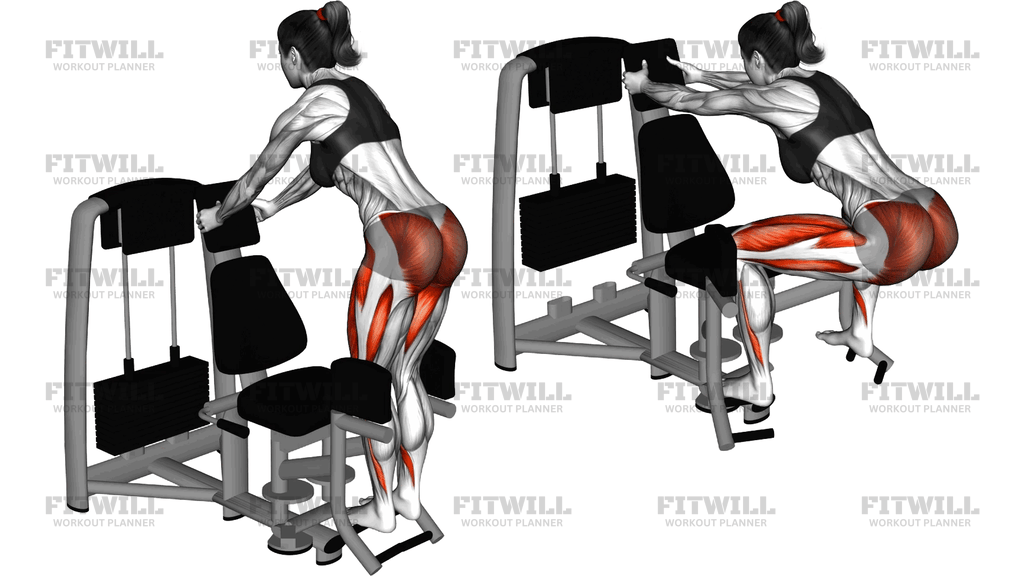
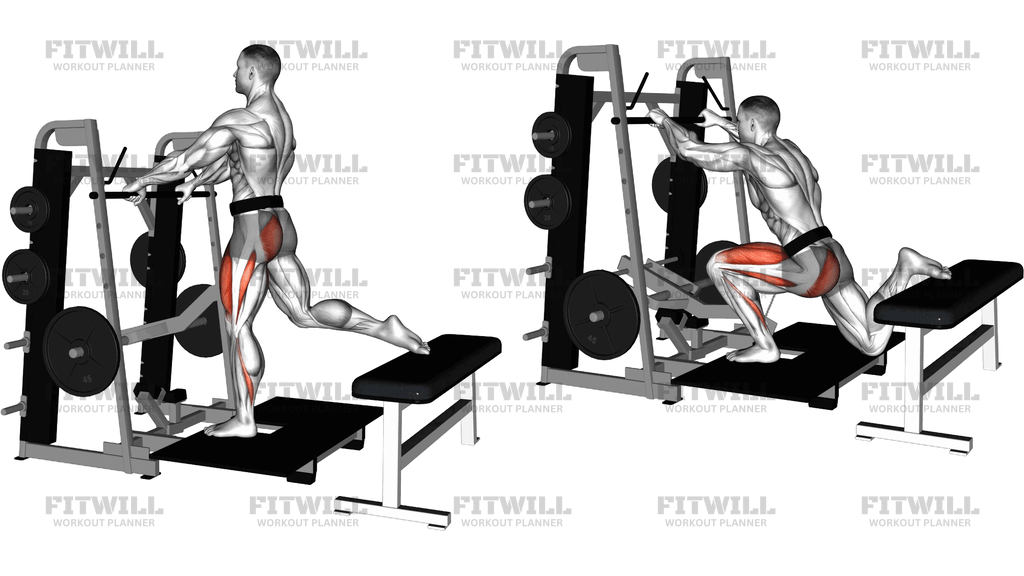
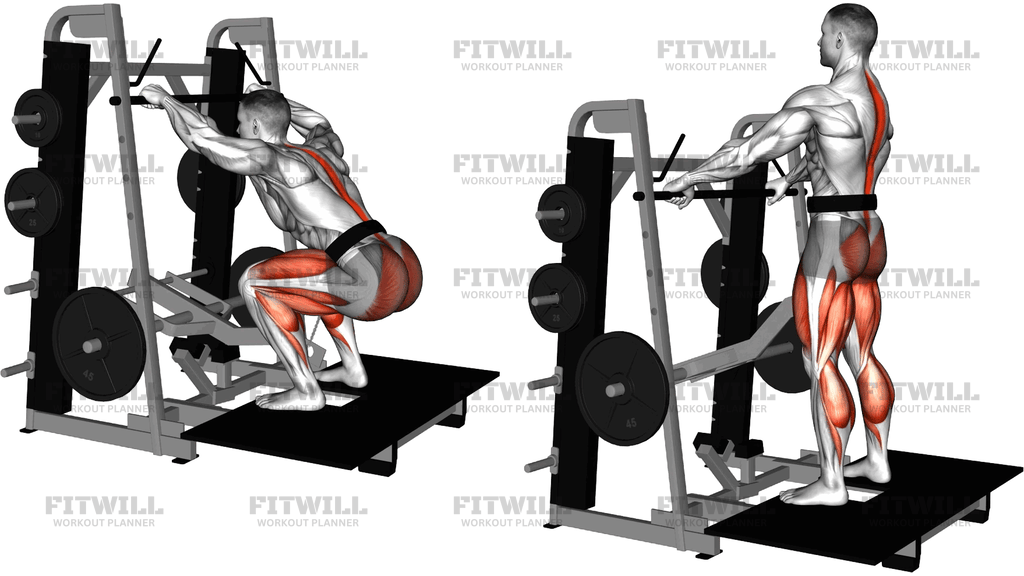
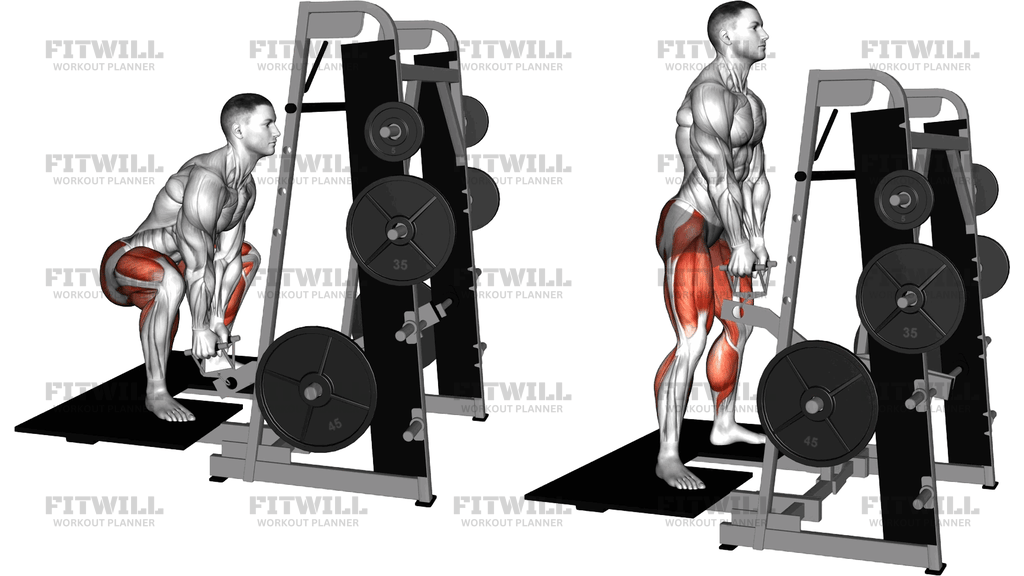
Cable Squat (Version 3)
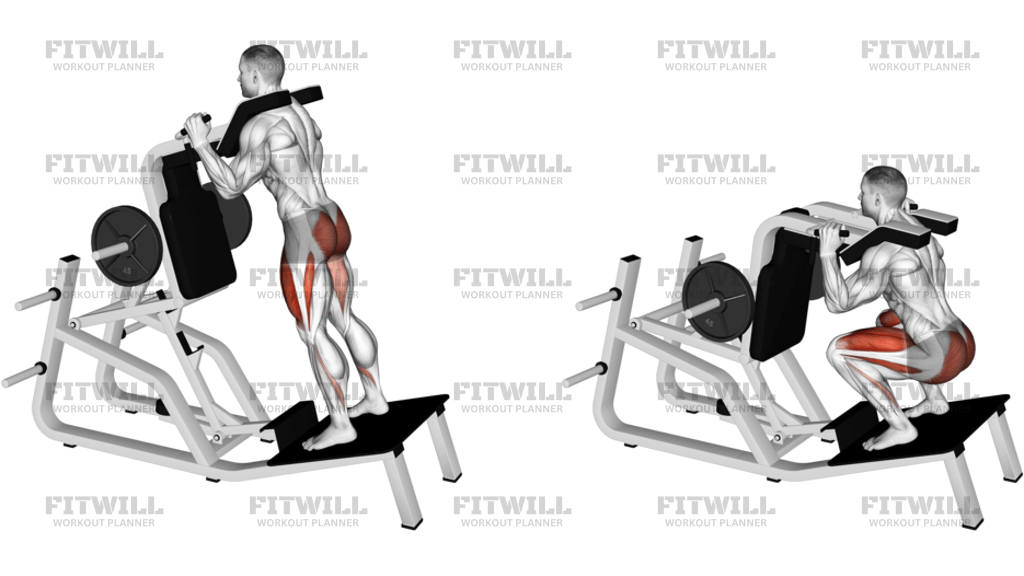
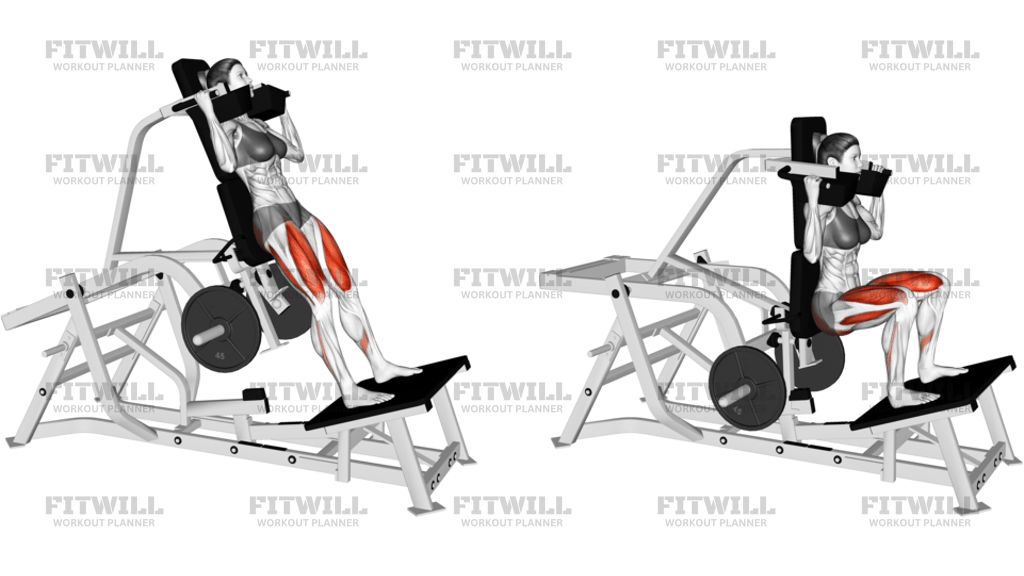
The Cable Squat (Version 3) is a machine-based squat performed on a leverage apparatus with the bar positioned across the back of the shoulders, similar to a back squat. The bar connects to cables and a cam system at the base of the machine, which creates a guided, angled resistance path. As you lower into the squat and drive back up, the machine supports the load through the entire arc of movement, letting you focus on the squat pattern itself rather than on balancing a free barbell.
This movement primarily targets the quadriceps, which light up through both the lowering and driving phases. The glutes and hamstrings work hard at the bottom of the squat and during hip extension back to standing, while the calves, core, and lower back stabilizers maintain posture under load. Because the machine controls the horizontal path of the bar, the resistance shifts smoothly between the legs and hips as you move, which many lifters find more forgiving than a barbell squat.
The Cable Squat is especially useful for lifters who want to train the squat pattern with less demand on balance and upper back strength. Beginners can use it to learn depth and positioning with a lighter load, while more experienced lifters often use it as a secondary squat variation for higher volume or as a way to push the legs closer to fatigue without a spotter. It is also a practical option for people returning from time away from training, since the fixed path reduces the risk of the bar drifting forward or backward.
Setup matters more than it might seem on a guided machine. The bar should rest on the trapezius muscles at the top of the back, not on the neck, and your feet should be placed far enough forward that your knees track naturally without slamming toward the machine at the bottom. Because the machine follows a fixed arc, a poor foot position will force your hips or knees into awkward angles, so take a moment to dial in your stance before adding significant weight.
Execution is straightforward but deserves attention. Keep the chest tall, brace the abdominal muscles, and sit the hips back and down while the knees bend in line with the toes. Descend until the thighs reach at least parallel, then drive through the whole foot to return to a full stand. Avoid bouncing out of the bottom and let the machine's path do its job while your legs produce the force.
A final practical note: the cables and cam system mean the resistance feels slightly different at the top than at the bottom, so expect the hardest portion to vary depending on the machine's design. Control the descent on every rep, keep the bar secured on the shoulders with a firm overhand grip, and never sacrifice depth or posture just to add more weight to the stack or plate holder.
[ Workout Log & Planner ]
Put your next workout in Fitwill
Keep your plan and training log ready when you are.


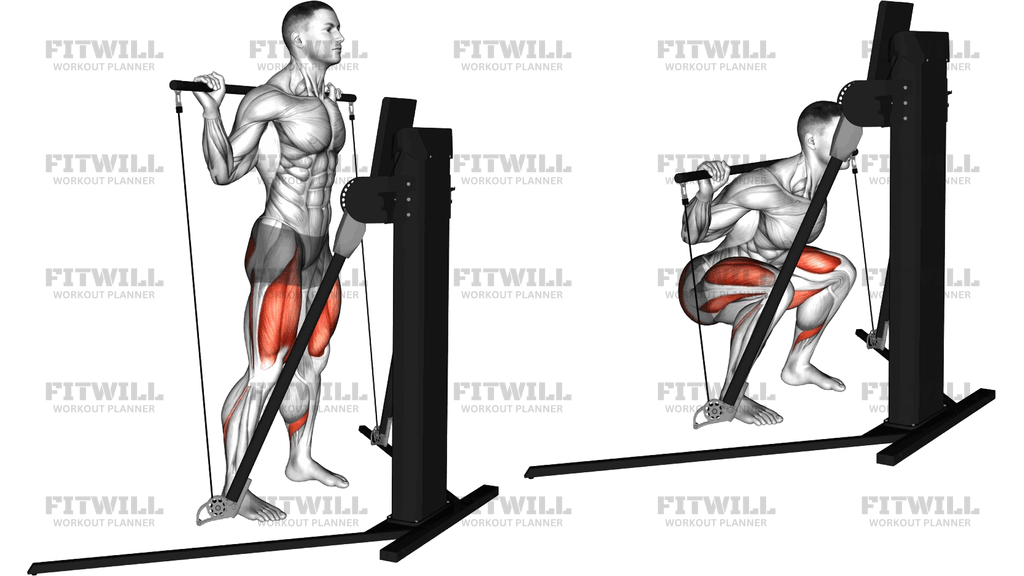
Instructions
- Set the bar of the leverage machine at roughly upper-chest height so you can duck under it and stand it up without straining.
- Position the bar across the top of your trapezius, just below the base of the neck, and grip it firmly with both hands slightly wider than shoulder width.
- Step your feet forward so they are planted shoulder-width apart, toes turned out slightly, with your body angled so the bar's cable path stays aligned over your mid-foot.
- Unrack the bar, stand tall, and brace your abdominal muscles while keeping your chest up and your gaze forward.
- Inhale, then push your hips back and bend your knees to lower into the squat, letting the machine's guided path carry the bar naturally down and slightly back.
- Descend until your thighs are at least parallel to the floor, keeping your knees tracking in line with your toes and your heels flat.
- Exhale and drive through your whole foot, extending the hips and knees together to return to a full standing position.
- Squeeze the glutes at the top without leaning back or locking the knees aggressively.
- Complete all repetitions in a smooth, controlled rhythm, then step forward and re-rack the bar onto its hooks before releasing your grip.
Tips & Tricks
- If your heels lift at the bottom, your feet are probably too far forward on the platform; move them back slightly until the shin angle feels natural.
- Do not let the bar ride up onto your neck. If it feels uncomfortable on the shoulders, build up the trapezius shelf by pulling the elbows down and back under the bar.
- A common mistake with this machine is squatting with the knees caving inward, especially as the weight increases. Actively push the knees out over the little toes as you descend.
- Keep the torso angle steady from top to bottom. If your chest drops as you fatigue, reduce the load rather than rounding through the lower back.
- Because the cam system changes resistance through the arc, avoid bouncing at the bottom where the leverage may feel easiest; own the full range on every rep.
- Use a full, flat-footed stance. Pushing through the toes shifts stress to the knees and pulls you toward the machine.
- Treat this as a volume or technique tool. If your goal is maximal strength, get comfortable with the pattern here first, then progress to free-weight squats.
- Set the machine's starting height before loading plates. Re-racking a heavy bar from a tired position is one of the most common moments where form breaks down.
Frequently Asked Questions
Which muscles does the Cable Squat (Version 3) work the most?
The quadriceps are the primary movers, working through both the descent and the drive upward. The glutes and hamstrings contribute strongly near the bottom and during hip extension, with the calves and lower back providing stability.
Is the Cable Squat (Version 3) a good choice for beginners?
Yes. The machine guides the bar along a fixed path, which removes much of the balance requirement of a barbell squat and lets beginners focus on depth, bracing, and knee tracking with lighter loads.
How deep should I go on the Cable Squat (Version 3)?
Aim to lower until your thighs are at least parallel to the floor, as long as you can keep your heels down and your back neutral. If depth causes your form to collapse, reduce the weight or limit the range slightly while you build mobility.
Where exactly should the bar sit during the Cable Squat (Version 3)?
Rest it on the trapezius muscles at the top of your back, just below the neck, with a firm overhand grip. Placing it on the neck itself creates unnecessary discomfort and can pull your posture forward.
How is the Cable Squat (Version 3) different from a barbell back squat?
The machine controls the horizontal path of the bar through cables and a cam system, so you do not need to stabilize the weight in multiple directions. This makes it easier on the core and upper back but removes some of the total-body demand of the free-bar version.
Why do my knees drift toward the machine at the bottom?
That usually means your feet are too far forward on the platform or your stance is too narrow. Move the feet back slightly and widen them to shoulder width so the knees can track over the toes naturally.
Can I use the Cable Squat (Version 3) without a spotter?
Yes, that is one of its main advantages. The guided path and easy re-rack position mean you can train close to fatigue safely, though you should still keep the weight within a range you can control for all planned reps.
What can I substitute if my gym has no leverage squat machine?
A Smith machine squat with the bar on the upper back is the closest alternative, followed by dumbbell goblet squats or barbell back squats. Each shifts the balance and stabilization demands a bit, so start lighter than you expect.
Should I lock my knees at the top of each rep?
Stand fully upright and squeeze the glutes, but avoid snapping the knees into a hard lock, especially under heavier loads. A controlled finish keeps tension on the legs and protects the joint.