Cable Kickback Version 2
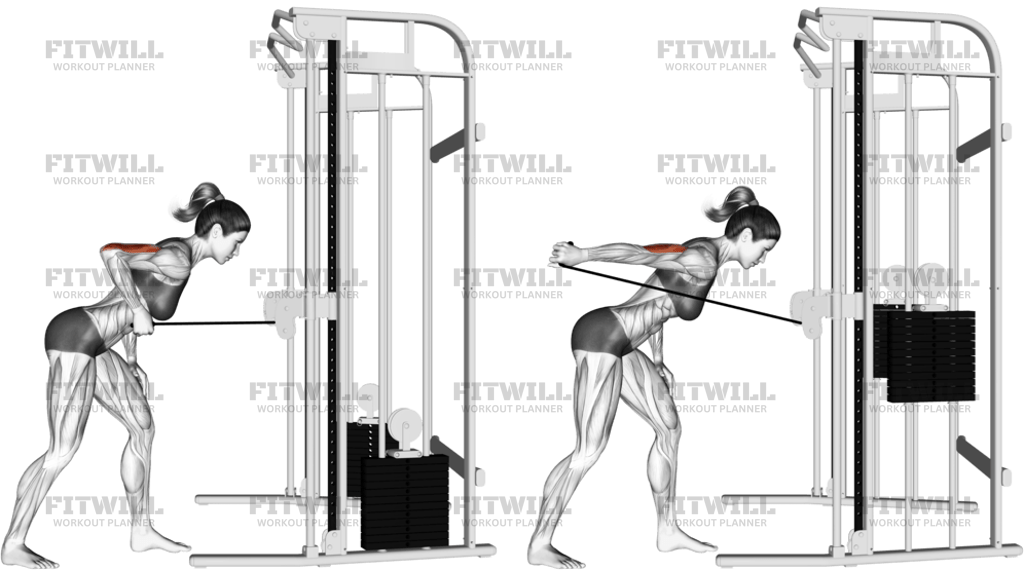
Cable Kickback (version 2) is a single-arm triceps isolation exercise done with a cable machine and handle attachment. In the image, the lifter is hinged forward with the upper arm held close to the torso, then straightens the elbow to send the handle back behind the body. That fixed upper-arm position is the key to making the triceps do the work instead of turning the movement into a shoulder swing.
The exercise primarily trains the triceps, especially the long and lateral heads, while the forearms, rear shoulder, and core help stabilize the torso and keep the cable path clean. Because the resistance stays constant through the whole rep, it is useful for learning elbow extension control, improving arm finishing strength, and adding low-joint-stress volume after heavier pressing or arm work.
Setup matters more than load here. Use a low pulley, attach a single handle, and stand far enough away that the cable is already lightly tensioned when your elbow is bent. Hinge at the hips, keep a soft bend in the supporting knee, and square the shoulders so the working upper arm stays nearly parallel to the torso. A stable hinge and quiet torso let you keep tension on the triceps instead of letting momentum or a loose ribcage take over.
Each repetition should begin with the elbow bent and the forearm pointing toward the floor or slightly back. From there, extend the elbow until the arm is almost straight and the handle moves behind the body, then return slowly until the triceps are loaded again. The upper arm should stay fixed in space; only the forearm should move. Breathing should stay controlled and rhythmic so the torso does not rise and fall with the cable.
Cable Kickback (version 2) fits well in accessory blocks, arm-focused sessions, or as a finishing movement after compound presses and rows. It is usually best performed with lighter to moderate resistance, a deliberate tempo, and strict range of motion. If the cable stack starts pulling your shoulder forward, or if your torso starts rocking to finish the rep, the set is too heavy or your stance is too unstable.
[ Workout Log & Planner ]
Put your next workout in Fitwill
Keep your plan and training log ready when you are.


Instructions
- Attach a single handle to a low cable pulley and stand facing the machine in a hip-width or split stance.
- Hinge forward at the hips until your torso is close to parallel with the floor and keep your back flat.
- Hold the handle with the working elbow bent and tucked close to your side, with the cable already under light tension.
- Set your shoulder down and back so the upper arm stays still instead of drifting during the rep.
- Brace your torso, then extend the elbow to drive the handle backward until the arm is almost straight.
- Squeeze the triceps briefly at the end of the kickback without arching the low back or twisting the torso.
- Return the handle forward under control until the elbow is bent again and the triceps are loaded.
- Repeat for the planned reps, then step in carefully and let the cable tension off before switching sides.
Tips & Tricks
- Choose a cable setting that lets you start with the elbow already bent and the handle pulled slightly forward.
- Keep the upper arm nearly frozen in place; if the shoulder is moving back, the load is too heavy.
- Use a slight split stance if your torso wants to sway when you extend the elbow.
- Finish the rep by straightening the elbow, not by whipping the hand upward or flaring the shoulder.
- Let the handle travel behind the hip line, but do not force a huge range that tips the torso open.
- Lower the handle slowly so the triceps stay loaded on the way back to the start.
- Keep the neck long and the ribcage quiet to avoid turning the hinge into a back-extension drill.
- If the cable stack slams down, shorten the set or reduce the resistance until the return stays smooth.
Frequently Asked Questions
What muscle does Cable Kickback (version 2) target most?
It primarily targets the triceps, with the rear shoulder, forearms, and core helping stabilize the movement.
Why does the image show the torso hinged forward?
The forward hinge keeps the upper arm fixed and makes it easier to isolate elbow extension instead of turning the rep into a standing shoulder swing.
Should my upper arm move during the kickback?
No. The upper arm should stay close to the torso while only the forearm moves at the elbow.
What is the most common form mistake on the handle attachment?
People often swing the handle back with the shoulder or arch the low back instead of finishing the rep with triceps extension.
Is this exercise better for strength or muscle endurance?
It is usually used for controlled accessory work, so moderate to higher reps work well when the goal is triceps hypertrophy or endurance.
Can I do Cable Kickback (version 2) one arm at a time?
Yes. It is typically performed unilaterally so you can keep the elbow path strict and match both sides more easily.
How far should the handle travel behind my body?
Only far enough to straighten the elbow and finish the triceps contraction; forcing extra distance usually changes the movement into a shoulder-dominant swing.
What can I use instead of a cable machine?
A dumbbell triceps kickback or a banded kickback can work as a substitute, but the cable version gives steadier tension through the whole rep.