Seated Circle Leg Crunch
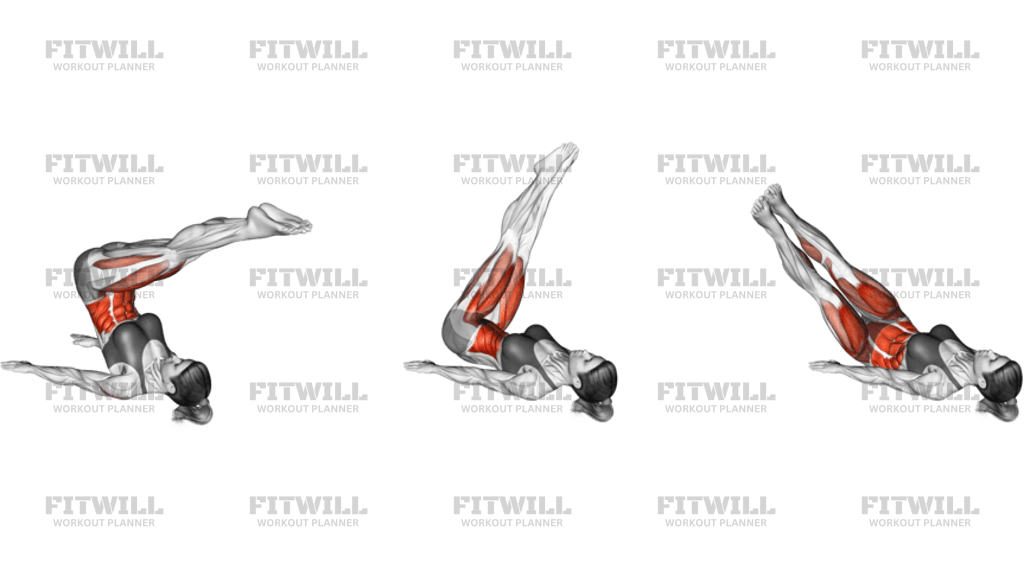
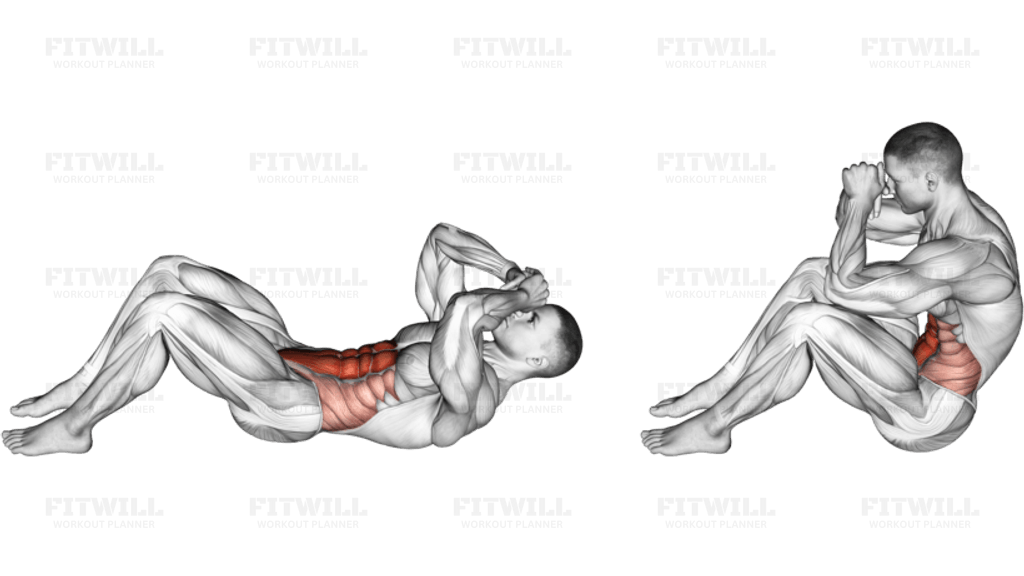
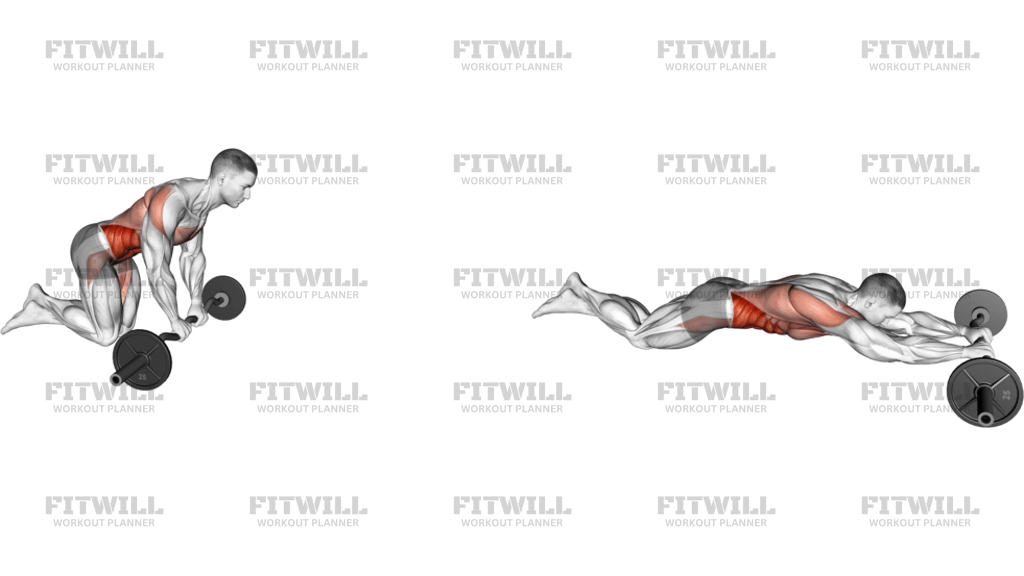
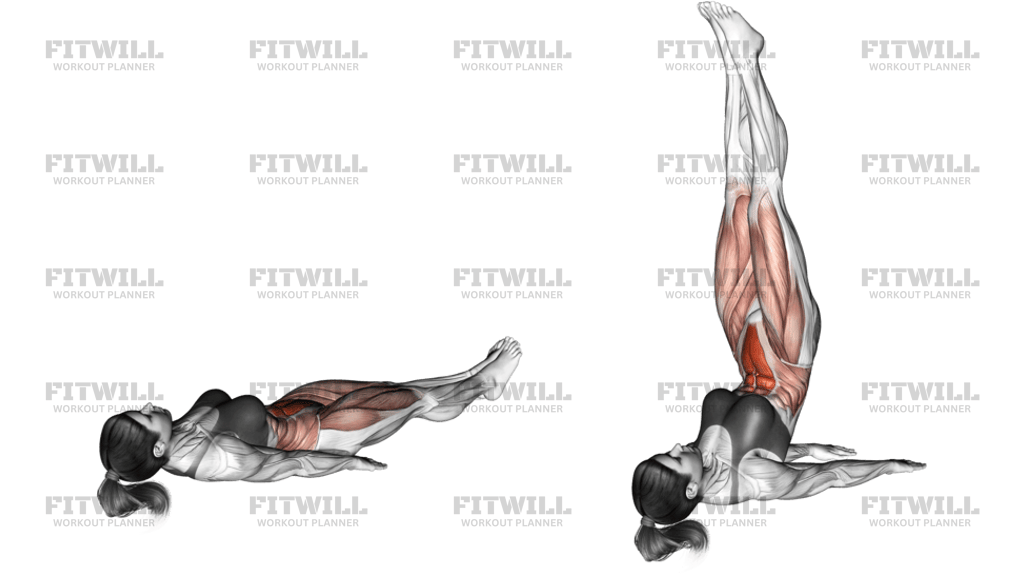
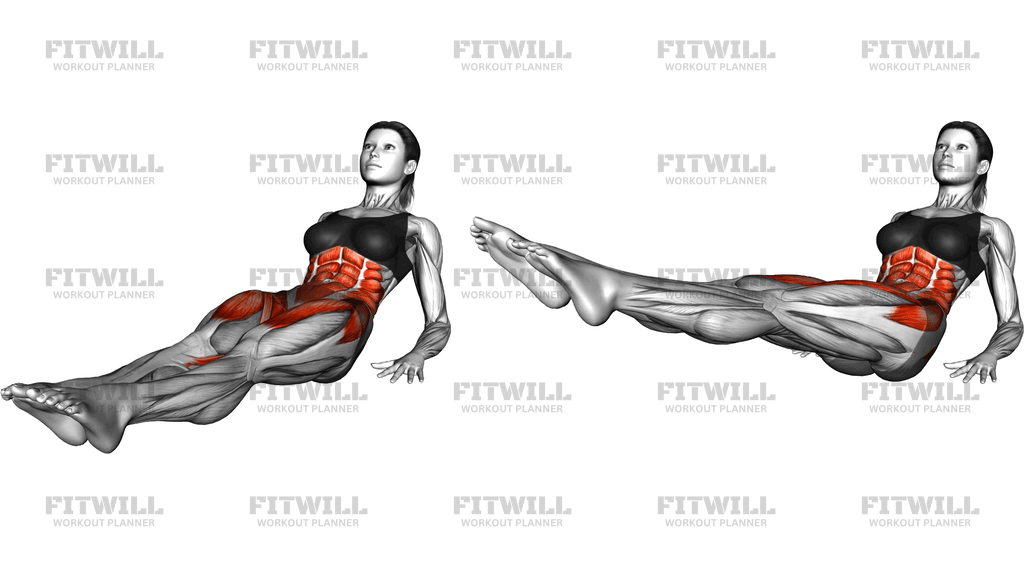
The Seated Circle Leg Crunch is a floor-based core exercise where you sit on a mat, lean your torso back and support yourself on your hands behind your hips, then extend your legs and sweep them through continuous circular patterns while keeping your abdominal wall braced. Unlike a standard crunch that curls the spine toward the knees, this variation holds the trunk still and makes your midsection control the moving weight of both legs through an arc, which shifts the challenge toward anti-rotation control and lower abdominal endurance.
The primary work comes from the rectus abdominis holding your torso upright as you lean back, with the deep core stabilizing the pelvis. Because the legs travel in circles rather than straight up and down, the hip flexors work hard through the front of each rotation, and the obliques engage to keep your hips level as the leg path drifts from side to side. The quads assist by keeping the knees locked out straight through the circle.
This movement suits people who already tolerate basic leg raises and want a more dynamic core challenge without equipment. It is common in calisthenics circuits, home abdominal routines, and warm-ups for sports that demand rotational trunk control such as martial arts, tennis, and swimming. Because the hands are planted behind you, it is also friendlier to the lower back than fully supine leg circles for many lifters, since the torso angle can be adjusted to reduce or increase leverage.
Setup is what separates a good rep from a strained one. Sit tall on the mat, place your palms on the floor slightly behind your hips with fingers pointing forward or slightly outward, and lean back just far enough that leaning forward would tip you over. Lift your feet off the floor with the knees softly extended. The further you recline, the longer the lever your legs become and the harder the abs must work, so find a torso angle you can hold without your lower back collapsing.
To execute the circle, brace your abdominal wall as if bracing for a light push, then sweep both legs together in a controlled circular path, tracing a dinner-plate-sized ring in front of you. Keep the shoulders down away from the ears and avoid shrugging through the supporting arms. Complete all reps in one direction, then reverse and circle the other way so the obliques and hip flexors are loaded evenly. Exhale steadily through the hardest arc of the circle and inhale on the easier section rather than holding your breath.
The most common faults are letting the lower back round and sink as fatigue builds, bending the knees to shorten the lever, and rushing the circles so momentum does the work. If your form breaks down, reduce the circle size, sit slightly more upright, or bend one knee and work with a shorter lever until your core endurance catches up. Stop the set when you can no longer keep your pelvis neutral; pushing through a collapsing lower back trains nothing you want trained.
[ Workout Log & Planner ]
Put your next workout in Fitwill
Keep your plan and training log ready when you are.


Instructions
- Sit in the middle of an exercise mat with your legs extended in front of you and place your palms flat on the mat behind your hips, fingers pointing forward or slightly out.
- Lean your torso back to roughly a 45-degree angle, keep your chest lifted, and draw your shoulders down away from your ears so your arms are supporting you rather than your neck.
- Brace your abdominal wall firmly and lift both feet off the mat, extending the legs until the knees are straight or nearly straight.
- Begin sweeping both legs together in a smooth clockwise circle, tracing a ring roughly the width of a dinner plate in front of your hips.
- Keep the pelvis square and level throughout each rotation; if one hip lifts or drops, shrink the circle until you can level it again.
- Complete your target repetitions clockwise, controlling the speed so momentum never takes over the movement.
- Reverse direction and perform the same number of counterclockwise circles to load both sides evenly.
- Exhale slowly through the most demanding arc of the circle, usually the low point, and inhale on the return portion rather than holding your breath.
- When finished, lower the legs to the mat with control, sit upright, and shake out the wrists and shoulders before the next set.
Tips & Tricks
- If your shoulders burn out before your abs, move your hands closer to your hips and sit slightly more upright, which shortens the lever and shifts load back to the core.
- Watch for the lower back sinking into a rounded position as the legs pass the lowest point of the circle; this is the failure point of the exercise, so end the set when you cannot keep the pelvis stacked.
- Bent knees silently make the movement easier by shortening the leg lever. If you catch yourself softening the knees, reset with a smaller circle instead.
- Keep the circles slow and even in diameter. Uneven, wobbling rings are a sign the obliques are losing their grip on pelvic control, not that you need more speed.
- Pointing the toes and squeezing the quads to lock the knees out helps the legs travel as one unit and keeps the hip flexors from snatching the movement.
- On a slippery floor, press the fingertips actively into the mat rather than resting on the palms; this stabilizes the shoulder girdle and protects the wrists.
- Progress by adding seconds per set before adding circles. Time under tension builds the lower abdominal endurance this exercise is really after.
- Regress by bending one knee and planting that foot lightly for support, or by performing circles with a single leg at a time until bilateral control improves.
Frequently Asked Questions
Which muscles does the Seated Circle Leg Crunch work the most?
The rectus abdominis and deep core do the main stabilizing work, while the hip flexors drive the legs through each circle and the obliques keep the pelvis level as the path sweeps side to side. The quads assist by holding the knees straight.
Why are the hands placed behind the hips in the Seated Circle Leg Crunch?
The hands behind the hips support the reclined torso so your attention stays on controlling the legs rather than balancing. This also lets you adjust difficulty by leaning further back for more load or sitting up for less.
Is the Seated Circle Leg Crunch suitable for beginners?
Yes, if it is scaled correctly. Beginners should sit more upright, trace a smaller circle, or allow a slight knee bend, then progress toward straighter legs and a deeper recline as core control improves.
Should I circle clockwise and counterclockwise in the same workout?
Yes. Completing equal reps in both directions balances the load on the left and right obliques and hip flexors, since the resistance pattern of a circle is not perfectly symmetrical.
How big should the leg circle be?
A circle roughly the width of a dinner plate is a good starting size. Shrink it whenever your hips start tilting or your lower back rounds, because control matters more than range.
My wrists hurt when supporting myself during the Seated Circle Leg Crunch. What can I do?
Make loose fists and support on your knuckles, use push-up handles, or lean on a low bench instead of the floor. Also check that you are pressing through the whole palm rather than dumping weight into the heel of the hand.
How is this different from lying leg circles or a regular crunch?
In a regular crunch the trunk curls toward the legs; here the trunk stays fixed and the legs move, which emphasizes hip flexor strength and anti-extension core control. The seated lean also lets you tune the difficulty with torso angle, which lying variations do not.
How many circles should I aim for per set?
Start with 8 to 10 circles in each direction, focusing on smooth, even pacing. Once you can complete that without pelvic tilt or lower back rounding, add time or circles gradually.
Can I do the Seated Circle Leg Crunch if I have lower back discomfort?
Proceed cautiously and only within a pain-free range. Sitting more upright, using a smaller circle, and keeping one foot lightly supported reduce the leverage on the lumbar spine, but stop the exercise if symptoms appear and consult a professional if they persist.