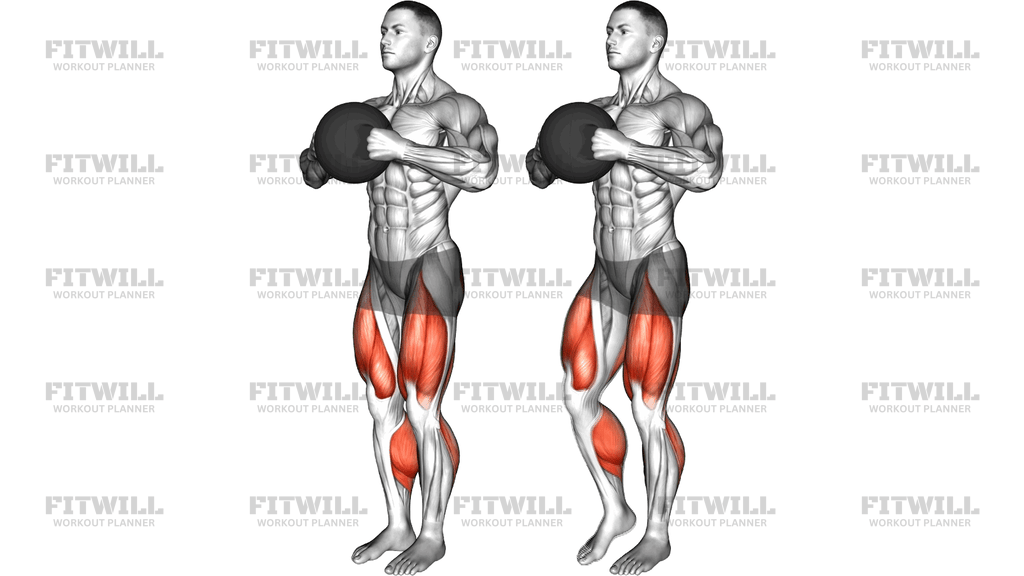
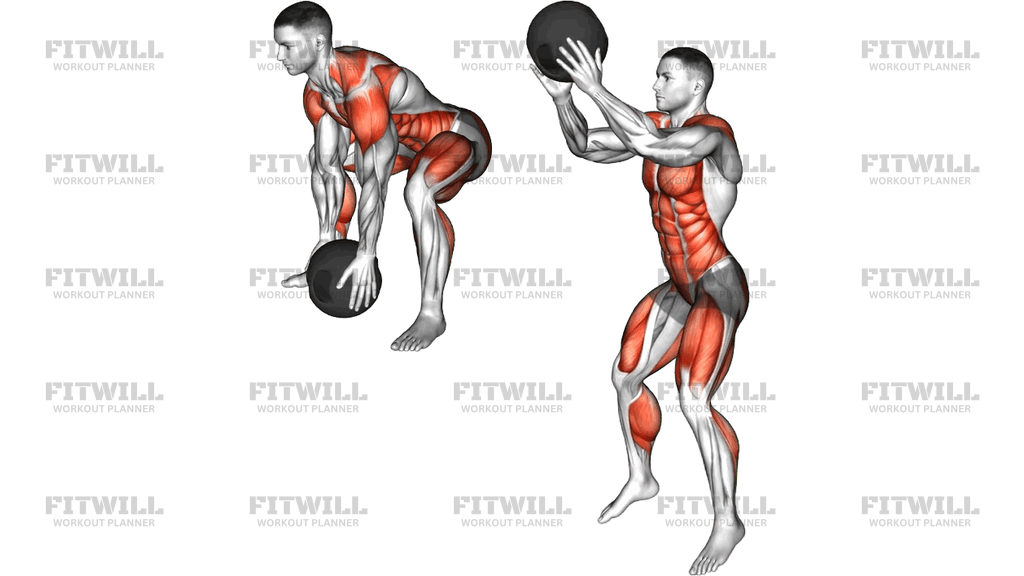
Medicine Ball Skater Hop
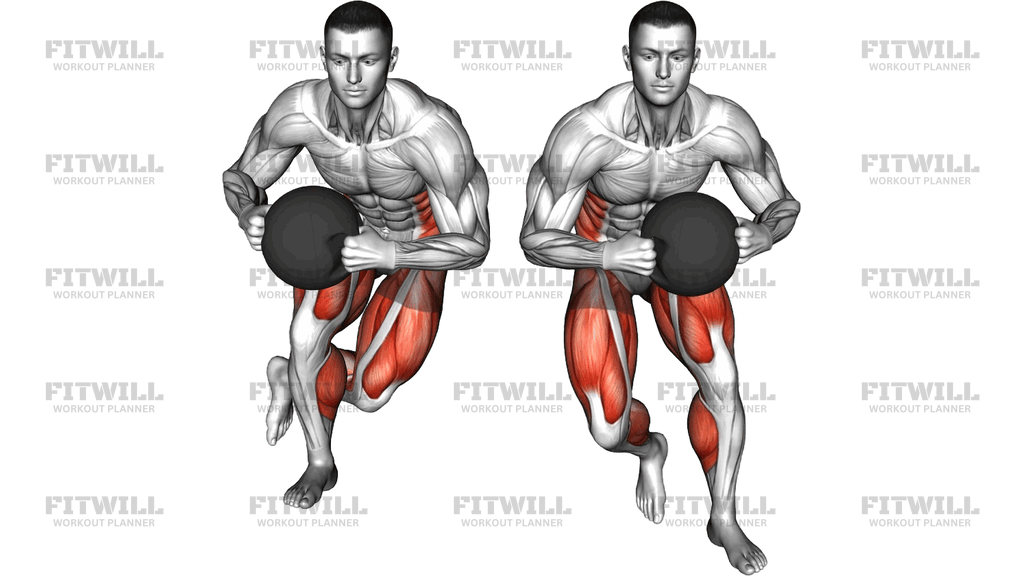
The Medicine Ball Skater Hop is a lateral jumping exercise that mimics the side-to-side glide of a speed skater while you hold a medicine ball at your chest. Instead of hopping in place, you push off one leg, travel sideways through the air, and land softly on the opposite leg in a single-leg stance, with the trailing leg sweeping behind your body. The medicine ball adds load and forces your trunk to work hard to keep the ball from pulling you off balance every time you land.
This movement is especially useful for athletes in sports that demand quick changes of direction, such as basketball, tennis, soccer, and skiing, but it also works well for general trainees who want stronger, more resilient legs. It develops explosive power in the quadriceps and glutes, single-leg landing strength in the hamstrings and calves, and lateral stability through the hips. Because you land and balance on one leg at a time, the small stabilizing muscles around the hip and ankle get far more work than they would in a standard two-footed jump.
The setup matters because lateral hops are less forgiving than vertical ones. Your chest stays tall, the ball is held firmly at chest height with both hands, and each landing should place your knee stacked over the middle of your foot. If you land with a collapsed arch, a knee diving inward, or your torso pitching forward, the energy you are trying to train leaks out and the stress shifts to joints instead of muscles. A controlled, quiet landing is the quality marker for this exercise, not distance covered.
To execute it well, load the working leg with a small hip hinge and a bent knee, then drive sideways off the floor. Land on the opposite foot with the free leg crossing behind you, absorb the impact by sinking into the hip, pause long enough to feel balanced, and then hop back to the other side. Beginners can start with short, low hops and no pause requirement, while more advanced lifters can widen the distance, add a brief hold on each landing, or increase the ball weight.
You will see the Medicine Ball Skater Hop used as a power developer in lower-body sessions, as a warm-up primer before heavy squats or deadlifts, and as a conditioning drill when performed for time. The main safety points are simple: use a non-slip surface, clear space to each side, choose a ball weight you can hold without rounding your upper back, and stop progressing the distance until every landing feels stable and controlled.
[ Workout Log & Planner ]
Put your next workout in Fitwill
Keep your plan and training log ready when you are.


Instructions
- Stand with your feet roughly hip-width apart and hold a medicine ball with both hands at chest height, elbows tucked close to your ribs.
- Shift your weight onto your right leg, lift your left foot slightly off the floor, and hinge forward a few degrees at the hips with a tall chest.
- Brace your core as if bracing for a light push, and bend your right knee so it tracks directly over your foot.
- Exhale forcefully and push off your right foot to jump sideways to the left, keeping the ball pressed at your chest throughout the flight.
- Land on your left foot, letting your right leg sweep behind your left leg, and sink into your left hip to absorb the landing.
- Keep your knee over the middle of your foot and your shoulders over your knee at the bottom of the landing, holding balance for a beat.
- Once stable, load the left leg and push off sideways to hop back to the right foot, mirroring the same path and landing position.
- Inhale during the brief pause on each landing and exhale on every takeoff to keep your breathing tied to the effort.
- Continue alternating side to side for the desired number of hops, resetting your stance and grip on the ball whenever your balance drifts.
Tips & Tricks
- Most people jump for distance before they can land for balance. Cut your hop width in half until every landing is quiet, then progress.
- If your landing knee caves inward, think about spreading the floor with your foot and driving the knee out over the pinky toe.
- Do not let the medicine ball drift away from your chest. A ball swinging forward acts like a counterweight and jerks your torso into a lean.
- Keep the trailing leg behind and slightly off the floor rather than tapping it down for support, or you turn the drill into a shuffle.
- A soft landing comes from the hip and knee bending together, not from dropping the chest forward. Cue yourself to sit into the hip.
- If your calves or ankles fatigue before your legs, shorten the sets. Lateral landing demand on the ankle is higher than in forward jumps.
- Use a smooth rubberized or textured medicine ball. A slick ball forces a squeezing grip that tightens your shoulders and disturbs balance.
- Warm up with a few unloaded skater hops first so the lateral pattern is fresh before you add the ball.
- Stop the set when your landings get loud or wobbly. Power work with poor landings trains bad habits, not athleticism.
Frequently Asked Questions
What muscles does the Medicine Ball Skater Hop work?
The main drivers are the quadriceps and glutes of the landing leg, with the hamstrings and calves controlling and cushioning each landing. Your obliques and deep core work continuously to keep the medicine ball and torso square as you decelerate sideways.
How heavy should the medicine ball be for Medicine Ball Skater Hops?
Choose a ball you can hold at your chest for a full set without your shoulders rounding or your balance wavering, typically a lighter ball than you would use for slams or presses. Landing quality matters far more than ball weight in this exercise.
Is the Medicine Ball Skater Hop suitable for beginners?
Yes, if you start with short, low hops and master the bodyweight version first. If single-leg balance is a struggle, practice holding the landing position on one foot before adding lateral travel and the ball.
Why do I keep losing balance when I land on one leg?
The usual causes are hopping too far, landing with a straight stiff knee, or letting the ball drift forward away from the chest. Shorten the distance, sink deeper into the landing hip, and keep the ball pressed against your sternum.
What can I use instead of a medicine ball for this exercise?
You can do plain skater hops with no weight, hug a dumbbell or kettlebell at your chest, or hold a sandbag. Any load you can secure against your torso works, as long as your hands stay free of swings.
How far should I hop side to side during the Medicine Ball Skater Hop?
Start with a distance you can cover while landing quietly and keeping your knee over your foot, often two to three feet for newer lifters. Increase the width only when every landing feels stable and controlled.
Is this exercise bad for my knees?
Performed with controlled landings, a knee tracking over the foot, and an appropriate hop distance, it is generally well tolerated and can build knee resilience. If you have an active knee issue, clear it with a qualified professional before adding loaded lateral jumping.
Should I pause between hops or move continuously?
Pause briefly on each landing if your goal is balance and single-leg strength, which is the better choice when learning the pattern. Continuous, quick hops suit advanced trainees using the drill for power or conditioning.
Where does the Medicine Ball Skater Hop fit in my workout?
It works well early in a lower-body session as a power drill when you are fresh, or after your main lifts as a finisher for conditioning. Avoid doing high-repetition sets right before heavy squats or deadlifts, since fatigued landings compromise control.
How many reps should I do per set?
Six to ten hops per side works well for power and balance focus, while timed sets of twenty to thirty seconds suit conditioning days. End the set as soon as your landings become noisy or unsteady, regardless of the rep count.