Medicine Ball Squat To Overhead Press
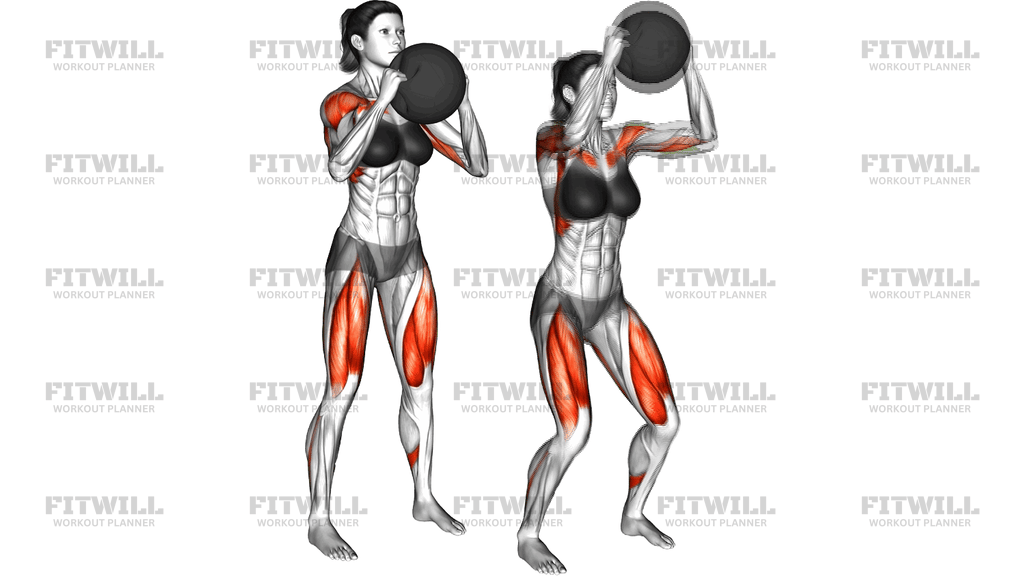
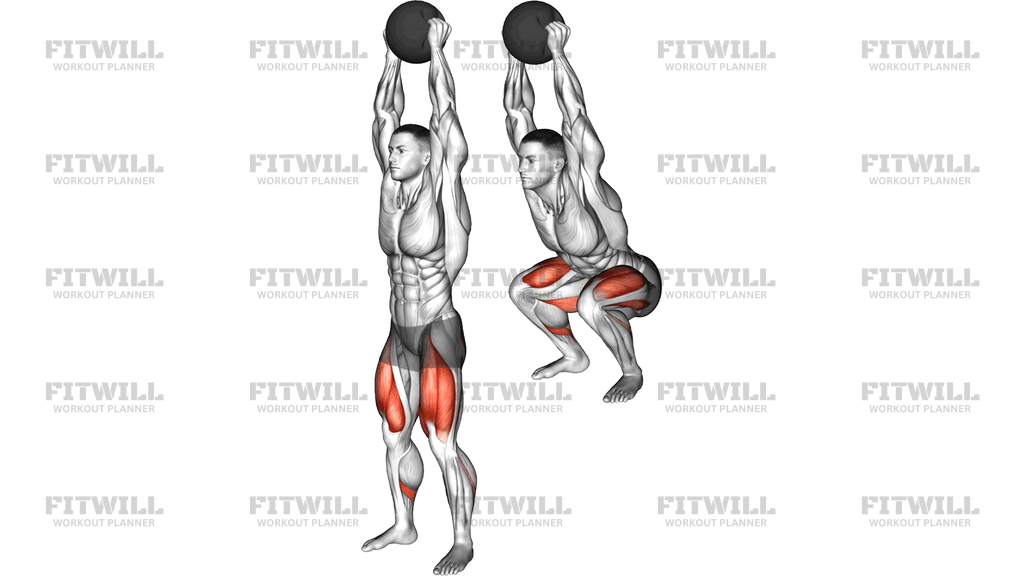
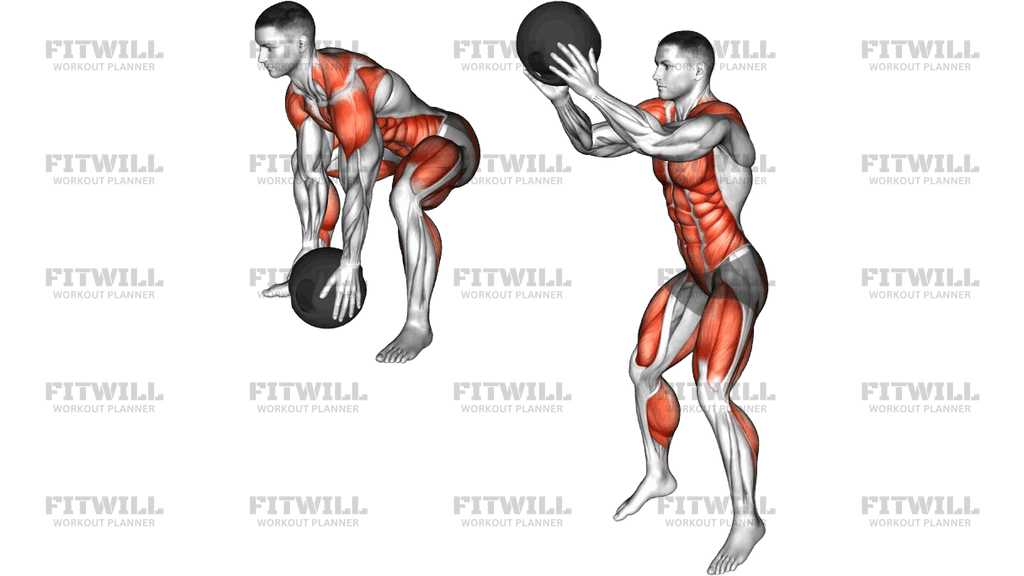
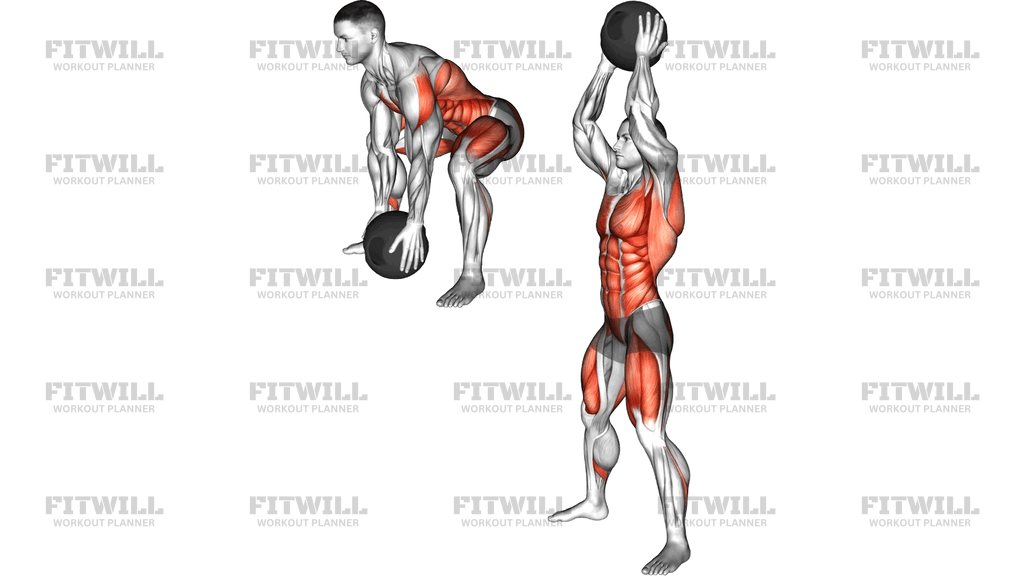
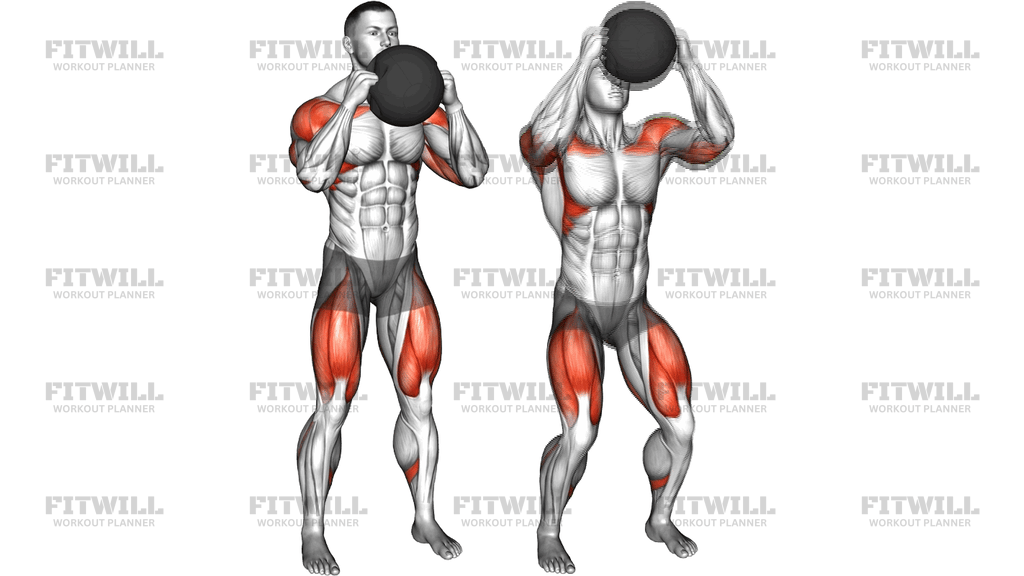
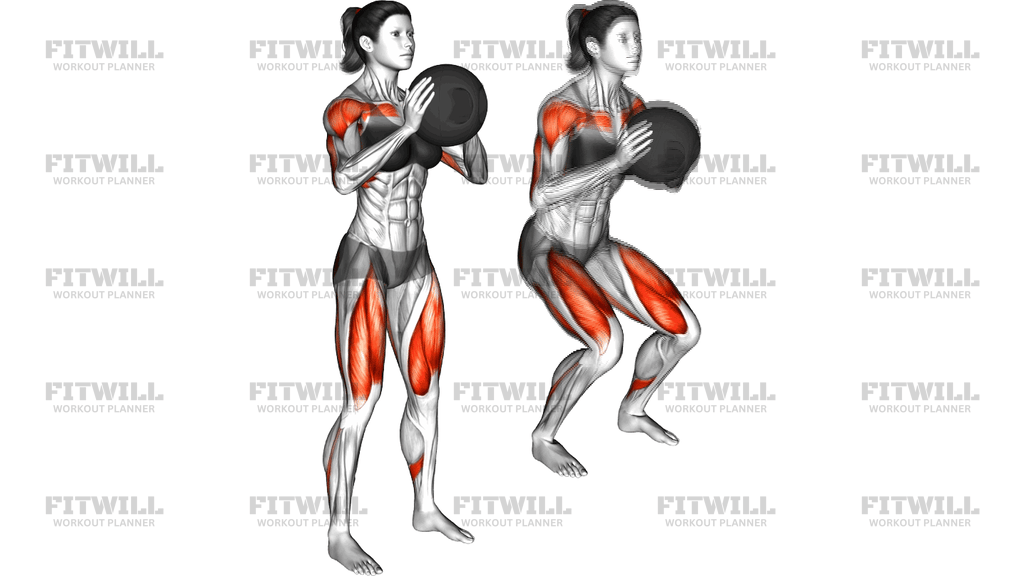
The Medicine Ball Squat To Overhead Press is a compound, full-body movement that combines two fundamental patterns into one continuous rep: a squat and a vertical press. You hold a medicine ball at chest height, sink into a squat, then drive through your legs to stand while pressing the ball straight overhead until your arms are fully extended. Because the ball stays in your hands the entire time, your legs, hips, core, shoulders, and arms all work together through a single coordinated chain.
This exercise is especially useful when you want a lot of training effect from minimal equipment. With just one medicine ball you can load the quads and glutes through the squat, challenge the front delts and triceps through the press, and force your core to hold everything steady between the two. The ball's soft, grippable shape also makes it friendlier for the wrists and shoulders than a barbell, which is why this variation shows up often in general conditioning circuits, group training, and warm-up ramp-ups before heavier lifting.
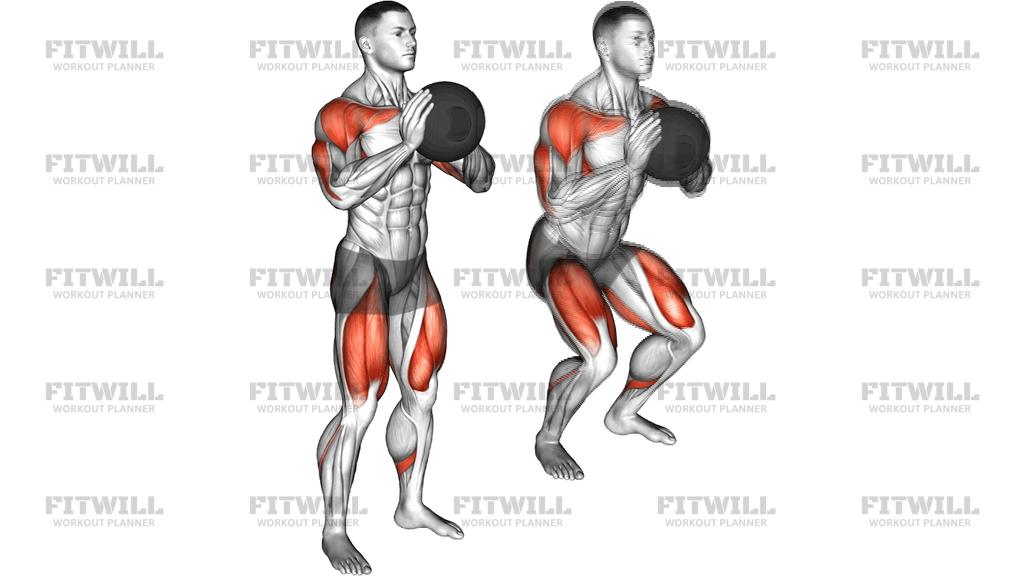
Setup matters more than it looks. The ball should rest against your upper chest and sternum with elbows tucked fairly close to the body, not drifting out wide. Your stance should be roughly shoulder-width with toes turned out slightly, and your weight spread across the whole foot. If the ball sits low near your belly or your elbows flare out, the squat tends to collapse forward and the press loses its clean vertical path, so it is worth taking a moment to set the ball properly before every set.
Execution comes down to sequencing. Squat first, reach a depth you can control with a neutral spine, then stand with intent and let that leg drive carry the ball upward into the press. The press should feel like the finish of the squat rather than a separate arm effort. At the top, the ball is directly over your head, biceps near your ears, and your ribs are not flaring open. Lower the ball back to your chest as you descend into the next rep, keeping the rhythm smooth rather than jerky.
Common use cases include full-body strength circuits, conditioning intervals, and beginner-friendly strength work where a barbell front squat and press would be excessive. Because the load is limited by what you can hold and press, most people get the best results by focusing on crisp reps, controlled tempo, and full range of motion. If you cannot complete the press without leaning back, drop to a lighter ball before adding reps.
[ Workout Log & Planner ]
Put your next workout in Fitwill
Keep your plan and training log ready when you are.


Instructions
- Stand with your feet about shoulder-width apart, toes turned out slightly, holding a medicine ball with both hands at chest height.
- Cup the sides of the ball with your palms and tuck your elbows down so the ball rests against your upper chest and sternum, not your stomach.
- Brace your core, lift your chest, and shift your weight evenly across both feet before you begin the rep.
- Push your hips back and bend your knees to descend into a squat, keeping the ball tight to your chest and your torso as upright as you can manage.
- Lower until your thighs are at least parallel to the floor, or as deep as you can go while keeping your heels down and your spine neutral.
- Drive through your mid-foot and heels to stand, and as your hips extend, press the ball straight up overhead until your arms are fully locked out.
- At the top, position the ball directly over your head with your biceps close to your ears, and keep your ribs from flaring upward.
- Reverse the press under control, catching the ball back at your chest as your hips and knees bend into the next squat.
- Exhale as you drive up and press, and inhale as you lower the ball and sink back down.
- Complete your set, then set the ball down on the floor rather than dropping it from overhead.
Tips & Tricks
- The most common breakdown point is the ball sliding down toward the belly during the squat, which pulls your chest forward — reset it against your sternum before every rep instead of mid-rep.
- If you find yourself pressing the ball out in front of your face rather than straight up, your elbows are probably drifting wide at the chest; keep them tucked and think about pushing the ball toward the ceiling.
- Avoid bouncing out of the bottom before your legs are loaded; control the descent so the squat and press stay connected instead of becoming two separate movements.
- Lower back arching at the top of the press usually means the ball is drifting behind your head — pull your chin back slightly so the ball finishes over your mid-foot, not in front of or behind it.
- Heels lifting during the squat is a stance or depth problem, not a balance problem; widen your feet a touch or reduce depth until your whole foot stays planted.
- Choose a ball you can press overhead for all your planned reps with good technique; if your arms give out before your legs, the ball is too heavy for this exercise.
- For conditioning circuits, keep the tempo steady and uniform rather than sprinting the first few reps and losing your squat depth at the end.
- If your wrists ache holding the ball, spread your fingers wider around the sides of the ball and share the load through your palms instead of gripping with the fingertips.
Frequently Asked Questions
What muscles does the Medicine Ball Squat To Overhead Press work?
The quads and glutes do most of the work during the squat, while the front shoulders and triceps handle the overhead press. Your core works throughout to keep your torso upright with the ball loaded against your chest.
Is the Medicine Ball Squat To Overhead Press good for beginners?
Yes, it is one of the more accessible full-body strength exercises because the ball is easy to hold and the load is self-limiting. Beginners should start with a light ball and prioritize squat depth and a straight overhead press path before adding reps or weight.
How heavy should my medicine ball be for this exercise?
Pick a ball you can press strictly overhead without leaning back, usually somewhere in the 4 to 10 kg range depending on your training background. If your legs feel fresh but your press starts breaking down, the ball is too heavy.
Why does the ball need to stay against my chest during the squat?
Holding the ball at your sternum keeps the load close to your center of mass, which lets you stay upright and squat with a neutral spine. If the ball drifts low, your torso pitches forward and your lower back takes on stress it does not need.
Should the squat and press happen at the same time?
The press should begin as you drive up out of the squat, finishing as your hips reach full extension. Pressing before you stand or waiting until you are fully upright both disconnect the leg drive from the press and reduce the coordination benefit.
My lower back arches when I press the ball overhead — how do I fix it?
This usually means the ball is finishing behind your head or your core relaxed at the top. Keep your ribs pulled down, squeeze your glutes as you reach lockout, and make sure the ball finishes over the middle of your foot.
Can I substitute a dumbbell if I do not have a medicine ball?
You can hold a single dumbbell vertically at your chest in a goblet position and use the same squat-to-press sequence. A kettlebell held by the horns works the same way, though the ball is more comfortable for high-rep conditioning sets.
How deep should I squat while holding the medicine ball?
Aim for thighs at least parallel to the floor as long as your heels stay down and your spine stays neutral. If your chest collapses or your heels lift near the bottom, squat to a shallower depth and work on mobility before forcing depth.
Is it safe to do this exercise every day?
It is a low-load, joint-friendly movement, so frequent practice is generally fine as part of warm-ups or light conditioning. If your shoulders or legs feel worn down from heavier training, scale back the volume rather than pushing through fatigue.
Should I drop the medicine ball at the end of a set?
No, lower it to the floor under control. Dropping a ball from overhead risks it bouncing into you or someone nearby, and controlled lowers keep tension on your muscles through the full rep.