Medicine Ball Marching On Spot
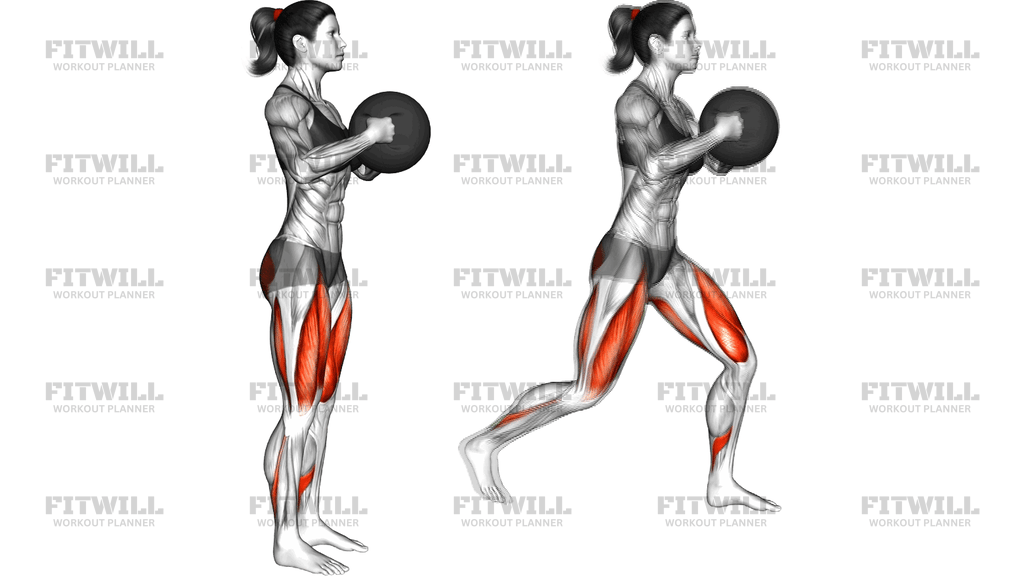
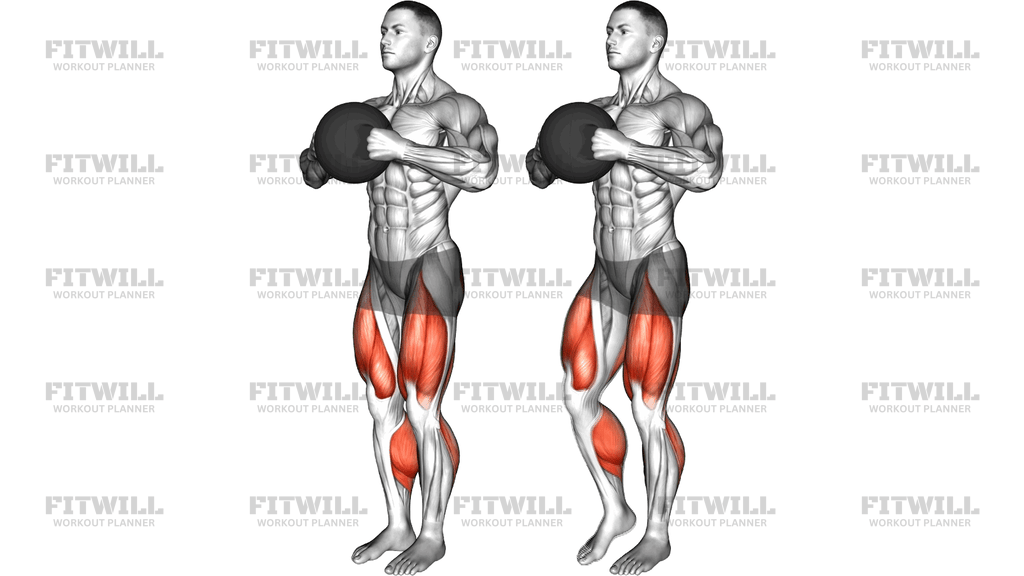
Medicine Ball Marching On Spot is a standing conditioning drill where you hold a medicine ball at chest height and drive your knees up one at a time without traveling anywhere. The added load in front of your torso forces your trunk to stay tall and braced while your legs work through repeated knee lifts, so you get a modest core challenge and a genuine lower-body endurance stimulus in one low-skill movement.
The main work comes from the hip flexors as they lift each knee, with the quads and calves contributing as you rise onto the ball of the working foot and absorb each step. Because you are marching rather than running, the impact stays low, which makes this a practical choice for warm-ups, beginners returning to training, older adults who want loaded upright movement, or anyone adding light cardio between strength exercises in a circuit.
The setup matters more than it looks. Holding the ball at your chest rather than letting it hang at your waist keeps your center of gravity slightly forward and forces the abdominals to work isometrically to prevent your ribs from flaring and your lower back from arching as each knee lifts. If the ball drifts down or your torso leans back, the drill loses most of its trunk-stability value.
To execute it well, stand tall with your feet about hip-width apart, grip the ball with both hands at chest height, and lift each knee to roughly hip height in a steady rhythm. Keep your eyes forward, your shoulders relaxed, and your weight over the mid-foot of the standing leg. The tempo should be controlled enough that you could hold a conversation in short sentences; rushing turns it into sloppy high-knee bouncing with minimal hip flexor range.
Common use cases include warm-up circuits, metabolic intervals, and low-impact conditioning blocks where jumping is not appropriate. A ball in the two-to-six kilogram range suits most people, and because the movement is simple, it is easy to adjust intensity by changing march speed, knee height, or how long each set runs.
[ Workout Log & Planner ]
Put your next workout in Fitwill
Keep your plan and training log ready when you are.


Instructions
- Stand upright with your feet about hip-width apart and hold a medicine ball with both hands at chest height, elbows tucked close to your ribs.
- Set your stance so your weight is spread evenly over both feet, then shift slightly onto the ball of one foot as your starting foot position.
- Brace your abdominal muscles and pull your ribs down gently so your lower back stays neutral before the first knee lift.
- Lift one knee up to about hip height, keeping the ball steady against your chest and your torso tall and square to the front.
- Lower that foot back to the floor under control and immediately lift the opposite knee, continuing to alternate in a steady marching rhythm.
- Stay on the spot the whole time; the standing foot should roll naturally onto the ball of the foot as the opposite knee rises.
- Breathe in a regular rhythm through the set, exhaling lightly with every second knee lift rather than holding your breath.
- Keep your gaze forward and your shoulders relaxed so the ball does not pull your chest down or round your upper back.
- When the set ends, stop marching, lower the ball to waist height or set it down, and take a few breaths before starting again.
Tips & Tricks
- If your torso starts leaning back as the knees rise, the ball has usually drifted away from your chest; pull it back in and rebrace your abs.
- Aim for knee height rather than maximum height. Cranking the knee far past hip level usually arches the lower back and shifts work away from the hip flexors.
- Land each step softly with the ball of the foot contacting first. Heavy heel slaps mean you are dropping the leg instead of lowering it under control.
- Do not let your elbows flare out to the sides; keeping them close to your ribs stops the shoulders from tiring before your legs do.
- If your rhythm becomes choppy, count a steady one-two cadence out loud. Even timing keeps the marching pattern clean and the effort sustainable.
- Keep your hips square to the front. Rotating the pelvis to chase higher knee lifts is a common fault and reduces the trunk-stabilizing benefit.
- Start with a lighter ball than you think you need. If you cannot keep the ball at chest level for the whole set, the load is stealing from your march quality.
- If balance feels shaky on one side, stand near a wall and let a hand hover close without gripping it until your single-leg control improves.
Frequently Asked Questions
What muscles does Medicine Ball Marching On Spot work?
The hip flexors do the main work of lifting each knee, supported by the quads and calves of the standing and stepping legs. Holding the medicine ball at chest height also keeps your abs and trunk muscles working to stay upright.
Is Medicine Ball Marching On Spot suitable for beginners?
Yes. It is low-impact, low-skill, and easy to scale by adjusting knee height, march speed, and ball weight, which makes it a friendly starting point for building upright endurance.
How high should I lift my knees during Medicine Ball Marching On Spot?
Aim for roughly hip height on each knee lift. Going much higher than that usually causes your lower back to arch and your torso to lean, which is where form breaks down.
Where should I hold the medicine ball during the march?
Hold it with both hands at chest height, elbows close to your ribs. Letting it slide down to your stomach removes the trunk-stabilizing demand that makes this drill worth loading.
What is the most common mistake in Medicine Ball Marching On Spot?
Rushing the tempo and turning the march into a bouncy, half-range step. Slow the rhythm down and finish each knee lift fully before switching legs.
How heavy should the medicine ball be?
Choose a ball you can hold at chest level with a tall posture for the entire set, typically somewhere between two and six kilograms for most people. If your shoulders fatigue before your legs, drop the weight.
Can I do Medicine Ball Marching On Spot without a medicine ball?
Yes, marching on the spot with just body weight is a valid substitute, though you lose the extra trunk load. A single dumbbell held vertically at your chest is the closest alternative.
How long should each set of Medicine Ball Marching On Spot last?
Twenty to forty seconds per set works well for warm-ups and circuits. Focus on keeping the same rhythm and knee height from start to finish rather than sprinting the first ten seconds.
Is Medicine Ball Marching On Spot safe for people who avoid jumping?
Generally yes, because one foot stays in contact with the floor at all times and the impact is low. If you have an acute knee, hip, or ankle issue, keep the knee lifts to a comfortable height and clear any new exercise with a professional first.