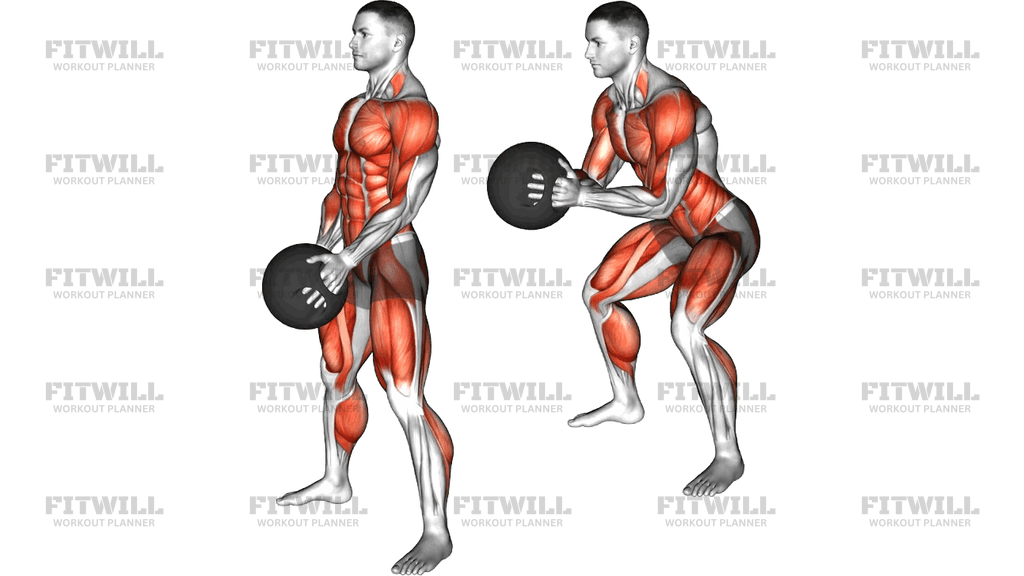
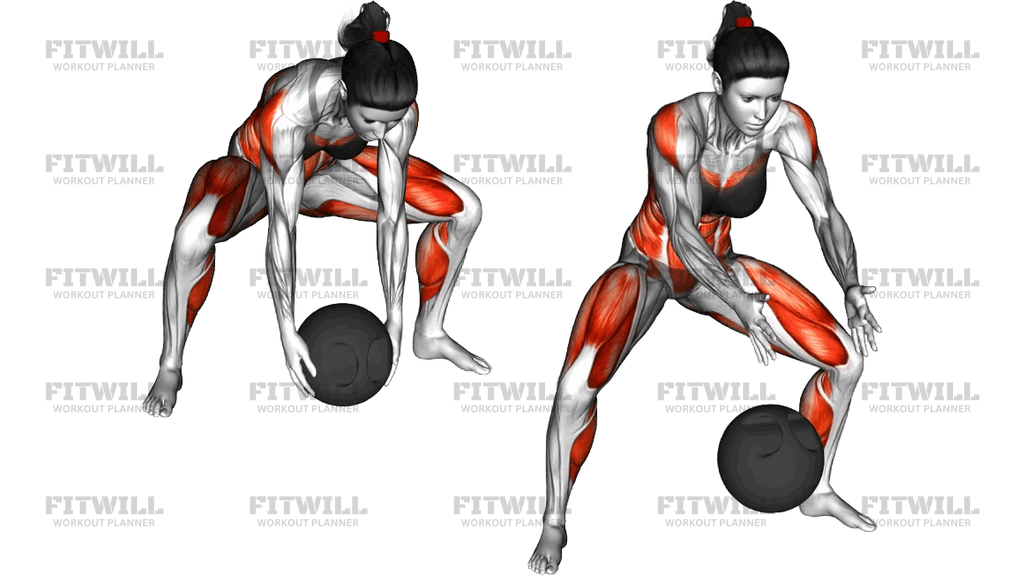
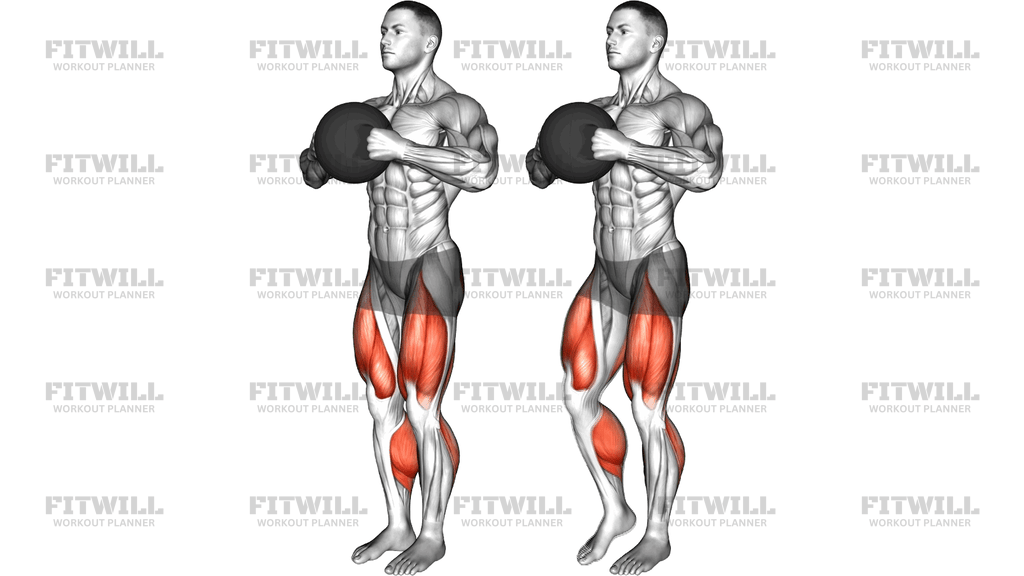
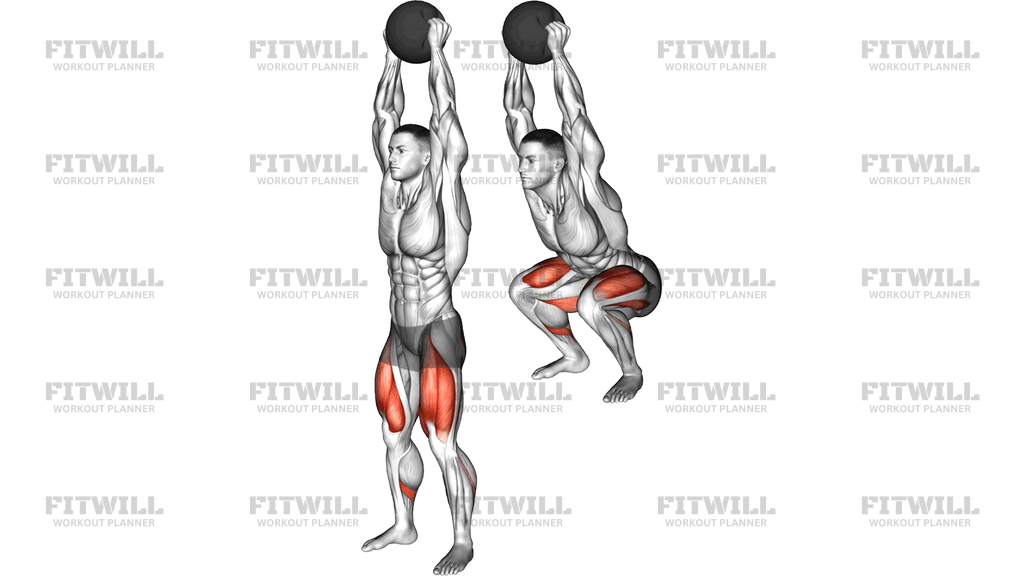
Medicine Ball Throw Squat With Wall
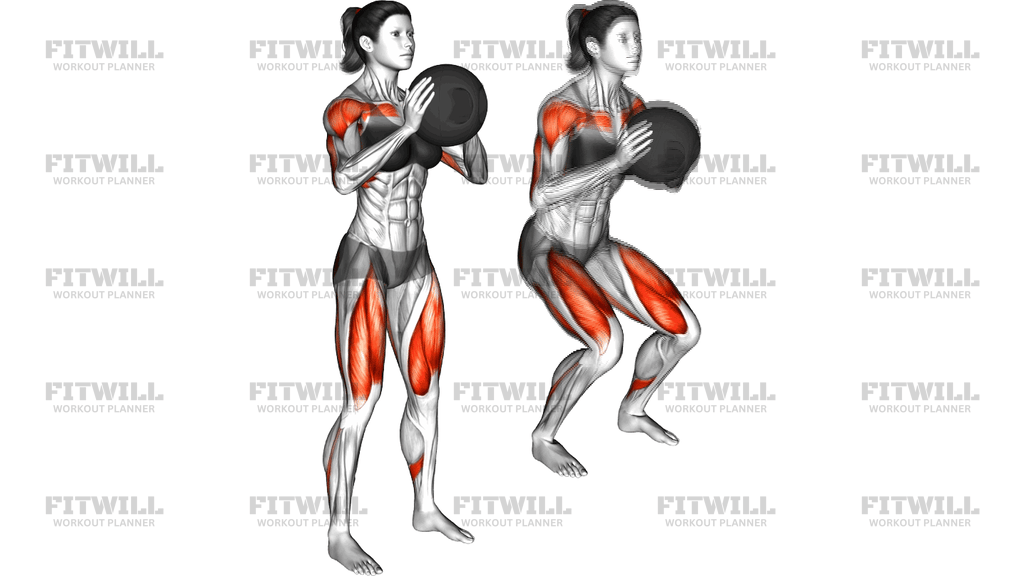
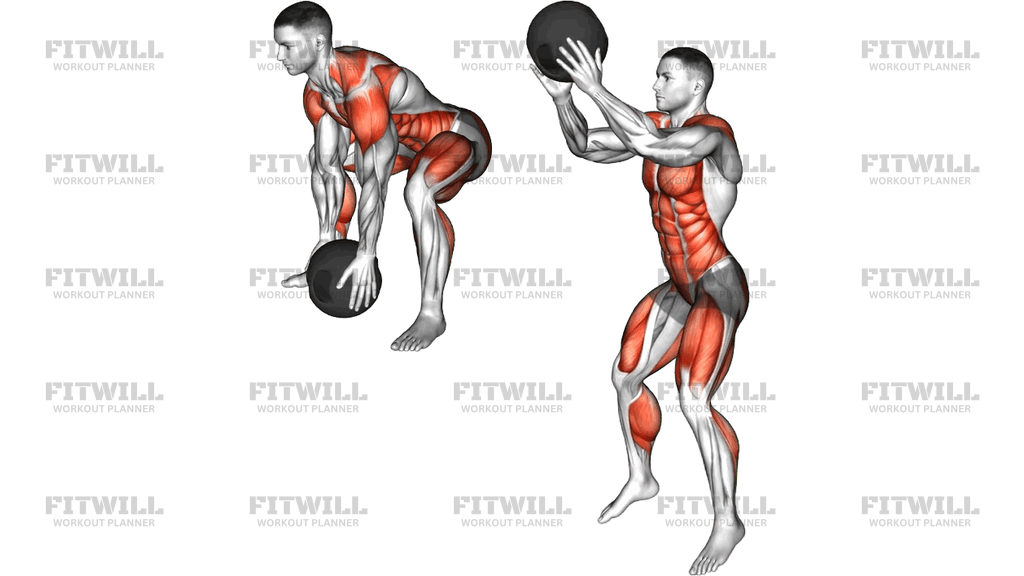
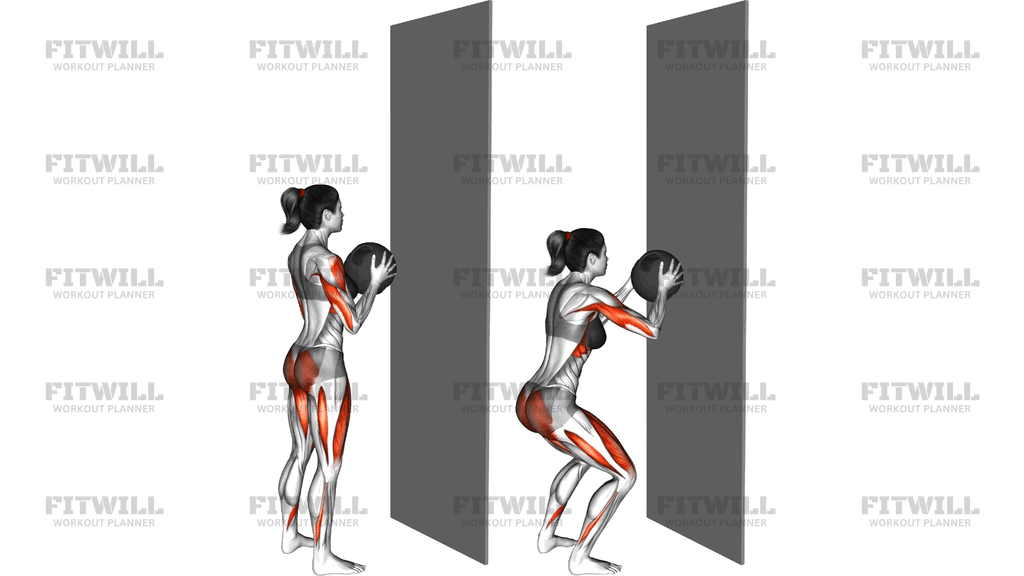
The Medicine Ball Throw Squat With Wall combines a bodyweight squat with an explosive chest pass into a wall, turning a basic lower-body movement into a full power drill. You stand facing a sturdy wall holding a medicine ball at chest height, sink into a squat, then drive up through the floor and throw the ball forward against the wall, catching it as it rebounds. Because the throw happens right as your legs extend, the whole chain from calves through hips to arms has to work together in one coordinated effort.
This movement earns its place in a lot of programs because it trains power, not just strength. The squat builds force in the quads and glutes, and the throw teaches you to transfer that force upward through the core into the chest, shoulders, and triceps. That quality of linking lower-body drive to upper-body output is exactly what athletes need for jumping, sprinting, throwing, and most reactive sports, and it is hard to develop with slow lifting alone.
The wall is what makes the setup work. Standing roughly an arm's length to a step away gives the ball a short flight path, so you can catch the rebound cleanly and flow straight into the next repetition without chasing the ball around the room. Keep the target at chest to face height, not overhead, so the throw stays a horizontal push rather than drifting into a strained press. A wall you trust to handle impact, such as a concrete or brick surface, is worth seeking out before you start throwing.
Execution is straightforward but rewards attention to detail. Brace your trunk, keep the ball tucked at your sternum with elbows down, and squat until your thighs are at least parallel or as deep as your hips allow with a neutral spine. From the bottom, push the floor away aggressively and release the ball with both hands as your arms extend toward the wall. Catch the rebound with soft elbows, absorb it by dropping straight back into your squat, and repeat. The rhythm should feel like one continuous wave rather than separate squatting and throwing phases.
This drill suits intermediate exercisers and athletes who already squat with decent control, but beginners can use it too with a light ball and a shallow depth. It fits well as a warm-up primer before heavy leg days, as a conditioning station in circuits, or as a dedicated power block of three to five sets of five to eight quality throws. Choose a ball weight that lets you throw fast; if the ball slows down noticeably, it is too heavy to train power effectively.
Safety comes down to two things: control your landing and respect the rebound. Keep your knees tracking over your toes, your heels down, and your chest tall throughout the squat, and never stand so close that the ball smacks back into your face. Start conservatively, and stop the set as soon as your throw height or squat depth starts to degrade.
[ Workout Log & Planner ]
Put your next workout in Fitwill
Keep your plan and training log ready when you are.


Instructions
- Stand facing a sturdy wall about an arm's length to one step away, with your feet roughly shoulder-width apart and toes turned out slightly.
- Hold the medicine ball with both hands at chest height, fingers spread around the sides of the ball and elbows tucked down rather than flared wide.
- Brace your abdominal muscles, pull your shoulders back, and set your gaze on a spot on the wall slightly above the ball's target point.
- Inhale, then push your hips back and bend your knees to lower into a squat, keeping your chest tall, heels flat, and the ball close to your sternum.
- From the bottom of the squat, exhale forcefully and drive up through your heels and mid-foot, extending your hips and knees at speed.
- As you rise, press the ball off your chest with both hands and throw it forward into the wall at chest height, finishing with your arms extended.
- Catch the ball on the rebound with soft elbows, letting its momentum carry your hands back toward your chest.
- Ride the catch directly into your next squat by absorbing the ball as you lower your hips, keeping your spine neutral the whole time.
- Reset your stance and brace briefly between reps if your rhythm breaks, then continue for your target repetitions.
Tips & Tricks
- Aim the throw at a fixed point on the wall at chest height; throws that drift upward usually mean your elbows are flaring and your chest is collapsing forward in the squat.
- If the ball rebounds too hard to control, you are either standing too close to the wall or throwing too hard for your ball weight, so take a half step back before softening the throw.
- Let your heels lift off the floor and you lose most of the leg drive, so cue yourself to push the floor away rather than pushing the ball away.
- A common mistake is squatting deep and then pausing before the throw, which kills the power transfer; the throw should begin while your legs are still extending.
- Catch the ball with your arms absorbing the impact, not locked straight, or the shock travels into your elbows and shoulders over repeated sets.
- Keep the ball resting against your sternum during the descent instead of letting it pull your torso forward, which turns the squat into a tipped-over good morning.
- Pick a lighter ball if your squat depth shortens after the first few reps; the legs, not the arms, should be the limiting factor in this drill.
- On hard floors, a slight bend in the knees on every catch protects them far better than landing stiff-legged after each rebound.
- Face the wall squarely with both feet planted; twisting your torso to follow an off-target throw loads your lower back asymmetrically.
Frequently Asked Questions
Which muscles does the Medicine Ball Throw Squat With Wall work the most?
The quads and glutes do the bulk of the work during the squat and drive, while the chest, shoulders, and triceps deliver the throw. Your core stays busy the entire time holding your trunk steady between the two efforts.
How far from the wall should I stand for the Medicine Ball Throw Squat With Wall?
Start about an arm's length to one step away so the rebound comes back quickly and predictably. If the ball comes back too hot to catch safely, take a half step back rather than weakening the throw.
What weight medicine ball should a beginner use for this exercise?
Most beginners do well with a ball in the 4 to 8 pound range, light enough that the throw stays fast and the squat depth stays consistent. If your throw height drops or your form breaks down, switch to a lighter ball.
Should I throw the ball on the way down or on the way up?
Throw on the way up, as your hips and knees extend out of the squat. This lets the leg drive power the throw, which is the entire point of pairing the two movements.
Can I do the Medicine Ball Throw Squat With Wall without a partner?
Yes, the wall replaces the partner entirely by returning the ball to you, which is one of the main reasons this setup is so practical for solo training.
Why does my lower back ache during this movement?
This usually means the ball is pulling your chest forward in the squat or you are arching to generate the throw. Keep the ball tucked at your sternum, brace your abs before each rep, and throw with a tall torso.
How many reps and sets of the Medicine Ball Throw Squat With Wall should I do?
For power, work in sets of five to eight throws with full recovery between sets, around 60 to 90 seconds. For conditioning, use a lighter ball and shorter rests, but stop the set when the throw quality drops.
What can I substitute if I do not have a wall or a medicine ball?
A squat to jump with an overhead or chest-height reach trains a similar leg drive, and a regular chest pass against a rebounder or with a partner covers the throwing side. Both together approximate the full movement.
Is it safe to catch the rebound while dropping into the next squat?
Yes, as long as you catch with soft elbows and control the descent rather than letting the ball slam you down. If the rebound speed makes that hard, step back slightly or pause and reset between reps until your timing improves.
How is the Medicine Ball Throw Squat With Wall different from a regular wall ball shot?
A wall ball shot typically throws the ball high toward a target on the way up from a deep squat, often with the ball starting at the shoulders. This version uses a horizontal chest pass at wall height, emphasizing the hip-to-chest power transfer over a tall throw.