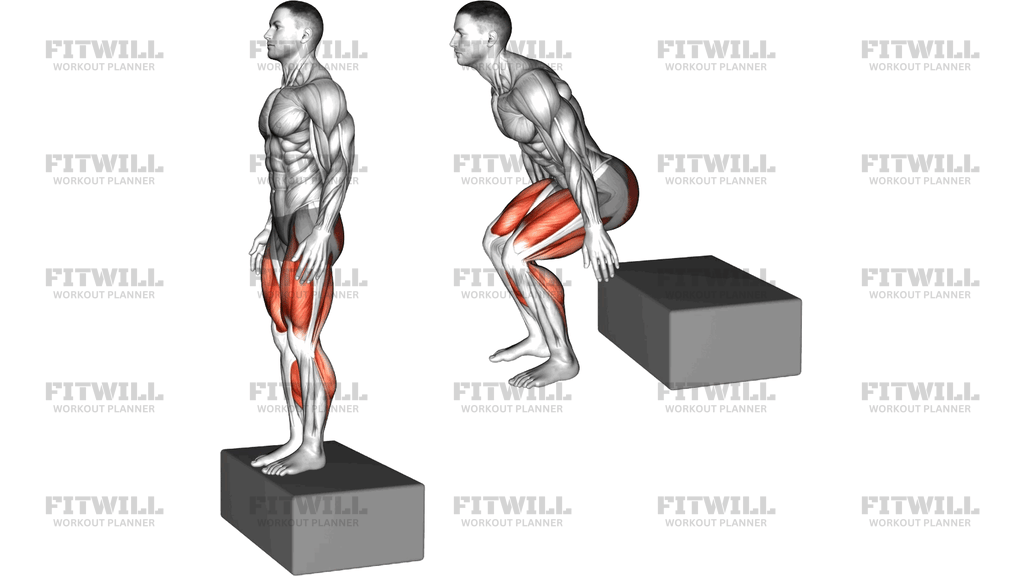
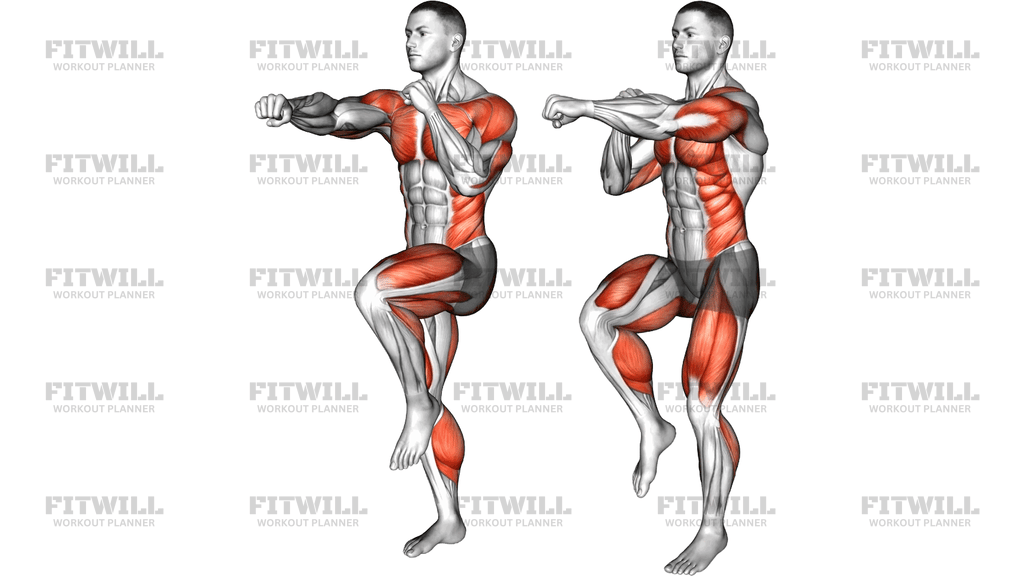
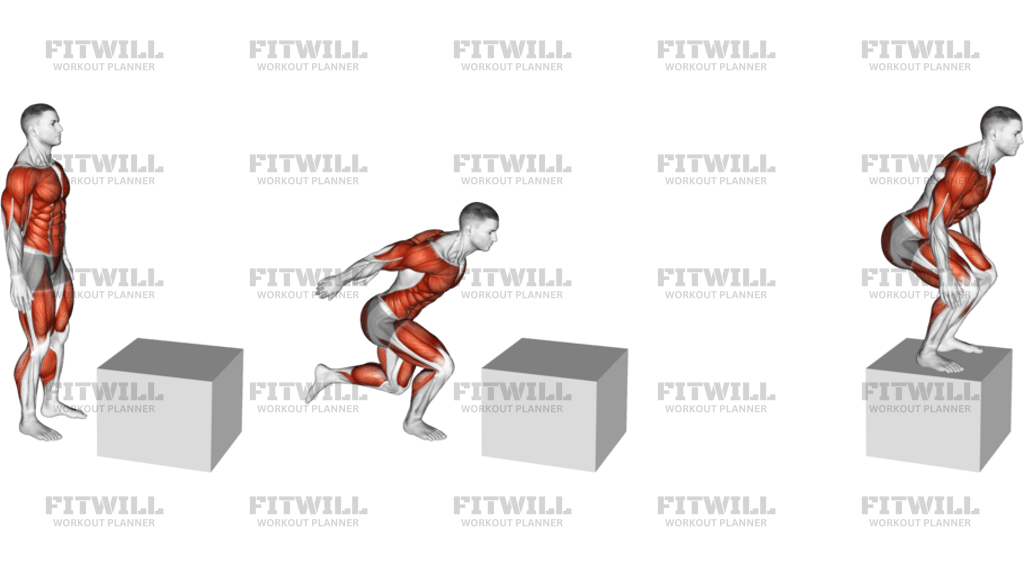
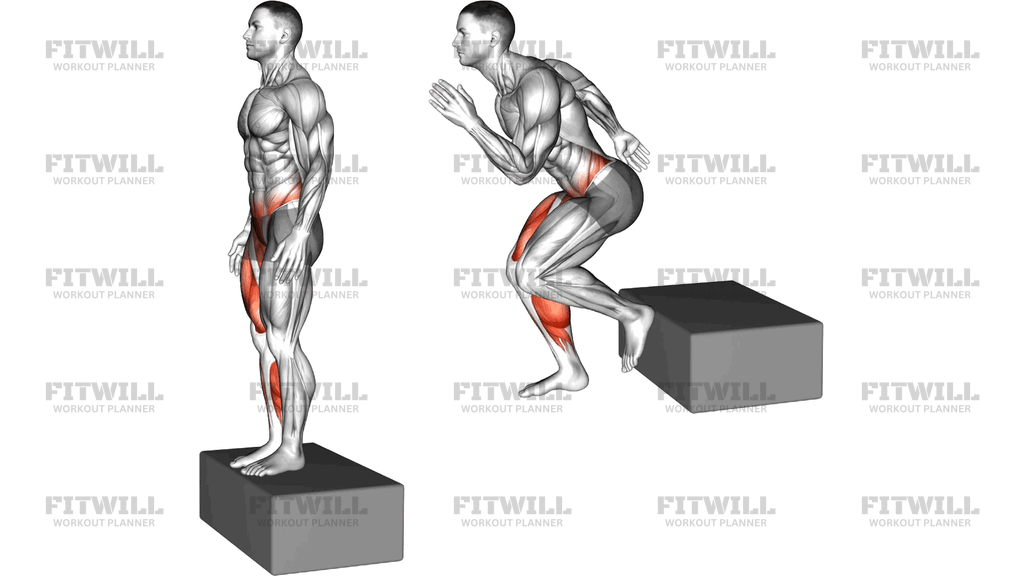
Two To One Leg Jump
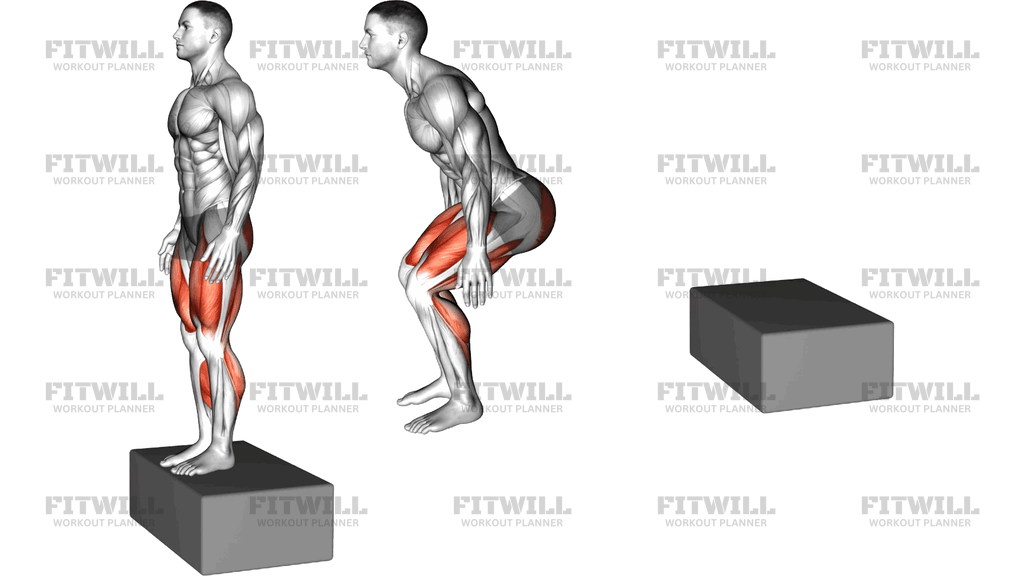
The Two To One Leg Jump is a plyometric exercise where you start from a two-footed stance, explode upward off both legs, and land on a single leg before absorbing the impact under control. The hands stay clasped at chest height throughout, which keeps the torso upright and prevents the arms from flailing as you jump and stick the landing. It is one of the simplest ways to progress from basic bilateral jumping into single-leg landing work, which is where most athletes get the biggest return on their training time.
The demand here is split into two distinct phases. The takeoff trains explosive triple extension through the ankles, knees, and hips, driven mainly by the quads and glutes with help from the calves. The landing is the harder half: all of your momentum arrives through one leg, so that single limb has to decelerate your body weight while the stabilizers around the knee, hip, and ankle keep everything aligned. This is exactly the kind of force absorption that transfers to running, cutting, sprinting, and most field and court sports.
This movement suits intermediate trainees who already own a solid two-footed squat jump and can hold a stable single-leg squat position. Team-sport athletes use it to build unilateral landing mechanics and reduce injury risk from awkward single-leg decelerations. General lifters use it to add a low-volume power element to leg days without needing any equipment or heavy loads.
Setup matters more than most people expect. Start on a firm, non-slip surface with enough clearance overhead and around you, feet about hip width, and the hands folded in front of the chest. From there, dip into a shallow quarter squat and jump straight up, keeping both feet even on takeoff so the landing leg is truly fresh rather than already tilted.
Execution quality shows up on the landing, not the jump. Aim to land on one leg with the knee tracking over the middle of the foot, the hip sitting back slightly, and the torso tall. The free leg bends behind you to keep the center of mass compact. Push the landing into a brief, quiet hold rather than letting the knee collapse downward, then step back to two feet before the next rep.
Treat this as a quality-over-quantity drill. Low sets of two to five contacts, taken fresh, build better mechanics than grinding out high-rep sets with a degrading landing. Because the impact is concentrated on one knee and ankle, progress the height and volume gradually, and stop any set where the landing knee starts diving inward or the hold gets wobbly.
[ Workout Log & Planner ]
Put your next workout in Fitwill
Keep your plan and training log ready when you are.


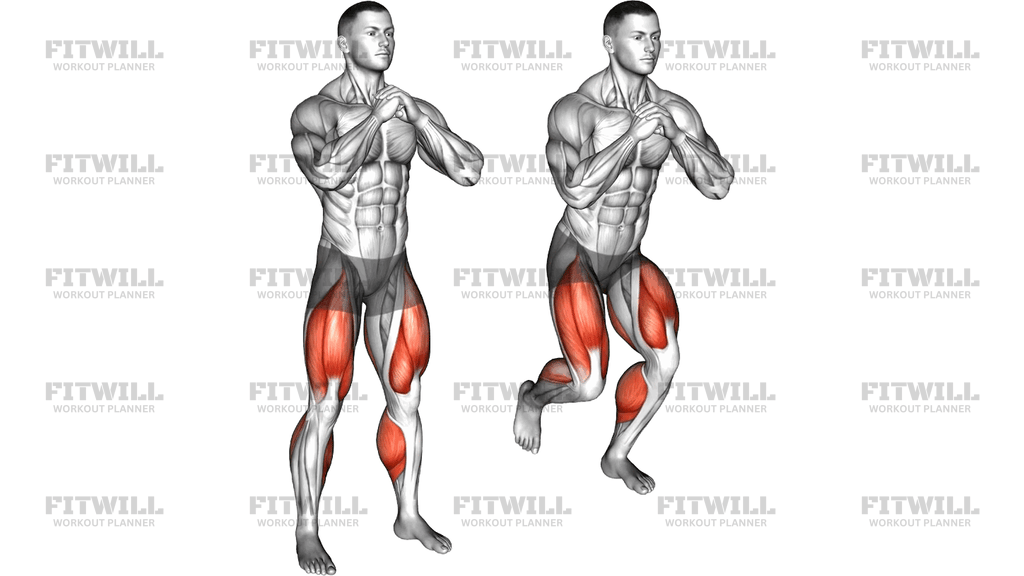
Instructions
- Stand tall on a firm, flat surface with your feet about hip width apart and your hands clasped together at chest height.
- Brace your core lightly and pull your shoulders back so your torso stays upright for the whole set.
- Dip into a shallow quarter squat, letting both hips and knees bend evenly, keeping your weight over the middle of both feet.
- Explosively extend your hips, knees, and ankles to jump straight up, driving evenly off both legs and keeping the hands at the chest.
- In the air, prepare one leg to receive the landing and let the other leg bend behind you.
- Land on the single leg with the knee bent and stacked over the middle of the foot, the hip pushed slightly back, and the chest tall.
- Hold the landing briefly and stay balanced instead of bouncing straight out of it.
- Step the free foot down and reset to the two-footed stance before starting the next repetition.
- Exhale as you jump, then breathe steadily through the landing and reset; alternate landing legs set to set if you are training volume.
Tips & Tricks
- The most common mistake is letting the landing knee cave inward. Cue yourself to push the knee out over the pinky toe as you land.
- If you are flopping into the landing instead of sticking it, cut the jump height in half until you can land quietly on one foot.
- Keep the hands clasped at the chest rather than swinging the arms down on takeoff; arm swing changes your trajectory and makes the single-leg landing harder to control.
- Avoid tipping the torso forward on landing. A collapsing chest usually means the hip is not sitting back far enough to absorb force.
- Alternate which leg takes the landing between sets so you do not build a strong side and a lazy side.
- Do these on a forgiving but stable surface such as a gym floor or thin mat; a thick, soft mat makes balancing on one foot harder without protecting your joints.
- Keep the free leg bent behind you rather than letting it swing forward, which pulls your center of mass away from the landing foot.
- Do not rush the reset. Stepping back to two feet deliberately between reps keeps every jump fresh and every landing crisp.
- Place this drill early in a leg session while you are fresh, since single-leg landings degrade quickly once the quads are fatigued.
Frequently Asked Questions
What muscles does the Two To One Leg Jump work?
The quads and glutes do most of the work on both the takeoff and the landing, with the hamstrings and calves assisting the jump. The stabilizers around the knee, hip, and ankle work hard during the single-leg landing phase.
Is the Two To One Leg Jump suitable for beginners?
It is best treated as an intermediate progression. Beginners should first be comfortable with two-footed squat jumps and controlled single-leg squat holds before adding the single-leg landing.
Why do I land on one leg instead of two?
Landing on one leg roughly doubles the load through the working limb and forces the hip and knee stabilizers to control real deceleration. That is what makes this drill carry over to running, cutting, and jumping in sport.
How high should I jump in the Two To One Leg Jump?
Only as high as you can land from quietly while keeping the landing knee over the middle of the foot. Height should increase only after the landing looks clean and stable.
My knee caves in when I land. How do I fix it?
Reduce the jump height and consciously push the landing knee out over the little toe while sitting the hip back. Strengthening the glutes with work like single-leg squats and hip thrusts also helps the knee hold its path.
How many reps and sets should I do?
Keep the volume low and the quality high: two to four sets of three to six jumps per leg, taken with full rest. Stop a set as soon as the landing becomes noisy or unbalanced.
Can I substitute something if single-leg landings bother my knees?
Yes. Two-footed squat jumps or box jumps where you land softly on both legs train similar power with less per-leg impact. If one-leg work still hurts, get the landing mechanics assessed before pushing through it.
Should I swing my arms during the jump?
No. Keep the hands clasped at chest height, as this keeps the torso tall and makes the single-leg landing easier to control. Save arm swing for jump variations that specifically train it.
Is it safe to do the Two To One Leg Jump on hard pavement?
A firm surface is fine if your landing mechanics are solid, but start on a gym floor, rubber surface, or turf. Concrete plus a fatigued landing is what gets single-leg jumpers into trouble, not the drill itself.