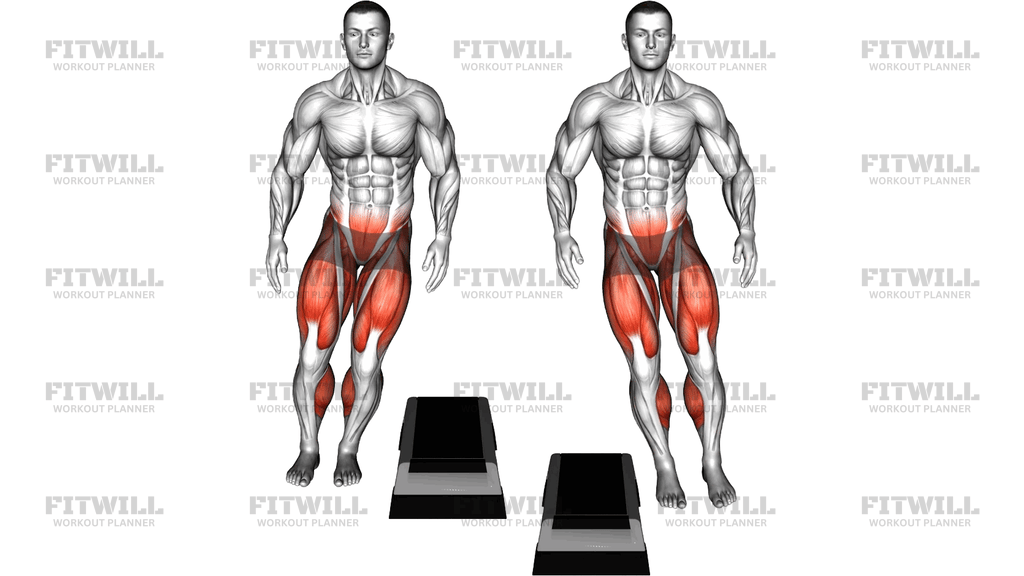
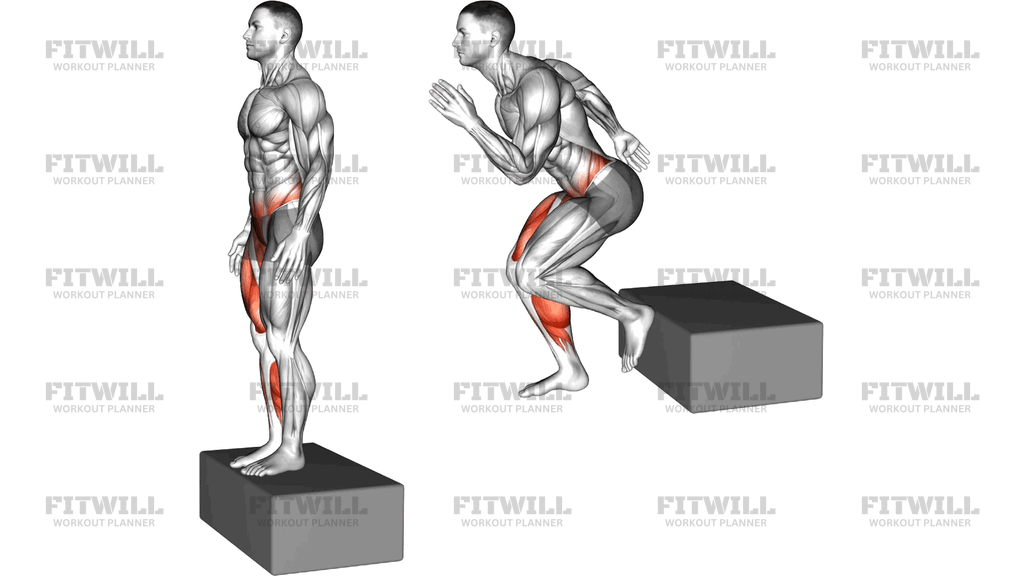
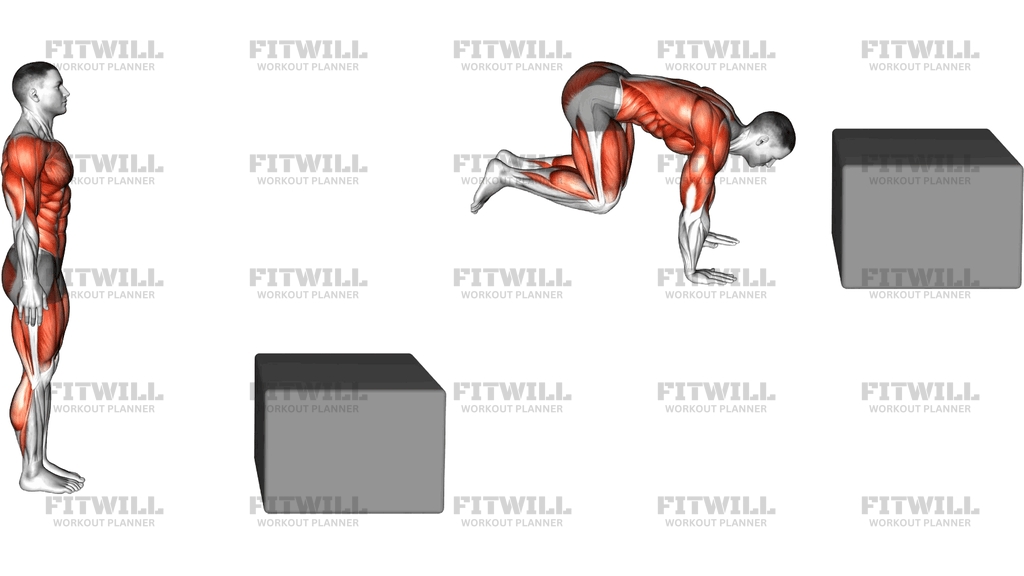
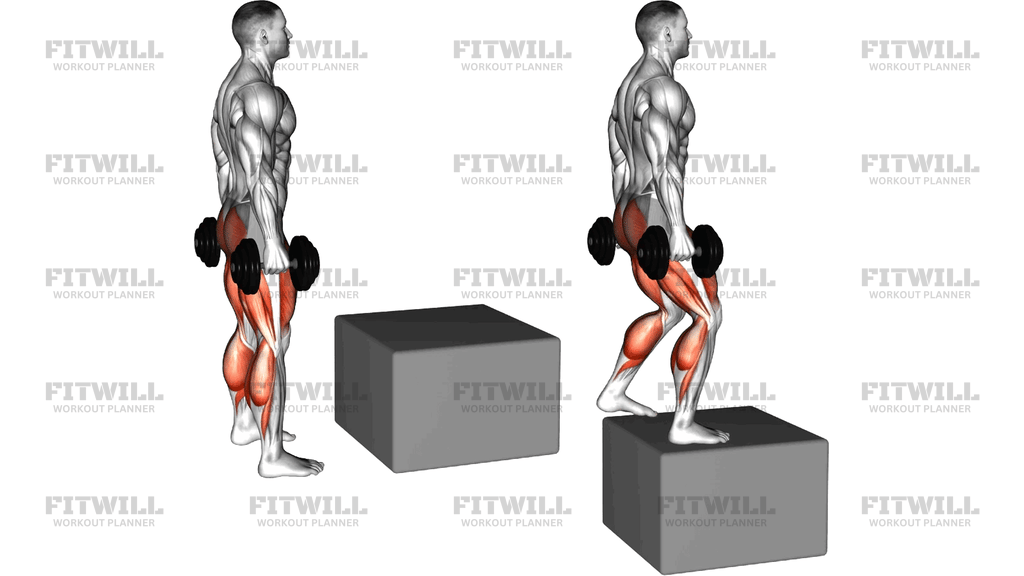
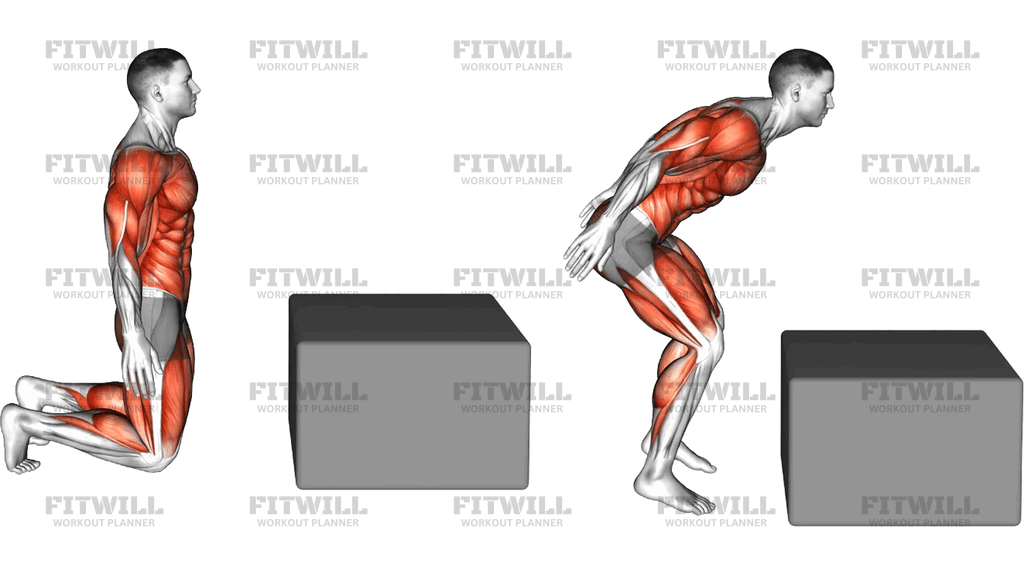
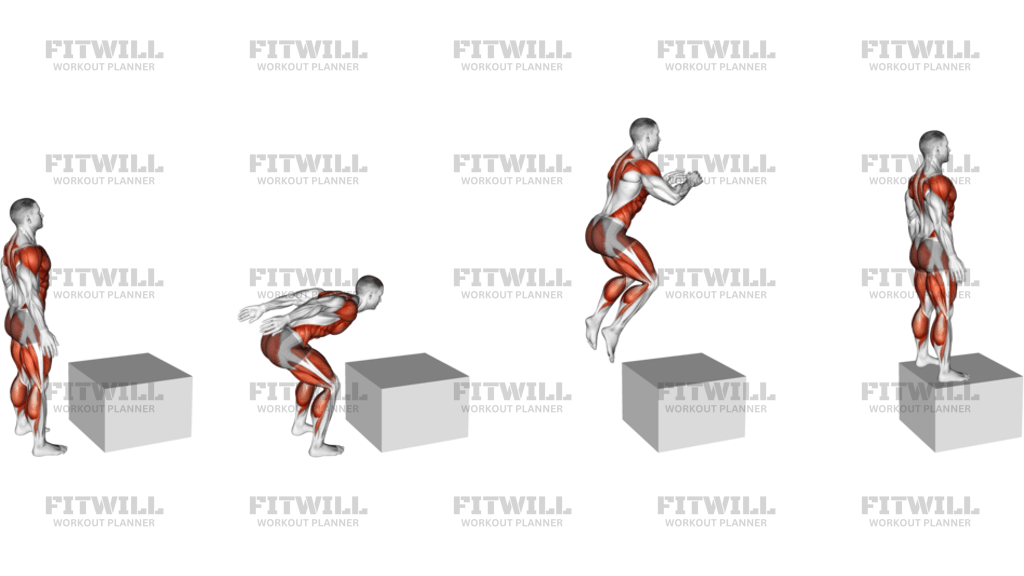
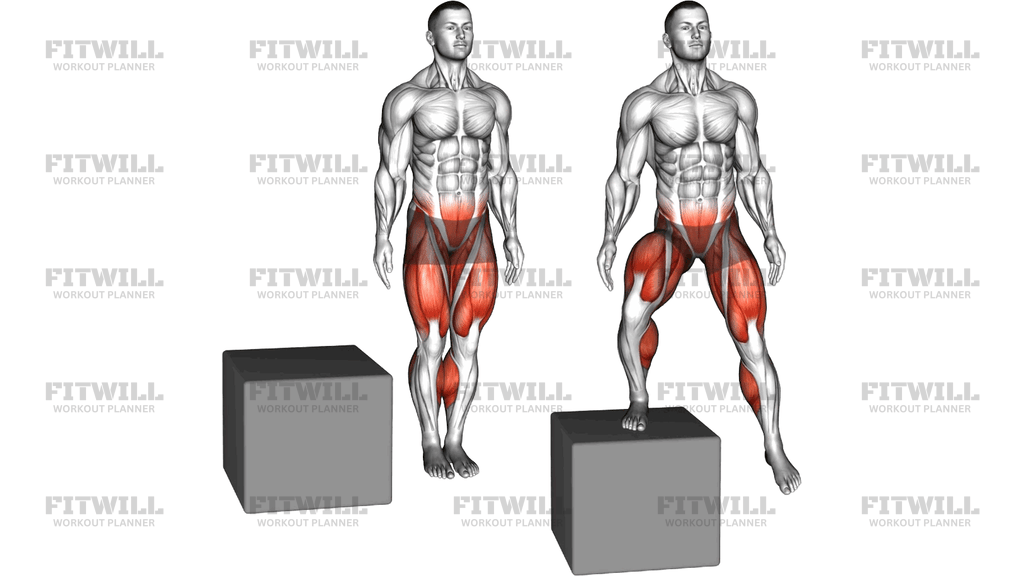
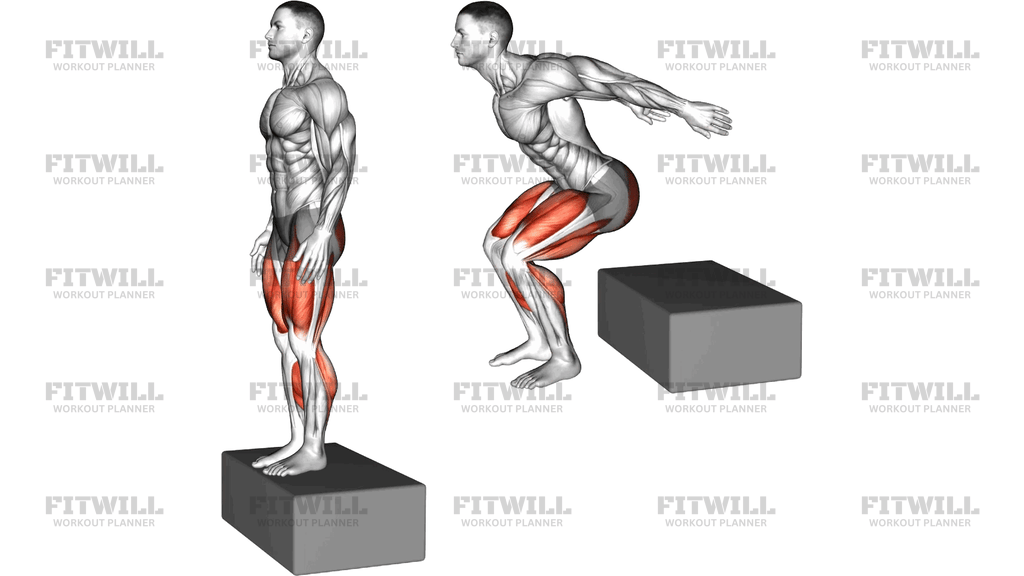
Box Jump Drop 2 Foot Land Forward Jump
The Box Jump Drop 2 Foot Land Forward Jump is a reactive plyometric drill that chains three phases together: you start standing on a plyo box, drop off it to land on both feet at the same time, absorb the landing into a short quarter squat, and immediately explode into a forward jump toward a second box or target in front of you. The key quality being trained is the switch from absorbing force to producing it with almost no pause in between. That contact time on the floor is the whole point of the exercise.
This drill suits athletes who already have a base of jumping experience and decent landing mechanics. Basketball, volleyball, soccer, and sprint players all benefit because their sports constantly demand that you decelerate, hit the ground, and re-accelerate in one fluid action. If you can perform controlled box jumps and depth drops with quiet landings, you are ready to add this progression.
Physically, the movement loads the quads and glutes heavily during the drop landing, calls on the calves for the forward push-off, and challenges the hamstrings and hip stabilizers to keep your knees tracking straight as you redirect force forward. Your core works isometrically the entire time to hold your trunk upright over a moving base of support. Because the load is your own body weight moving at speed, the stress on the nervous system is high even though no external weight is involved.
The setup matters more than in most jumps because the drop height controls the intensity. A box around 12 to 20 inches is plenty for most people; the higher the box, the more landing force you must convert, and the less likely you are to keep ground contact short enough to be reactive rather than slow. Clear space in front of the box and know exactly where your forward jump will end before you step up.
Execution comes down to rhythm and posture. Step off the box rather than jumping up first, let both feet meet the floor together, and treat the landing like a spring compressing rather than a collapse. Then drive the hips forward and up into the jump, reaching full extension at the ankles, knees, and hips. Stepping down, landing stiff-legged, or pausing too long on the floor are the usual faults that turn this into a slow squat jump with extra noise.
Use this drill early in a workout, while you are fresh, for low volume. Three to five sets of three to five quality reps is a realistic dose. Quality beats quantity here: once your landings get loud or your ground contact drags, the set is over.
[ Workout Log & Planner ]
Put your next workout in Fitwill
Keep your plan and training log ready when you are.


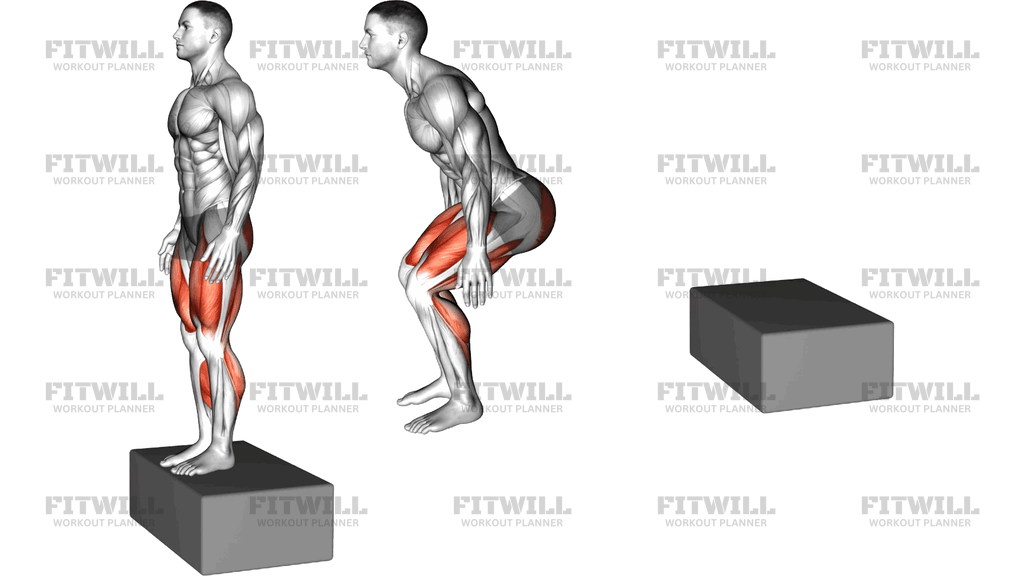
Instructions
- Stand on top of a plyo box with both feet fully on the surface, toes just behind the edge, and confirm the landing area in front of and beyond the box is clear.
- Set your second target box or landing zone a comfortable forward distance away, far enough that the forward jump requires real effort but close enough that you can land cleanly on two feet.
- Shift your weight over the edge and step off the box, keeping your torso tall and your arms relaxed at your sides rather than reaching down for the floor.
- Brace your core before contact so your trunk stays stacked over your hips when you land.
- Land on both feet at the same moment, letting your ankles, knees, and hips bend together into a short quarter squat with your chest angled slightly forward.
- Without pausing in the squat, drive through the floor and jump forward toward the target, extending your hips, knees, and ankles fully and swinging your arms up and ahead.
- Land softly on both feet over the target with bent knees, holding that landing for a second to own the position.
- Exhale on the forward jump and inhale as you step back up onto the box for the next rep.
- Reset your stance on the box each rep rather than rushing; complete all reps on one side of the box before turning around if your space only allows jumping in one direction.
Tips & Tricks
- Step off the box, do not jump off it. Jumping down adds height you did not plan for and makes the two-foot landing much harder to control.
- Aim for a ground contact that feels like one beat, not two. If you land, sit, and then think about jumping, the stretch reflex has already faded.
- Keep the quarter squat shallow on the landing. Dropping into a deep squat gives you a longer, slower switch and defeats the purpose of the drill.
- Listen to your landings. Loud, slapping feet usually mean stiff legs or a box that is too high; quiet contact means you are absorbing force the way you should.
- Keep your knees tracking over your toes during both landings. A knee that caves inward on the drop will usually cave again on the forward jump, so fix it at the first contact.
- Choose a box height you could depth drop from with perfect form. Going higher only helps if your contact time stays short.
- Swing your arms deliberately: down and back as you drop, then drive them forward and up on the jump to add lift and keep your chest tall.
- Place this drill at the start of your session after a warm-up. Doing it fatigued at the end of leg day is how landing form falls apart.
- Rest 60 to 90 seconds between sets. Reactive jumping quality depends on a fresh nervous system, not on being out of breath.
Frequently Asked Questions
Which muscles does the Box Jump Drop 2 Foot Land Forward Jump work most?
The quads and glutes handle most of the force absorption on the drop landing, the calves power the forward push-off, and the hamstrings and core stabilize the hips and trunk throughout. It is a lower-body plyometric, not an isolated muscle builder.
How is this different from a regular box jump?
A regular box jump starts on the floor and ends on the box, with the emphasis on getting up. The Box Jump Drop 2 Foot Land Forward Jump starts on the box and trains the transition from landing to jumping forward, which makes it a reactive-strength drill rather than a simple jump.
Can beginners do the Box Jump Drop 2 Foot Land Forward Jump?
Beginners should first master bodyweight squats, two-foot landing mechanics, and basic box jumps at a low height. Once landings are quiet and controlled from a low box, a shallow drop version of this drill can be introduced with few reps.
How high should the box be for this drill?
Most people do best with a box between 12 and 20 inches. Pick a height you can step off and land from on both feet without your heels slamming or your knees collapsing inward.
Why do I need to land on two feet instead of one?
The two-foot landing splits the landing force between both legs and keeps the drill symmetric, letting you focus on a fast transition into the forward jump. Single-leg versions place much higher stress on the ankle, knee, and hip stabilizers.
How long should my feet stay on the ground between the drop and the forward jump?
Aim for a short, springy contact, roughly a quarter of a second in feel, where the landing flows straight into the jump. If you have to think about jumping after you land, the contact is too long and you are training a slow squat jump instead.
What is the most common mistake in this movement?
Jumping off the box instead of stepping off, which turns the landing into a maximum-effort drop you cannot control. The second most common fault is sinking into a deep squat on the landing, which stretches the ground contact time and kills the reactive effect.
What can I substitute if I do not have two boxes?
You can step off a sturdy bench or low platform, land on two feet, and jump forward to a marked line or cone on the floor. Any stable elevated surface and a clear landing zone will work.
How many reps and sets should I do?
Keep the volume low and the quality high: 3 to 5 sets of 3 to 5 reps with full rest between sets works well. Stop the set when your landings become loud or your ground contact slows down noticeably.
Is the Box Jump Drop 2 Foot Land Forward Jump safe for the knees?
It is generally well tolerated when the box height matches your ability, you land on both feet with knees tracking over toes, and you step off rather than leap off. If you currently have knee pain or a recent lower-body injury, get clearance from a qualified professional before adding reactive jumping.