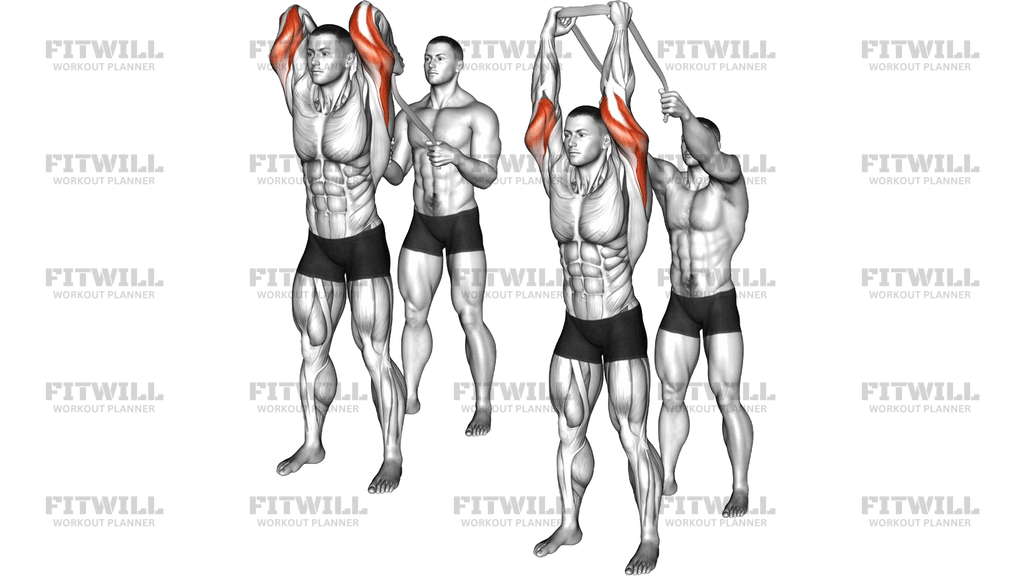
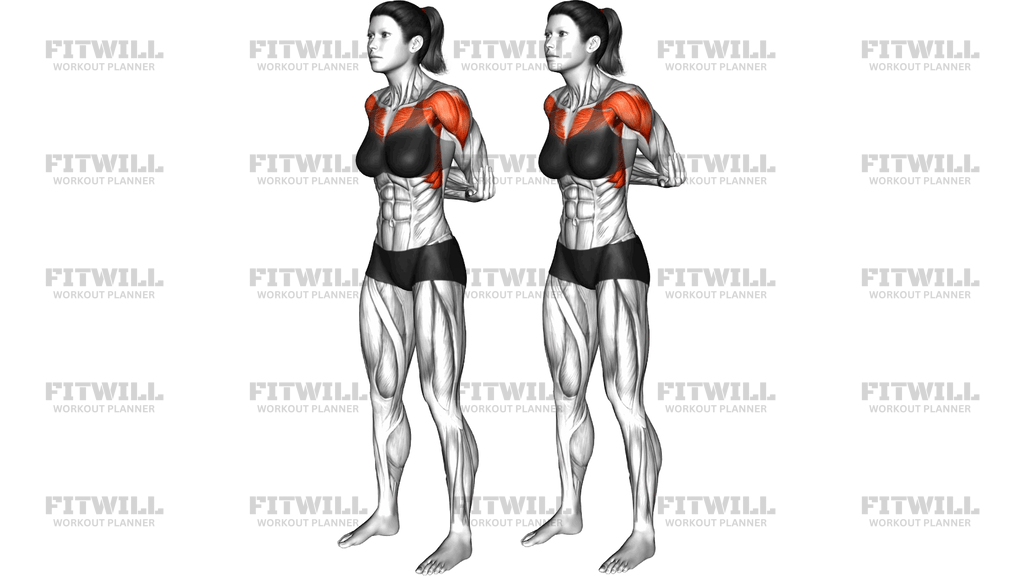
Shoulder Stretch Behind The Back With Towel
The Shoulder Stretch Behind The Back With Towel is a classic mobility drill for anyone whose shoulders feel locked up in overhead or behind-the-back positions. You hold a towel in one hand, drape it behind your back, and grab the lower end with the other hand, then use the towel as a strap to draw the bottom arm gently upward. The arm hanging behind your back gets stretched through internal rotation and extension, hitting the rotator cuff, the front of the shoulder, and the chest in a way that few other stretches reach.
This position is exactly where most people discover their restrictions. Reaching behind your back to fasten a seatbelt, tuck in a shirt, or scratch between your shoulder blades all demand the same combination of shoulder internal rotation and extension. If your shoulders are tight from bench pressing, pull-ups, swimming, or long hours at a desk, this stretch gives you a practical way to work on that range every day.
The towel is what makes the movement work. Because your hands may not be able to reach each other behind your back, the towel bridges the gap and lets you apply a controlled pull without forcing the joint. As your mobility improves, you simply narrow your grip along the towel until your hands get closer together. That built-in progression makes it suitable for stiff beginners and for lifters chasing deeper range alike.
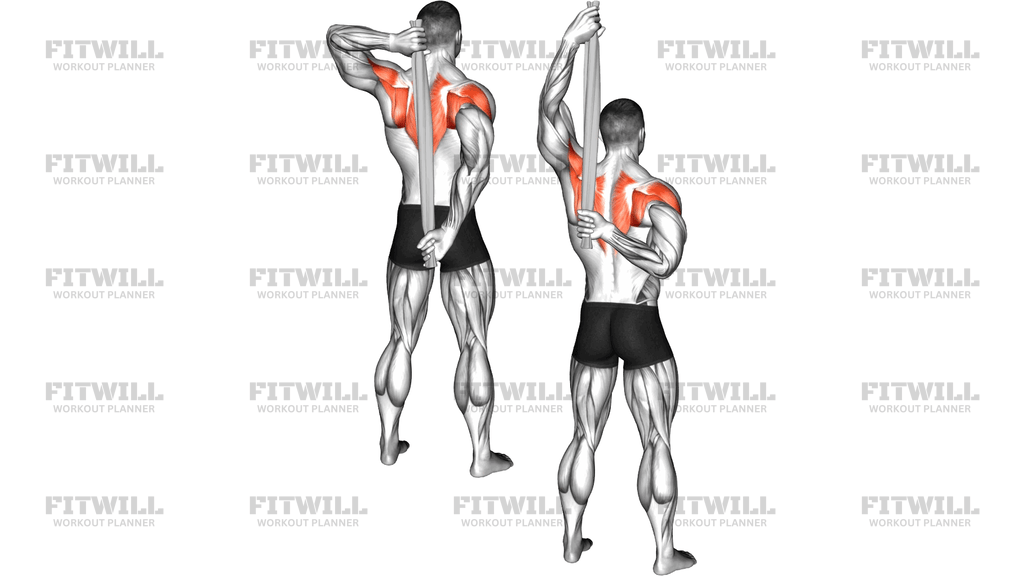
Stand tall with your feet about hip-width apart and your ribs down rather than arching your lower back. Your top arm reaches over the shoulder with the elbow pointing up, while your bottom arm bends behind your lower back with the palm facing outward. The stretch should concentrate around the shoulder of the bottom arm, with a mild pull possibly running down the back of that upper arm through the triceps.
Keep the pull patient and gradual. Ease into the end range over several breaths and never yank the towel to force more range, because the shoulder capsule and rotator cuff tissues respond poorly to aggressive stretching. Hold for 20 to 45 seconds, then switch sides and give the other shoulder the same attention. If one side is noticeably tighter, spend extra time there, but always stay within a comfortable stretch rather than pushing into pain.
[ Workout Log & Planner ]
Put your next workout in Fitwill
Keep your plan and training log ready when you are.


Instructions
- Stand upright with your feet about hip-width apart and your core lightly braced so your lower back stays neutral.
- Grip one end of a towel in your top hand and raise that arm overhead, bending the elbow so the towel hangs down behind your back.
- Reach your other arm behind your lower back and grasp the lower end of the towel with your palm facing away from your body.
- Position the towel flat against your spine so it runs vertically from the overhead elbow down to the hand at your lower back.
- Pull the towel upward slowly with the top hand, drawing the bottom arm higher up your back until you feel a stretch in the shoulder of the bottom arm.
- Keep your torso upright and avoid leaning sideways or arching backward to chase extra range.
- Hold the stretched position for 20 to 45 seconds while breathing slowly and steadily.
- Release the pull gradually, let the bottom arm slide back down, and pause before repeating.
- Switch hands so the opposite arm is behind the back, and repeat the stretch on the other side.
Tips & Tricks
- If your hands cannot reach the towel ends at first, grab higher up the fabric — a wide grip shortens the distance and makes the setup achievable.
- The stretch belongs in the bottom shoulder; if you feel pinching in the top arm's shoulder, you are pulling too hard or the elbow has drifted too far out to the side.
- Keep the bottom hand's wrist relaxed. Gripping the towel with white-knuckle tension tenses the whole arm and reduces the stretch on the shoulder.
- Do not shrug the overhead shoulder toward your ear; keeping that side long helps the towel track along your spine.
- Exhale slowly as you deepen the pull — letting the breath out helps the muscles around the shoulder blade release instead of guarding.
- Avoid twisting your trunk to bring your hands closer. Rotation fakes extra range without actually improving the shoulder.
- Progress by walking your bottom hand a little higher each week rather than cranking the towel harder in a single session.
- Warm shoulders stretch better — use this after training or a shower rather than as the very first movement of a cold morning.
- If a towel irritates the back of your neck, shift it slightly outward so it rides on the shoulder muscles instead of the cervical spine.
Frequently Asked Questions
Which muscles does the Shoulder Stretch Behind The Back With Towel target?
It primarily targets the shoulder of the arm behind the back, especially the rotator cuff muscles that handle internal rotation, along with the front of the shoulder and the chest. The triceps of the bottom arm also receive a mild stretch.
Why use a towel instead of just clasping my hands behind my back?
Most people's hands cannot reach each other behind their back, so the towel acts as a strap that bridges the gap and lets you apply a gradual pull. It also allows precise control of intensity, which clasping does not.
How long should I hold the Shoulder Stretch Behind The Back With Towel?
Hold for 20 to 45 seconds per side and repeat one to three times if the shoulder is very tight. For lasting improvements in range, consistent daily practice matters more than long single sessions.
Is this stretch good for beginners?
Yes, as long as beginners start with a wide grip on the towel so the bottom arm only lifts slightly. The intensity is entirely self-regulated by how hard the top hand pulls.
I feel a pinch in the front of my shoulder during the stretch — what should I change?
Reduce the pull immediately and keep the bottom hand lower on the towel. If pinching persists even with a gentle pull, move the bottom arm slightly away from your back and consult a professional before continuing.
What is the most common mistake with this stretch?
Yanking the towel forcefully or leaning and twisting the torso to gain range. Both habits shift stress away from the shoulder and can irritate the joint, so keep the pull slow and the spine tall.
Can I use a resistance band instead of a towel?
Yes, a light band or a strap works the same way and may be more comfortable if your towel is short. The key is a non-elastic or mildly elastic strap long enough to span the distance between your hands.
When is the best time to do the Shoulder Stretch Behind The Back With Towel?
It works well after upper body training, pressing sessions, or swimming, when the shoulders are warm. You can also use it as a gentle daily mobility break if you sit at a desk for long hours.
One shoulder is much tighter than the other — should I do extra reps on that side?
Yes, it is normal to have side-to-side differences, and adding an extra hold or two on the tighter side is a sensible approach. Just keep the intensity of each hold identical so you are not forcing the stiff side.
Is this stretch safe after a shoulder injury?
Do not attempt it during an acute injury flare-up, and if you have a history of shoulder dislocation, impingement, or surgery, get clearance from a health professional first. Range work after injury should follow a prescribed plan.