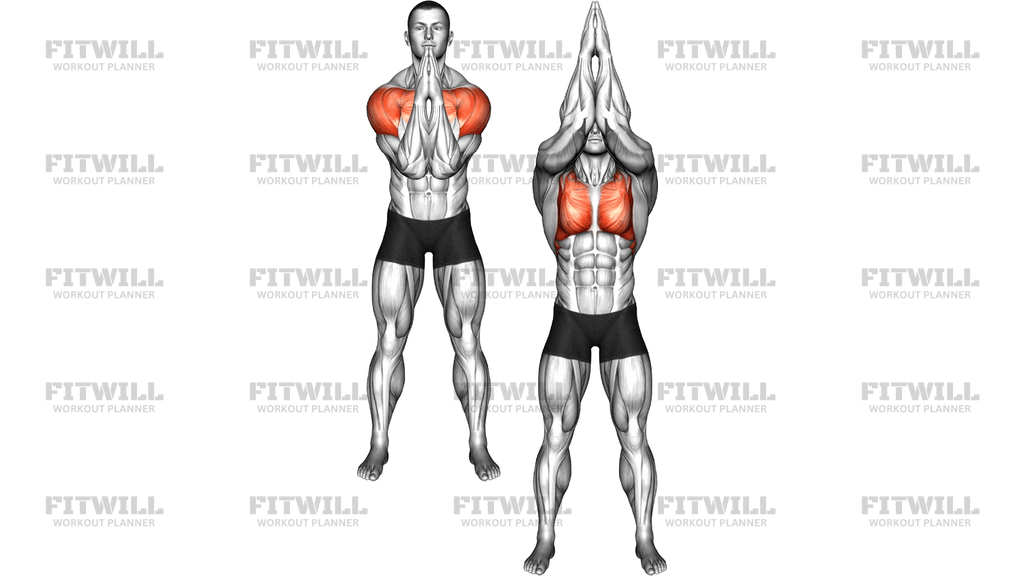
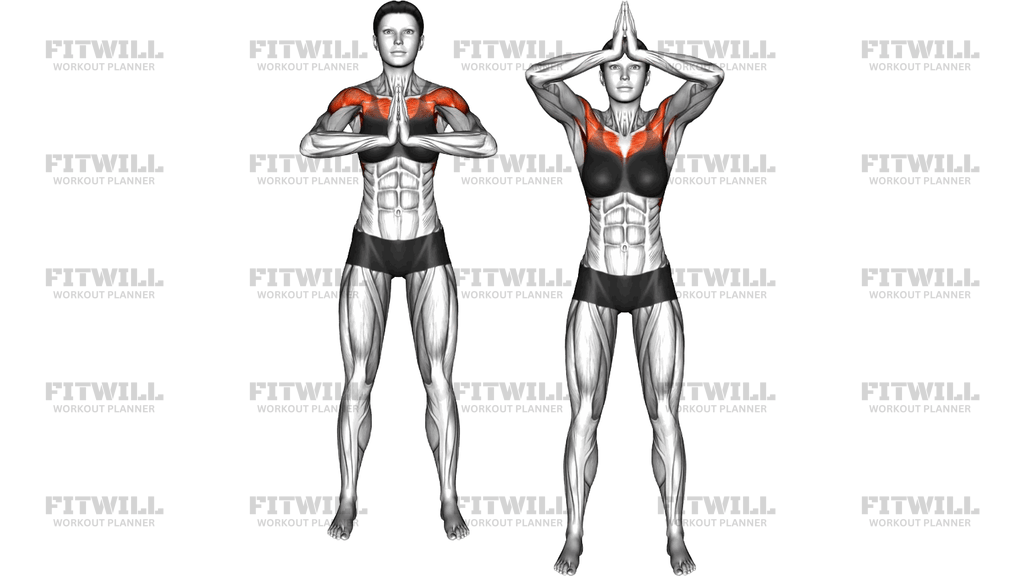
Back Hugs Chest Stretch
The Back Hugs Chest Stretch is a standing flexibility drill that targets the front of the upper body by placing the arms in extension behind the torso. You interlace your fingers behind your lower back, straighten your elbows, and gently draw the arms up and away from your body while opening the chest. The position resembles giving a hug to someone standing behind you, which is where the exercise gets its name.
This stretch primarily lengthens the pectoralis major across the chest, along with the front of the shoulders and, to a lesser degree, the biceps since the straight-elbow position places them under mild tension. People who spend long hours at a desk, drive frequently, or press weights regularly tend to develop tight chest tissue and rounded shoulders, and this movement directly addresses that pattern by pulling the shoulders back into a more open position.
Setup matters more than most people expect. Your spine position determines where the stretch lands: if you arch your lower back excessively or let your ribs flare, you can fake extra range without actually lengthening the chest. Keep the torso relatively tall, the ribs stacked over the pelvis, and let the shoulder joints do the work. A neutral neck with the gaze forward keeps unnecessary tension out of the traps.
To execute it well, start with a comfortable hand position behind your back. If your shoulders are tight, hold a towel between your hands instead of forcing the fingers to meet. Straighten the arms as much as is comfortable, then lift the chest and draw the shoulder blades gently toward each other as the arms rise behind you. The stretch should feel like a broad pull across the chest and the front of the shoulders, never a sharp pinch at the shoulder joint itself.
This drill fits well as a warm-up before pressing movements like bench press or push-ups, as a reset between long blocks of sitting, or as part of a cool-down after upper body training. It requires no equipment and very little space, so it works in a gym, office, or living room. Hold each repetition for twenty to thirty seconds, breathing slowly, and repeat two to three rounds.
Two safety points deserve attention. First, avoid forcing the arms higher than your shoulder mobility allows; the stretch should come from the chest, not from pain in the shoulder capsule. Second, if you feel tingling or numbness in the hands, ease out of the position immediately and shorten the range or widen your hand placement on a towel.
[ Workout Log & Planner ]
Put your next workout in Fitwill
Keep your plan and training log ready when you are.


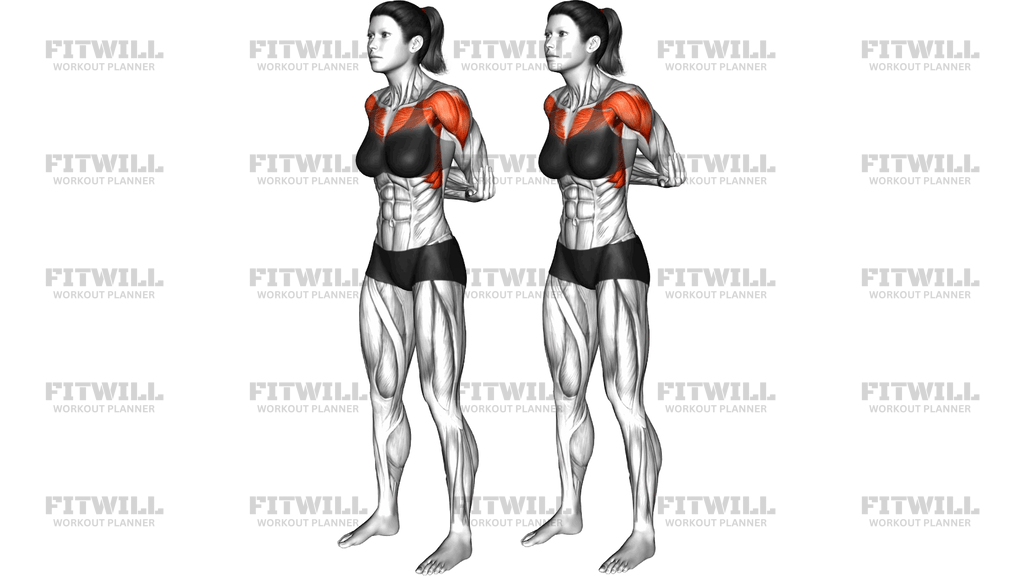
Instructions
- Stand with your feet about hip-width apart, weight evenly distributed, and your posture tall with the gaze forward.
- Reach both arms behind your back and interlace your fingers at the level of your sacrum, or hold opposite ends of a towel if your shoulders feel tight.
- Gently straighten your elbows without locking them hard, letting the hands rest against your body or hover just behind you.
- Brace your core lightly and keep the ribs down so your lower back does not arch to create extra range.
- Exhale and slowly lift the hands up and away from your lower back, keeping the arms straight.
- Open the chest by drawing the shoulder blades toward each other and letting the shoulders roll back and down.
- Stop when you feel a steady stretch across the chest and the front of the shoulders, and hold for twenty to thirty seconds while breathing calmly.
- To release, slowly lower the arms back toward the body, bend the elbows, and unlace the fingers.
- Shake out the arms and shoulders briefly, then repeat for a second or third round if desired.
Tips & Tricks
- If your shoulders round forward the moment you try to straighten the arms, shorten the lever: bend the elbows slightly first and straighten them only as far as the chest stays open.
- A towel between the hands is a better choice than straining to touch your fingers; forcing the clasp often tilts the wrists and shifts tension into the forearms.
- Watch for rib flare at the top of the lift. If your chest pushes forward and your lower back arches, you are compensating with the spine instead of stretching the chest.
- Keep the head still. Many people jut the chin forward to fake a taller posture, which loads the neck without improving the chest stretch.
- Rather than yanking the arms higher, try small pulsing lifts of one or two inches within the stretched position to encourage the shoulders to open gradually.
- If you feel a pinch at the front of one shoulder, lower the arms a few degrees and widen the angle between your hands and torso until the pinch disappears.
- Breathe out as the arms lift; holding your breath tends to tension the shoulders and shortens the effective range of the stretch.
- Do this stretch after pressing workouts rather than before heavy max-effort sets, since very loose chest tissue can feel less supportive under a heavy bench press.
Frequently Asked Questions
Which muscles does the Back Hugs Chest Stretch target?
It mainly lengthens the pectoralis major across the chest, along with the anterior deltoid at the front of the shoulder. The biceps also feel mild tension because the elbows are held straight behind the body.
I cannot interlace my fingers behind my back. What should I do?
Hold a towel, strap, or stick between your hands with a comfortable grip width. This removes the need for extreme shoulder internal rotation while still allowing the chest to open.
Should the Back Hugs Chest Stretch be done before or after a workout?
It works well as a warm-up before pressing exercises and as a cool-down afterward. Before heavy pressing, keep the holds shorter and gentler so the chest does not become overly relaxed.
Why does my lower back ache when I lift my arms behind me?
That usually means the lumbar spine is arching to create extra range. Brace the core lightly, keep the ribs stacked over the pelvis, and reduce how high you lift the arms until the stretch returns to the chest.
How long should I hold each repetition?
Twenty to thirty seconds per hold works well for most people, repeated two to three times. For a deeper post-workout release, you can extend holds toward forty-five seconds.
Can this stretch help with rounded shoulders from desk work?
Yes, the extended-arm position pulls the shoulders back and opens the chest, which counteracts the forward-rounded posture common with prolonged sitting. Consistent daily practice matters more than any single long session.
Is it normal to feel the stretch in the front of the shoulders instead of the chest?
Some shoulder sensation is normal since the anterior deltoid is on stretch, but a sharp or pinching feeling is not. Lower the arms slightly and keep the shoulders rolled back and down until the discomfort settles into a stretch.
What is a good substitute if standing is uncomfortable?
You can perform the same arm position seated on a bench with a tall spine, or lie face down and reach the arms behind you. The key elements, straight elbows and an open chest, stay the same in each variation.
Who should be cautious with the Back Hugs Chest Stretch?
Anyone with a recent shoulder injury, shoulder impingement symptoms, or current neck pain should reduce the range significantly or consult a professional first. Tingling or numbness in the arms is a clear signal to stop and reset with a wider grip.