Suspension Self Assisted Pull-Up
Suspension Self Assisted Pull-Up is a vertical pulling exercise that uses suspension straps and your own legs to make the pull-up pattern more accessible. The setup lets you lighten part of your bodyweight while still training the lats, upper back, biceps, and forearms through a long, controlled range. Because the straps stay overhead, the movement rewards clean body position and smooth pressure through the hands far more than raw effort.
The exercise is most useful when you want to practice pull-up mechanics without committing to a full hanging pull-up. It lets you rehearse shoulder depression, elbow drive, and a stable torso while keeping the feet in contact with the floor. That makes it a practical option for beginners building toward pull-ups, for lifters who need a deloaded back session, or for accessory work after heavier vertical pulls.
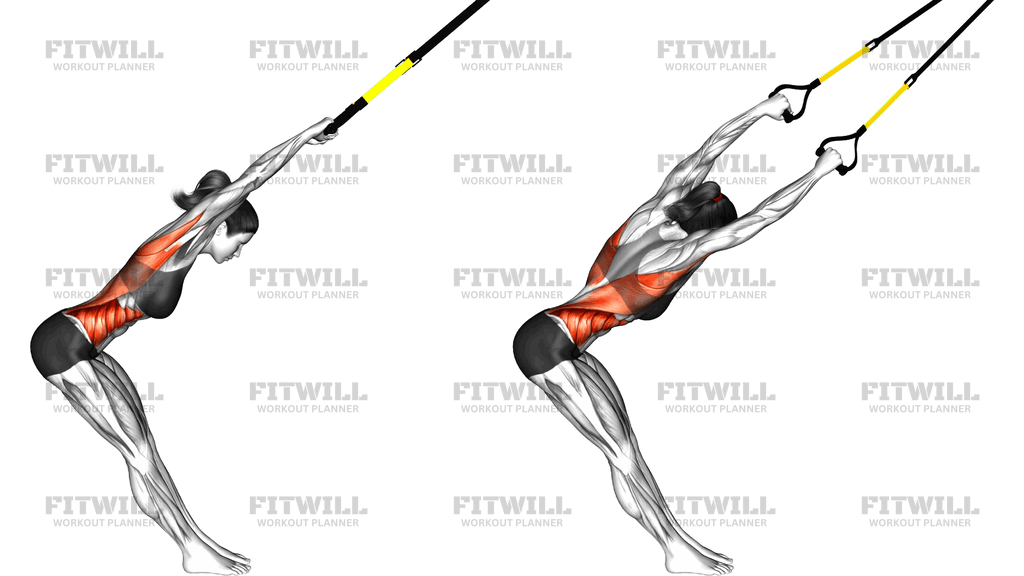
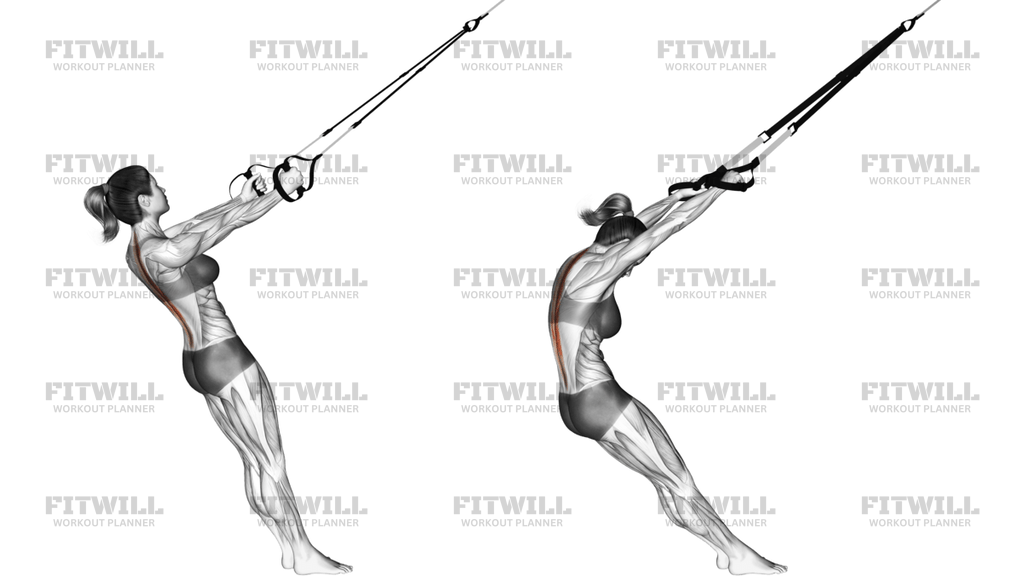
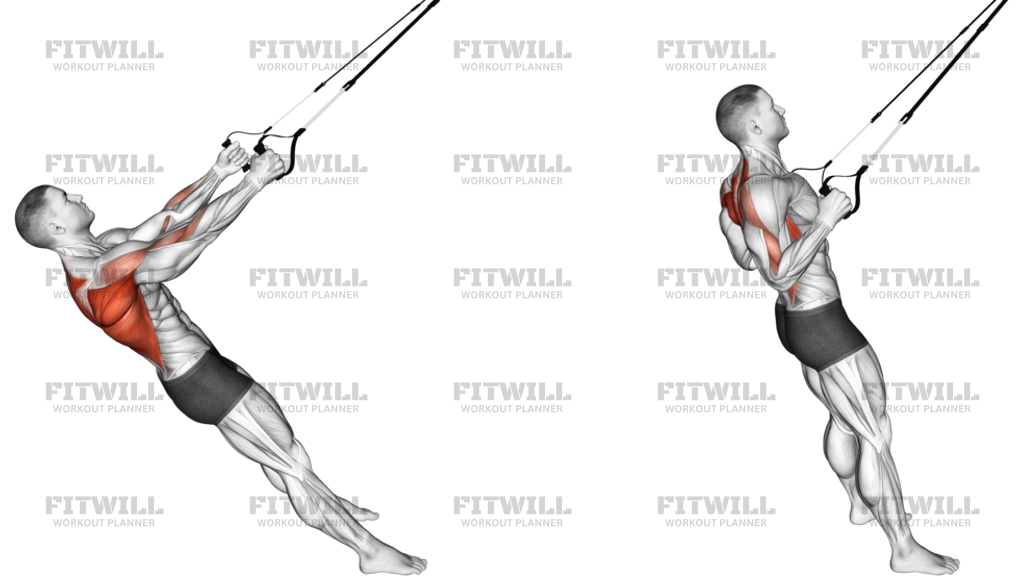
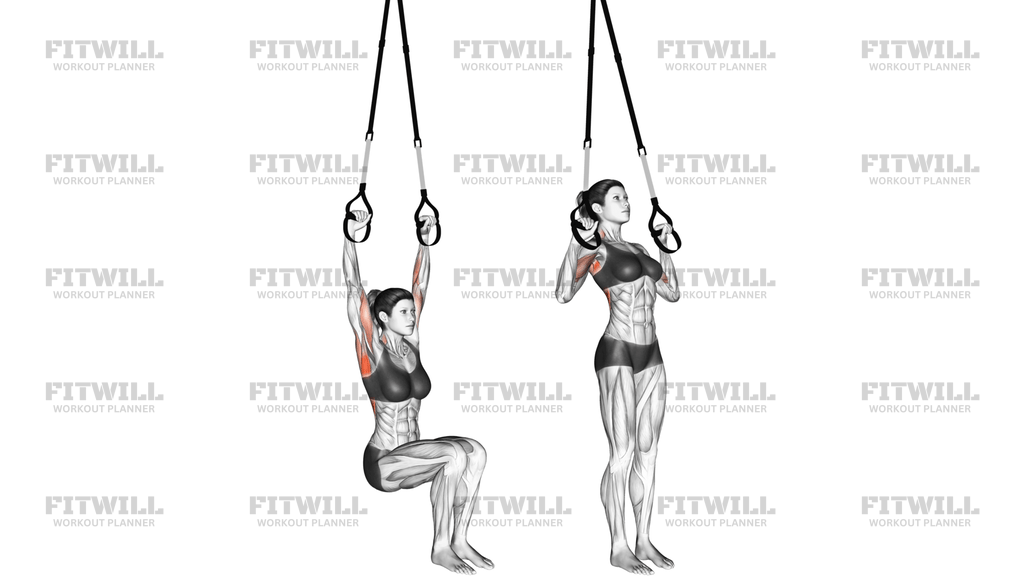
The bottom position should be organized, not collapsed. Start with the handles overhead, feet planted, and knees bent deeply enough that you can sit back under control. From there, pull the chest up between the straps while driving the elbows down and slightly back. As you rise, the legs can help just enough to keep the motion smooth, but the upper back still needs to do the work. Finish tall with the ribs controlled, then lower slowly until the arms are long again.
Good reps look like a clean, upright pull rather than a hip thrust or a shrug. If the shoulders shoot up toward the ears, the feet jump, or the torso swings forward, the load is too hard or the body angle is too aggressive. Keep the motion deliberate and repeatable, and use the exercise as a way to build both strength and pull-up confidence without losing position.
In anatomy terms, the main work centers on the Latissimus dorsi, with help from Rhomboids, Biceps brachii, and Forearm flexors. The exercise can be used in back sessions, upper-body circuits, or technical warmups when you want a controlled pulling pattern that is easier to scale than a bodyweight pull-up. Choose the body angle that lets you move smoothly through the full range without pain or momentum, then progress by reducing assistance rather than forcing a bigger range than you can own.
[ Workout Log & Planner ]
Put your next workout in Fitwill
Keep your plan and training log ready when you are.


Instructions
- Set the suspension straps overhead and stand between them with feet about hip-width apart.
- Grab the handles with a neutral grip, arms long overhead, and sit back into a low squat so your body is slightly leaned back under the anchor.
- Keep your chest lifted, ribs down, and shoulders set away from your ears before you start the pull.
- Press your feet into the floor and pull your chest up toward the handles while driving your elbows down and slightly back.
- Let the legs assist just enough to keep the movement smooth, but avoid jerking or jumping off the floor.
- Finish in a tall standing position with the handles close to your upper chest or shoulders and the shoulder blades controlled.
- Lower yourself slowly back into the squat until the arms are straight again and the body returns to the starting angle.
- Exhale as you pull up, inhale on the controlled descent, and reset your stance before the next rep.
Tips & Tricks
- If the straps are too vertical and you are almost standing upright at the bottom, the pull gets too easy; walk your feet forward until the lean-back angle creates real tension.
- Keep the elbows tracking down rather than flaring wide so the lats can help finish the pull.
- Do not shrug at the top; the shoulders should stay packed instead of riding up toward the ears.
- Use the legs as assistance, not as a jump. The feet should stay grounded and quiet through the rep.
- Stop the descent before you lose torso control. A clean mid-range rep is better than forcing a sloppy deep one.
- If your wrists or elbows feel cranky, use a neutral hand position and shorten the range slightly.
- Think about bringing the chest up to the handles, not yanking the handles down with the hands.
- Choose a body angle that lets you repeat the same path for every rep; if the final reps turn into a squat bounce, it is too hard.
Frequently Asked Questions
What muscles does the Suspension Self Assisted Pull-Up train most?
The main emphasis is on the lats, with the upper back, biceps, and forearms helping to control the pull.
Why is this exercise considered self-assisted?
Your feet stay on the floor and help reduce how much bodyweight the upper body has to move, which makes the pull-up pattern easier to learn.
How do I know if the setup angle is right?
At the bottom you should feel supported but not upright. If you barely lean back, the exercise is too easy; if you cannot keep your chest up, it is too hard.
Should the elbows flare out during the pull?
No. Let the elbows travel down and slightly back so the lats and upper back can do most of the work.
Is this a good exercise for beginners?
Yes. It is a strong regression for people who are not ready for full bodyweight pull-ups but still want to practice vertical pulling.
What is the most common form mistake?
People often shrug, swing, or jump through the rep instead of keeping the torso quiet and the feet grounded.
Where should the handles finish at the top?
They usually finish near the upper chest or shoulders, with the body tall and the shoulder blades controlled.
How can I make the exercise harder?
Walk the feet farther forward, reduce leg help, or slow the lowering phase so the lats have to control more of the bodyweight.