Inverted Row Between Chairs
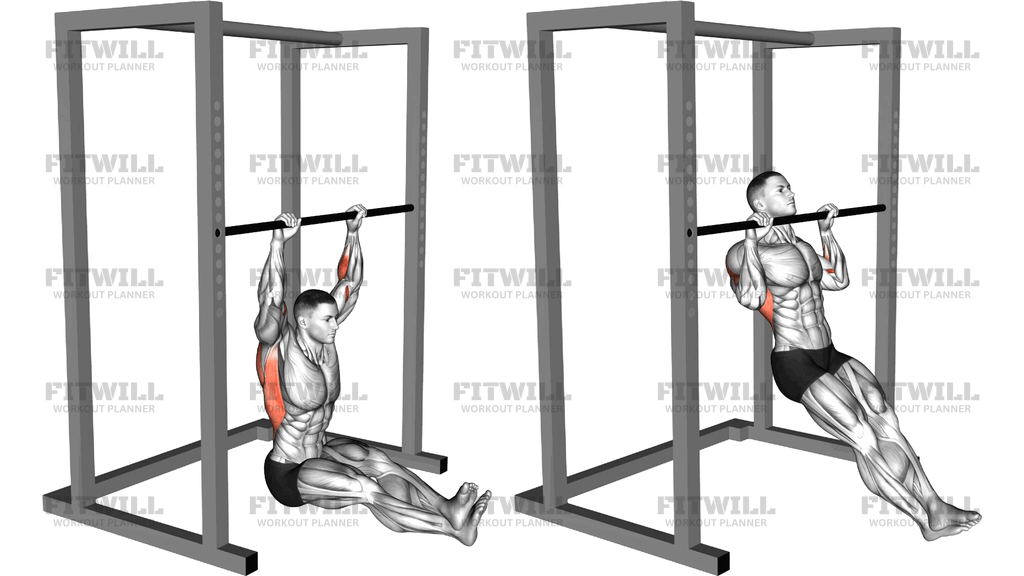
Inverted Row Between Chairs is a bodyweight pulling exercise that trains the back through a strict horizontal row. It builds strength in the lats, upper back, biceps, and forearms while also demanding that the trunk stay braced so the body does not sag or twist under load. Because the body angle can be changed easily, it works well for beginners learning to row and for experienced lifters who want a hard back movement without hanging from a pull-up bar.
The setup matters more than it does in many exercises. Place two sturdy chairs on level ground, keep them from sliding, and support a solid bar or dowel across the tops so it cannot roll. Lie underneath with your chest centered under the bar, hands slightly wider than shoulder width, and your heels or feet supported on the opposite chair. Start with your body in one long line, ribs down, glutes tight, and shoulders set away from your ears so the row begins from a stable position instead of a loose hang.
Each rep should feel like a controlled pull of the chest toward the bar. Drive the elbows back and slightly toward the hips, keep the wrists neutral, and bring the upper chest to the bar or as close as you can without losing body tension. Pause briefly at the top, then lower yourself slowly until the arms are straight and the shoulder blades can open again. Breathe out as you pull and inhale on the descent so the torso stays steady through the whole range.
This movement is useful as a horizontal-pulling pattern in home workouts, back-focused sessions, and accessory work for pull-up progressions. It teaches scapular control and mid-back engagement while letting you scale the difficulty with body angle rather than plates or machines. A more upright body makes the exercise easier, while straighter legs and a farther foot position make it harder. The goal is not to yank the chest to the bar, but to keep the line from head to heels organized while the back does the work.
The safest and most effective reps come from clean furniture setup, a stable bar, and a range you can repeat without shifting position. If the chairs wobble, the bar slides, or your hips drop, stop and reset before continuing. Common mistakes include flaring the elbows wide, shrugging the shoulders, shortening the lowering phase, and swinging the body to finish the rep. Treat every repetition like a strict plank row, and the exercise will stay focused on back strength instead of momentum.
Fitwill
Log Workouts, Track Progress & Build Strength.
Achieve more with Fitwill: explore over 9600 exercises with images and videos, access built-in and custom workouts, perfect for both gym and home sessions, and see real results.
Start your journey. Download today!




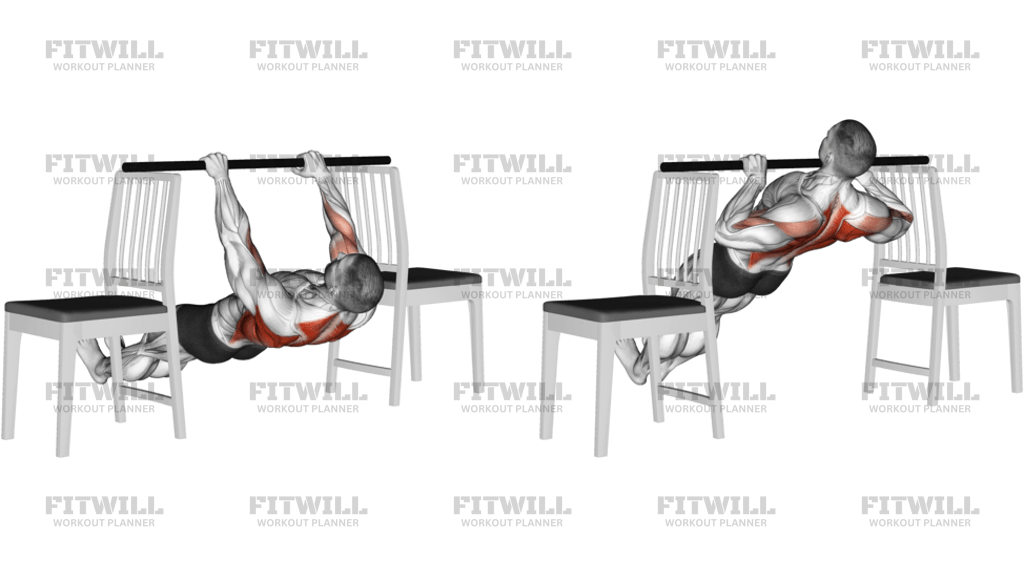
Instructions
- Place two sturdy chairs on level ground and set a solid bar or dowel across the tops so it cannot roll.
- Lie underneath with your chest centered under the bar, grip it slightly wider than shoulder width, and place your heels or feet on the opposite chair seat.
- Straighten your legs as much as the setup allows, then squeeze your glutes and brace your ribs down so your body forms a straight line.
- Start with your arms straight and your shoulders set down away from your ears.
- Pull your chest toward the bar by driving your elbows back and slightly toward your hips.
- Keep your wrists neutral and your neck long as you bring your upper chest to the bar or as close as you can touch cleanly.
- Pause for a beat at the top, then lower yourself slowly until the arms are straight and the shoulder blades can reach forward.
- Reset your body position before the next rep and breathe out on the pull, then inhale on the way down.
Tips & Tricks
- If your hips sag, bend the knees more or bring the feet a little closer to your body.
- Move the feet farther forward on the chair to make the row harder without changing the hand position.
- Keep the bar deep in the palm instead of letting it sit in the fingers, which helps keep the wrists straight.
- Set the shoulders down before every rep; if they shrug, the pull usually turns into a trap-dominant shrug.
- Stop the chest just short of the bar if touching it makes your ribs flare or your hips drop.
- Use a slower 2-3 second lowering phase to keep the back working through the full descent.
- Keep the elbows about 30-45 degrees from the torso instead of flaring them wide.
- If the chairs wobble or slide, reduce the range or change the setup before adding more reps.
Frequently Asked Questions
What muscles does Inverted Row Between Chairs work most?
It mainly targets the lats, with the upper back, rear shoulders, biceps, and forearms helping through the pull.
How do I set up the chairs safely for Inverted Row Between Chairs?
Use two heavy, non-slip chairs on level ground and test that the bar or dowel cannot roll before you lie underneath it.
Should my feet be on the floor or on the chair?
The version shown uses foot support on the opposite chair seat, but you can bend the knees or adjust the body angle to make the pull easier.
How high should I pull on Inverted Row Between Chairs?
Pull until your upper chest reaches the bar or comes very close without losing the straight line from your head to your heels.
Is Inverted Row Between Chairs good for beginners?
Yes, as long as the setup is stable and you keep enough knee bend or body angle to control each rep.
Why do I feel Inverted Row Between Chairs mostly in my arms?
Usually the elbows are drifting too wide or the shoulders are shrugging; think about driving the elbows back and keeping the shoulders down.
How can I make Inverted Row Between Chairs harder?
Straighten the legs more, move the feet farther forward, and slow the lowering phase while keeping the torso rigid.
What is the most common mistake in this movement?
Letting the hips drop or swinging the body to finish the rep is the most common problem.