Standing Lats Spread
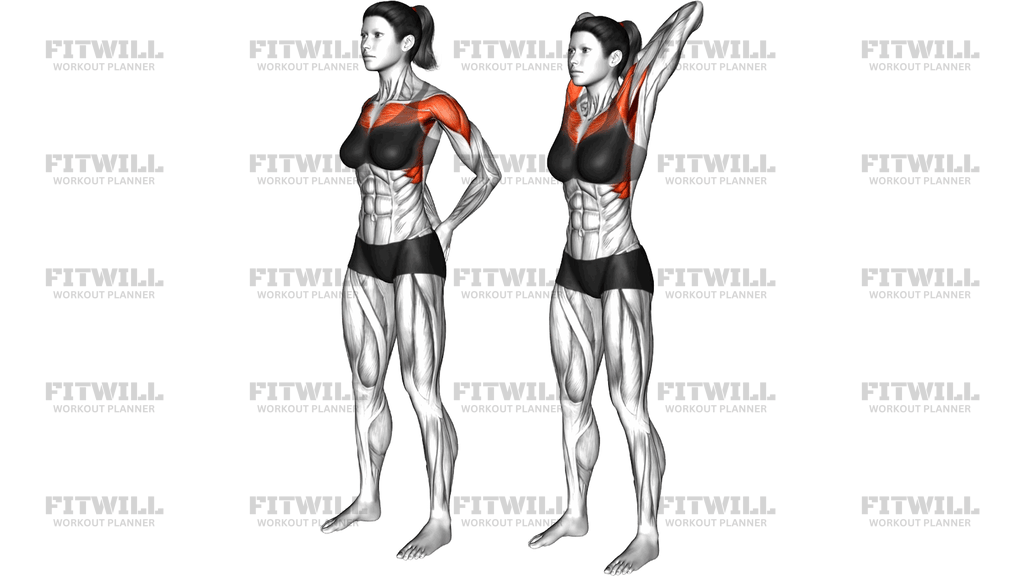
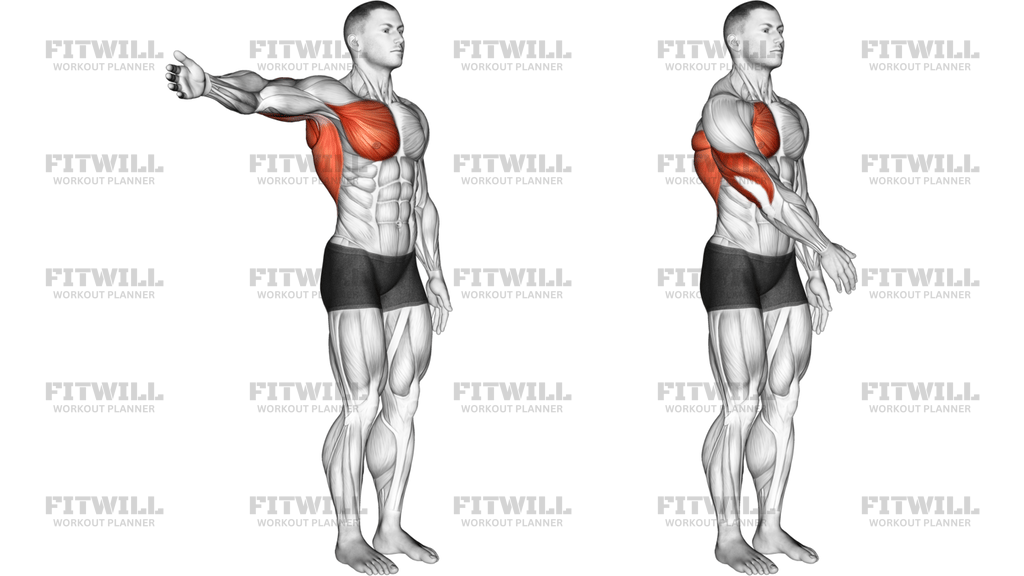
The Standing Lats Spread is a bodyweight movement where you deliberately flare your lats from an upright standing position, keeping your hands at or near your waist as your elbows drive down and outward. It comes from classic physique posing, but it has earned a permanent place in modern training because it teaches you what a lat contraction actually feels like without any load, cable, or bar masking the signal. The two phases are simple on paper: start with your hands at your sides or thumbs hooked into your waistband, then spread your elbows wide and press them down so your lats flare into a visible V shape.
This exercise trains the latissimus dorsi through isometric contraction and scapular control, with supporting work from the teres major, middle and lower traps, and the rear delts that help pull the shoulders down and back. Because there is no external resistance, the challenge is entirely neural: you are learning to fire the lats on command and to depress your shoulder girdle without shrugging. That skill carries directly over to pull-ups, pulldowns, and rows, where a lat-dominant pull is what separates a strong back set from an arm-dominated one.
The standing setup matters more than it looks. With your feet about hip width apart and your torso upright, there is nothing to lean on and nowhere to hide, so any cheating shows up immediately as a shrug, an arch, or a forward lean. Keep your ribs stacked over your pelvis, brace your core lightly, and let your shoulders do the work. If you catch yourself rolling your upper back forward to fake width, reset and reduce the intensity of the flare.
To execute it well, think of pushing your hands outward against an invisible wall while simultaneously drawing your elbows toward your back pockets. The hands stay relatively still at waist level; the elbows are what travel. Hold the peak flare for two to five seconds, breathe steadily through the hold, and release with control rather than letting your shoulders snap back to your ears.
The Standing Lats Spread is useful for a wide range of lifters. Beginners use it to build the mind-muscle connection that makes later back training productive, intermediate and advanced lifters use it as a warm-up primer before pulling sessions, and physique competitors use it to sharpen their presentation and improve lat separation. Bodybuilders preparing for a stage will hold the spread for longer durations to build posing endurance, while general lifters can treat it as a low-fatigue activation drill between heavy sets.
From a safety standpoint, the movement is gentle on the joints since it is unloaded and self-paced. The main cautions are avoiding forceful shrugging, which can irritate the upper traps and neck, and not holding your breath through the contraction. If you have an existing shoulder issue, keep the flare within a comfortable range and stop if you feel pinching at the shoulder rather than muscular tension in the back.
[ Workout Log & Planner ]
Put your next workout in Fitwill
Keep your plan and training log ready when you are.


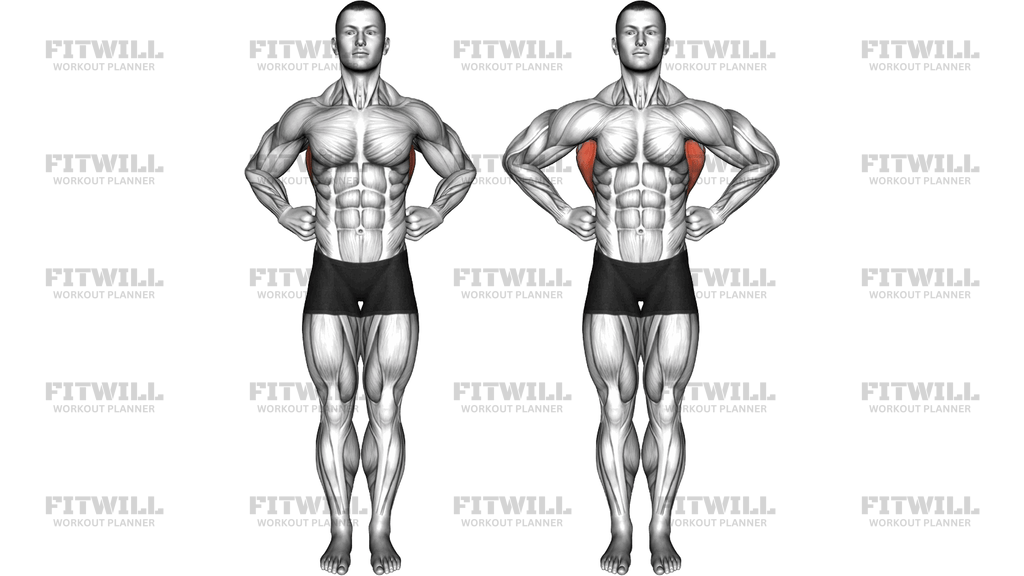
Instructions
- Stand upright with your feet roughly hip width apart, weight balanced evenly across both feet, and your arms relaxed at your sides.
- Bring your hands in toward your waist so your fingers or thumbs rest lightly on your hip crests, with your elbows pointing out to the sides.
- Brace your core lightly and stack your ribs over your pelvis so your torso stays upright without arching your lower back.
- Begin the flare by driving your elbows down toward your back pockets while simultaneously spreading them outward, away from your ribs.
- Press your hands gently outward against your waist as if pushing against an invisible wall, letting the lats widen and harden at your sides.
- Hold the peak spread for two to five seconds, keeping your shoulders depressed and your neck relaxed rather than shrugged toward your ears.
- Breathe steadily throughout the hold, exhaling smoothly instead of holding your breath.
- Release the flare slowly over two to three seconds, letting your elbows drift back toward your ribs with control.
- Reset your posture between reps, take a breath, and repeat for the desired number of holds.
Tips & Tricks
- If your upper traps bunch up and creep toward your ears, you are shrugging instead of depressing your shoulder blades. Cue your elbows down first and reduce how hard you flare until the shrug disappears.
- Keep your hands anchored at waist level. If your hands drift forward and your chest opens up, the tension leaves the lats and moves into the shoulders.
- A common mistake is leaning the torso backward or sticking the chest out to fake a bigger flare. Stay vertical and let the elbows create the width.
- Try flexing one side at a time if you cannot feel both lats evenly. Many lifters have a weaker neural connection on their non-dominant side, and single-side work fixes that.
- Use this spread as a primer before pull-ups or pulldowns. Two or three hard five-second holds wake up the lats and make the first working set feel more lat-driven.
- Do not rush the release. Dropping out of the flare instantly wastes half the drill, since the eccentric control is where scapular strength is built.
- If you cannot feel your lats at all, place one hand flat against your side just below the armpit while you flare. Feeling the muscle push into your palm confirms the contraction is happening.
- Practice in front of a mirror occasionally. Visible lat flare is a good feedback tool, but check that your torso and head stay still while the elbows move.
- For posing endurance, lengthen the holds gradually toward ten to fifteen seconds, but never at the cost of a shrugged, tension-filled neck position.
Frequently Asked Questions
What muscles does the Standing Lats Spread work?
The latissimus dorsi is the primary muscle, contracting isometrically to create the flare. The teres major, middle and lower traps, and rear delts assist by depressing and stabilizing the shoulder girdle.
Is the Standing Lats Spread good for beginners?
Yes, it is one of the best beginner drills for back training because it teaches lat activation without any equipment. Learning to feel your lats here makes pulldowns, pull-ups, and rows far more effective later.
Why do my shoulders shrug when I try the Standing Lats Spread?
Shrugging means your upper traps are taking over because the lat contraction is not yet established. Lower the intensity of the flare, think about driving your elbows into your back pockets, and rebuild the pattern with shorter holds.
How long should I hold the lat flare?
Start with two to five second holds for eight to twelve repetitions. For posing endurance, progress toward longer holds of ten to fifteen seconds, as long as your shoulders stay down and your breathing stays steady.
Can the Standing Lats Spread build muscle, or is it only for posing?
As an unloaded isometric it will not drive significant muscle growth on its own, but it is a legitimate activation and scapular control tool. Its main value is improving the quality of your loaded back exercises and, for competitors, posing precision.
Where exactly should my hands be during the spread?
Rest your fingers or thumbs on your hip crests at waist level with your elbows pointed outward. The hands push gently outward against the waist while the elbows travel down and away from your ribs.
What can I use instead of the Standing Lats Spread?
A straight-arm pulldown with light cable resistance or a band lat pull-in trains a similar lat contraction with added feedback. A wall-supported lat press, where you push your elbows out against a wall, also works when you need a tactile cue.
Is it safe to do the Standing Lats Spread with a shoulder injury?
Because it is unloaded, most people tolerate it well, but you should keep the flare within a pain-free range and avoid forcing the elbows wide. Stop if you feel pinching at the shoulder joint rather than muscular tension along your side.
Should I breathe during the hold?
Yes, keep breathing steadily through every hold. Holding your breath raises tension in the neck and torso and makes it harder to keep the shoulders depressed.