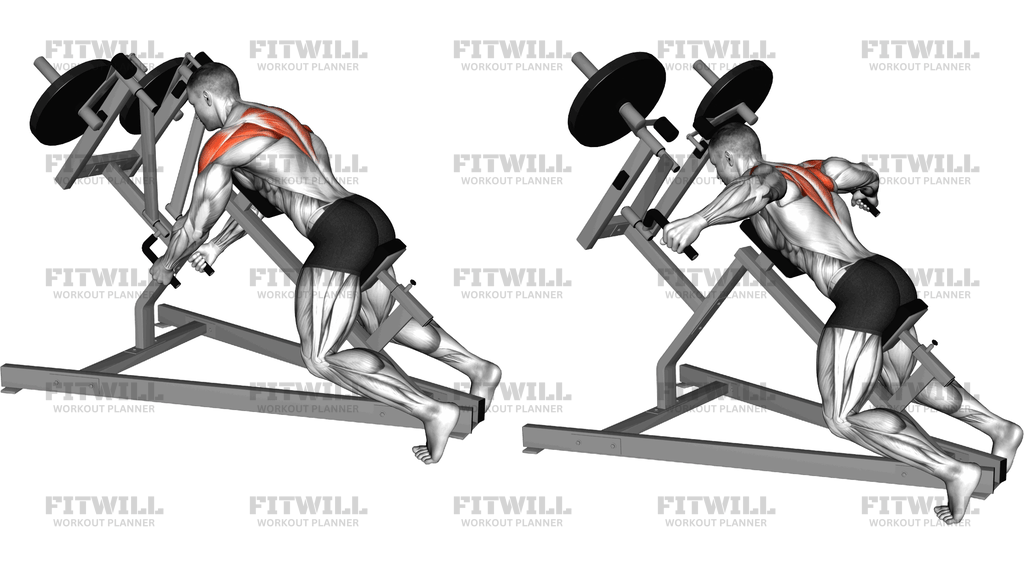
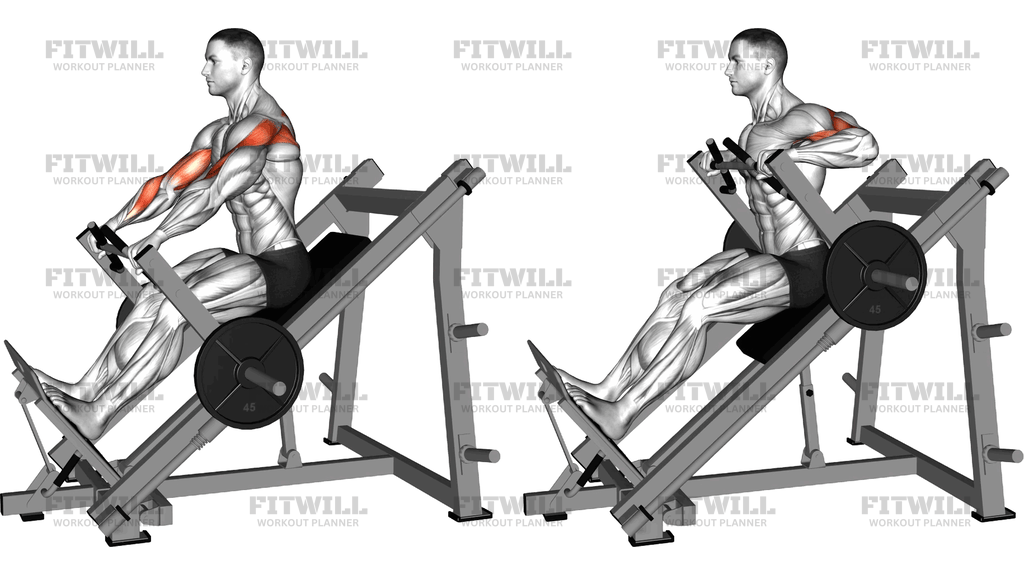
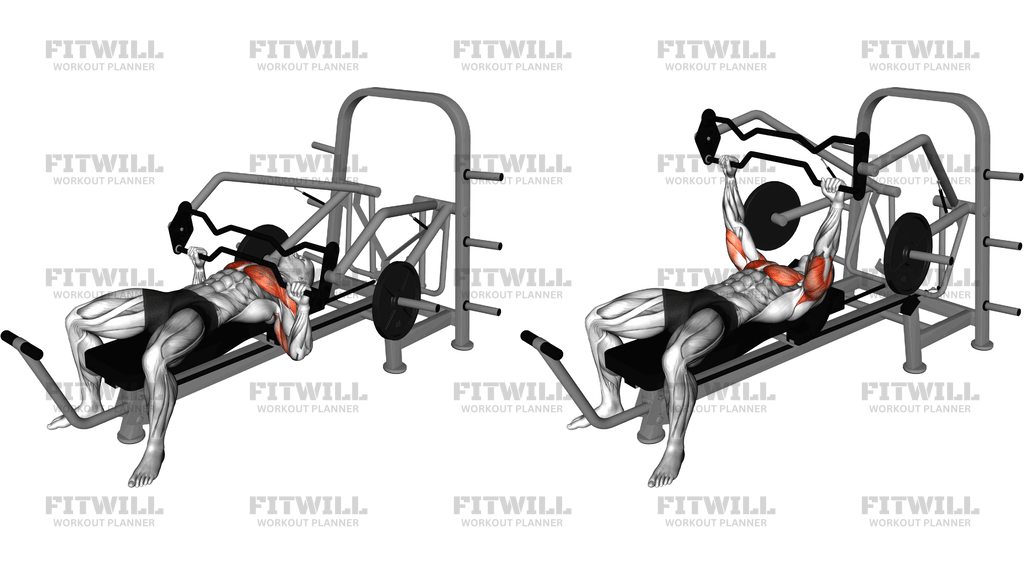
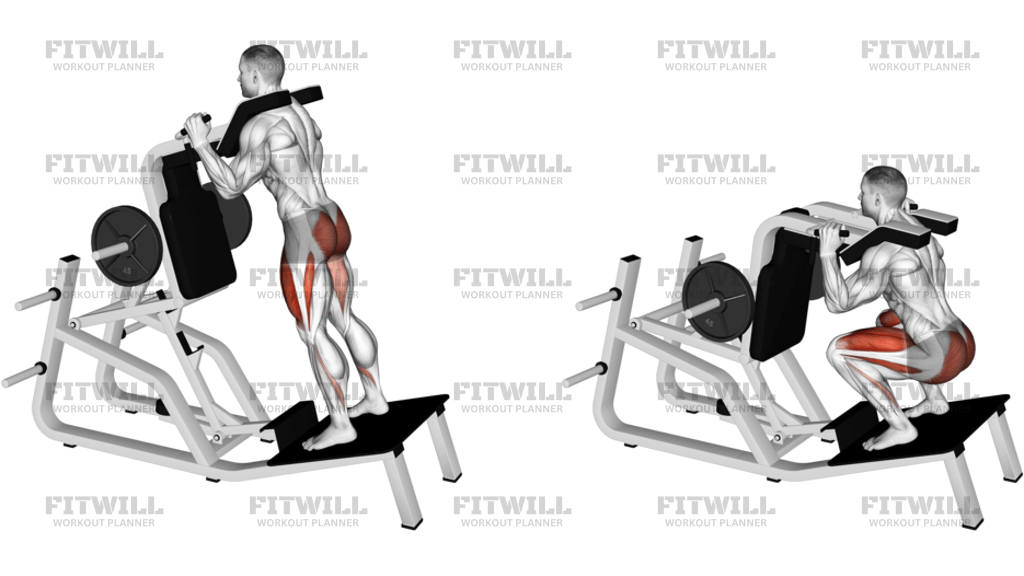
Lever Stack Seated Shoulders Press
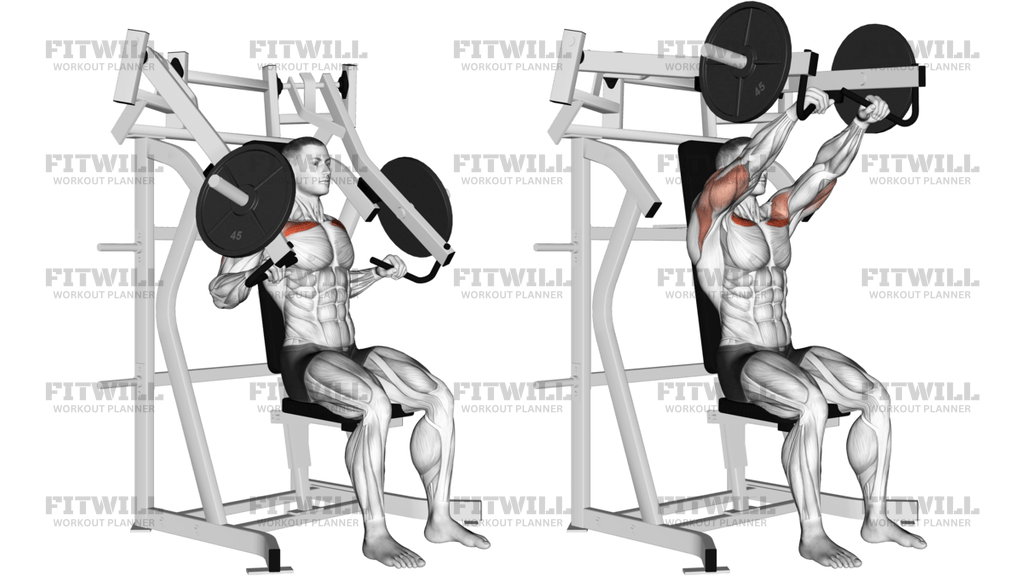
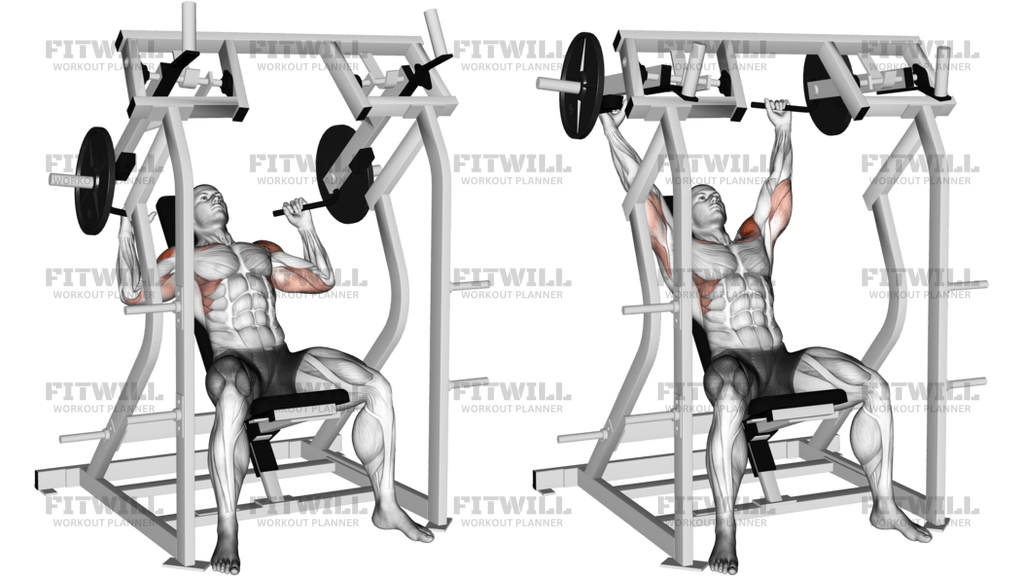
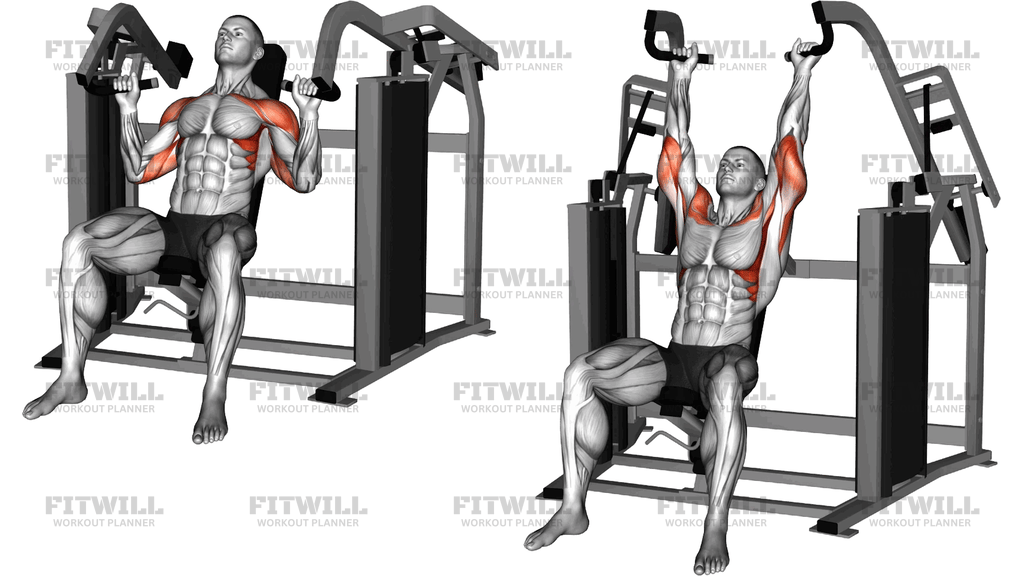
The Lever Stack Seated Shoulders Press is a machine-based overhead press performed on a plate-loaded lever unit. You sit with your back flat against the vertical back pad, take hold of the two independent handles at roughly ear height, and press them up and slightly inward until your arms are extended overhead. Because the handles travel on a fixed lever arm, the movement path stays consistent from rep to rep, which makes it one of the safest ways to load the shoulders heavily.
The main work is done by the front delts, with the side delts, triceps, and upper traps contributing as you drive the handles up and stabilize near the top. Your scapular muscles and core work quietly in the background to keep your torso tall and steady against the pad. Compared with a barbell or dumbbell press, the machine removes the demand for balance, so you can focus entirely on pushing hard through the target muscles.
This exercise suits a wide range of lifters. Beginners benefit from the guided path while they build pressing strength and confidence. Intermediate and advanced lifters use it as a heavy primary press on shoulder day or as a finishing movement when smaller stabilizers are already fatigued from free-weight work. It is also a practical choice for anyone returning from a layoff who wants overhead pressing volume without the stability requirements of a bar.
Setup quality determines everything here. Adjust the seat so the handles line up with the top of your shoulders and your elbows sit slightly below shoulder level in the start position. If the seat is too low, the handles start behind your head and stress the shoulder joint; if it is too high, you lose range of motion at the bottom. Keep your head, upper back, and glutes in contact with the pad, and plant your feet flat on the floor for a stable base.
To execute well, grip the handles firmly, brace your trunk, and press upward on a slight inward arc until your arms are straight without locking hard. Pause briefly at the top, then lower under control until your hands are around ear height. Exhale as you press, inhale as you lower, and keep the reps smooth rather than bouncing out of the stretch. A controlled tempo and consistent seat height are the two details that separate productive sets from sloppy ones.
A final practical point: never drop the levers rapidly from the top. Lower them deliberately so the weight stack settles gently and your shoulders stay loaded through a safe range. If you feel pinching at the bottom of the press, raise the seat slightly or shorten the range rather than forcing depth.
Fitwill
Log Workouts, Track Progress & Build Strength.
Achieve more with Fitwill: explore over 9600 exercises with images and videos, access built-in and custom workouts, perfect for both gym and home sessions, and see real results.
Start your journey. Download today!




Instructions
- Set the seat height so the machine handles sit at about ear height when you are seated, with your elbows slightly below shoulder level.
- Sit down with your back, shoulders, and head against the vertical back pad and your feet flat on the floor about hip-width apart.
- Grip both handles with a firm overhand or semi-neutral grip and position your forearms roughly vertical, elbows a little in front of the plane of your torso.
- Brace your core, lift your chest, and press your upper back lightly into the pad to create a stable base.
- Press both handles up and slightly inward in a smooth arc until your arms are extended overhead, keeping your wrists stacked over your elbows.
- Pause for a beat at the top with your elbows soft, feeling the front delts and triceps under tension.
- Lower the handles slowly back to ear height, stopping just before your elbows drop far below the level of your shoulders.
- Exhale as you press up and inhale as you lower the weight on every repetition.
- Keep your head in contact with the pad throughout; do not jut your chin forward to finish reps.
- Complete your set, then let the levers return gently to rest rather than dropping them into the stack.
Tips & Tricks
- The most common error on this machine is setting the seat too low, which places the handles behind your shoulders and strains the joint at the start of each press. Raise the seat until the handles align with the top of your shoulders.
- If your elbows flare straight out to the sides at the bottom, angle them about 30 to 45 degrees forward from your torso instead; this protects the shoulder capsule and tracks better with the lever path.
- Avoid bouncing out of the bottom position. The stack pulling the levers down can tempt you to use the stretch reflex, but a one-second pause under your ear height builds far more delt strength.
- Do not hyperextend your elbows and let the weight slam into the lockout. Finish with arms nearly straight but elbows still soft to keep tension on the delts and triceps.
- Watch for hips sliding forward off the seat as the weight gets heavy. Reset your glutes firmly against the pad between sets rather than pressing from a slumped position.
- Grip the handles just firmly enough to stay secure. Squeezing excessively hard recruits the forearms and upper traps and can cause neck tension by the end of a set.
- If one arm lags behind the other because the levers move independently, slow the weaker side down and let it set the pace instead of letting the stronger arm finish early.
- Use a full but pain-free range: ears to lockout is the standard, but stop higher if pinching occurs at the bottom and address seat height before pushing deeper.
Frequently Asked Questions
Which muscles does the Lever Stack Seated Shoulders Press work?
The front delts do most of the pressing, supported by the side delts and triceps. Your upper traps, rotator cuff, and core stabilize the torso and shoulder girdle throughout the movement.
Is the Lever Stack Seated Shoulders Press good for beginners?
Yes. The fixed lever path removes the balance and coordination demands of a barbell or dumbbell press, so beginners can learn pressing mechanics with a controlled, repeatable motion.
How high should I set the seat for this machine press?
Set it so the handles line up with the top of your shoulders or just below ear height when seated. This lets your elbows sit slightly below shoulder level at the start without the handles drifting behind your head.
How does this press differ from a seated dumbbell shoulder press?
The lever machine locks the path in place and supports your back, so you can push harder with less stability work. The dumbbell press builds more coordination and lets your joints find their own path, but the machine is easier to load progressively and safer to take close to failure.
Should I lock out my elbows at the top of the Lever Stack Seated Shoulders Press?
Extend fully but keep a slight bend in the elbows rather than snapping into a hard lockout. This keeps continuous tension on the delts and triceps and avoids unnecessary joint stress under load.
Why do my neck and traps feel tight during this exercise?
This usually comes from shrugging your shoulders toward your ears or jutting your chin forward as you press. Keep your head against the pad, pull your shoulder blades slightly down before pressing, and moderate your grip tension.
How deep should I lower the handles on each rep?
Lower until your hands are around ear height and your elbows are at or slightly below shoulder level. Going much deeper offers little extra benefit and increases shoulder joint stress, especially if you feel any pinching.
Can I use the Lever Stack Seated Shoulders Press as my main shoulder exercise?
Yes, it can serve as your primary press because the lever mechanism allows heavy, progressive loading. Many lifters pair it with a free-weight lateral raise or rear delt movement to cover the rest of the shoulder.
Is it safe to drop the levers after finishing a set?
No. Lower the handles deliberately so the weight stack settles gently; dropping them from overhead jars the shoulder joint and the machine mechanism alike.