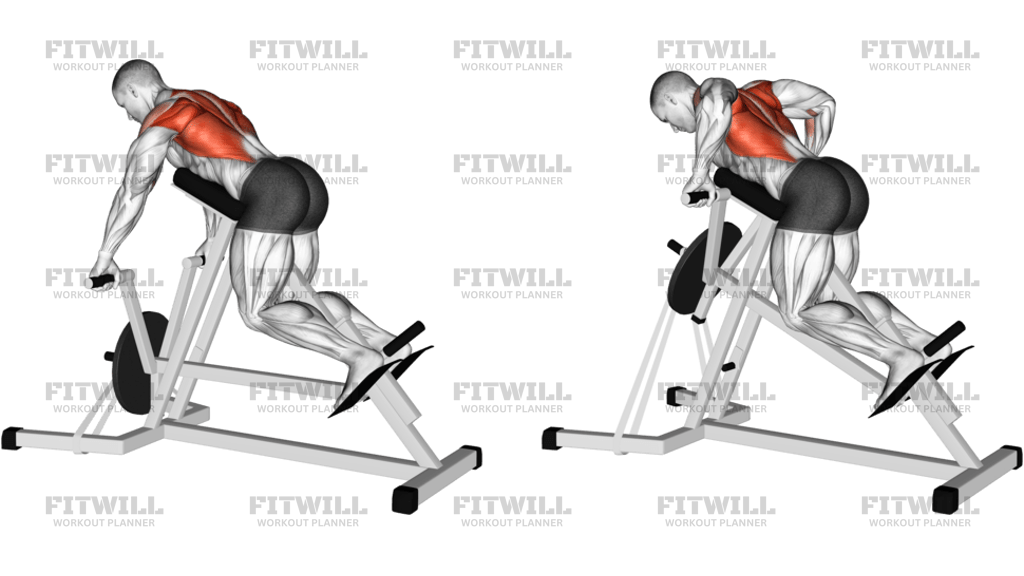
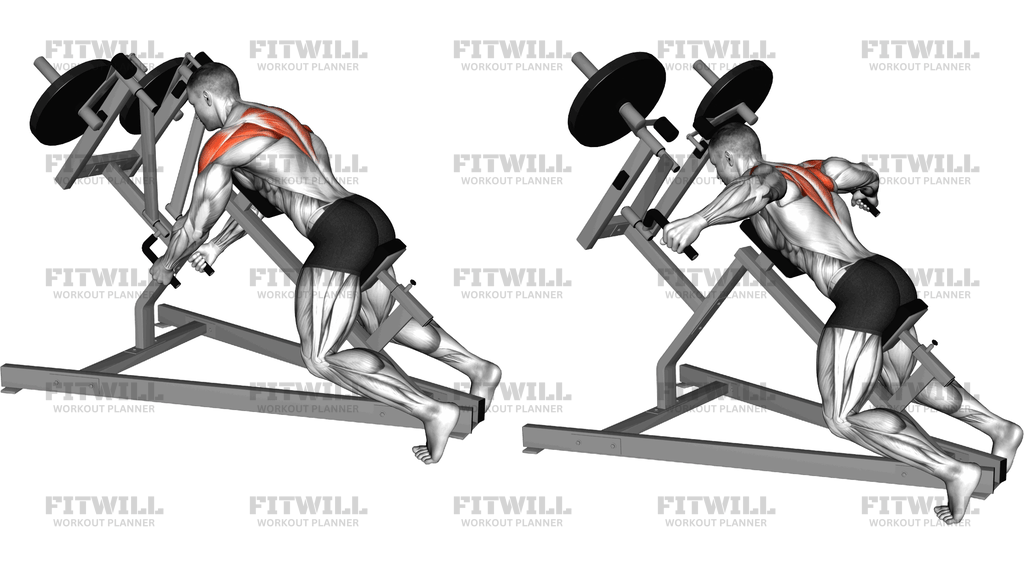
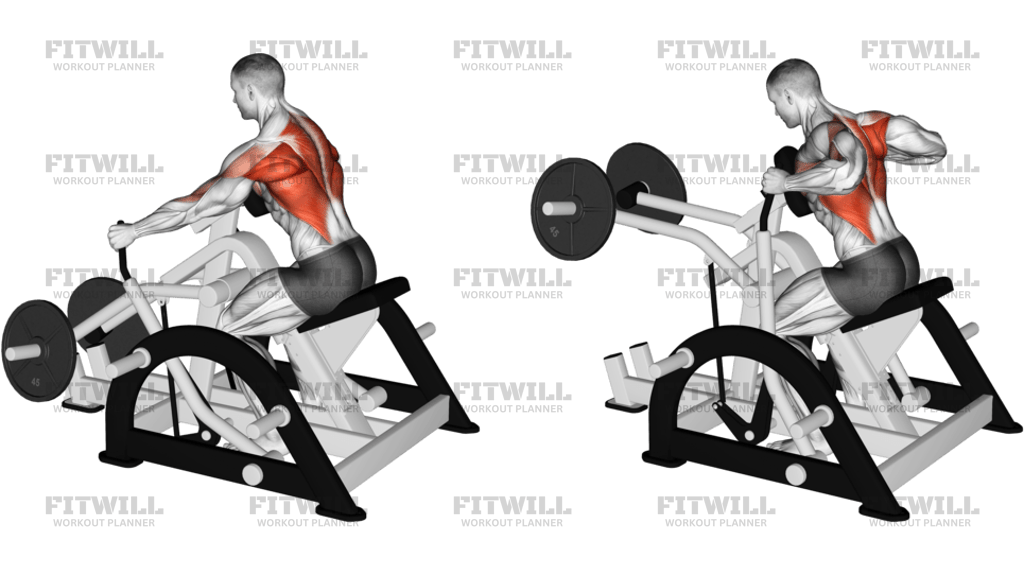
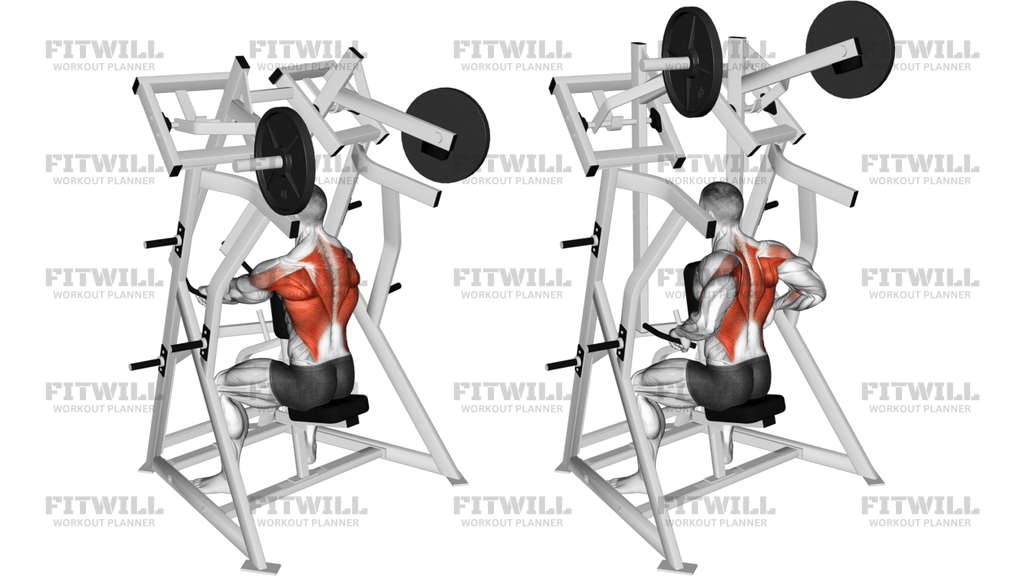
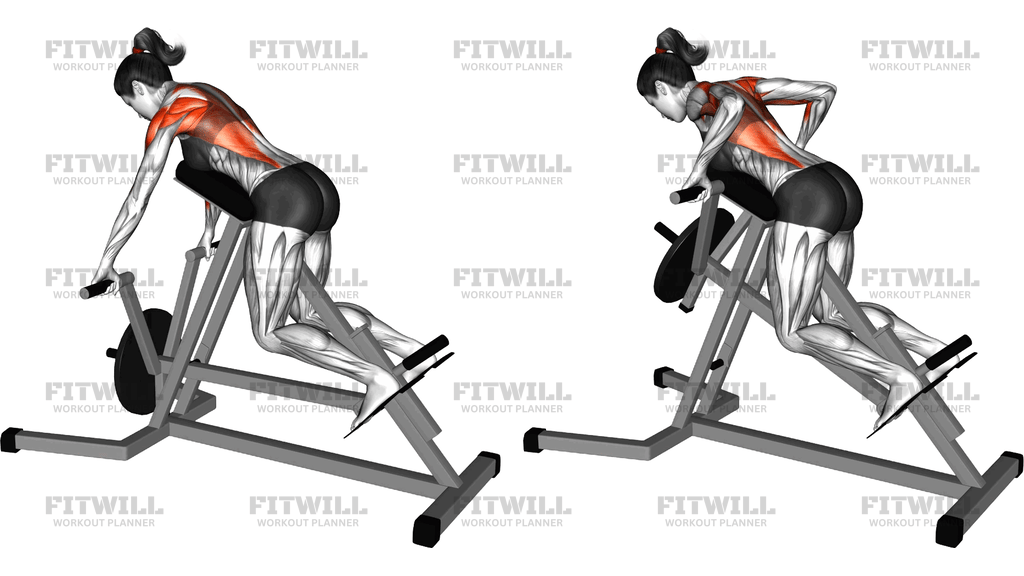
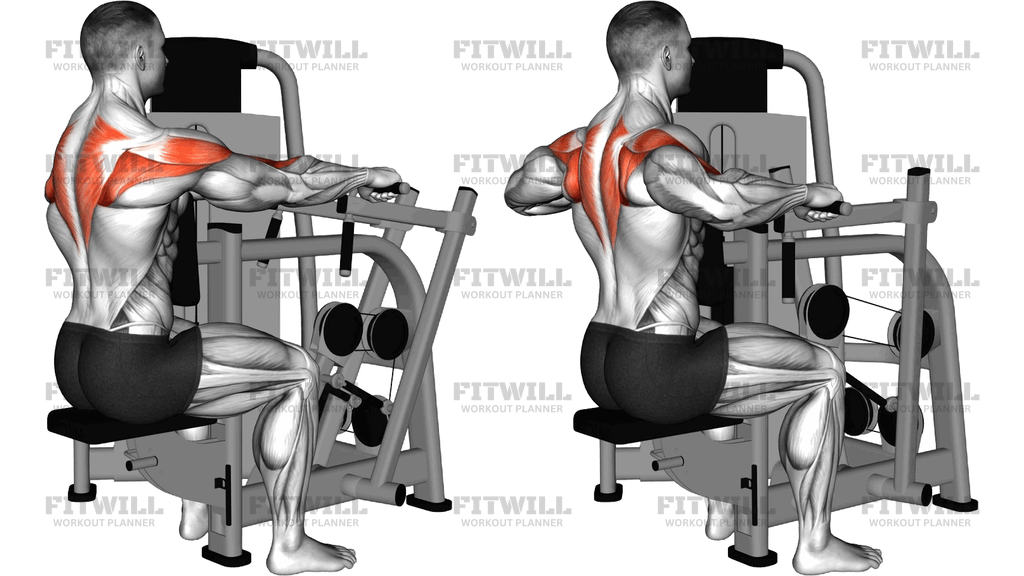
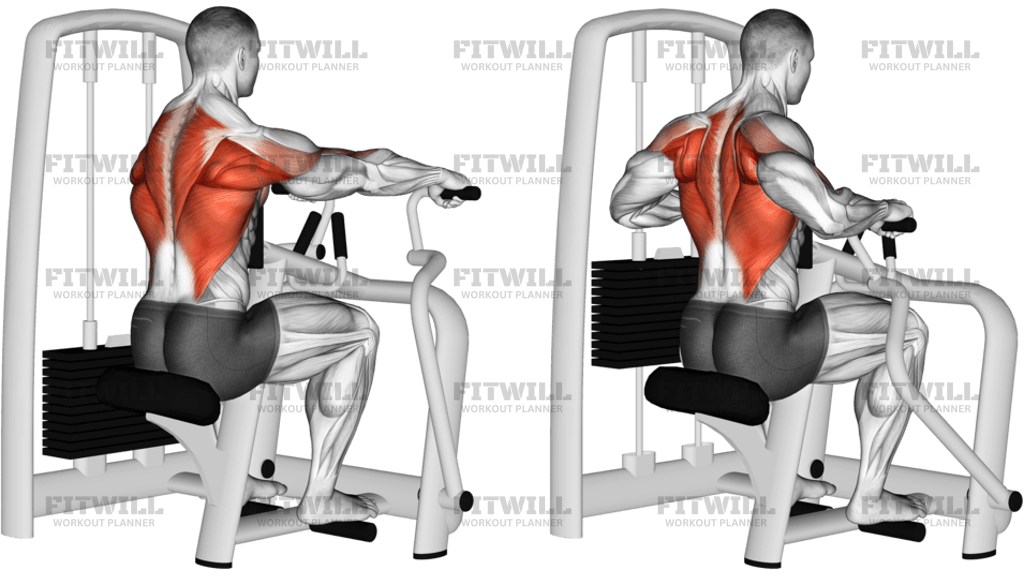
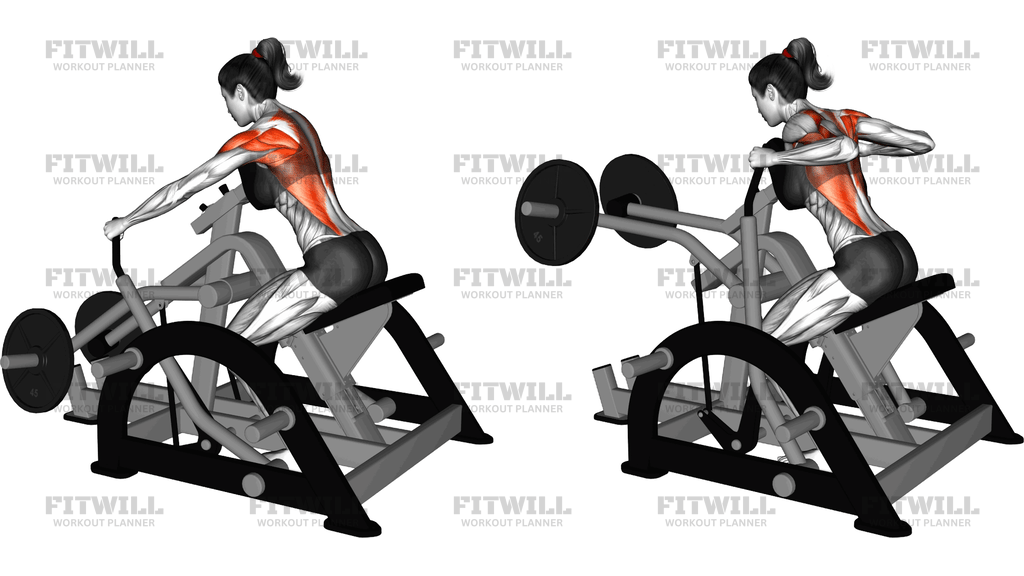
Lever Linear Delt Row
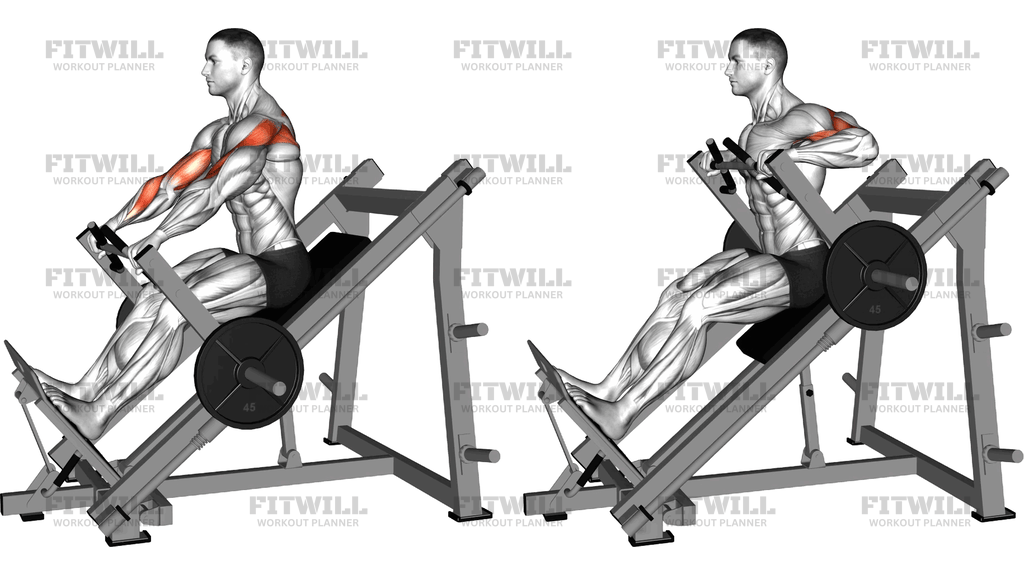
The Lever Linear Delt Row is a plate-loaded leverage machine exercise built around one idea: a rowing motion aimed at the deltoids instead of the mid-back. You sit on the angled seat with your feet planted on the footplates, take hold of the machine's handles, and pull them back toward your torso along the fixed path of the lever arm. Because the machine dictates the trajectory, your attention stays on driving the shoulders through the pull rather than on balancing a free weight.
This movement is especially useful for lifters who want to build the rear and side heads of the shoulders without loading the spine or relying on stabilizer strength. The elevated, slightly reclined seat position and foot support let you stay braced and repeat the same groove rep after rep, which makes it easy to compare sets, progress the weight in small jumps, and really feel the delt working. It is a solid pick for bodybuilders chasing shoulder detail, for lifters whose pressing outpaces their pulling, and for anyone who finds free-weight upright rows or bent-over rows uncomfortable on the lower back.
The primary work comes from the posterior deltoids at the back of the shoulder, with strong support from the lateral deltoids as the elbow travels up and back. The traps and rhomboids assist as the shoulder blades retract, the biceps and forearms handle the grip and elbow flexion, and the core quietly holds your torso steady on the seat. Because the resistance sits on a lever arm loaded with plates, the tension stays smooth through the whole range rather than spiking at one point.
Setup matters more than most people expect on this machine. The seat angle and footplate position determine whether the pull targets the delts or drifts into a generic row. Sit firmly with your hips back, keep your torso upright and lightly braced, and set your grip so your elbows can flare wide as you pull. If you sit too far forward or let your chest collapse, the pull turns into a torso-heave and the shoulders stop doing the work.
To execute it well, pull the handles back until they reach your lower ribs or upper abdomen, leading with the elbows and keeping them high and wide rather than tucked. Pause briefly at the back of the movement to feel the shoulder squeeze, then let the handles travel forward under control until the arms are extended and the delts are loaded. Two seconds forward, one strong pull back, short squeeze, controlled return is a tempo that suits this machine well.
You will most often see the Lever Linear Delt Row programmed as an accessory after pressing work, in shoulder-focused sessions, or as a finishing movement for higher-rep back and delt training. Start with a moderate plate load while you learn the path, and treat small, clean progressions as the goal. Keep the pull in a range you can own end to end; overloading this machine usually shows up as torso swinging, shrugging, or half-reps that skip the exact portion where the delts work hardest.
[ Workout Log & Planner ]
Put your next workout in Fitwill
Keep your plan and training log ready when you are.


Instructions
- Load plates onto the machine's lever arm and adjust the seat so your feet rest flat on the angled footplates with your knees slightly bent.
- Sit back against the seat with an upright torso, brace your core, and take hold of the handles with a firm, comfortable grip.
- Let your arms extend fully toward the front of the machine so the shoulders are stretched before the first rep.
- Pull the handles back toward your lower ribs, leading with your elbows and keeping them high and wide of your torso.
- Continue the pull until the handles reach your torso and your shoulder blades draw together.
- Squeeze the shoulders briefly at the back of the movement without shrugging up toward your ears.
- Release slowly and let the lever arm carry the handles forward until your arms are extended and the delts are loaded again.
- Exhale as you pull back and inhale as the handles return forward.
- Complete your set, then let the lever arm settle fully onto its rest before letting go of the handles and standing up.
- Check your seat position between sets so every rep starts from the same hip, foot, and torso position.
Tips & Tricks
- Lead with the elbows, not the hands. If you yank with your arms, the biceps take over and the rear and side delts lose their share of the work.
- Keep the elbows wide instead of tucked. Tucking them turns the exercise into a lat-heavy row, which defeats the delt emphasis of this machine.
- Do not shrug at the top of the pull. If your shoulders ride up toward your ears, drop the weight slightly and focus on pulling back and out, not up.
- Resist the urge to lean back and row with your torso. The footplates and seat let you cheat easily, so keep your hips planted and let the shoulders move the lever.
- Control the stretch at the front. Letting the handles slam forward on a heavy load yanks the shoulder joint, so guide the lever through the last few inches.
- Grip the handles firmly but not white-knuckle tight. Excess grip tension fatigues the forearms before the delts get their stimulus.
- If the pull feels like it is hitting your mid-back more than your shoulders, check your torso angle and seat height; sliding forward or sitting too low shifts the path away from the delts.
- Use the fixed path to your advantage. Because the lever arm cannot drift, the same plate load should feel identical rep to rep; if it does not, your form is changing, not your strength.
- Set the seat so your arms extend almost fully at the front without your shoulders rolling forward and collapsing at the end of the stretch.
Frequently Asked Questions
Which muscles does the Lever Linear Delt Row work the most?
The posterior deltoids do the main work, with the lateral deltoids contributing as the elbows travel back and out. The traps, rhomboids, biceps, and forearms assist through the pull and grip.
How is the Lever Linear Delt Row different from a regular seated row?
A standard row targets the mid-back with elbows tucked close to the body, while this machine is set up so you pull with the elbows flared wide, shifting the emphasis onto the deltoids. The lever arm also fixes the path so you cannot drift out of position.
Is the Lever Linear Delt Row good for beginners?
Yes. The fixed lever path and supported seat make it one of the more forgiving ways to learn a delt-focused row, since there is no free weight to balance. Beginners should start light and focus on feeling the back of the shoulder work on every rep.
Why do my forearms and biceps fatigue before my shoulders on this machine?
That usually means you are initiating the pull with your hands and arms instead of your elbows. Loosen your grip slightly, think about driving the elbows back, and use a weight your delts can move rather than one your arms are dragging.
Should my elbows be tucked or flared during the Lever Linear Delt Row?
Flared. Keeping the elbows high and wide of your torso is what directs the effort into the deltoids; tucking them converts the movement into a lat and mid-back row.
What can I substitute if my gym does not have this machine?
Wide-grip cable rows, chest-supported rear delt rows, or bent-over dumbbell rear delt rows with elbows flared all train similar areas. The main thing to reproduce is the wide elbow path and a stable, supported torso.
How heavy should I go on the Lever Linear Delt Row?
Choose a load you can pull through a full range with your torso staying still and no shrugging. The shoulders respond well to controlled reps, and this machine is easy to overload dishonestly with body english, so progress in small plate jumps.
Is it safe for my lower back since it is a rowing movement?
The supported seat, footplates, and fixed lever path keep the load off the lower back, which is one reason lifters with lower back sensitivity often prefer it over bent-over rows. Keep your torso upright and avoid rocking to keep it that way.
Where should I place the Lever Linear Delt Row in my workout?
It works well as an accessory after your main presses, or as a higher-rep finisher on shoulder or upper back days. Since it is machine-based and stable, it is also a dependable choice when you are fatigued late in a session.