Cable Standing Shrug In
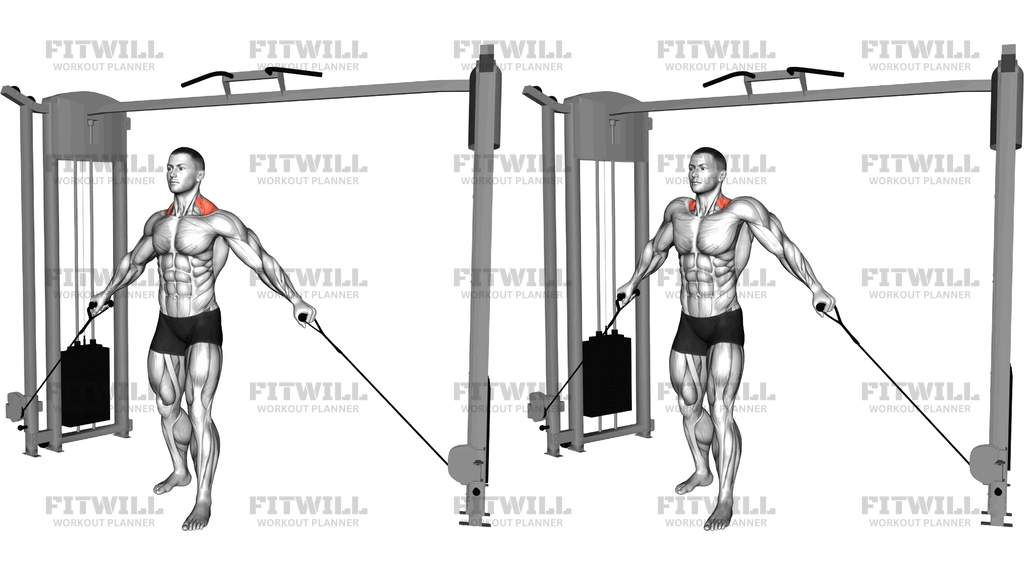
The Cable Standing Shrug In is a shrug variation performed between two low pulleys of a cable machine. You stand centered between the stacks, grab a handle in each hand, and let the cables run down and outward to your sides at roughly a 30 to 45 degree angle. From there, you elevate your shoulders straight up toward your ears and lower them back down under control. Because the resistance comes from the sides rather than straight down, the pull on your upper traps has a slightly inward line, which is where the "in" in the name comes from.
This movement targets the upper trapezius, the diamond-shaped muscle that runs from the top of your spine and skull down to your collarbone and out to your shoulder. The middle traps and levator scapulae assist as you elevate, and your forearms and grip work the entire time to hold the handles. Compared with a barbell or dumbbell shrug, the cable version keeps constant tension on the traps through the whole range, including at the bottom, where free weights tend to unload the muscle.
The setup matters more than people expect. Standing centered between the pulleys keeps the tension symmetrical, so both traps do equal work. If you drift toward one side, that cable goes slack and the opposite trap takes on extra load. Keeping the cables clear of your body also matters: if a cable drags across your thigh or hip, you lose the clean upward line of resistance and the movement turns into something closer to an upright row.
Execution should stay simple and disciplined. Feet about hip width, a soft bend in the knees, ribs stacked over the pelvis, and arms hanging long with no pulling from the elbows. The shrug itself is a pure elevation of the shoulder girdle — think of lifting your shoulders vertically toward your ears, holding the top for a beat, then lowering until you feel a stretch across the top of the traps. Rolling the shoulders or shrugging with the elbows bending turns it into a different exercise and robs the traps of the work.
This lift fits well for anyone chasing thicker, more developed upper traps, for lifters who find heavy barbell shrugs uncomfortable on the lower back or grip, and for people who want a smoother resistance profile than dumbbells provide. It is commonly placed at the end of a shoulder or pull day, usually for moderate to higher reps, since the cable setup makes it easy to adjust load precisely and keep strict form as fatigue builds.
A few safety points are worth respecting. Do not load this so heavy that you have to jerk the weight up or lean back to start the rep, as that shifts stress toward the spine and away from the traps. Keep the range controlled, especially on the way down, and let the shoulders settle fully before starting the next rep. If you have any history of neck issues, start light and keep the head neutral rather than craning forward during the shrug.
[ Workout Log & Planner ]
Put your next workout in Fitwill
Keep your plan and training log ready when you are.


Instructions
- Set both pulleys of the cable machine to the lowest position and attach a single handle to each side.
- Stand centered between the two stacks with feet about hip width apart, knees slightly bent, and a handle in each hand using a neutral grip.
- Step back or forward as needed so both cables are taut and angle evenly down and out to your sides, with your arms hanging just outside your hips.
- Brace your core, keep your chest tall, and look straight ahead with your head in line with your spine.
- Elevate your shoulders straight up toward your ears, keeping your arms relaxed and your elbows from bending.
- Pause for one to two seconds at the top and squeeze the upper traps hard.
- Lower your shoulders slowly and deliberately until the traps reach a full stretch and the cables stay taut at the bottom.
- Breathe in on the way down, exhale as you shrug up.
- Complete all reps on one set, keeping your torso still, then release the handles one at a time and let the stacks settle before stepping away.
- Adjust the weight so the last few reps stay strict — no bouncing or leaning back to finish.
Tips & Tricks
- The most common mistake is turning this into an upright row by bending the elbows. If your elbows bend, the weight is too heavy or you are rushing — let the arms stay long and passive.
- Do not roll your shoulders backward or forward. The cable line pulls in from the sides, and circling the shoulders breaks that line and adds stress to the shoulder joint.
- Check your stance before every set. If one cable hangs slack at the bottom, you are standing off-center relative to the pulleys and one trap is doing more work than the other.
- Resist the urge to tuck your chin or push your head forward at the top of the shrug — that shortens the range the traps actually travel and loads the neck instead.
- The cables should not touch your thighs during the rep. If they do, widen your stance slightly or move your hands a touch further from your body so the pull stays clear.
- Use the bottom position as part of the exercise. Letting the shoulders sink into a full stretch between reps builds the traps through a longer range than half reps ever will.
- If your grip gives out before your traps, use lifting straps. The point of this exercise is trap training, not grip endurance.
- Start lighter than you think you need. Cable shrugs feel easier than barbell shrugs at first because there is no momentum to hide behind, but strict reps with a pause are harder than they look.
- Keep the rest of your body quiet — no knee dip to bounce the weight up. If you need a leg drive to start the rep, drop the load.
Frequently Asked Questions
What muscles does the Cable Standing Shrug In work?
The primary muscle is the upper trapezius, with the middle traps and levator scapulae assisting during the lift. Your forearms and grip also stay busy holding the handles against the cable tension.
Why use cables instead of a barbell or dumbbells for shrugs?
The cable keeps steady tension on the traps through the entire range, including at the bottom where dumbbells and barbells go slack. The side angle also removes the lower back loading that comes from holding a heavy bar in front of the body.
Why does the cable pull in from the sides rather than straight down?
The pulleys are set low at either side of you, so resistance travels down and outward. That angled line challenges the upper traps along a slightly different path than a vertical free-weight pull, which is what makes this variation worth using.
Where should I stand between the pulleys?
Stand centered so both cables are equally taut and angle down symmetrically to your sides. If one cable goes slack before the other, you are off-center and one trap is underloaded.
Should my elbows bend during the Cable Standing Shrug In?
No. Once the elbows bend, the exercise shifts toward the arms and shoulders and the traps lose tension. Keep the arms hanging long and move only at the shoulder girdle.
How high should I shrug?
Lift the shoulders as close to your ears as your natural range allows, then pause briefly. Shrugging higher than your range allows usually means leaning or craning the neck, which you want to avoid.
Is the Cable Standing Shrug In good for beginners?
Yes, it is actually one of the more beginner-friendly shrug variations because the cable path guides the movement and the weight can be adjusted in small increments. A beginner should start with light weight and focus on a strict vertical shrug with a pause at the top.
What can I use if my gym has only one adjustable cable column?
You can perform the shrug one side at a time, holding a single handle and working each trap separately, or fall back on dumbbell shrugs. The single-arm version also helps you spot and fix side-to-side imbalances.
How many sets and reps should I do?
Because the tension is smooth and the load is easy to control, this exercise works well for 3 to 4 sets of 10 to 15 reps with a short pause at the top of each rep. Go heavier only when every rep stays strict.
Is it safe for people with neck discomfort?
The shrug is generally gentle on the neck as long as the head stays neutral and the load is moderate. If shrugging reproduces neck pain, stop and get assessed before continuing, and consider a lower-load range in the meantime.