Cable Twisting Standing Row
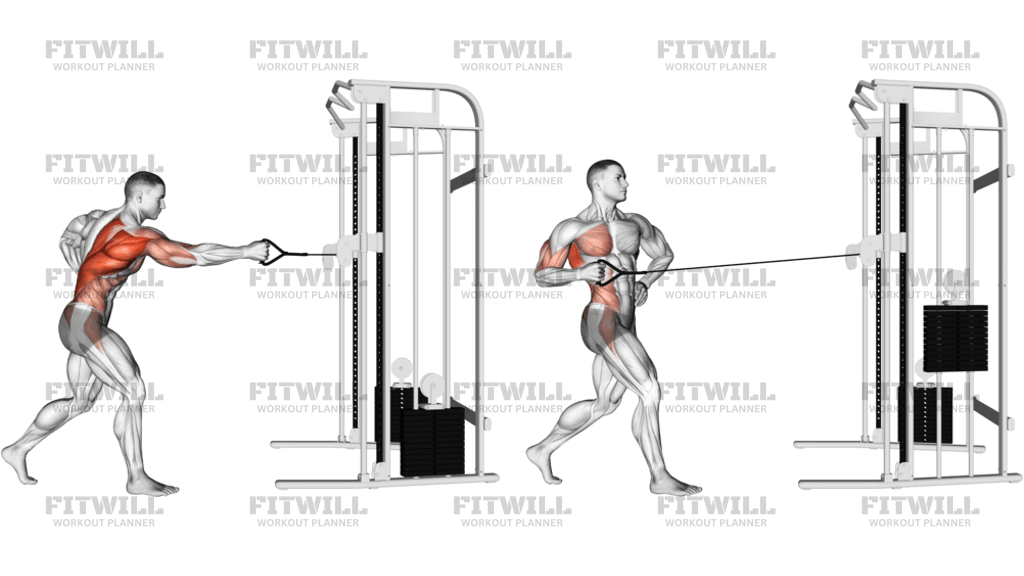
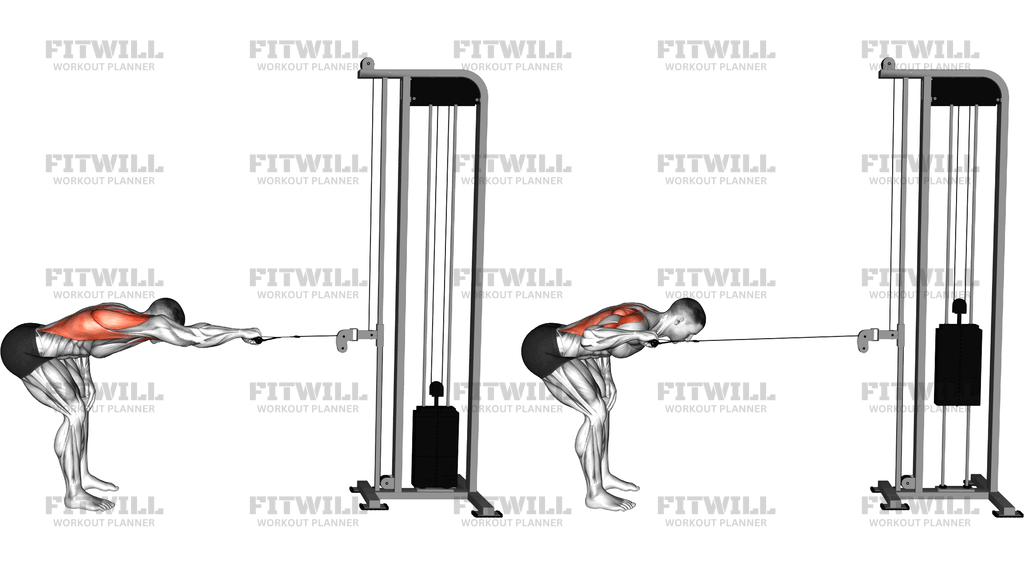
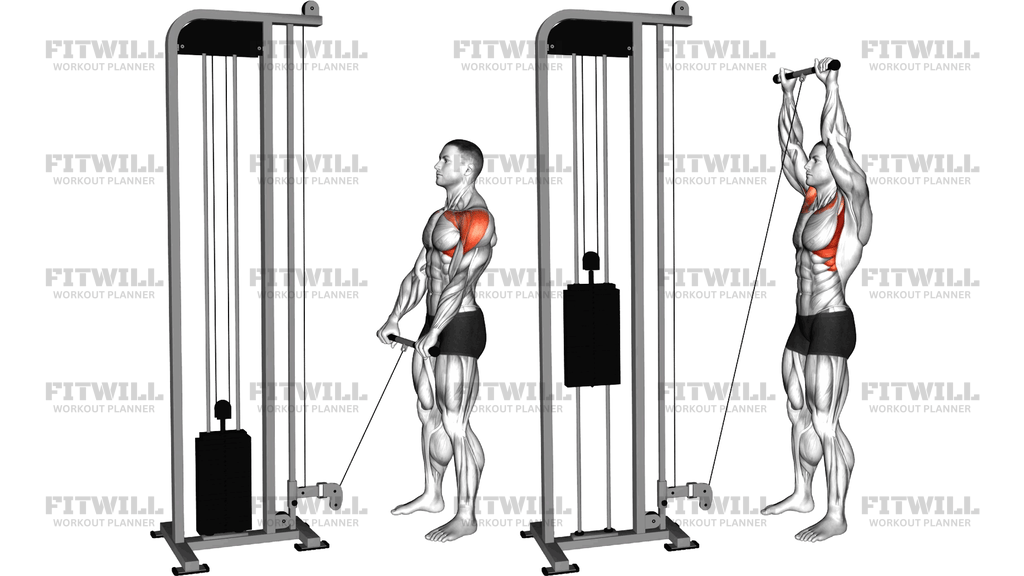
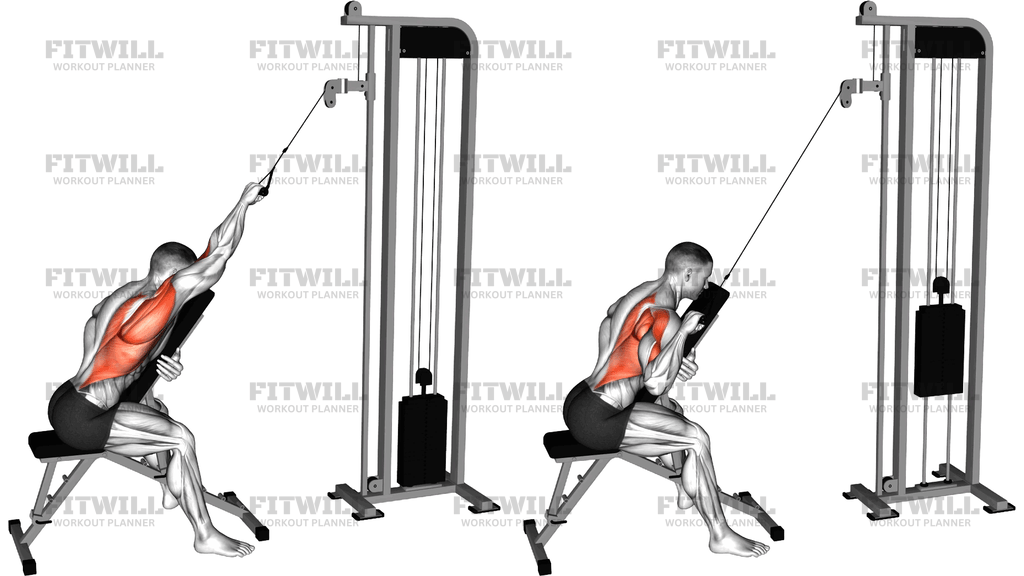
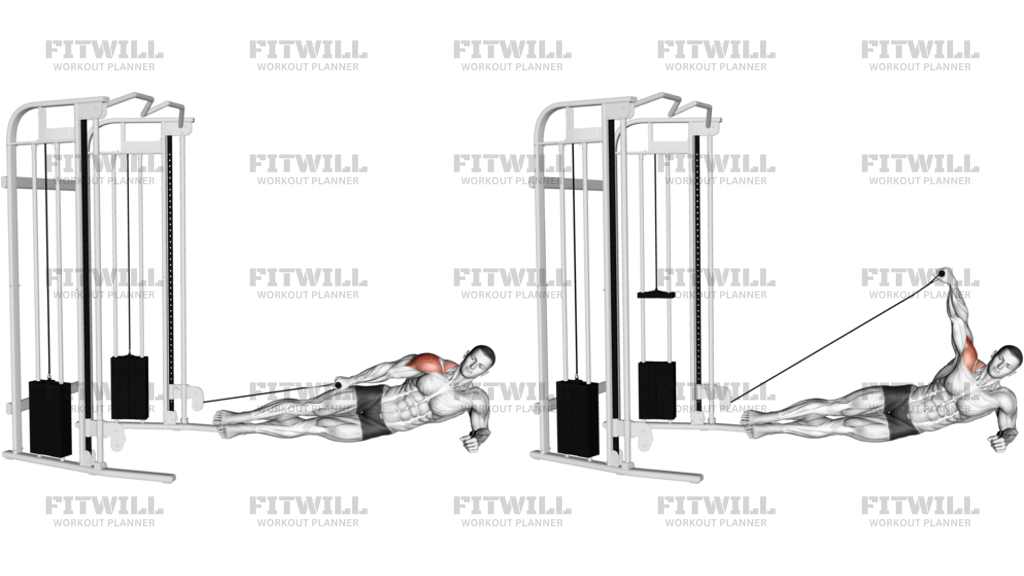
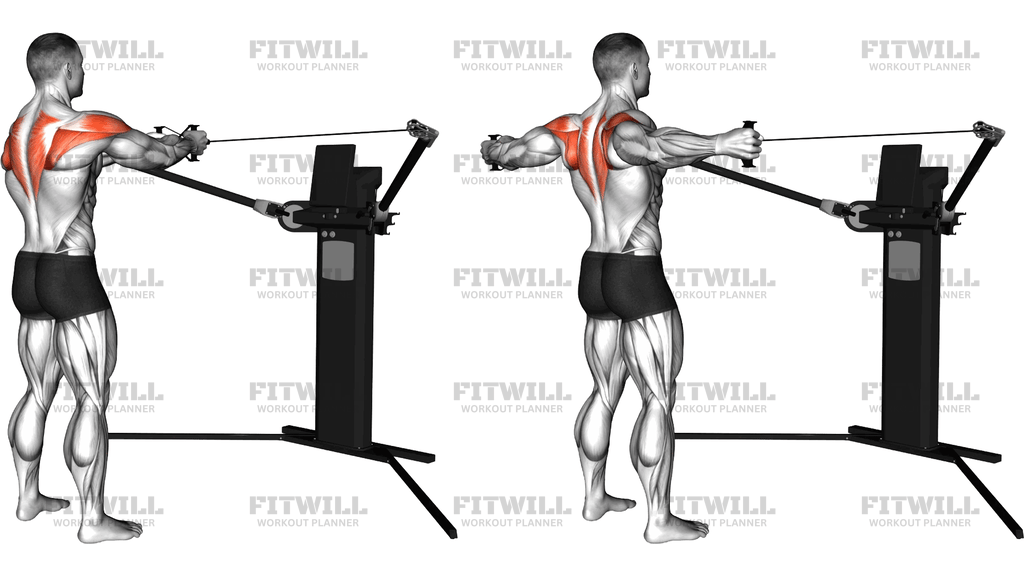
Cable Twisting Standing Row is a unilateral cable pulling exercise that blends a standing row with a controlled torso turn. In the image, the lifter stands a step or two away from a cable stack with a single handle, uses a staggered stance, and pulls the handle across the body while the torso rotates toward the working side. That combination makes the movement useful for training the upper back, traps, lats, rear shoulder, and arm muscles while also demanding good trunk position.
The setup matters because the cable line, foot position, and starting distance determine whether the rep feels smooth or awkward. If you stand too close, the handle shortens the range and the shoulder never reaches a clear stretch. If you stand too far away, the stack can pull you out of position and the twist becomes a lunge or a lean instead of a row. A stable split stance gives you enough base to rotate the rib cage without letting the hips or lower back take over.
A clean repetition starts with the arm reaching forward under control, then the elbow drives back as the shoulder blade glides toward the spine. The handle should travel toward the lower ribs or side of the torso, not straight up toward the shoulder. The torso can turn with the pull, but the movement should look organized and deliberate, not like a full-body yank. At the finish, the chest is slightly opened, the neck stays long, and the shoulder remains down rather than shrugged.
This exercise is often useful when you want a rowing pattern that feels more athletic and more coordinated than a fixed-seat machine row. It fits well in back sessions, upper-body accessories, or core-focused work where you want the trunk to resist and manage rotation instead of avoiding it completely. Keep the load light enough to control the twist, the return, and the shoulder position on every rep. If the lower back, shoulder, or neck starts to compensate, shorten the range and clean up the setup before adding weight.
[ Workout Log & Planner ]
Put your next workout in Fitwill
Keep your plan and training log ready when you are.


Instructions
- Attach a single handle to the cable and set the pulley around chest height.
- Stand a step or two away from the stack in a staggered stance so the cable is taut with your working arm almost straight.
- Face slightly away from the machine, keep soft knees, and plant the front foot firmly so the torso can rotate without losing balance.
- Reach the handle forward under control to start each rep, letting the shoulder blade glide forward without shrugging.
- Brace your midsection, then pull the elbow back as you turn the rib cage toward the working side.
- Finish the row by bringing the handle to the lower ribs or side of the torso while keeping the shoulder down and the neck long.
- Pause briefly in the contracted position and avoid letting the chest collapse or the elbow flare excessively.
- Return the handle slowly to the start as the torso unwinds, keeping tension on the cable the whole time.
- Reset your stance and breathing before the next rep so every repetition looks deliberate and repeatable.
Tips & Tricks
- Choose a load that lets the handle travel smoothly without jerking your shoulder forward at the start.
- Keep the twist small and organized; the rib cage should turn more than the pelvis.
- If your lower back feels the rotation, shorten the range and keep the hips quieter.
- Think about pulling the elbow back and around the body, not just straight behind you.
- Keep the wrist neutral so the forearm does not bend back as the handle reaches the torso.
- Let the shoulder blade move forward on the reach, then back on the pull, instead of pinning it hard in place.
- Stay tall through the chest without leaning away from the stack to cheat the last few inches.
- Exhale as you pull and keep the return slower than the pull so the stack does not yank you forward.
Frequently Asked Questions
What does Cable Twisting Standing Row train most?
It mainly trains the upper back and traps, with the lats, rear shoulder, and arms helping on each pull.
Should my torso actually twist during this row?
Yes, but only in a controlled way. Let the rib cage turn toward the cable while the hips stay mostly stable.
Where should the handle finish on each rep?
The handle should land near the lower ribs or the side of the torso, not high by the shoulder.
Why is the staggered stance useful here?
The split stance gives you enough base to row and rotate without wobbling or stepping into the stack.
How far should I stand from the cable machine?
Far enough that the cable is already under tension with the arm nearly straight at the start of the rep.
Can I use this exercise if my lower back gets tired easily?
Yes, but keep the twist small, stay tall, and reduce the load so the movement stays in the upper back and shoulder.
What is the most common mistake with the handle?
Most people yank the handle with the arm instead of letting the shoulder blade and torso finish the pull together.
Is this a good beginner rowing variation?
Yes, as long as the weight is light and the twist stays controlled rather than becoming a full-body swing.