Barbell Hang Snatch
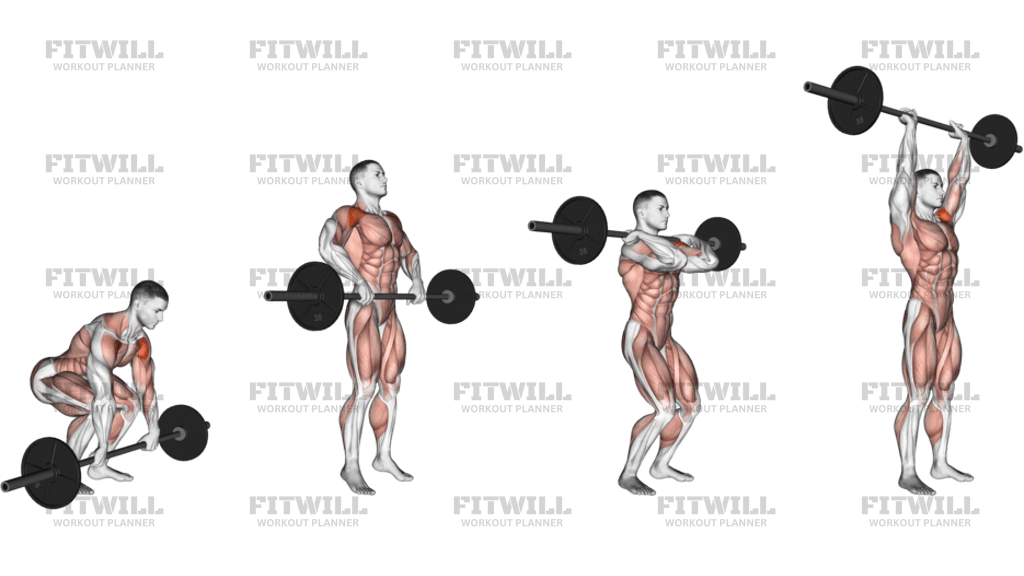
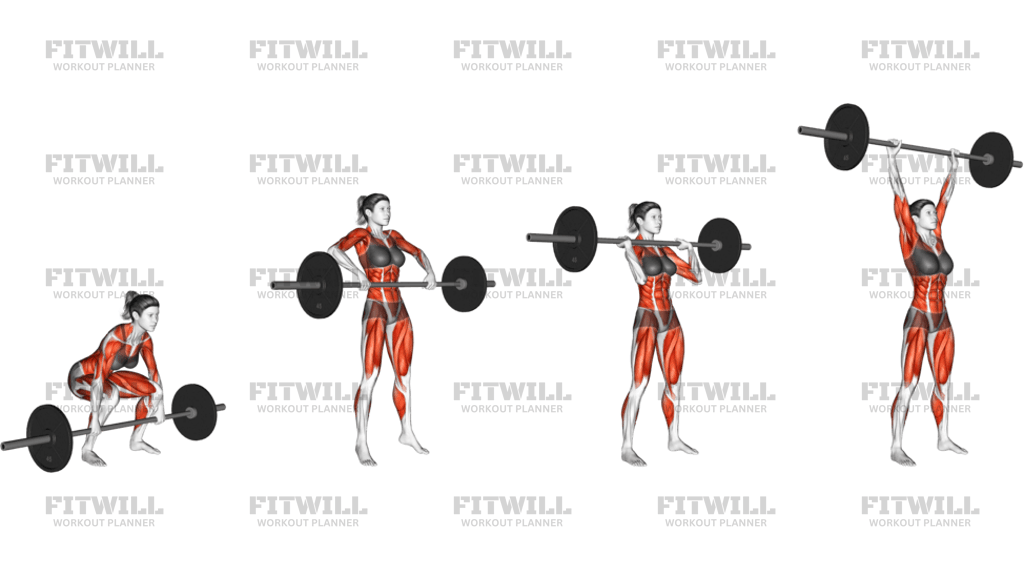
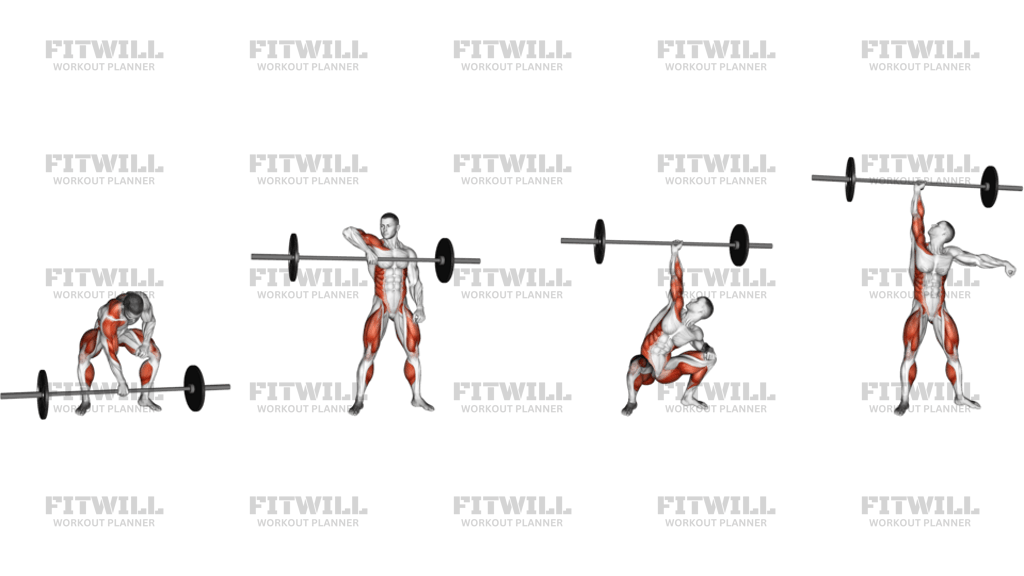
The Barbell Hang Snatch is the weightlifting movement where the barbell is taken from the hang position — held at roughly knee height with a wide snatch grip — and driven overhead in one continuous, explosive motion. Unlike the full snatch from the floor, the hang start shortens the range and forces you to generate power from the hips and legs without a floor pull to build momentum, which makes it a favorite for teaching timing and bar speed. The finish can be a full overhead squat catch or a taller power catch, depending on how much weight is on the bar and how aggressively you pull yourself under it.
This is one of the most complete lifts you can program. The drive comes from the glutes, hamstrings, and quads extending hard, the lower back and core hold the spine rigid through the pull, and the traps, shoulders, and arms finish the turnover so the bar lands locked out overhead. Because everything has to happen in under a second, the lift also trains rate of force development — how quickly your body can express strength rather than just how much of it you have.
Athletes in field and court sports use hang snatches to build explosive hip extension that transfers directly to sprinting, jumping, and change of direction. Weightlifters use it to sharpen the pull under the bar and reinforce a strong overhead receiving position. General lifters benefit from the shoulder and upper back stability demands, which are far greater than in comparable pressing movements because the bar has to be caught moving.
Setup matters more here than in most lifts. The wide snatch grip changes the angle of your shoulders and upper back, so the hang position — chest over the bar, knees bent, weight balanced over mid-foot — has to be consistent from rep to rep. A sloppy hang start turns the lift into an arm swing, which is where most people go wrong. Keep the bar close to the thighs and let the legs, not the arms, create the vertical drive.
Executed well, the bar travels a straight vertical path close to the body: extend through the hips and knees, shrug and pull the elbows up and out, then punch the hands up and drop beneath the bar into the catch. Because the bar moves overhead fast and the catch happens with the arms extended, start with a light load — an empty bar or even a broomstick — and only add weight once the pattern is smooth and repeatable.
[ Workout Log & Planner ]
Put your next workout in Fitwill
Keep your plan and training log ready when you are.


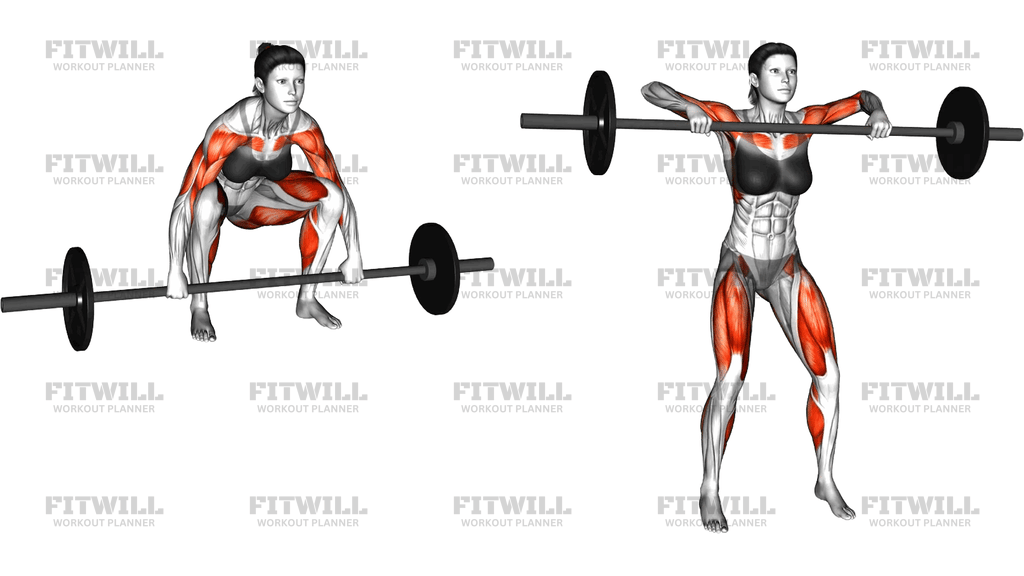
Instructions
- Set a barbell in a rack at about mid-thigh height or lift it from the floor to the hang. Take a snatch grip — hands set wide, roughly a hand-width or more outside the knurling rings — so the bar sits in the crease of your hips with your arms straight.
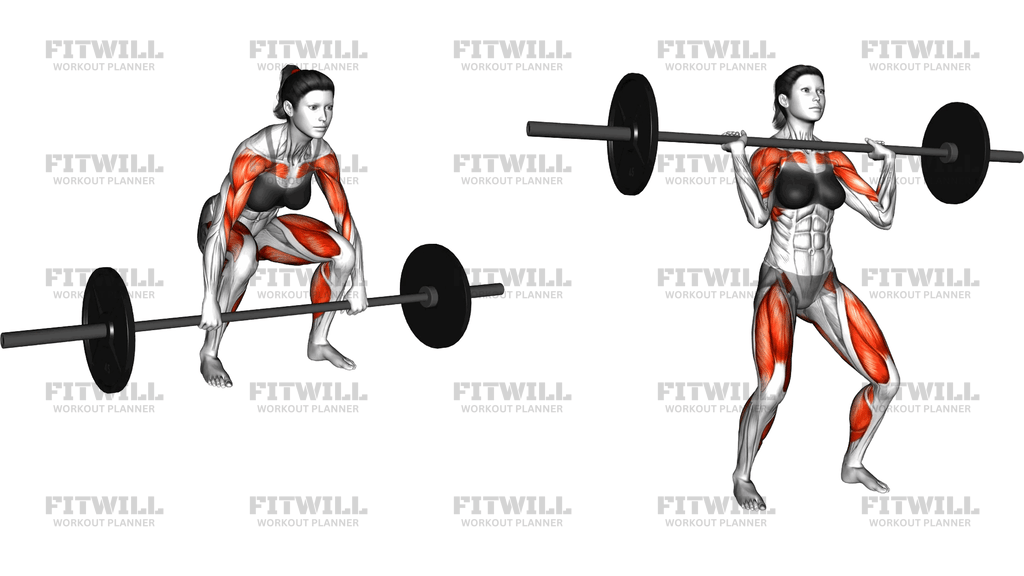
- Set your feet at hip width or slightly wider with toes turned out a little. Unlock the knees, push the hips back, and let the bar slide down to just above the knees, keeping your chest tall and shoulders slightly ahead of the bar.
- Brace your core and pull your shoulder blades back slightly so your spine stays neutral. Your weight should sit over mid-foot, with the bar touching or nearly touching your thighs.
- Inhale, then perform a short, controlled dip: bend the knees a few inches while keeping the chest up and the bar against your legs.
- Drive the floor away aggressively — snap the hips and knees into full extension so the bar rises from leg drive, not arm pulling.
- As the bar reaches hip height, shrug the traps and pull the elbows up and out to the sides, keeping the bar tracking close to your torso rather than swinging away.
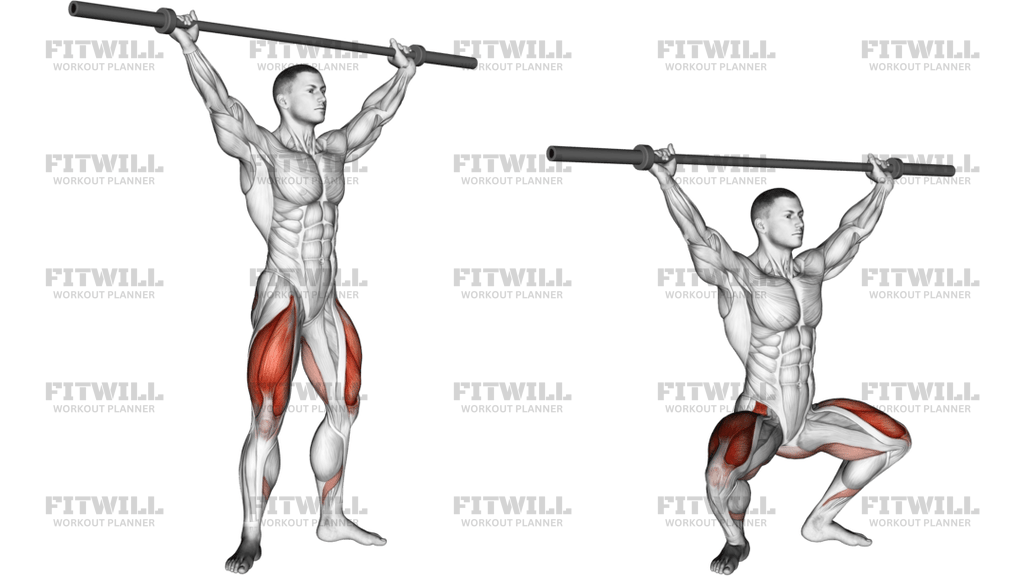
- Immediately punch the hands up and drop under the bar, catching it locked out overhead with your head pushed slightly forward through the arms. Move your feet out to a stable squat-width stance if catching low, or hold the power stance for a taller catch.
- Stand tall with the bar locked out overhead, squeezing the glutes to finish with your hips and knees fully extended and the bar stacked over your mid-foot.
- Exhale at the top, then lower the bar under control back to the hang position at the knees — bend the knees, guide the bar down the thighs, and reset your brace before the next rep.
- For a full snatch, ride the catch down into an overhead squat and stand the weight up; for a power snatch, catch above parallel and stand immediately.
Tips & Tricks
- The most common mistake is pulling with the arms too early. The arms should stay relaxed and long until the hips finish extending — if your elbows bend before the bar reaches hip height, the bar will drift forward and the lift will lose its power.
- Keep the bar dragging against your thighs through the hang and first pull. A gap between bar and body means the bar swings away on the drive, and you will have to chase it forward with your overhead catch.
- If you feel the catch soften overhead — elbows bending or the bar drifting behind you — drop the weight rather than muscling it. A soft overhead lockout under load is the main safety risk in this lift.
- Use a hook grip (fingers over the thumb) once the weight gets meaningful. It feels strange for the first few sessions, but it stops the bar rolling out of your hands during the turnover.
- Do not let your chest drop as you dip. A chest-heavy dip shifts your weight to the toes and turns the drive into a good morning instead of a jump — think hips down and back, spine tall.
- Film yourself from the side. The bar path should be close to vertical; a bar that loops away from the body or arcs over the head usually means the hips did not finish extending.
- Start every session with an empty bar and slow-motion reps. The Barbell Hang Snatch rewards timing more than raw strength, and grooving the sequence at light loads pays off more than adding plates early.
- If your shoulders feel cramped catching overhead, check your grip width first — a grip that is too narrow forces the wrists back at the catch. Widen your hands before blaming mobility.
- Wrist, shoulder, and thoracic mobility limit this lift for many people. If the overhead position is the bottleneck, add targeted mobility work rather than forcing a locked-out catch with bent elbows.
- Cap your sets at low reps — two to four per set. The snatch is highly technical and form degrades fast under fatigue, which is when bad habits get trained in.
Frequently Asked Questions
Which muscles does the Barbell Hang Snatch work?
It is a full-body lift: the glutes, hamstrings, and quads produce the drive, the lower back and core stabilize the spine, and the traps, shoulders, and arms handle the pull and overhead catch. The overhead lockout also heavily challenges upper back and shoulder stability.
Is the Barbell Hang Snatch suitable for beginners?
Yes, with an empty bar or PVC pipe and proper coaching on the hang position and overhead catch. Beginners should master the tall muscle snatch and overhead squat before adding weight or speed.
What grip width should I use for the Barbell Hang Snatch?
Use a wide snatch grip, typically set so the bar rests in the hip crease with your arms straight and hanging relaxed. A grip that is too narrow forces the wrists into extreme extension at the catch and makes the turnover harder.
What is the difference between the Barbell Hang Snatch and a full snatch?
The full snatch starts from the floor, while the hang snatch starts with the bar held around knee height. The hang version shortens the range, emphasizes the second pull and turnover, and is easier to learn because the floor pull is removed.
Why does my bar swing away from my body during the snatch?
The bar usually drifts forward when the hips do not finish extending or when the arms start pulling too early. Focus on driving the hips to full lockout and keeping the bar in contact with your thighs until it passes the hip crease.
Should I catch the Barbell Hang Snatch in a squat or a power position?
Either works — a power catch with a shallower knee bend is common at lighter training weights, while heavier loads usually require riding the catch down into a full overhead squat. Choose based on your comfort in the overhead squat and the weight on the bar.
What can I substitute if I do not have a barbell?
Dumbbell snatches from the hang position train a very similar hip-drive and overhead pattern, and kettlebell swings build the explosive hip extension. Neither replicates the wide-grip overhead catch exactly, but both transfer well.
How heavy should I go on the Barbell Hang Snatch?
Earn the weight gradually — the lift is technical and fast, so loads should stay at a level where your bar path and overhead lockout stay crisp. If your catch softens or the bar swings forward, the weight is too heavy for the day.
Is the Barbell Hang Snatch safe for the shoulders and lower back?
It is generally safe when the catch is caught with locked arms and a braced spine at appropriate loads. Problems arise from narrow grips, soft overhead lockouts, and heavy lifting under fatigue, so address those before increasing intensity.
How many reps should I do per set?
Keep sets short — two to four reps — because technique breaks down quickly with fatigue in this lift. Multiple low-rep sets with full resets between reps build better bar speed and consistency than high-rep sets.